
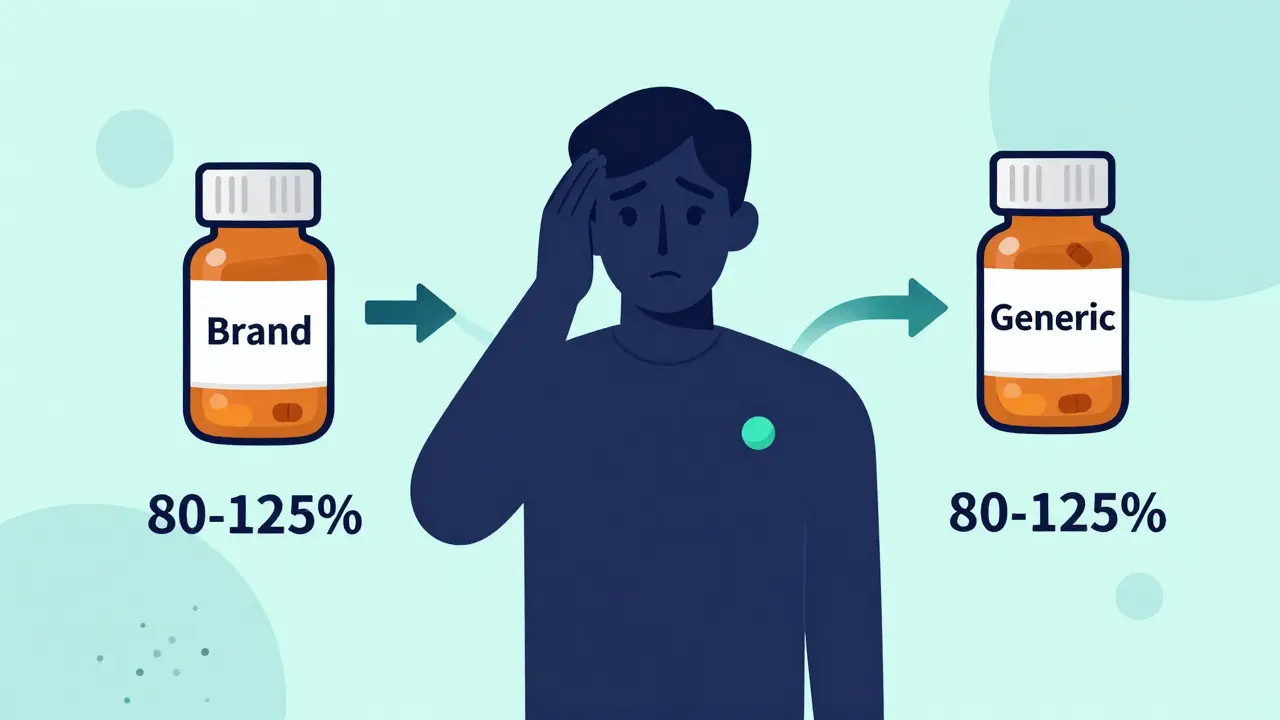
Have you ever switched from a brand-name prescription to its generic version and felt... different? Maybe your blood pressure spiked, your thyroid levels went haywire, or you developed headaches that weren't there before. You aren't imagining it, and you certainly aren't alone. While generic drugs are the backbone of modern healthcare-accounting for roughly 90% of all prescriptions dispensed in the United States-they don't work exactly the same way for everyone.
The medical consensus is clear: generics are safe and effective for the vast majority of people. They save the U.S. healthcare system approximately $373 billion annually by offering the same active ingredients as their expensive brand-name counterparts at a fraction of the cost. However, biology is messy, and individual responses can vary wildly. This article breaks down why some patients experience adverse effects when switching medications, focusing on the science of bioequivalence, the role of inactive ingredients, and what you should do if you feel worse after a switch.
Understanding Bioequivalence: The 80-125% Rule
To understand why reactions differ, we first need to look at how generic drugs get approved. Under the Hatch-Waxman Act of 1984, manufacturers don't have to repeat costly clinical trials to prove a generic works. Instead, they must prove bioequivalence. This means the generic drug must deliver the same amount of active ingredient into your bloodstream within a similar timeframe as the brand-name drug.
Here is where the nuance lies. The FDA mandates that a generic drug’s absorption rate must fall between 80% and 125% of the brand-name reference product. For most medications, this range is wide enough that your body won't notice the difference. If a brand-name pill releases 100 units of drug into your blood, a generic might release 90 or 110, and both are considered therapeutically equivalent.
However, this statistical average hides individual variability. As Dr. Robert L. Lins noted in an MD Edge analysis (2021), two different generic formulations of the same medication can differ from each other by up to 45% in absorption characteristics while still meeting regulatory standards. If one generic is on the low end (80%) and another is on the high end (125%), the gap between them is significant. For sensitive individuals, jumping from one generic manufacturer to another can feel like taking a completely different drug.
The Hidden Factor: Inactive Ingredients
While the active pharmaceutical ingredient (API) must be identical, the rest of the pill-the excipients-can vary substantially. Fillers, binders, dyes, preservatives, and coating materials make up 80-99% of a pill's total weight. These inactive ingredients help the pill hold its shape, dissolve at the right time, or taste less bitter.
For most people, these differences are irrelevant. But for others, they are critical. Consider allergies and sensitivities. Some generics use bisulfites (like sodium metabisulfite) as preservatives. According to Dr. William B. Schultz, former FDA deputy commissioner, these chemicals cause asthmatic allergic reactions in approximately 5-10% of asthmatic patients. If your brand-name drug didn't contain bisulfites but your generic does, you could experience respiratory distress despite the active ingredient being identical.
Digestive issues are another common culprit. Different binders or coatings can alter how quickly a drug dissolves in the stomach versus the intestine. If you have a condition like Crohn's disease or irritable bowel syndrome (IBS), a change in the dissolution profile caused by a different filler can lead to nausea, bloating, or inconsistent absorption. Always check the FDA's 'Inactive Ingredient Database' if you have known sensitivities.
Narrow Therapeutic Index (NTI) Drugs: The High-Stakes Category
Not all medications are created equal when it comes to tolerance for variation. Some drugs have a Narrow Therapeutic Index (NTI). These are medications where the difference between a helpful dose and a toxic or ineffective dose is very small-typically less than a 2-fold variation.
For NTI drugs, even a slight shift in blood concentration can trigger serious health events. Common NTI medications include:
- Levothyroxine (Synthroid): Used for hypothyroidism.
- Warfarin (Coumadin): A blood thinner.
- Phenytoin (Dilantin): An anticonvulsant.
- Carbamazepine (Tegretol): Another anticonvulsant.
- Digoxin (Lanoxin): Used for heart failure and arrhythmias.
A 2019 study published in JAMA Internal Medicine highlighted the risks here. Researchers analyzed 2,060 patients who switched from brand-name levothyroxine to generic versions. They found that 23.7% experienced thyroid-stimulating hormone (TSH) level fluctuations beyond the therapeutic range within six months. Compare that to just 14.2% of patients who stayed on the brand-name formulation. That’s a statistically significant increase in instability for those who switched.
Similarly, for antiepileptic drugs, a 2018 study in Epilepsia involving 1,250 patients showed that 17.3% experienced breakthrough seizures after switching from brand-name lamotrigine to generics, compared to 8.9% who maintained the brand-name formulation. For someone managing epilepsy, a "breakthrough seizure" isn't just an inconvenience; it's a life-threatening emergency.

What About Wider-Spectrum Medications?
It is important not to panic about every generic switch. For medications with a wider therapeutic index, the evidence overwhelmingly supports their safety and efficacy. Take metformin, a common diabetes medication. A 2020 systematic review in Diabetes, Obesity and Metabolism analyzed 15 clinical trials with 3,420 patients. They found no statistically significant differences in HbA1c reduction between generic and brand-name formulations. The mean difference was a negligible 0.04%.
This suggests that individual response variations are highly medication-specific. You are far more likely to experience issues with levothyroxine or warfarin than you are with metformin or most antibiotics. Understanding which category your medication falls into is key to managing expectations.
| Drug Class | Therapeutic Index | Risk of Adverse Switch Effects | Key Monitoring Metric |
|---|---|---|---|
| Levothyroxine | Narrow (NTI) | High (23.7% TSH fluctuation) | TSH Levels |
| Lamotrigine | Narrow (NTI) | Moderate-High (17.3% breakthrough seizures) | Seizure Frequency |
| Metformin | Wide | Low (No significant HbA1c diff.) | HbA1c |
| Bupropion | Moderate | Moderate (Headaches/Anxiety reported) | Symptom Diary |
Real-World Patient Experiences
Statistics tell one story, but patient reports add texture to the data. An analysis of 1,247 patient reviews on Drugs.com (2023) revealed that 38.2% of patients taking generic levothyroxine reported "worse symptom control" compared to the brand name. Specific complaints included increased fatigue (27.6%) and mood changes (19.3%).
Online communities reflect similar trends. In Reddit discussions regarding pharmacy issues, users frequently cited problems with generic bupropion (Wellbutrin). Approximately 63.4% of users reporting issues mentioned this specific drug, with many describing severe headaches and increased anxiety after switching manufacturers. While anecdotal, these clusters of complaints often signal real pharmacokinetic differences that large-scale studies might dilute.
Pharmacists see this daily. A 2022 survey by the National Community Pharmacists Association found that 68.3% of community pharmacists had observed patients experiencing adverse effects when switching between different generic manufacturers. Nearly half of those pharmacists reported this happening "frequently"-more than five cases per month.

How to Protect Yourself: Actionable Steps
If you are worried about your medication, you have options. Here is how to manage the transition safely:
- Know Your Drug's Index: Ask your doctor if your medication has a Narrow Therapeutic Index. If it does, stick to one manufacturer whenever possible.
- Monitor Closely: For NTI drugs, follow strict monitoring protocols. The American Thyroid Association recommends checking TSH levels 6-8 weeks after any formulation change. For warfarin, check your INR within 3-5 days of switching.
- Keep a Diary: Track your symptoms, energy levels, and side effects for two weeks after a switch. Concrete data helps your doctor distinguish between placebo effects and real physiological changes.
- Request Consistency: You can ask your pharmacist to stock a specific generic manufacturer. While insurance may push for the cheapest option, many pharmacies will honor a request for a consistent source if you explain the medical necessity.
- Check for Allergies: If you have asthma or food allergies, verify the inactive ingredients of your new generic against the old one using the FDA database.
In some cases, your doctor may write the prescription with the notation "Dispense as Written" (DAW) or "Brand Medically Necessary." This prevents the pharmacist from substituting a generic automatically. Use this tool wisely, as it may increase your out-of-pocket costs.
The Future of Generic Standards
Regulators are aware of these concerns. The FDA released draft guidance in 2023 identifying 17 medication classes requiring additional bioequivalence studies due to documented patient response variations. Furthermore, the European Medicines Agency already requires tighter bioequivalence ranges (90-111%) for NTI drugs compared to the FDA's 80-125% standard. This stricter approach results in fewer generic approvals for high-risk meds in the EU but potentially higher consistency for patients.
Emerging technologies like pharmacogenomic testing may soon allow us to predict individual response variations with greater accuracy. Research published in Clinical Pharmacology & Therapeutics (January 2024) demonstrated that genetic testing could predict generic response variations with 83.7% accuracy for certain drug classes. Until then, vigilance and open communication with your healthcare provider remain your best defense.
Are generic drugs always cheaper than brand-name drugs?
Yes, almost always. Generic drugs represent only 23% of total prescription drug spending in the U.S. despite making up 90% of prescriptions. They are cheaper because manufacturers do not have to recoup the billions spent on initial research and development, which brand-name companies did years ago.
Can I switch back to the brand-name drug if the generic doesn't work?
You can try, but insurance coverage may be limited. If you experience adverse effects from a generic, document them thoroughly. Your doctor may then prescribe the brand-name drug as "medically necessary," though you might face higher copays or prior authorization hurdles.
Why do different generic pills look different?
Different manufacturers use different inactive ingredients, such as dyes and binders. This affects the color, shape, and size of the pill. As long as the active ingredient and bioequivalence are met, the appearance does not impact efficacy for most drugs, though it may matter for those with dye allergies.
Is it safe to take two different generic brands of the same drug together?
No, you should never split doses between different manufacturers without consulting your doctor. Because absorption rates can vary significantly between manufacturers (up to 45% difference), mixing them can lead to unpredictable blood levels, especially dangerous for Narrow Therapeutic Index drugs.
Do generic drugs expire faster than brand-name drugs?
No. Both generic and brand-name drugs must meet the same stability and expiration date requirements set by the FDA. The expiration date is determined by rigorous testing to ensure the drug remains potent and safe until that date, regardless of the manufacturer.