
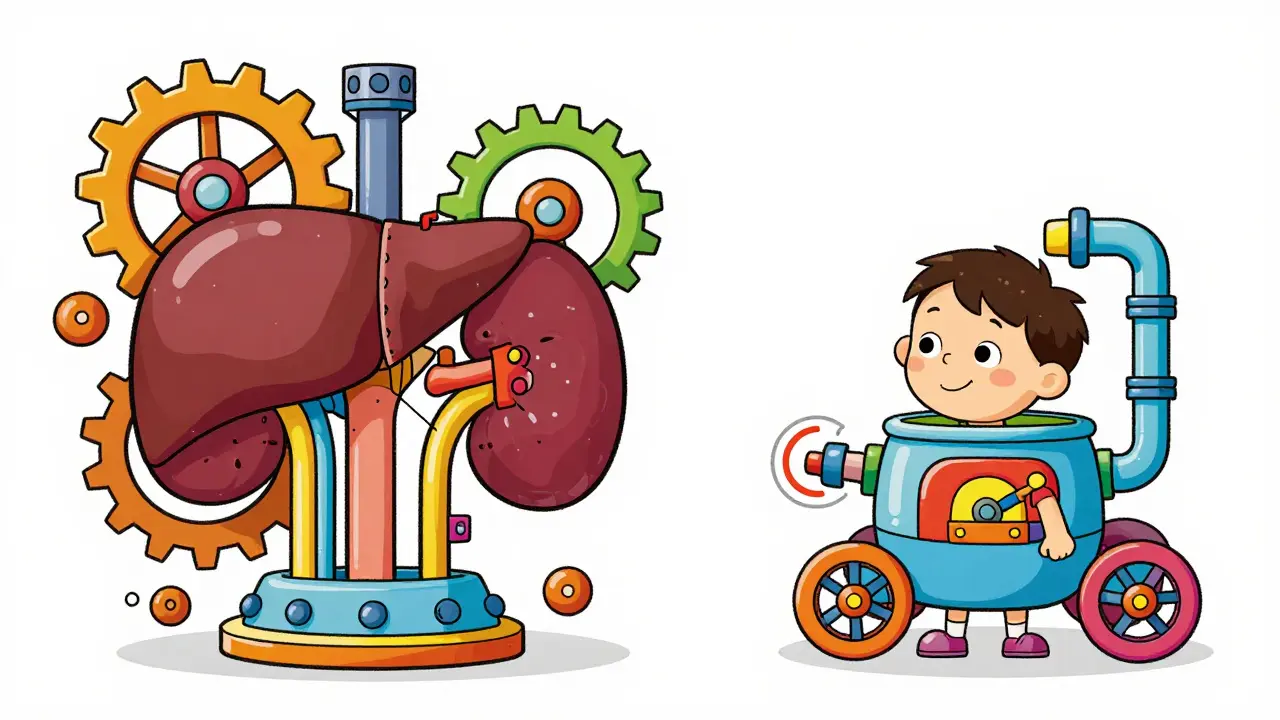
Giving medicine to a child isn't as simple as just using a smaller spoon. Many people assume kids are just "mini adults," but their bodies process drugs completely differently. From how their kidneys filter waste to how their livers break down chemicals, the internal machinery of a child is in a constant state of change. This is why using the wrong formulation or a guessed dose can be dangerous. According to the CDC, inappropriate medication use is behind about 4% of pediatric hospital admissions, and nearly 18% of hospitalized children suffer from adverse drug reactions.
Why Weight Matters More Than Age
If you look at a bottle of children's medicine, you'll often see age brackets. While these are helpful shortcuts, they aren't precise. In the medical world, the gold standard is weight-based dosing (mg/kg). Why? Because a 4-year-old who is in the 95th percentile for weight needs a different amount of medicine than a 4-year-old who is very petite.
For example, when treating common infections, clinicians use specific targets. For certain oral conditions, children from 3 months up to 40 kg might need 25-45 mg/kg/day of a medication, split into several doses. If you're dealing with pain, kids under 12 typically need 4-10 mg/kg per dose of specific analgesics every 6 to 8 hours. If you just guess based on age, you risk either under-treating the illness or hitting a toxicity level that the child's kidneys can't handle.
The Right Form for the Right Age
Have you ever tried to give a pill to a two-year-old? It's nearly impossible. This is where "formulation" comes in. The World Health Organization emphasizes that the form of the medicine must match the child's ability to take it. For kids under 5, liquid syrups, chewable tablets, or orally disintegrating tablets are the only real options. Older children can usually handle standard tablets.
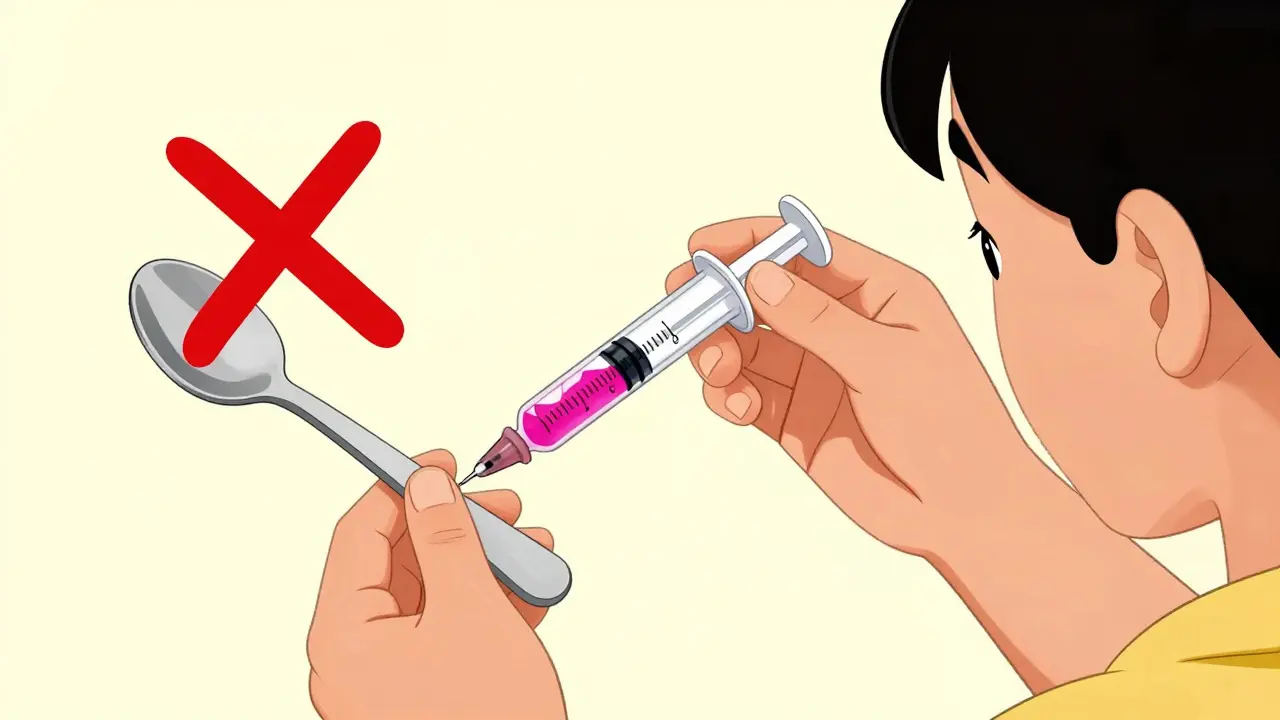
The struggle is real for parents. A study from the Children's Hospital of Philadelphia found that 42% of caregivers make dosing errors because they use non-standard measuring devices-like a kitchen spoon-instead of the precise oral syringe provided with the medicine. When a dose is as small as 2.5ml, a tiny slip can mean a big difference in the amount of drug the child receives.
| Age Group | Preferred Formulation | Dosing Basis | Key Consideration |
|---|---|---|---|
| Neonates (0-27 days) | Highly concentrated liquids | Strict mg/kg | Immature liver/kidney function |
| Infants & Toddlers (1mo - 23mo) | Liquid / Drops | Weight-based | Taste aversion & choking risk |
| Young Children (2 - 11 years) | Chewables / Syrups | Weight-based | Palatability & adherence |
| Adolescents (12+ years) | Tablets / Capsules | Adult or weight-based | Pubertal metabolic changes |
Medications to Approach With Caution
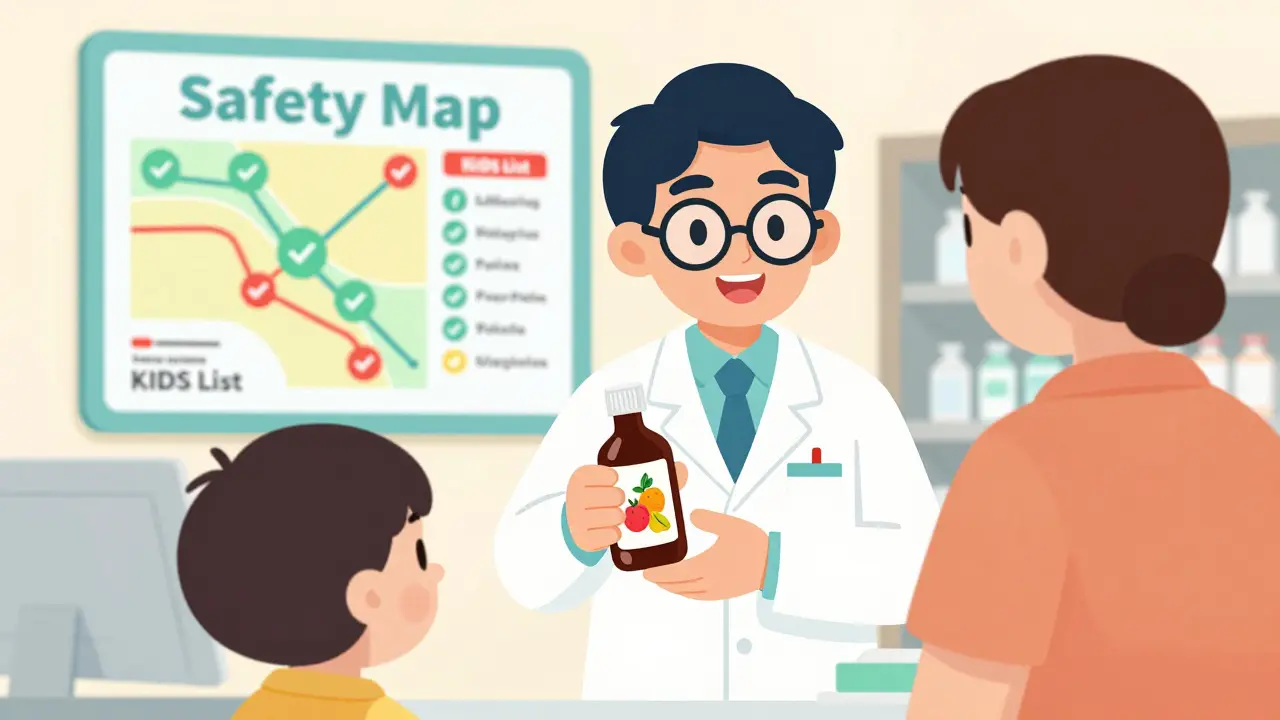
Some drugs that are perfectly safe for adults can be toxic or even fatal for children. To help doctors, the Pediatric Pharmacy Association created the KIDs List (Key Potentially Inappropriate Drugs in Pediatrics). This isn't just a suggestion; it's a safety map of what to avoid.
For instance, codeine and tramadol are strictly flagged as "avoid" for all children. Why? Because some children metabolize these opioids too quickly, which can lead to sudden respiratory failure. Similarly, aspirin is avoided in children due to the risk of Reye's syndrome, a rare but devastating condition that causes swelling in the liver and brain. Instead, parents are steered toward acetaminophen or ibuprofen.
Even some asthma medications require a watchful eye. Montelukast is listed as "use with caution" for everyone under 18 because it can cause significant sleep disturbances and mood changes in some kids.
Antibiotics: Avoiding the Resistance Trap
One of the biggest headaches in pediatric care is the misuse of antibiotics. About 30% of pediatric outpatient visits involve inappropriate antibiotic prescribing, which fuels the rise of superbugs. The go-to for most ear infections is amoxicillin, which works for about 87% of cases. However, when parents push for "faster" or "stronger" drugs, they might end up with fluoroquinolones. These are generally avoided in anyone under 18 because they can cause cartilage toxicity-essentially damaging the growing joints of a child.
If your child is allergic to penicillin, doctors might use azithromycin. While it's convenient because it's taken less often, it's not always the first choice because resistance rates in *Streptococcus pneumoniae* are quite high, ranging from 25% to 40%.
Practical Tips for Stress-Free Dosing
Getting a toddler to take bitter liquid medicine can feel like a battle of wills. To make it easier and safer, follow these ground rules:
- Ditch the kitchen spoon: Only use the oral syringe or dosing cup that came with the medication. If you lost it, ask the pharmacist for a new one.
- Double-check the math: If the dose is based on weight, write the calculation down. Decimal point errors are the most common cause of pediatric medication mistakes.
- Ask about flavors: Some medications, like oseltamivir for flu, now come in fruit flavors. This simple change has been shown to increase how often kids actually finish their treatment by nearly 60%.
- Verify the concentration: Not all "Children's Tylenol" is the same concentration. Check how many milligrams are in each milliliter (mg/ml) before pouring.
Can I just give my child a smaller dose of my adult medicine?
No. Adult medications are formulated for adult metabolism and weight. Some adult pills are too concentrated to be accurately split, and some ingredients are dangerous for children. Always use a product specifically labeled for pediatric use.
Why does the doctor ask for my child's weight every single visit?
Because pediatric dosing is almost always calculated as milligrams per kilogram (mg/kg). Even a few pounds of growth can change the required dose of a medication to ensure it is both effective and safe.
What should I do if my child spits out half of their liquid medicine?
Don't automatically give another full dose, as this could lead to overdosing. Contact your pediatrician or pharmacist to determine if a partial redose is necessary based on the specific medication.
Is ibuprofen safe for all children?
Ibuprofen is generally safe and a common alternative to aspirin, but it carries a higher risk of gastrointestinal irritation (gastritis) than acetaminophen. It should be given with food or milk to protect the stomach lining.
What is the KIDs List and why does it matter?
The KIDs List is a professional guide that identifies medications that are potentially inappropriate for children. It helps doctors avoid drugs that could cause life-threatening side effects, like respiratory depression from certain opioids.
What to Do Next
If you're unsure about a dose, the fastest way to get an answer is to call your pharmacist. They are the experts in formulation and can tell you if a specific syrup concentration matches your doctor's orders. If you're managing a child with complex needs who takes five or more medications, ask for a "medication review" to check for drug-drug interactions.