
Many people believe they’re allergic to antibiotics-especially penicillin-because they had a rash, stomach upset, or felt dizzy after taking one years ago. But here’s the truth: penicillin allergy is often misdiagnosed. About 10% of people in the U.S. say they’re allergic, but less than 1% actually are when tested properly. That means millions are avoiding safe, effective, and cheaper antibiotics out of fear, not fact. If you’ve been told you’re allergic to penicillin or another antibiotic, getting tested isn’t just helpful-it could change how you’re treated for every infection from now on.
Why Testing Matters
If you’re labeled allergic to penicillin, doctors often switch you to broader-spectrum antibiotics like vancomycin, clindamycin, or fluoroquinolones. These drugs are more expensive, less targeted, and increase your risk of side effects and antibiotic-resistant infections. Studies show patients with unconfirmed penicillin allergies get these stronger drugs 69% more often. That adds up to nearly $6,000 extra in healthcare costs per person every year. Worse, it fuels the global crisis of antibiotic resistance. The good news? Allergy testing for beta-lactam antibiotics like penicillin, amoxicillin, and ampicillin is accurate, safe, and widely available. When done right, a negative test result means you’re 95-98% likely not allergic. That opens the door to safer, cheaper, and more effective treatment for everything from ear infections to pneumonia.What You Need to Do Before Testing
Preparation is the most important step-and the one most people mess up. You can’t just show up and expect accurate results. Your body needs to be free of medications that hide allergic reactions.- Stop all first-generation antihistamines like diphenhydramine (Benadryl) and hydroxyzine at least 72 hours before your appointment.
- Stop second-generation antihistamines like cetirizine (Zyrtec), loratadine (Claritin), fexofenadine (Allegra), and levocetirizine (Xyzal) for a full 7 days. These are common in cold and allergy meds, so check labels carefully.
- If you take tricyclic antidepressants like doxepin, stop them 14 days before testing. These also block histamine and can interfere with results.
- Don’t stop blood pressure meds like beta-blockers or ACE inhibitors unless your doctor tells you to. But do tell your allergist you’re taking them. Beta-blockers can mask early signs of anaphylaxis, and ACE inhibitors can make reactions harder to treat.
- Bring a full list of every medication, supplement, and herbal product you take. Even over-the-counter stuff matters.
Missing one of these steps can lead to a false negative-meaning you’re told you’re not allergic when you actually are. That’s dangerous. Follow the rules exactly.
What Happens During the Test
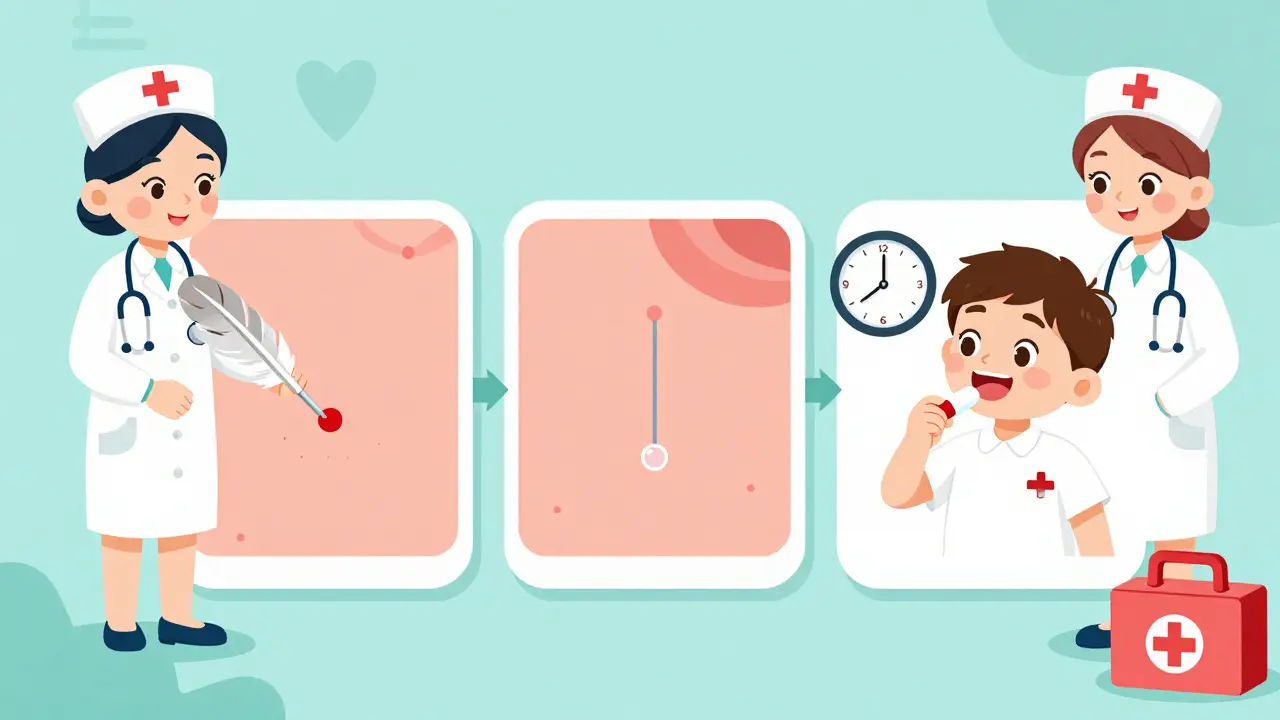
Testing is done in three steps, usually over 2-3 hours. It’s done in a clinic or hospital setting where emergency equipment is on hand.- Skin prick test: A tiny drop of penicillin solution is placed on your skin, then the surface is lightly pricked with a small plastic device. It feels like a quick mosquito bite. No needles. No pain. If you’re allergic, a red, itchy bump will appear within 15 minutes.
- Intradermal test: If the skin prick is negative, a small amount of the solution is injected just under the skin with a thin needle. This forms a tiny bubble. Again, redness or swelling over 3mm means a positive reaction.
- Oral challenge: If both skin tests are negative, you’ll be given a small dose of the antibiotic-usually amoxicillin or penicillin-in pill form. You’ll be watched for 30 minutes. Then you’ll get the full dose and monitored for another 60 minutes. Most people feel nothing. A few get mild itching or a rash. Only about 1 in 1,600 people have a serious reaction.
Throughout the whole process, epinephrine, antihistamines, and breathing treatments are kept ready. But serious reactions are extremely rare. The risk of anaphylaxis during testing is about 0.06%-lower than the risk of being struck by lightning.
What the Results Mean
A positive skin test means you likely have a true IgE-mediated allergy. That means your immune system reacts quickly to the drug. You should avoid it and carry an epinephrine auto-injector if you’re at risk of future exposure. A negative test means you’re not allergic. You can safely take penicillin and related antibiotics. Your medical records will be updated, and you’ll be able to use cheaper, more effective drugs going forward. But here’s something many don’t know: allergies can fade. About half of people who had a severe reaction to penicillin as a child lose their allergy within 5 years. By 10 years, 80% no longer react. If you were told you were allergic years ago, retesting is worth it-even if you haven’t taken penicillin since.What to Expect After Testing
Most people feel fine right after. Some report mild itching or redness at the test site. That’s normal and usually goes away in a few hours. If you get delayed itching or swelling 4-8 hours later, apply hydrocortisone cream. That happens in about 15% of cases. Don’t be surprised if your doctor asks you to take a full dose of the antibiotic at home the next day. This is called a “home challenge” and is safe for low-risk patients under supervision. A recent study at UCSF showed 95% success with this method.Real Benefits, Real Savings
One patient in Birmingham had osteomyelitis-a bone infection. She was told she was allergic to penicillin, so she was put on daptomycin, which costs $1,850 per dose. After testing proved she wasn’t allergic, she switched to penicillin at $12 a dose. Her annual antibiotic bill dropped from $67,525 to $4,380. That’s not rare. Every time someone gets de-labeled as allergic, it saves the healthcare system an average of $5.70 for every $1 spent on testing. That’s because fewer broad-spectrum antibiotics are used, fewer infections become resistant, and hospital stays get shorter by nearly two days on average.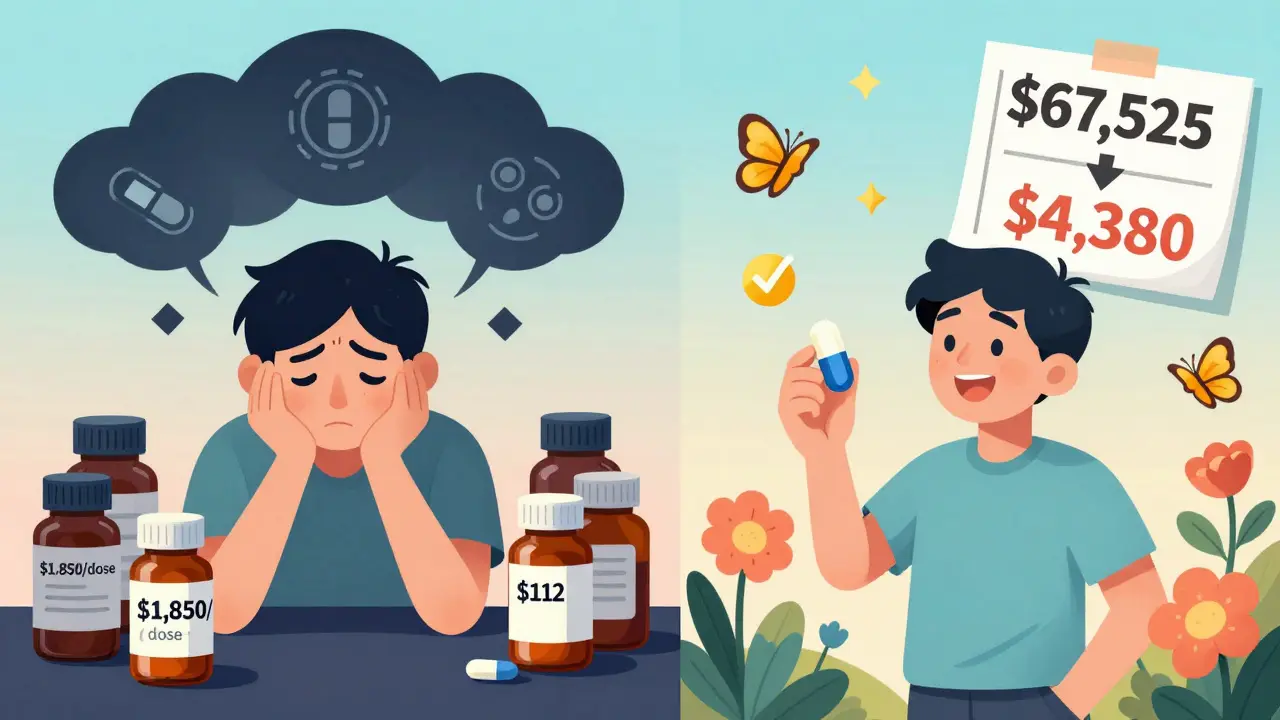
Who Should Get Tested?
You should consider testing if:- You were told you’re allergic to penicillin or amoxicillin as a child
- You’ve avoided penicillin-based antibiotics for years
- You’ve had a rash after taking an antibiotic but no breathing trouble or swelling
- You’re facing surgery or an infection and need the best antibiotic
- You’re on multiple antibiotics and experiencing side effects
If you’ve had anaphylaxis, hives, or swelling with breathing trouble, you should still get tested-but only under strict supervision. Don’t assume you’re allergic forever.
What If There’s No Allergist Near You?
In rural areas or places without allergy specialists, access is still a problem. Only 17% of primary care providers follow current testing guidelines. But things are changing. Telemedicine programs are now helping patients safely complete oral challenges at home under video supervision. By 2027, 75% of U.S. hospitals are expected to have formal de-labeling programs. You might not need to travel far.Ask your GP or pharmacist for a referral to an allergist. If they say it’s not necessary, ask them to check the 2022 AAAAI/IDSA guidelines. You have the right to accurate information about your health.
What’s Next for Testing?
Right now, skin testing is the gold standard. Blood tests for penicillin allergy are not reliable and shouldn’t be used. But a new NIH-funded project is developing a point-of-care blood test that could replace skin testing by 2028. That could make testing faster, cheaper, and available in every clinic.For now, skin testing is your best bet. It’s safe, proven, and life-changing.
Can I eat or drink before my allergy test?
Yes. You can eat and drink normally before your test. Fasting is not required. But avoid alcohol and large meals right before the appointment, as they can make you feel lightheaded during monitoring.
How long does the whole process take?
Most testing takes 2 to 3 hours. Skin tests take 15-20 minutes each. The oral challenge adds another 90 minutes of monitoring. You’ll be able to go home the same day.
Will the test hurt?
The skin prick feels like a quick, light pinch. The intradermal injection is a tiny needle jab-less painful than a flu shot. The oral challenge is just swallowing a pill. Most people say it’s much easier than they expected.
Can I get tested for other antibiotics besides penicillin?
Penicillin and related beta-lactams are the only antibiotics with standardized testing. For other drugs like sulfa, vancomycin, or cephalosporins, testing is less reliable and usually only done in special cases. If you’re unsure, your allergist can advise whether testing is possible.
What if I’m pregnant and think I’m allergic?
Testing is safe during pregnancy and often recommended. Untreated infections are riskier than the test. If you need antibiotics for a UTI or group B strep, knowing whether you’re truly allergic helps your doctor choose the safest option for you and your baby.
Will my insurance cover this?
Most insurance plans in the U.S. and U.K. cover allergy testing for antibiotics because it’s proven to reduce overall healthcare costs. Check with your provider, but if they say no, ask for a letter of medical necessity from your doctor.
Can I get retested if I was told I’m allergic years ago?
Absolutely. Allergies to penicillin often fade over time. If you haven’t taken it since childhood or haven’t had a reaction in over 5 years, retesting is strongly recommended. You might find you’re not allergic anymore.
Comments (14)
Skye Kooyman
January 24, 2026 AT 11:48I got told I was allergic to penicillin at 8 after a rash. Turned out I wasn't. Best $200 I ever spent.
rasna saha
January 26, 2026 AT 02:38This is so important. In India, so many people avoid antibiotics because of old rashes. I had a cousin who got sick for weeks because they wouldn't give her the right meds. So glad someone's talking about this.
SWAPNIL SIDAM
January 27, 2026 AT 16:04My uncle died because they gave him the wrong antibiotic. He wasn't allergic. They just assumed. This needs to be taught in schools.
Mohammed Rizvi
January 28, 2026 AT 19:44So let me get this straight. We're spending billions on fancy antibiotics because doctors won't bother to do a 2-hour skin test? That's like refusing to check your tire pressure and then blaming the road for your blowout.
eric fert
January 30, 2026 AT 16:34I get that testing is good, but let's be real - the whole penicillin allergy thing is a myth peddled by Big Pharma to sell you more expensive drugs. They don't want you to know you can just take amoxicillin and be done with it. Also, I've been on 14 different antibiotics in 5 years and never had a reaction. They're all poison anyway. The body doesn't need antibiotics. Your immune system can handle it. I've been fasting and doing cold plunges since 2018. My infections cleared up faster. The system is rigged.
Dan Nichols
January 31, 2026 AT 03:32The data here is solid but the article ignores that skin testing has false positives too. You're not accounting for IgG mediated reactions or delayed hypersensitivity. Also the 95-98% claim only applies to IgE mediated which is a subset. Most people don't even know what IgE is. This is misleading. And why is everyone assuming penicillin is the only one? Cephalosporins cross react. The guidelines are outdated. You need to cite the 2023 JAMA study on cross reactivity rates. Not the 2022 one.
Renia Pyles
February 1, 2026 AT 05:31So you're telling me I should just trust a doctor who didn't even ask me about my 2010 rash? I had a full body rash and my throat closed. You think that's not an allergy? You're just trying to make people take dangerous drugs because you're paid by the hospital. I'm not your lab rat.
Peter Sharplin
February 1, 2026 AT 19:25I'm an ER doc. I see this every week. Someone comes in with pneumonia, allergic to penicillin, gets clindamycin, gets C. diff, ends up in ICU. We test them the next day - negative. They go home on amoxicillin in 48 hours. It's not magic. It's just medicine. If you were told you were allergic as a kid, get tested. It's not a big deal. It's literally the easiest thing you can do to save your own life.
Betty Bomber
February 3, 2026 AT 01:32I got tested last year. Zero reaction. My doctor updated my chart and I cried. I've been avoiding every antibiotic since I was 12. Now I can take amoxicillin for my UTI. My insurance saved $4,000. I'm not a hero. I just followed instructions.
Aishah Bango
February 3, 2026 AT 05:08I'm not saying you shouldn't get tested, but what about the people who actually are allergic? You're making it sound like everyone who says they are is just being dramatic. My sister had anaphylaxis. Twice. You think she's doing this for attention? This isn't a game. Don't erase real trauma because you want to save money.
Simran Kaur
February 4, 2026 AT 17:13In India, my aunt was told she was allergic to penicillin after a fever rash. She never took it again. Last year she got a bad infection. The doctor gave her a drug that made her dizzy for weeks. We finally got her tested - negative. She's been fine since. This isn't just about money. It's about dignity. You deserve to be treated right.
Neil Thorogood
February 6, 2026 AT 12:43I got tested. Negative. Took amoxicillin like a boss. Then I got a rash. 24 hours later. So I'm not allergic? Or am I? Now I'm confused. Maybe I'm just allergic to modern medicine. 🤷♂️
Geoff Miskinis
February 7, 2026 AT 14:30This article is a textbook example of performative healthcare. You're reducing a complex immunological phenomenon to a checklist. Do you think the immune system operates on a binary? Of course not. You're commodifying fear to push a cost-saving agenda. And let's not forget the placebo effect of de-labeling - patients feel better because they believe they're no longer allergic, not because the biology changed. This is not medicine. It's behavioral economics dressed in scrubs.
Rakesh Kakkad
February 8, 2026 AT 03:30I am writing to you with the utmost respect and formal decorum. As a senior healthcare administrator in Delhi, I must express my profound concern regarding the informal tone of this article. The use of colloquialisms such as 'you're not allergic' and 'it's just a pill' undermines the gravity of immunological science. Furthermore, the inclusion of emoticons is an affront to professional medical communication. I have attached a 12-page white paper on the proper nomenclature for antibiotic hypersensitivity, which I urge you to review before publishing any further content. 🙏