
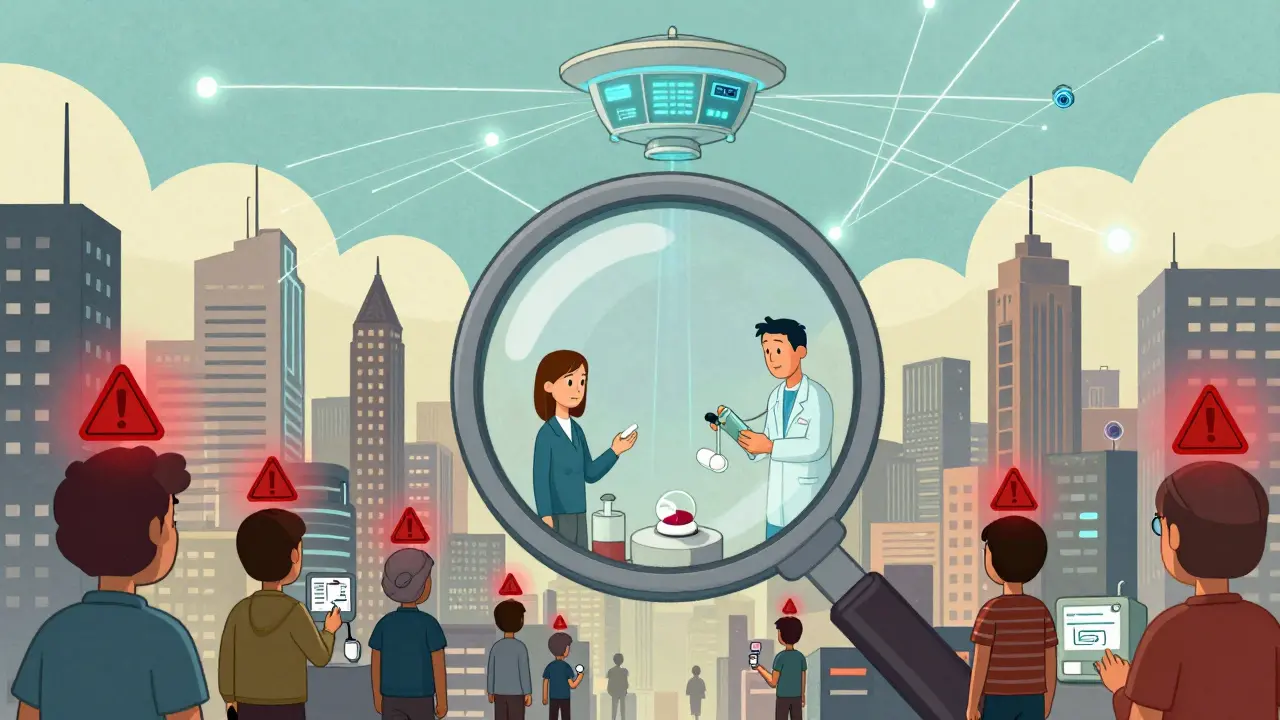
Side Effect Detection Calculator
How Many Reports Are Needed?
Based on FDA data showing only 6-10% of adverse events are reported, this tool demonstrates the statistical challenge of detecting rare side effects.
Signal Detected
To detect this side effect with confidence, you'd need at least reports.
With current reporting rates, you'd need to monitor users to see this side effect.
When a new drug or medical device hits the market, it’s easy to assume it’s been thoroughly tested. Clinical trials involve hundreds or even thousands of patients, right? So what could possibly go wrong? The truth is, some dangers only show up when millions of people start using the product - not just the carefully selected group in a trial. That’s where post-market surveillance comes in. It’s not a backup plan. It’s the real safety net.
Why Clinical Trials Aren’t Enough
Clinical trials are designed to prove a drug or device works - not to catch every possible side effect. Participants are usually healthy adults, free of other illnesses, and closely monitored. They don’t represent the real world. Elderly patients with five different conditions? Pregnant women? People taking six other medications? Those groups are often left out. And even if they’re included, the trial might only last six months. What if a side effect takes three years to appear? Take the case of Vioxx, a painkiller pulled from shelves in 2004. It was approved after trials with about 5,000 people. But once millions started using it, the risk of heart attacks and strokes became clear. That’s not a failure of the trial - it’s a limitation. Trials are snapshots. Post-market surveillance is the full movie.How Side Effects Actually Get Found
There’s no single magic system. It’s a patchwork of reports, data mining, and patient voices. In the U.S., the FDA runs MedWatch, a voluntary reporting system. Doctors, nurses, pharmacists, and even patients can submit reports when something unusual happens after taking a medication or using a device. But here’s the catch: experts estimate only 6% to 10% of actual adverse events are ever reported. Many doctors don’t have time. Patients don’t know how. And sometimes, they just assume the reaction is normal. In Europe, the EudraVigilance database collects over 1.5 million reports a year. It’s more structured, but still relies on people speaking up. The real breakthroughs come from active surveillance - systems that don’t wait for reports. The FDA’s Sentinel Initiative digs into electronic health records from over 300 million Americans. It looks for patterns: suddenly, more people with a certain condition are being hospitalized after starting a new drug. That’s a red flag. For medical devices, the story’s different. A pacemaker doesn’t cause nausea - it might fail. Or the wire could break. Or a surgeon might use it wrong. That’s why the EU’s Medical Device Regulation (MDR), which took full effect in 2024, requires manufacturers to run Post-Market Clinical Follow-up (PMCF) studies. These aren’t just reports. They’re active, planned studies tracking real patients over time. If a new type of hip implant starts showing higher-than-expected loosening after five years, PMCF catches it before it becomes a crisis.The Hidden Problem: Underreporting
You can have the best system in the world, but if no one uses it, it’s useless. A 2021 Johns Hopkins study found only 12% of patients even knew about MedWatch. Most think side effects are their fault - “I must’ve eaten something bad,” or “The pain will go away.” Doctors are just as guilty. A cardiologist in Boston told a Medscape forum she reported a dangerous skin reaction to a new blood thinner - and never heard back. Why report again if it feels like shouting into a void? This gap is dangerous. The FDA admits that passive systems like MedWatch miss most events. That’s why regulators are pushing for more automated tools. AI now scans social media, patient forums, and even pharmacy records looking for clusters of complaints. One company, Oracle Health, says its AI spots safety signals 40% faster than traditional methods. That’s not sci-fi - it’s happening now.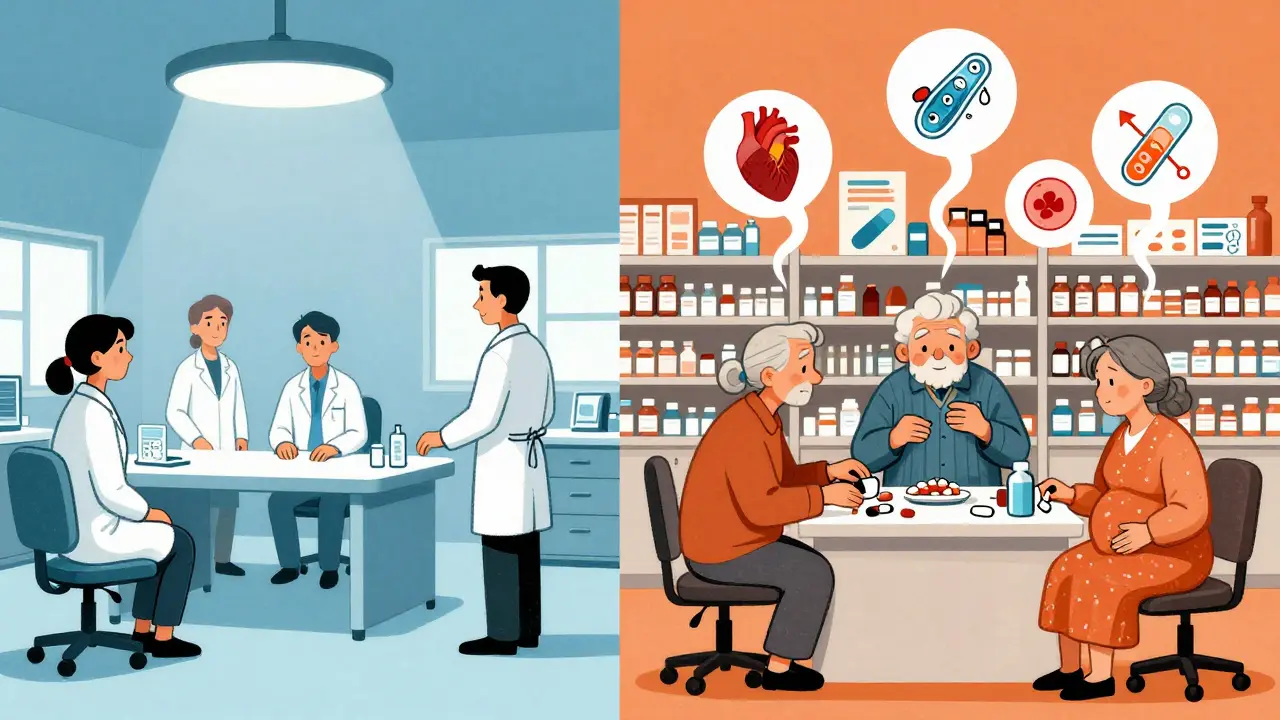
Real-World Impact: When Surveillance Saves Lives
Post-market surveillance isn’t just about pulling drugs off shelves. It’s about making them safer while they’re still in use. In 2020, a new diabetes drug showed a spike in rare pancreatitis cases through EudraVigilance. Instead of recalling it, regulators updated the prescribing guidelines. Doctors now check liver enzymes before prescribing it. Patients get warning labels. Thousands avoided serious harm. Another example: a popular knee replacement device started showing higher failure rates in younger, more active patients. PMCF data revealed the implant’s design didn’t hold up under high impact. The manufacturer redesigned the component. People who already had it got free check-ups. No mass recall. Just smarter use. And sometimes, the system finds benefits too. A drug approved for depression was later found to reduce migraines in a subset of users. That’s not a side effect - it’s a new use. Post-market surveillance doesn’t just catch danger. It uncovers hidden value.The Human Cost of Weak Systems
It’s not just about data. It’s about trust. A 2023 survey by Emergo by UL found 63% of medical device companies struggled to meet EU MDR requirements. Why? Not because they’re lazy - because they’re under-resourced. One quality assurance worker on Reddit said the new rules doubled their workload without more staff. Burnout is real. And the consequences? A 2021 study in JAMA Internal Medicine found only 29% of FDA-mandated post-approval studies were completed on time. The average delay? Over three years. That’s three years where patients might be exposed to risks that could’ve been caught. In low- and middle-income countries, only 28% have functional pharmacovigilance systems. That means millions of people are using medicines with no one watching for side effects. That’s not just a gap - it’s a global health injustice.
What Needs to Change
The tools are getting better. AI, real-world data, and patient apps are making surveillance faster and smarter. But the system still relies too much on human effort - and too little on structure. Here’s what’s needed:- Make reporting easy - Patients should be able to report side effects with one tap in their pharmacy app.
- Pay doctors to report - Time is money. If reporting takes 10 minutes, they need compensation.
- Share data across borders - A side effect in Germany should trigger alerts in Canada and Australia.
- Require transparency - If a company gets a safety signal, the public should know - not just regulators.
What You Can Do
You don’t need to be a scientist to help. If you or someone you know has an unexpected reaction to a medicine or device - report it. In the U.S., go to fda.gov/medwatch. In the EU, contact your national health authority. Even if you’re not sure it’s related, report it. One report might be noise. Ten thousand? That’s a signal. And if you’re a patient - ask your doctor: “Is this drug being monitored after approval?” If they don’t know, it’s time they learned.The Bottom Line
Approval doesn’t mean safety. It means the benefits outweigh the known risks - for a small group, under controlled conditions. The real test happens when millions start using it. Post-market surveillance is the only system we have to catch what trials miss. It’s messy, underfunded, and often ignored. But without it, we’d be flying blind. The next time you hear about a drug being pulled from the market, don’t think, “Why didn’t they catch this sooner?” Think, “Thank goodness they caught it at all.”How are side effects reported after a drug is approved?
Side effects are reported through voluntary systems like the FDA’s MedWatch in the U.S. or EudraVigilance in Europe. Healthcare providers, patients, and manufacturers can submit reports when an unexpected reaction occurs. These reports are collected, analyzed, and used to detect patterns that might indicate a safety issue. In some cases, active surveillance systems like the FDA’s Sentinel Initiative automatically scan electronic health records to find unusual spikes in hospital visits or lab results linked to specific drugs.
Why don’t clinical trials catch all side effects?
Clinical trials involve a limited number of people - usually a few hundred to a few thousand - and often exclude older adults, pregnant women, or those with multiple health conditions. Trials are also short, typically lasting months, not years. Rare side effects (affecting fewer than 1 in 1,000 people) or long-term issues (like cancer risk after 5 years) simply won’t show up in these small, controlled studies. Only when millions use the drug in real life do these risks become visible.
What’s the difference between pharmacovigilance and post-market surveillance?
Pharmacovigilance is the specific term for monitoring drug safety after approval - focusing on adverse drug reactions. Post-market surveillance is the broader umbrella that includes pharmacovigilance for drugs, plus monitoring for medical devices, combination products, and other health technologies. So all pharmacovigilance is post-market surveillance, but not all post-market surveillance is pharmacovigilance.
Do medical devices have different post-market rules than drugs?
Yes. Drugs usually cause biological reactions - nausea, liver damage, allergic responses. Devices often fail mechanically or are used incorrectly. That’s why the EU’s MDR requires device makers to run Post-Market Clinical Follow-up (PMCF) studies - active, planned research tracking real patients over time. Drug makers rely more on spontaneous reports, though they also use active surveillance. Device failures can be sudden and catastrophic, so PMCF is designed to catch trends like implant loosening or software glitches before they cause widespread harm.
Can AI really help find side effects faster?
Absolutely. AI tools now scan electronic health records, pharmacy databases, social media, and patient forums to detect unusual patterns. For example, if hundreds of people start posting about dizziness after starting a new antidepressant, AI can flag it within days - not months. Companies like Oracle Health say their AI cuts signal detection time by 40% compared to traditional methods. This doesn’t replace human review, but it helps regulators focus on the most urgent signals.
What happens after a side effect is detected?
Regulators don’t always pull the product. Often, they update the label to warn doctors and patients, restrict use in certain groups, or require new safety studies. In some cases, the manufacturer issues a recall or redesigns the product. For example, a blood thinner might get a new warning about interactions with common antibiotics. The goal isn’t punishment - it’s prevention. The system works best when it catches risks early and makes adjustments before harm spreads.
Are post-market surveillance systems reliable?
They’re the best tool we have - but they’re far from perfect. Underreporting is the biggest problem. Experts say only 6-10% of adverse events are reported. Many systems are slow, underfunded, and fragmented across countries. But when they work - like when a new cancer drug’s rare heart risk was caught before it affected thousands - they save lives. The goal isn’t perfection. It’s continuous improvement.
Comments (12)
Coy Huffman
February 3, 2026 AT 15:32man i just realized how much we rely on people just... telling someone when something goes wrong. like, imagine if your phone had a 'report crash' button that only 6% of users ever pressed. we're basically flying blind half the time. glad they're using AI to scan forums now though. 👍
Susheel Sharma
February 4, 2026 AT 03:18This entire system is a house of cards built on goodwill and negligence. The FDA's passive reporting? A joke. Manufacturers? They bury adverse events like contraband. And don't get me started on how underfunded these systems are. We're not 'monitoring'-we're hoping.
Katherine Urbahn
February 5, 2026 AT 20:21I must emphasize: underreporting is not merely a statistical anomaly-it is a systemic failure of civic responsibility. Patients must be educated, physicians incentivized, and regulatory bodies adequately resourced. To do otherwise is to invite preventable catastrophe.
Alex LaVey
February 6, 2026 AT 10:23I really appreciate how this post breaks it down without fear. It's easy to feel powerless, but knowing that reporting even one weird reaction could help someone else... that's powerful. If you've ever had a strange side effect, just hit that button. You're not overreacting. You're being part of the solution. 🙌
Justin Fauth
February 7, 2026 AT 03:13Let’s be real-America’s system is a dumpster fire compared to Europe’s. EU actually forces companies to track devices long-term. We’re still waiting for doctors to remember to click a form while they’re on their 17th patient of the day. If this were Japan or Germany, we’d have this nailed. But nope. US. Again.
Meenal Khurana
February 7, 2026 AT 11:54Report it. Even if unsure.
Joy Johnston
February 9, 2026 AT 08:49The Sentinel Initiative is genuinely revolutionary. By analyzing real-time, de-identified EHR data from over 300 million Americans, it detects signals that passive reporting would miss by orders of magnitude. This isn’t speculation-it’s evidence-based surveillance. The future of pharmacovigilance is automated, scalable, and proactive. We’re not just catching side effects anymore. We’re preventing them.
Zachary French
February 10, 2026 AT 06:50I’ve been saying this for YEARS. The FDA is basically running a hotline that only gets calls from people who have nothing else to do. Meanwhile, my cousin took that new migraine med and ended up in the ER with liver toxicity. No one asked her to report it. She didn’t know how. And now? She’s scared to take ANYTHING. This isn’t science. It’s a gamble with human lives. And we’re all rolling the dice.
Daz Leonheart
February 10, 2026 AT 18:55I work in a clinic and we get maybe one MedWatch report every 3 months. Honestly? I don’t blame the staff. They’re swamped. But if we had a 2-click option in the EHR-like a little 'Did this seem off?' checkbox-it’d be used. I’d use it. My nurse would. We just need it to be easy. No extra forms. No extra time. Just one tap.
Amit Jain
February 11, 2026 AT 21:44In India, we have no system. People take medicine, get sick, and think it's normal. My aunt had a reaction to a blood pressure pill. She stopped it. No report. No follow-up. We need apps. Simple. Local language. Maybe even WhatsApp bot. One message. That's all.
Ed Mackey
February 12, 2026 AT 06:32I think the real issue is trust. If you report something and nothing happens... why bother? I reported a weird rash from a new statin. Got an auto-reply. Never heard again. So now I just tell my patients: 'if it feels wrong, stop it. And don't waste your time reporting.' That's the sad truth.
Joseph Cooksey
February 13, 2026 AT 15:12Let’s not sugarcoat this: the entire post-market surveillance framework is a monument to bureaucratic inertia. We have the technology to detect a spike in adverse events within hours-AI, real-world data, wearable integration-but we cling to paper forms and voluntary reporting like it’s 1998. And meanwhile, patients die. Not because the science is flawed-but because the system is broken, underfunded, and utterly indifferent. The fact that we call this 'surveillance' is an insult to the word. It’s not surveillance. It’s a funeral pyre waiting to be lit.