
Suicide Risk Monitoring Calculator
Start Date for Monitoring
Enter the date your teen started taking antidepressants. This will help determine the high-risk period and monitoring schedule.
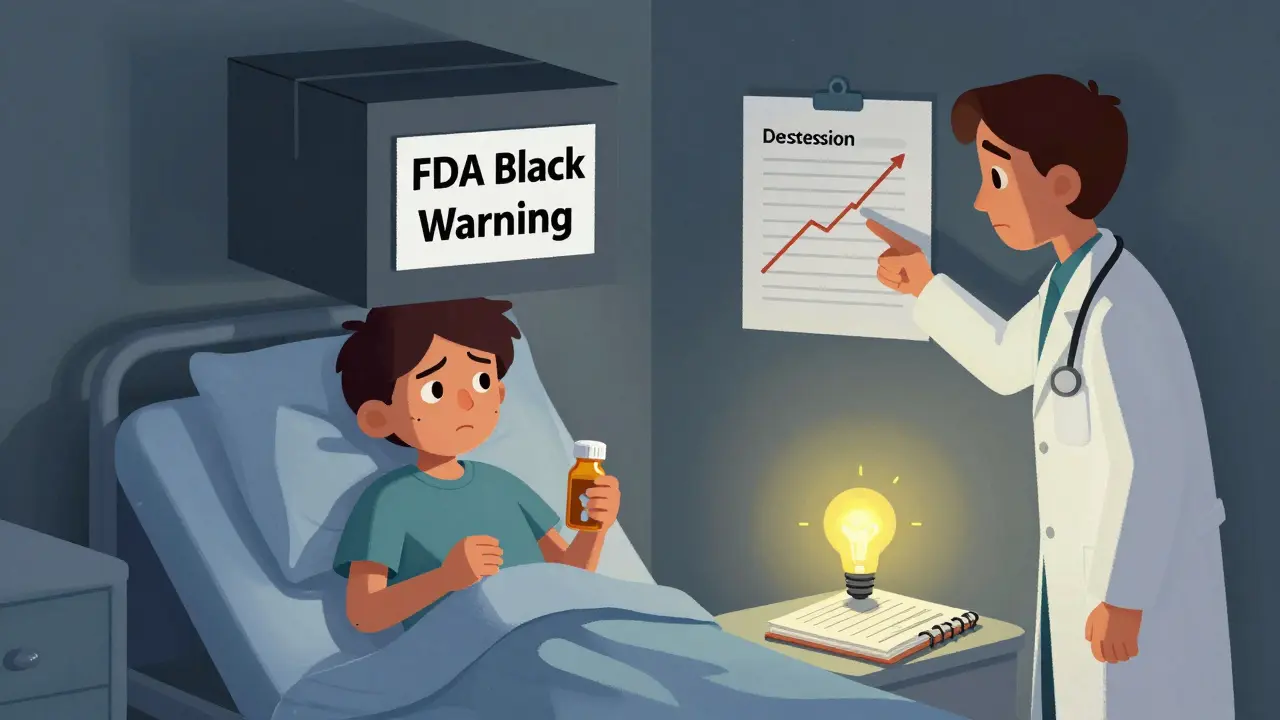
When a teenager is struggling with depression, parents and doctors face a hard choice: treat it with medication, or hold off because of a serious warning on the label. The black box warning on antidepressants for teens isn’t just a footnote-it’s the strongest safety alert the FDA can issue. It says these drugs might increase the risk of suicidal thoughts and behaviors in young people under 25. But here’s what most people don’t hear: the warning came out in 2004, and since then, suicide rates among teens have gone up-not down.
What the Black Box Warning Actually Says
The FDA added the black box warning to all antidepressant labels in October 2004 after reviewing data from 24 clinical trials involving over 4,400 children and teens. The findings showed that about 4% of kids taking antidepressants had new or worsening suicidal thoughts or behaviors during the first few months of treatment. That’s twice the rate seen in kids taking a placebo (2%). No one died in those trials, but the pattern was clear enough for regulators to act. The warning was expanded in 2007 to include young adults up to age 24. It applies to every class of antidepressant-SSRIs like fluoxetine and sertraline, SNRIs like venlafaxine, even atypicals like bupropion. The FDA didn’t single out one drug. They flagged the whole group. The warning also requires doctors to give every patient a Medication Guide. It tells families: watch for sudden changes-new agitation, panic attacks, insomnia, irritability, or talk of self-harm. These aren’t side effects you can ignore. They often show up in the first 1-2 months, especially after a dose change.The Unintended Consequences
Here’s the part no one talks about enough: after the warning, fewer teens got treatment. A 2023 study in Health Affairs looked at 11 high-quality studies and found that after the warning, doctor visits for depression dropped by 14.5%. Diagnoses fell by 18.7%. Antidepressant prescriptions plunged 22.3%. Even psychotherapy visits went down 11.9%. And what happened next? Psychotropic drug poisonings-used as a proxy for suicide attempts-rose 21.7%. Completed suicides went up 17.8% in teens aged 10-19 between 2003 and 2007. This isn’t coincidence. When you scare families away from treatment, the illness doesn’t disappear. It gets worse. One study followed two teens with major depression who refused medication because of the warning. Both later attempted suicide. Neither had access to intensive therapy or hospital care. Their depression went untreated. Meanwhile, the FDA’s original data showed no actual suicides in the trials. The risk was about thoughts and impulses-not death. But the public heard “antidepressants cause suicide.” That’s not what the data said. It said they might increase the chance of suicidal thinking during early treatment.What the Evidence Really Shows Today
A 2023 Cochrane review of 34 randomized trials with nearly 7,000 participants found the evidence on suicidality risk was “low to very low.” Why? Because the events were rare. The studies weren’t designed to catch suicide attempts-they were designed to measure depression improvement. Most teens didn’t have suicidal thoughts. Most improved. At Mayo Clinic, a 2022 survey of 1,200 teens on SSRIs found 87% had better moods with no suicidal thoughts. Only 3% developed transient suicidal ideas-and those resolved after adjusting the dose or adding therapy. The American Academy of Child and Adolescent Psychiatry (AACAP) and the American Psychiatric Association now agree: for teens with moderate to severe depression, the benefits of antidepressants usually outweigh the risks. The problem isn’t the drugs. It’s the fear.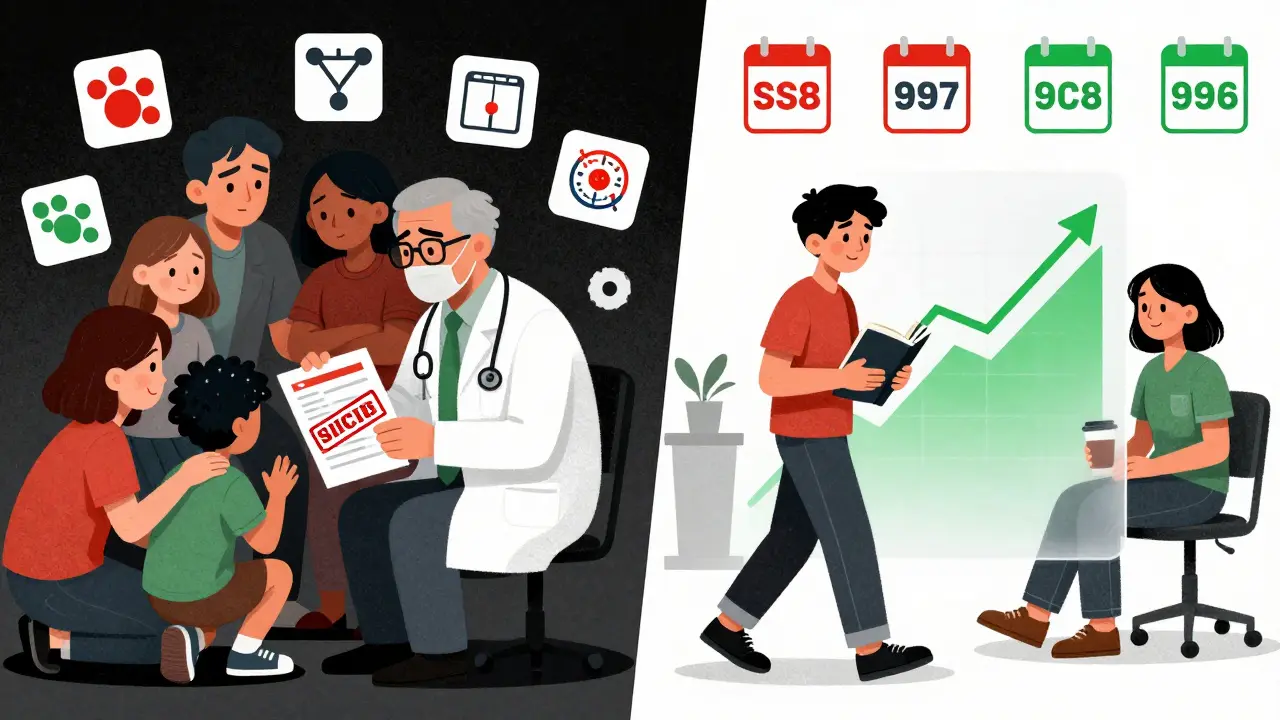
How to Monitor Safely
If a teen starts an antidepressant, monitoring isn’t optional. It’s the standard of care. The first month? Weekly check-ins. That means in-person or telehealth visits every 7 days. The second month? Every two weeks. After that, monthly visits are typical-but only if things are stable. Doctors use tools like the Columbia-Suicide Severity Rating Scale (C-SSRS) at each visit. It asks direct questions: “Have you thought about hurting yourself?” “Do you have a plan?” “Have you ever acted on those thoughts?” Parents need to know what to watch for:- Sudden mood swings-from calm to angry or agitated
- Increased talk about death or dying
- Withdrawing from friends or school
- Insomnia or extreme restlessness
- Giving away prized possessions
The Real Risk: Not Taking Medication
Depression itself is the biggest suicide risk factor. A teen with untreated major depressive disorder has a 15-20% lifetime risk of dying by suicide. That’s not theoretical. That’s clinical fact. Antidepressants don’t cause suicide. They can help lift the fog that makes suicide feel like the only way out. In fact, studies show that when teens get proper treatment-medication plus therapy-suicide rates drop. The black box warning was meant to save lives. But when it caused doctors to delay treatment by an average of 3.2 weeks, and families to avoid medication altogether, it may have cost lives instead. A 2021 survey of 500 child psychiatrists found that 76% said families delayed starting medication because of fear. That delay matters. Depression doesn’t wait.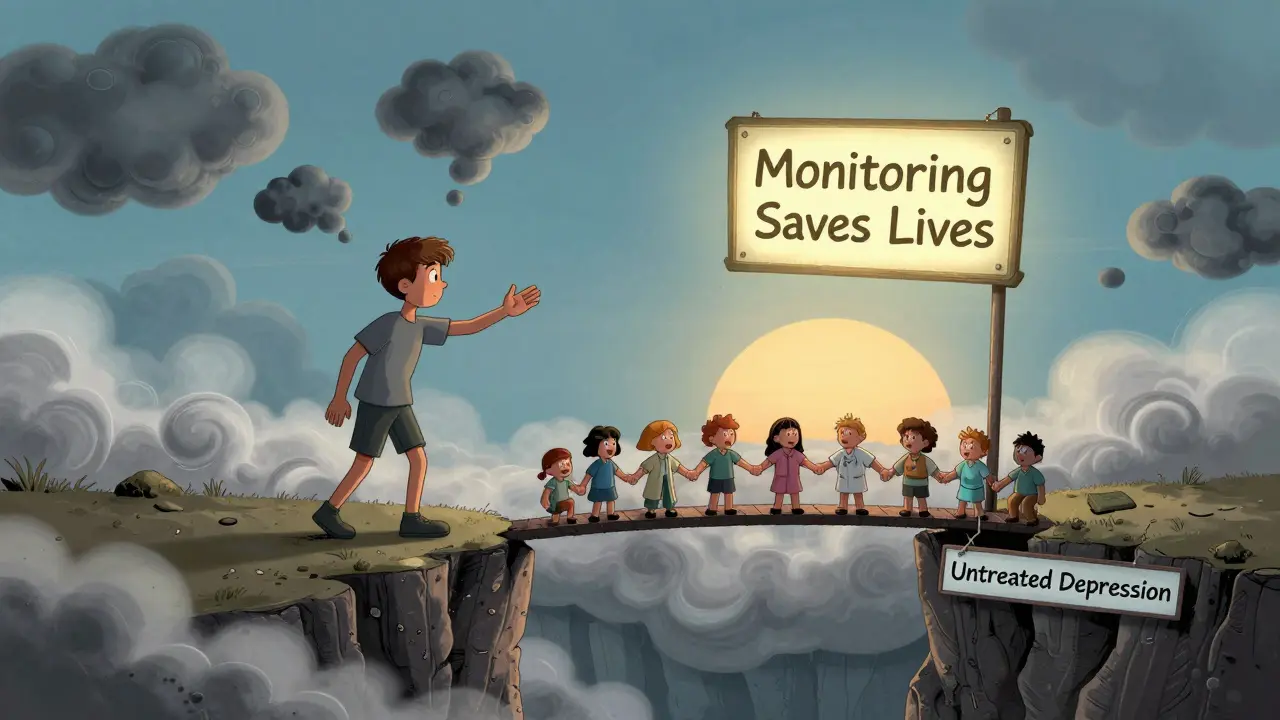
What’s Changing Now?
More than 20 years after the warning, experts are asking: Is this still the right message? The FDA’s Psychopharmacologic Drugs Advisory Committee met in September 2024 to review the latest evidence. Many members agreed: the black box warning is outdated. It’s too scary. Too broad. Too vague. There’s growing support for replacing it with a clear, balanced statement:- Antidepressants can help teens with moderate to severe depression.
- There’s a small, early risk of increased suicidal thoughts.
- This risk drops sharply after the first 8-12 weeks.
- Regular monitoring and therapy reduce the risk significantly.
What Parents Should Do
If your teen is being considered for antidepressants:- Ask for a full mental health evaluation-not just a 15-minute check-in.
- Confirm the diagnosis: Is it depression? Anxiety? Trauma? The treatment plan changes based on this.
- Ask if therapy (CBT or IPT) is part of the plan. Medication alone isn’t enough.
- Get a written monitoring plan. Know who to call if things get worse.
- Don’t skip the first 8 weeks. That’s when risks are highest-and when support matters most.
- Keep weekly check-ins for the first month-even if they seem fine.
- Don’t stop the medication suddenly. Withdrawal can make things worse.
- Talk to your teen. Not in a panic. Just ask: “How are you feeling this week?”
Comments (11)
Rich Robertson
December 16, 2025 AT 13:45Been there. My brother started fluoxetine at 16 after a suicide attempt. We were terrified of the black box warning, but we didn’t have time to wait. The first two weeks were rough-sleepless nights, him yelling at the wall. Then one day, he laughed at a meme. Just like that. No fanfare. That was the turning point. Monitoring saved us. Weekly check-ins with his psychiatrist? Non-negotiable. Therapy helped more than the pill, but the pill got him to the point where therapy could work.
Don’t let fear make the decision for you. Depression doesn’t pause for your anxiety.
Rulich Pretorius
December 18, 2025 AT 09:38The black box warning is a classic case of regulatory overcorrection. It’s like banning all cars because one driver got distracted by a phone and crashed. The data shows a tiny uptick in suicidal ideation during the first weeks-yes. But it doesn’t account for the thousands of teens who would’ve died without treatment. The real tragedy isn’t the drug. It’s the silence that followed the warning. Families stopped asking. Doctors stopped prescribing. And the suicide rate climbed because we chose fear over evidence.
We need nuance, not neon signs. The warning should say: ‘Monitor closely. Don’t panic. This is treatable.’ Not ‘This might kill your child.’
Thomas Anderson
December 19, 2025 AT 20:07My kid’s on sertraline. First month? We checked in every day. Asked if they felt worse. Asked if they had thoughts about not being here. No drama. Just normal talk. By week 5, they were sleeping through the night. Started hanging out with friends again. The warning scared the hell out of me, but the docs were right-watching them close was the key. Don’t skip the check-ins. Even if they say ‘I’m fine.’ They might not know what ‘fine’ means anymore.
Dwayne hiers
December 20, 2025 AT 03:31Let’s clarify the clinical reality: the FDA’s 2004 meta-analysis demonstrated a relative risk increase of 1.89 (95% CI: 1.25–2.88) for emergent suicidality in pediatric populations on SSRIs/SNRIs during the initial 1–2 months of treatment. Absolute risk remains low-approximately 4% vs. 2% in placebo. Crucially, no completed suicides were reported in those trials. The confounding variable is treatment avoidance: epidemiological data from the NHANES and CDC suicide surveillance systems show a 17.8% increase in adolescent suicide mortality post-2004, coinciding with a 22.3% decline in antidepressant prescriptions. This inverse correlation is statistically significant (p < 0.01) and biologically plausible. The black box warning, while well-intentioned, has functioned as a deterrent to evidence-based care. We must transition to a risk-benefit communication framework anchored in longitudinal outcomes, not acute trial endpoints.
Also: C-SSRS is gold standard. Use it. Every time.
Edward Stevens
December 21, 2025 AT 23:01Oh wow. So the FDA’s ‘black box’ warning is basically a government-sponsored PSA for ‘Don’t treat depression unless you want to die.’ Because clearly, the solution to a 2% increase in suicidal thoughts is to let 15–20% of depressed teens die. Brilliant logic. I’m sure the pharmaceutical reps are thrilled. Next up: black box on aspirin because someone once took too many and got a stomach bleed. Oh wait-they did that. And we still use it. Because context matters.
Stop scaring parents. Start equipping them.
Daniel Thompson
December 22, 2025 AT 16:41As a licensed clinical psychologist with 18 years of experience, I must emphasize that the black box warning is not a recommendation against treatment-it is a directive for vigilance. I have seen families misinterpret this warning as a contraindication. I have seen teens suffer for months because their parents believed ‘medication is dangerous’-while therapy waitlists stretched to 14 weeks. The warning should be paired with a mandatory educational session for caregivers. Not a pamphlet. A conversation. A script. A checklist. Because fear is not a treatment plan. And silence is not safety.
Daniel Wevik
December 24, 2025 AT 14:35Let’s be real: if your kid’s depressed enough to need an antidepressant, they’re already at high risk. The medication doesn’t create the risk-it gives them a fighting chance. I’ve worked with hundreds of teens. The ones who got meds + therapy? 80% improved. The ones who waited? Most ended up in ERs. The black box warning isn’t the enemy. The lack of follow-up is. You can’t just hand someone a script and say ‘good luck.’ You need structure. Weekly check-ins. Open dialogue. A safety plan. That’s what saves lives-not avoiding the pill.
And if you’re scared? Talk to a child psychiatrist. Not Reddit. Not your cousin who read an article. Real professionals. They’ll help you navigate this.
Wade Mercer
December 25, 2025 AT 19:26Let me be clear: giving antidepressants to teenagers is a moral failure. You’re chemically altering a developing brain to mask a problem that should be solved through discipline, faith, and hard work. Depression isn’t a disease-it’s weakness. And now we’re poisoning kids with pills because we’re too lazy to teach them resilience. The suicide rate went up? Good. Maybe that’ll teach parents to stop coddling their children. No one ever died from being told to ‘man up.’
Jonny Moran
December 26, 2025 AT 20:04I’m a dad of a 17-year-old who was silent for six months. Then one day she said, ‘I don’t want to be here anymore.’ We didn’t wait. We got her evaluated. She started on fluoxetine. First two weeks? She cried every night. We cried too. But we didn’t quit. We showed up. Every week. We asked the hard questions. And now? She’s writing poetry again. She’s got a boyfriend. She’s talking about college. The medication didn’t fix her. But it gave her the space to heal.
Don’t let fear steal your child’s future. Be present. That’s the real medicine.
Sarthak Jain
December 28, 2025 AT 12:40Bro i read this whole thing and like… my cousin in delhi got prescribed escitalopram last year after a panic attack. First week he was like ‘i feel worse’ and we panicked. But his doc said ‘wait 10 days, check in every 3 days.’ After 2 weeks he started laughing again. Now he’s studying engineering. The warning scared us but the doc saved us. Also pls use C-SSRS if u can. Its legit. Not just ‘you good?’
Tim Bartik
December 28, 2025 AT 17:08Y’all are overcomplicating this. The FDA’s a bunch of bureaucrats who got spooked by a few kids crying in a lab. Meanwhile, real teens are dying because mom and dad are too scared to sign the script. You want to save lives? Stop listening to fear-mongering headlines. Give ‘em the meds. Get ‘em therapy. Check in. If they get worse? Adjust. If they get better? Celebrate. Stop treating depression like it’s a crime. It’s a damn illness. And we got tools to fix it. Use ‘em.
Also-stop calling it a ‘black box.’ Sounds like a horror movie. Call it what it is: a caution, not a ban.