
Nosebleed Risk Checker
This tool helps you assess your risk of nosebleeds caused by medications. Answer a few questions to get personalized prevention recommendations.
Your Risk Assessment
Personalized Prevention Tips
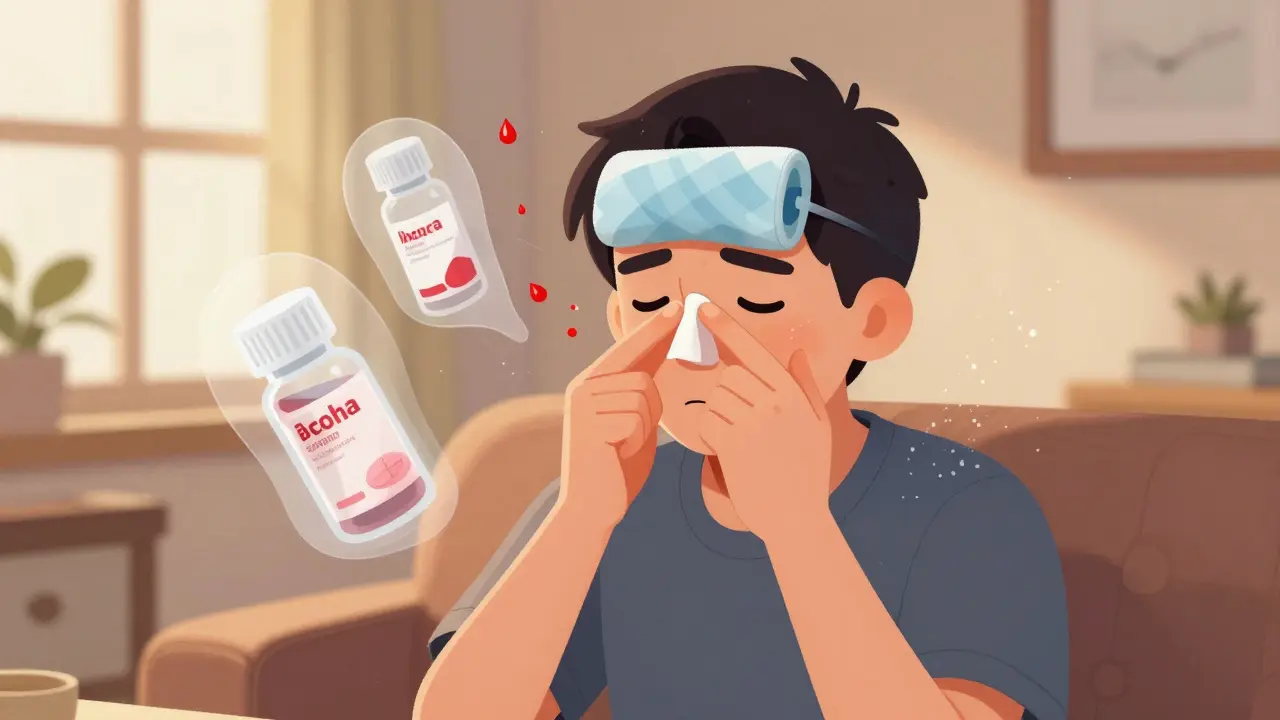
Anyone who’s had a nosebleed knows how startling it can be - sudden blood, panic, and that instinct to tilt your head back. But if you’re taking any kind of regular medication, that nosebleed might not be just bad luck. It could be your medicine. Nosebleeds linked to medications are far more common than most people realize, and understanding why they happen can help you prevent them before they start.
Why Your Medicine Might Be Making Your Nose Bleed
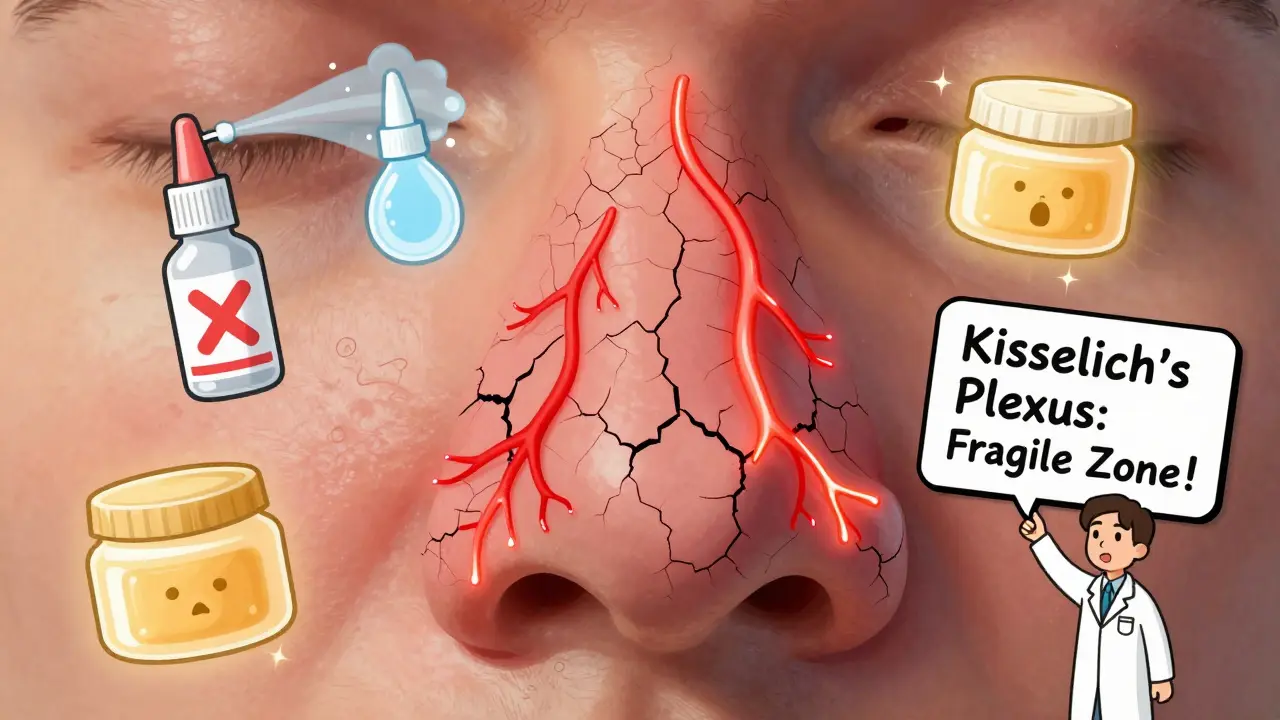
Nosebleeds, or epistaxis, happen when tiny blood vessels in the front of your nose burst. This area, called Kiesselbach’s plexus, has a dense network of capillaries that are easy to damage. Normally, your body handles small injuries without a problem. But certain medications interfere with your body’s natural defenses, making those vessels more likely to bleed - and harder to stop. Two main mechanisms are at play. The first is impaired clotting. Blood-thinning drugs like aspirin, warfarin, and clopidogrel stop platelets from sticking together or slow down clotting factors. Even low-dose aspirin (81mg daily), often taken for heart health, can thin your blood enough to turn a minor nose scratch into a nosebleed. NSAIDs like ibuprofen and naproxen work the same way - they block enzymes that help platelets form clots. A single dose can be enough to tip the balance, especially if your nasal lining is already dry or irritated. The second mechanism is mucosal dryness. Decongestant sprays like oxymetazoline (Afrin) shrink blood vessels at first, giving temporary relief from congestion. But if you use them for more than three days, your nose rebounds with worse swelling and dries out the lining. Antihistamines used for allergies also reduce mucus production, leaving nasal tissues cracked and vulnerable. Think of it like chapped lips - but inside your nose.Medications Most Likely to Cause Nosebleeds
Not all meds carry the same risk. Some are clear culprits:- Aspirin - Even low-dose versions used for heart protection can increase bleeding risk.
- Ibuprofen (Advil, Motrin) and Naproxen (Aleve) - Common pain relievers that thin blood and irritate nasal tissue.
- Warfarin (Coumadin) - A classic anticoagulant that requires regular INR monitoring. Nosebleeds are a known red flag.
- Clopidogrel (Plavix) - Often prescribed after stents or strokes. It affects platelets differently than aspirin but with similar results.
- Oxymetazoline (Afrin) - Decongestant sprays used too long cause rebound congestion and tissue damage.
- Heparin - Can trigger a rare but serious reaction called heparin-induced thrombocytopenia (HIT), which leads to both clotting and bleeding.
Even over-the-counter meds you think are harmless - like daily ibuprofen for arthritis or antihistamines for seasonal allergies - can be the hidden cause of frequent nosebleeds.
Who’s Most at Risk?
Some people are more likely to have medication-related nosebleeds:- Adults over 45 - Blood vessels naturally become more fragile with age.
- People with high blood pressure or atherosclerosis - Higher pressure in vessels means more force when they rupture.
- Pregnant individuals - Hormonal changes cause nasal blood vessels to expand, making them more sensitive to drying or thinning agents.
- Children - They’re more likely to pick their noses, and their nasal lining is thinner. Add in ibuprofen for fever or antihistamines for allergies, and the risk multiplies.
- Those on multiple medications - Combining aspirin with an NSAID, or a decongestant with an antihistamine, raises the risk significantly.
If you’re taking blood thinners and also use NSAIDs regularly, your risk isn’t just doubled - it’s multiplied. Many patients don’t realize these combinations are dangerous until they’re sitting in the ER with a nosebleed that won’t stop.
How to Stop a Medication-Induced Nosebleed
When it happens, don’t panic. Here’s what actually works:- Pinch your nose - Use your thumb and index finger to squeeze the soft part of your nose shut. Don’t just hold it - keep it pinched for 10 to 15 minutes. Set a timer. Most people think they’ve waited long enough after five minutes - they haven’t.
- Stay upright - Sit down and lean slightly forward. Tilting your head back sounds logical, but it just lets blood drain into your throat. You might swallow blood, which can make you nauseous or vomit.
- Apply cold - Hold a cold pack or ice wrapped in a cloth against the bridge of your nose. Cold helps constrict blood vessels.
- Don’t blow or pick - Even after the bleeding stops, leave your nose alone for the next 24 hours. No blowing, no rubbing, no touching.
If the bleeding doesn’t stop after 15 minutes of firm pressure, or if you feel dizzy, lightheaded, or notice bleeding from other places (gums, urine, bruising), get medical help immediately. For those on anticoagulants, even a small nosebleed that lasts more than 10 minutes should be checked.
Prevention: Simple Steps That Actually Work
The best way to handle medication-related nosebleeds is to stop them before they start. Here’s how:- Switch to acetaminophen (Tylenol) - For pain or fever, use acetaminophen instead of NSAIDs. It doesn’t affect platelets or clotting. This single change can cut nosebleed frequency in half for many people.
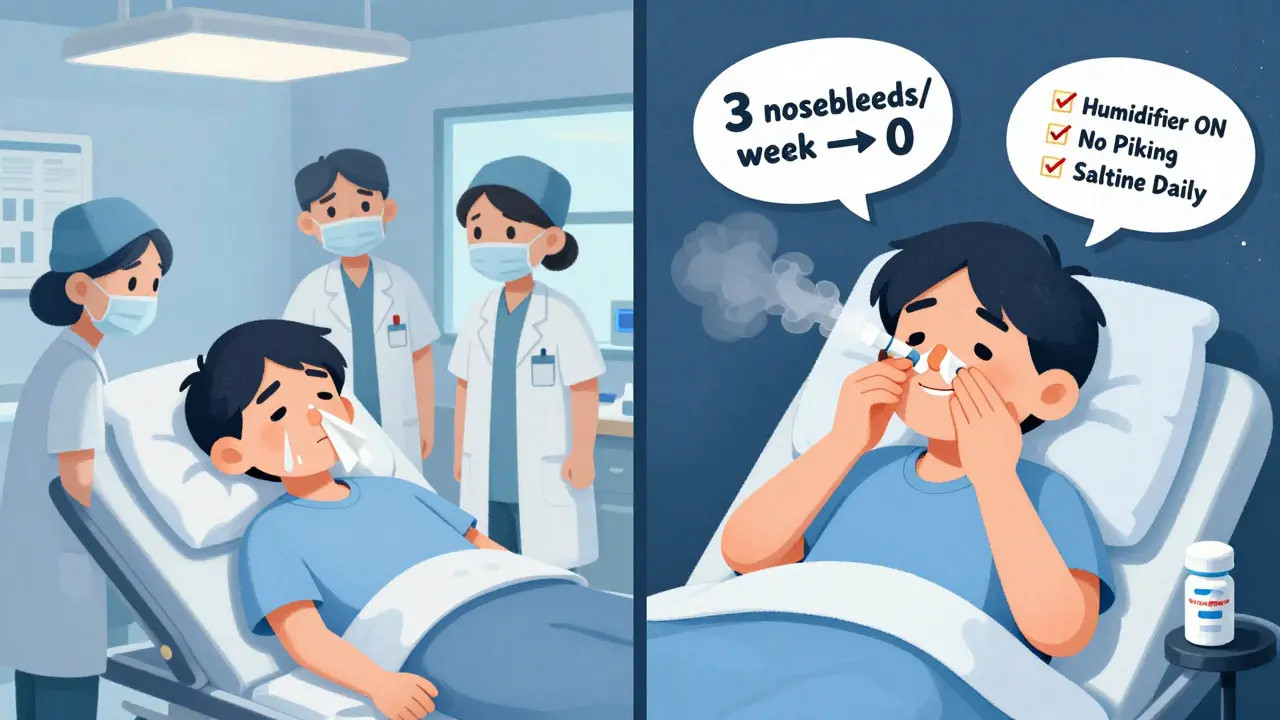
- Moisturize your nose daily - Apply a thin layer of petroleum jelly (Vaseline) inside each nostril, twice a day - morning and before bed. Nasal saline sprays or gels (like Ayr or Ocean) work too. Keep them in your bathroom, your purse, your car. Use them religiously.
- Use a humidifier - Especially in winter, indoor air can drop below 30% humidity. A cool-mist humidifier in your bedroom keeps nasal passages moist. Don’t wait until you’re bleeding - start using it before the dry season hits.
- Limit decongestant sprays - Use them for no more than 3 days in a row. If congestion lasts longer, see a doctor. There are safer alternatives like nasal steroids (fluticasone) that don’t dry out your nose.
- Avoid nose picking - This sounds obvious, but it’s one of the top triggers. Keep fingernails short. If you feel an itch, use a saline spray instead of your finger.
When to Talk to Your Doctor
Never stop taking prescribed medication on your own - especially blood thinners. The risk of a stroke or heart attack is often far greater than the risk of a nosebleed. But you should talk to your doctor if:- You’re having more than three or four nosebleeds in a week.
- You notice bleeding from other areas - gums, bruising, blood in urine or stool.
- You’ve been on the same medication for months and suddenly started getting nosebleeds.
- You’re on warfarin and your INR level has been rising without explanation.
Your doctor or pharmacist can review your full medication list. Sometimes, switching from one NSAID to another, adjusting the dose, or adding a nasal moisturizer can solve the problem without stopping the essential drug. Pharmacists play a key role here - they’re trained to spot these interactions. Ask them during your next refill.
What Not to Do
There are a lot of myths floating around:- Don’t put tissue up your nose - It can stick, tear tissue, and cause more bleeding when you pull it out.
- Don’t use cotton swabs - Even gentle cleaning can damage the delicate lining.
- Don’t assume it’s just allergies - Allergies can cause congestion and irritation, but if nosebleeds started after you began a new medication, that’s the likely trigger.
- Don’t ignore frequent nosebleeds - They’re not normal. Even if they’re mild, recurring ones mean something’s off - and it might be your meds.
Can aspirin cause nosebleeds even if I take it once a day?
Yes. Even low-dose aspirin (81mg daily), often taken for heart protection, can interfere with platelet function enough to cause nosebleeds. The effect builds up over time, so even occasional bleeding can be a sign that aspirin is affecting your nasal blood vessels. If you’re prone to nosebleeds, talk to your doctor about switching to acetaminophen for pain relief.
Is it safe to use nasal spray for nosebleeds?
Oxymetazoline (Afrin) can be used once, briefly, to help stop active bleeding by constricting blood vessels - but only if you haven’t used it in the last 24 hours. It’s not a prevention tool. Using it too often makes nosebleeds worse by drying out the lining and causing rebound congestion. For long-term prevention, stick to saline sprays and petroleum jelly.
Why do nosebleeds happen more in winter?
Cold air holds less moisture, and indoor heating dries out the air even further. Your nasal lining becomes cracked and fragile, and if you’re on medications that thin blood or reduce mucus, the risk skyrockets. Using a humidifier and applying petroleum jelly nightly can prevent most winter nosebleeds.
Can children get nosebleeds from medications?
Absolutely. Children are more likely to pick their noses, and their nasal tissue is thinner. Medications like ibuprofen for fever or antihistamines for allergies can make bleeding more likely. If a child has frequent nosebleeds, review all medications with their pediatrician. Acetaminophen is a safer choice for pain or fever in kids prone to bleeding.
Should I stop my blood thinner if I get nosebleeds?
No. Stopping blood thinners like warfarin or clopidogrel without medical advice can lead to stroke, heart attack, or blood clots. Instead, talk to your doctor. They may adjust your dose, check your INR levels, or recommend nasal moisturizing strategies. The goal is to manage the bleeding without stopping the life-saving medication.
Comments (15)
Robin bremer
February 18, 2026 AT 22:31lol this is so real 😭 I was on ibuprofen every day for my back and started bleeding out my nose like a horror movie. switched to tylenol and boom - no more drama. why do people not know this??
Tommy Chapman
February 19, 2026 AT 18:25Of course it's the meds. America's addicted to pills and too lazy to try natural remedies. You think your nosebleed is about 'dry air'? Nah. It's because you took Advil like candy. Get your life together.
Hariom Sharma
February 21, 2026 AT 00:44This is gold! 🌟 I used to think nosebleeds were just 'bad luck' until I started using Vaseline in my nostrils every night. Now I'm living my best life - no more panic in the shower! Try it, you'll thank me later. Stay hydrated, stay happy!
John Cena
February 22, 2026 AT 22:55I’ve had chronic nosebleeds for years. Took me 3 doctors and 2 pharmacists to realize it was the combo of aspirin + ibuprofen. Switched to Tylenol and started using saline spray religiously. Game changer. No drama. Just peace.
aine power
February 23, 2026 AT 08:38Acetaminophen. Saline. Humidifier. Done.
Freddy King
February 24, 2026 AT 05:04The pathophysiology here is textbook. Platelet dysfunction via COX-1 inhibition + mucosal atrophy from anticholinergics creates a perfect storm in Kiesselbach’s plexus. But honestly? Most people just need to stop self-medicating with NSAIDs like they’re candy. It’s not rocket science - it’s pharmacokinetics 101.
Laura B
February 24, 2026 AT 18:47I love how this breaks it down so clearly. My mom had constant nosebleeds for months and blamed it on allergies. We found out she was on Plavix + daily Aleve. Switched her to Tylenol and started nightly Vaseline - zero bleeds since. You’re not alone. This info saves lives.
Nina Catherine
February 25, 2026 AT 00:08OMG I JUST REALIZED I’VE BEEN DOING THIS WRONG 😅 I’ve been using Afrin every time I feel stuffy… like for 3 months straight. Now I get it why I’m bleeding every morning. I’m switching to saline spray tonight and slathering on Vaseline like it’s lotion. Thank u for this 🙏
Taylor Mead
February 26, 2026 AT 10:03I’ve been telling my coworkers this for years. If you’re on blood thinners and use ibuprofen, you’re basically playing Russian roulette with your nasal capillaries. Tylenol’s your friend. Humidifier’s your BFF. And never, ever pick your nose. Just… don’t.
Maddi Barnes
February 26, 2026 AT 12:08You know what’s really wild? People think nosebleeds are just 'a thing' - like it’s normal. But if you’re on meds and bleeding, that’s your body screaming. And instead of listening, you pop another Advil and blame the weather. Classic. I’ve seen so many people ignore the signs until they’re in the ER. Wake up.
Benjamin Fox
February 27, 2026 AT 12:34This is why America is weak 🇺🇸 We take 10 pills a day and then cry when our nose bleeds. Just stop the ibuprofen. Use a humidifier. Drink water. Do it. Stop being lazy.
Jonathan Rutter
March 1, 2026 AT 04:54I’ve been on warfarin for 7 years. I had 3 nosebleeds last week. I thought I was dying. Turns out I was using Afrin daily and taking Advil for my knee. I stopped both. Used saline and Vaseline. No bleed in 3 weeks. The body’s smart. You just gotta stop poisoning it.
Jana Eiffel
March 3, 2026 AT 03:32The clinical implications of medication-induced epistaxis are profound, particularly in geriatric populations with polypharmacy. One must consider not only pharmacodynamic interactions but also environmental modulators such as humidity and mucosal integrity. A multidisciplinary approach involving primary care, pharmacy, and ENT is optimal for risk mitigation.
Irish Council
March 4, 2026 AT 03:28They don’t want you to know this. The pharmaceutical industry profits from bleeding. Why? Because then you need more drugs. More visits. More tests. The nosebleed? That’s a distraction. The real problem? You’re being sold a system that keeps you dependent. Ask yourself: Who benefits?
Jayanta Boruah
March 5, 2026 AT 07:32In India, we have a traditional remedy called 'nose oil' - a blend of sesame and almond oil applied gently. It works wonders for mucosal hydration. Combine it with acetaminophen and avoid NSAIDs entirely. Western medicine overlooks centuries of Ayurvedic wisdom. The solution has always been simple: nourish, don’t suppress.