
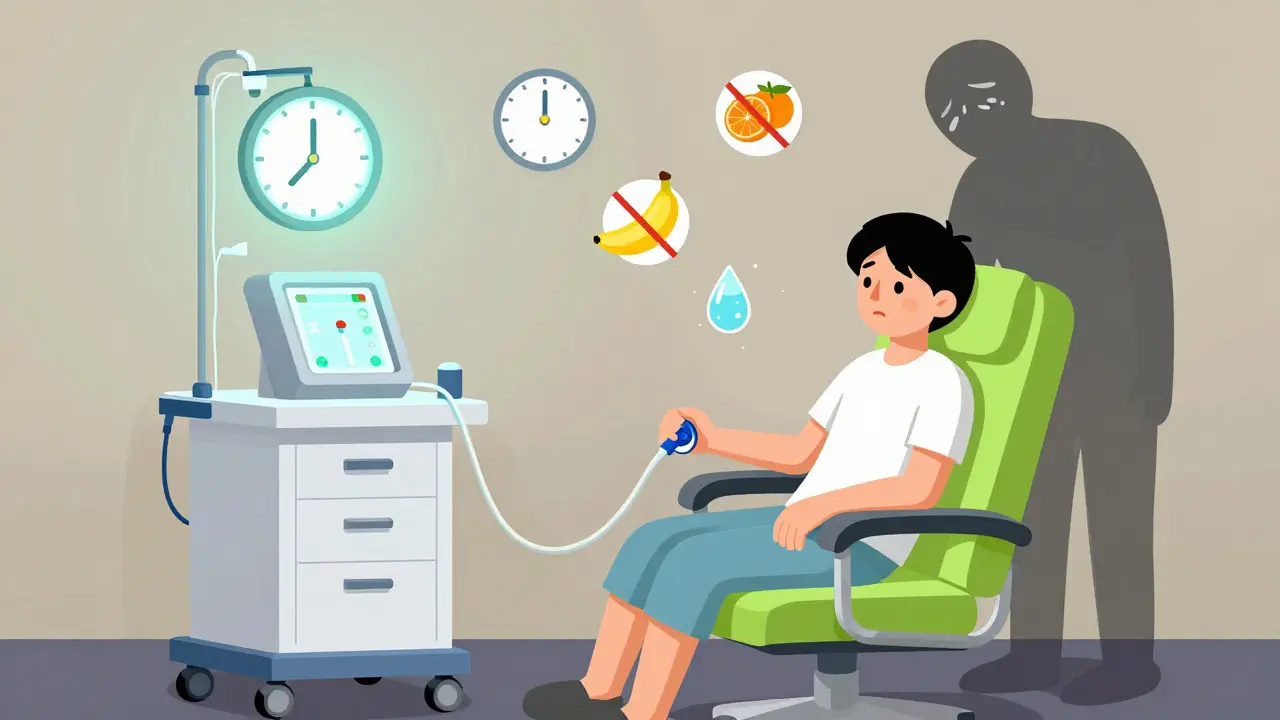
When your kidneys stop working, life changes in ways you can’t predict. End-stage renal disease (ESRD) isn’t just a medical label-it’s a daily reality for hundreds of thousands of people. At this stage, your kidneys have lost about 90% of their ability to filter waste and fluid. Without treatment, toxins build up in your blood, fluids swell, and your body can’t survive. The only options are dialysis, a kidney transplant, or death. But between those two treatments, the difference in how you live-your freedom, your energy, your future-isn’t just small. It’s enormous.
What Exactly Is End-Stage Renal Disease?
ESRD isn’t sudden. It’s the final step of a long decline. Most people don’t notice their kidneys failing until it’s too late. By then, the glomerular filtration rate (GFR) has dropped below 15 mL/min/1.73 m². That means your kidneys are barely working. The two biggest causes? Diabetes and high blood pressure. Together, they account for more than 70% of new ESRD cases. Other causes include polycystic kidney disease, lupus, and long-term drug or toxin exposure.
Here’s the hard truth: once you reach ESRD, your kidneys won’t heal. No pill, no diet, no exercise can bring them back. You need outside help-either a machine or a new kidney. And that’s where the real choices begin.
Dialysis: Keeping You Alive, But at What Cost?
Dialysis is a lifeline. It’s also a full-time job.
In-center hemodialysis is the most common. You go to a clinic three times a week, sit in a chair for 3 to 4 hours, and let a machine clean your blood. The process isn’t gentle. Blood is pulled out through a needle, filtered, and pumped back in. You’re hooked up to a machine that moves 300 to 500 mL of blood per minute. That’s a lot of pressure. And you can’t move much. Many patients nap, read, or watch TV-but even then, the fatigue hits hard afterward.
Then there’s peritoneal dialysis. This one you do at home, usually every day. A fluid goes into your belly through a catheter, pulls out toxins, and then drains out. Some do it manually four times a day. Others use a machine at night while they sleep. It’s less disruptive than in-center dialysis, but it’s not easy. You have to keep your catheter site clean. Infections happen. And you still need to follow a strict diet-low salt, low potassium, low phosphorus.
And here’s the catch: dialysis doesn’t fix your life. It just keeps you alive. You’ll need to limit fluids. You’ll need to take phosphate binders with every meal. You’ll need to check your blood pressure, calcium, and parathyroid hormone levels constantly. Most patients on dialysis have at least 12 to 16 hours per week spent traveling to and from treatments. Add in recovery time, and you’re looking at 20+ hours just for treatment.
Survival rates tell a grim story. Only 35% of dialysis patients are alive five years after starting. Many don’t make it past three. And that’s if they’re lucky enough to get regular care. Miss a session? You’re in the ER with fluid overload. Skip medications? Your bones weaken. Your heart struggles.
Kidney Transplant: The Real Solution
If dialysis keeps you alive, a kidney transplant gives you back your life.
Studies show transplant recipients live 68% longer than those on dialysis. Five-year survival? 83% for transplant patients. For those on dialysis? 35%. That’s not a small difference. That’s life versus a slow decline.
Transplant patients don’t need to go to clinics. They don’t need needles three times a week. They can eat more foods. They can travel. They can work full-time. They sleep through the night. One study found transplant patients scored 28.7 points higher on quality-of-life surveys than hemodialysis patients. That’s not just better. That’s a completely different existence.
And the numbers don’t lie. Transplant recipients have 50% fewer hospital visits each year. Their monthly medication costs? Around $1,500 to $2,500. That sounds high, but it’s far less than the $100,000+ per year that dialysis costs Medicare. In fact, Medicare spends $35 billion a year on ESRD care-even though these patients make up only 1% of its population.
There are two types of transplants: living donor and deceased donor. Living donor transplants have better outcomes. One-year graft survival? 95.5%. Five-year? 86%. Deceased donor? 93.7% and 78.5%. The difference? A living kidney works better, lasts longer, and doesn’t require you to wait years on a list.
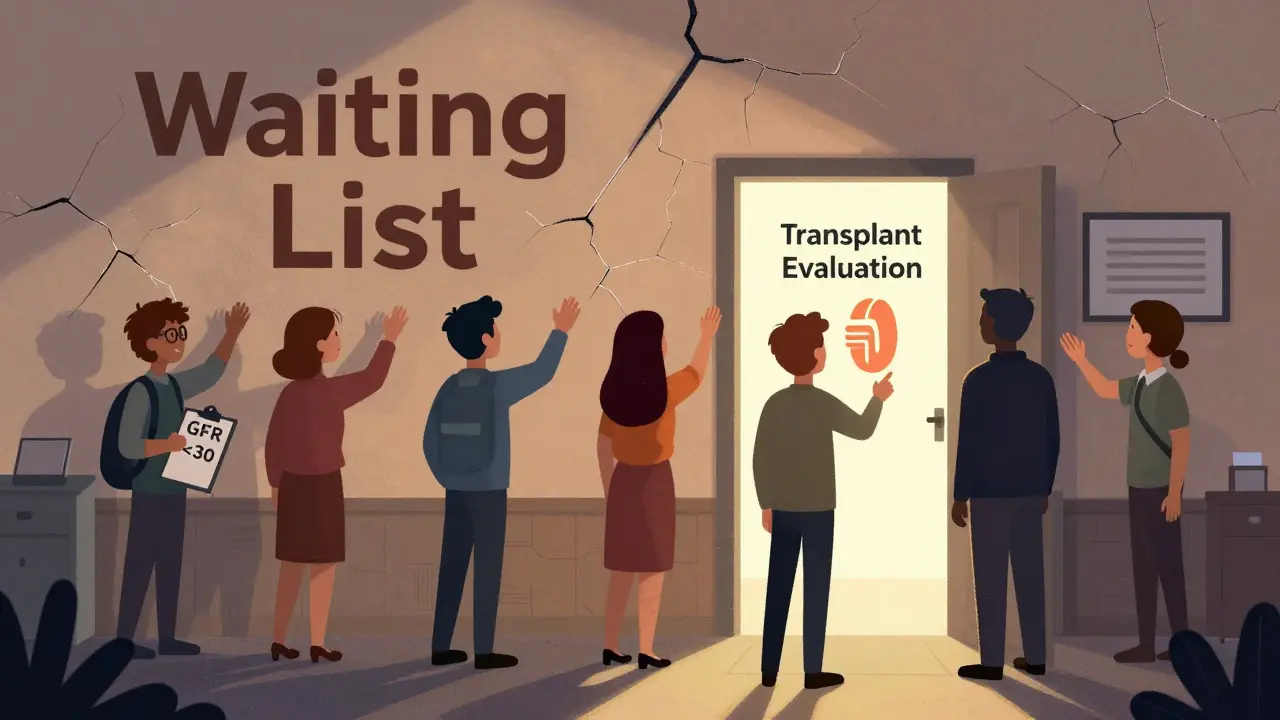
But here’s the problem: most people don’t even get to this option. Only 5% of patients who start dialysis are referred for transplant evaluation before they need treatment. That’s called a preemptive transplant-and it’s the best chance you have. The earlier you’re evaluated, the better your odds. The American Academy of Family Physicians recommends referral when your GFR drops below 30 mL/min, not 15.
Who Can Get a Transplant? The Hidden Barriers
It’s not just about medical need. It’s about access.
Not everyone qualifies. If you’re over 75 with severe heart disease, active cancer, uncontrolled mental illness, or ongoing substance use, you’re often turned away. Some centers have strict rules. Others don’t. And that’s where inequality creeps in.
Black patients are less likely to be referred-even when they have the same kidney function, same income, same insurance. A 2013 study called RaDIANT found African American patients had referral rates of just 8.5%. After education programs for doctors and patients, that jumped to 12%. Still low. White patients went from 12.3% to 15%. The gap didn’t close. It narrowed a little.
Medicare covers ESRD treatment starting in the fourth month of dialysis. But transplant evaluation? That’s not automatic. You have to ask. You have to push. You have to find a transplant center, get referrals, pass psychological and financial screenings. And if you’re in a rural area? Good luck finding a center nearby.
The waiting list is long. Over 90,000 people are waiting for a kidney in the U.S. As of 2023, only about 27,000 transplants happen each year. That means you might wait four years. Or longer. And if you’re on dialysis while you wait? Your body is wearing down. Every month on dialysis reduces your chance of surviving a transplant later.
Lifestyle After Transplant: Not a Cure, But a New Normal
Getting a transplant doesn’t mean you’re done with medical care. It means you’ve traded one set of challenges for another.
You’ll take immunosuppressant drugs for the rest of your life. These prevent your body from rejecting the new kidney. Common ones include tacrolimus, mycophenolate, and prednisone. But they come with side effects: higher risk of infections, weight gain, tremors, even diabetes. You’ll need blood tests every few weeks. You’ll need to avoid raw meat, unpasteurized cheese, and undercooked eggs. You’ll need to wash your hands constantly. You’ll avoid crowds during flu season.
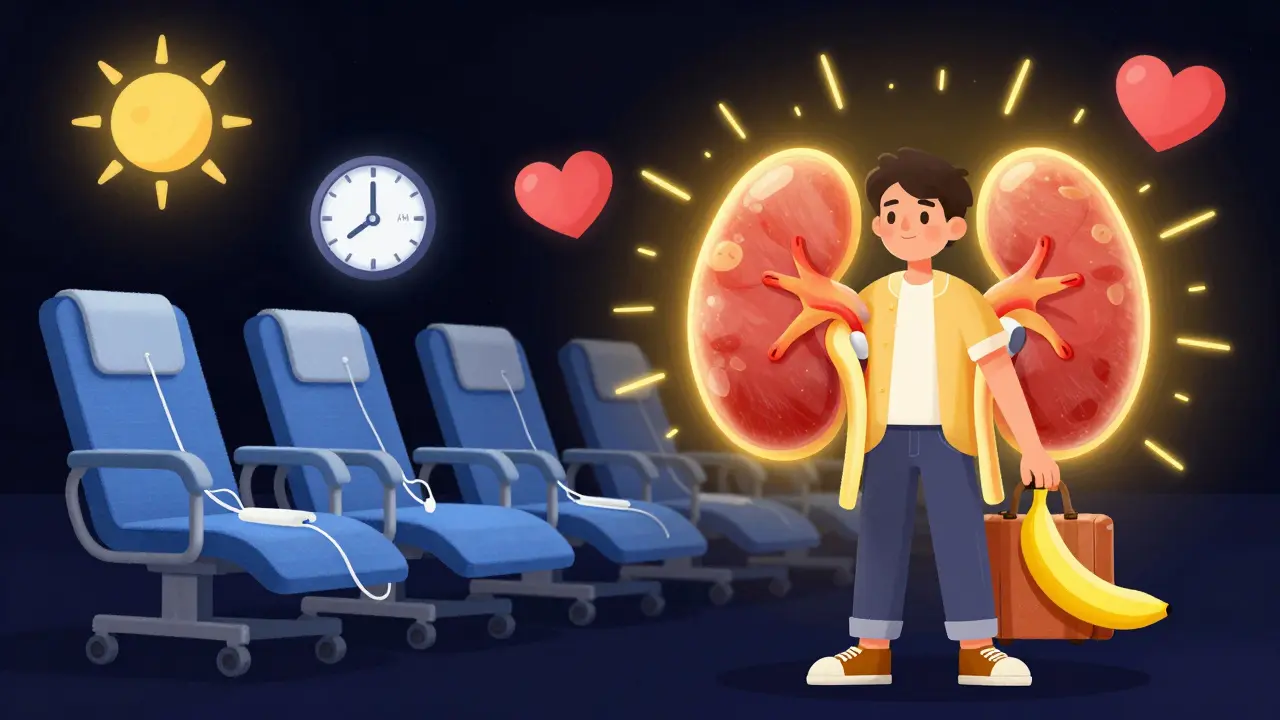
But compared to dialysis? It’s freedom. You can eat a banana. Drink a glass of orange juice. Go on a road trip. Sleep past 6 a.m. You can work. You can have kids. You can live.
And here’s something few talk about: emotional recovery. Many transplant patients say they feel guilty-especially if the kidney came from a living donor. They feel pressure to “be grateful.” But you don’t owe anyone a perfect life. You owe yourself the chance to heal. And that’s okay.
What You Can Do Now
If you or someone you love has chronic kidney disease, don’t wait. Don’t assume dialysis is the only path.
- Ask your nephrologist: Can I be referred for transplant evaluation?
- Ask: Can I get evaluated before I start dialysis?
- Ask: Is there a living donor option? Family? Friends?
- Ask: Can I do home dialysis while I wait?
Home dialysis options are growing. More people are choosing it now than ever before. In 2015, only 8.3% of new dialysis patients did home dialysis. By 2022, that number jumped to 14.2%. It’s not for everyone-but it’s an option worth exploring.
And if you’re healthy enough to donate? Consider it. A living donor kidney can save a life. And it doesn’t have to be a relative. Many strangers donate through paired exchange programs. You’re not just giving a kidney. You’re giving someone back their life.
The System Isn’t Perfect-But You Can Still Win
The U.S. healthcare system is broken when it comes to kidney disease. Referrals are delayed. Education is lacking. Disparities persist. Medicare pays more for dialysis than for transplant care. That’s not a mistake. It’s a policy.
But you’re not powerless. You can ask questions. You can push for referrals. You can research transplant centers. You can find patient advocates. You can join support groups. You can demand better.
There are new programs trying to fix this. The Kidney Care Choices Model, launched in 2022, gives doctors financial incentives to refer patients early. The NIH has poured $157 million into personalized kidney treatments. Living donor transplants have increased 18% since 2018.
Change is slow. But it’s happening.
And if you’re facing ESRD? You still have choices. You still have power. You still have time.
Don’t accept dialysis as your only future. Fight for the transplant. Fight for your life.
Comments (15)
Bhaskar Anand
February 25, 2026 AT 01:18Dialysis is a scam. The system wants you dependent. Transplant? Only for the rich. In India, we see this daily-no access, no hope. They keep you alive just to bill you. No pity. No mercy. Just profit.
William James
February 25, 2026 AT 23:25I’ve seen patients on both sides. Dialysis is brutal-but transplant isn’t magic. It’s a new kind of discipline. You’re not cured. You’re just given a second chance to learn how to live again. And that’s worth fighting for.
Vanessa Drummond
February 26, 2026 AT 02:16I had a cousin on dialysis for 4 years. She lost 30 pounds. Couldn’t hug anyone without feeling like she’d break. Then she got a transplant. She started baking again. Wore sandals. Laughed like she used to. It’s not just medical-it’s emotional rebirth.
Nick Hamby
February 26, 2026 AT 19:02The data is undeniable: transplant extends life, improves quality, reduces cost. Yet the system doesn’t prioritize it. Why? Because dialysis is a revenue stream. Transplant is a solution. Solutions don’t scale the same way as dependency does. We need structural reform-not just awareness.
kirti juneja
February 27, 2026 AT 04:41In India, if you’re poor, you don’t get a transplant. You get a needle. And a prayer. I’ve seen families sell their land for one shot at a kidney. No one talks about how much dignity gets auctioned off in these waiting rooms.
Haley Gumm
February 28, 2026 AT 08:11Let’s be real-transplant recipients are lucky. But they’re also the ones who had the privilege to even *know* about preemptive referrals. Meanwhile, people of color, rural folks, non-English speakers? They’re left in the dark. This isn’t medical-it’s systemic neglect dressed in white coats.
Gabrielle Conroy
March 1, 2026 AT 04:58I’m a nurse in a transplant unit. I see the hope. I see the fear. I see the guilt. The immunosuppressants? Yeah, they’re rough. But the freedom? The ability to sleep through the night? To hold your kid without thinking about fluid limits? It’s everything. Please, if you’re eligible-ASK. Don’t wait. Don’t assume. ASK.
Christopher Wiedenhaupt
March 2, 2026 AT 06:02It is important to note that the financial burden of dialysis versus transplantation is not merely a clinical consideration but a fiscal imperative. Medicare expenditures for end-stage renal disease are disproportionately allocated to maintenance dialysis, which, while life-sustaining, is not cost-effective in the long term. A shift in policy incentives is both medically and economically rational.
Brandice Valentino
March 2, 2026 AT 21:41I read this whole thing. So dramatic. Like, who even *is* this? Some doctor’s PowerPoint? I mean, sure, transplant is better-but you’re telling me I should just go out and find a kidney? Like, where? Amazon? Also, I’m pretty sure ‘living donor’ is just a euphemism for ‘someone who’s gonna die later from being nice.'
Larry Zerpa
March 2, 2026 AT 22:54You say transplant patients live longer. But have you looked at the long-term rejection rates? The cancers? The drug-induced diabetes? The psychological trauma of being a ‘recipient’? You’re romanticizing a medical procedure that turns people into permanent patients with a different set of chains. This isn’t freedom. It’s a different kind of captivity.
Gwen Vincent
March 4, 2026 AT 14:22I just want to say thank you for writing this. It’s rare to see the emotional weight of this disease laid out so honestly. I’ve been on dialysis for 6 years. I don’t talk about it much. But reading this… I felt seen.
Nandini Wagh
March 6, 2026 AT 12:00Oh wow. So the solution is just… ask nicely? And if you’re poor and brown? Too bad. Classic. The system is designed to make you beg. And then it calls you ‘non-compliant’ when you can’t afford the binders. How cute.
Holley T
March 6, 2026 AT 15:08Let’s not pretend this is about health. This is about capitalism. Dialysis centers are private corporations. They make billions. Transplants? They’re a one-time cost. So the system incentivizes you to stay sick. They don’t want you cured. They want you paying. And they’ve got lobbyists writing the rules. The 1% of Medicare patients? They’re not the problem. The profit motive is.
Ashley Johnson
March 8, 2026 AT 14:05I read a study that said dialysis patients live longer if they’re on a low-protein diet. But transplant patients are told to eat more protein. So which is it? Are we being lied to? Also, I heard from a guy on a forum that the government implants tracking chips in transplant kidneys. To monitor compliance. Is that true? Someone please fact-check me.
Lillian Knezek
March 9, 2026 AT 15:57I know someone who got a kidney from a donor who died in a car crash. The donor’s family said they were donating to ‘help others.’ But I’ve heard rumors… that the hospital harvested organs from people who were still alive. I mean… what if your donor was a victim? What if you’re alive because someone else was murdered? 😢