
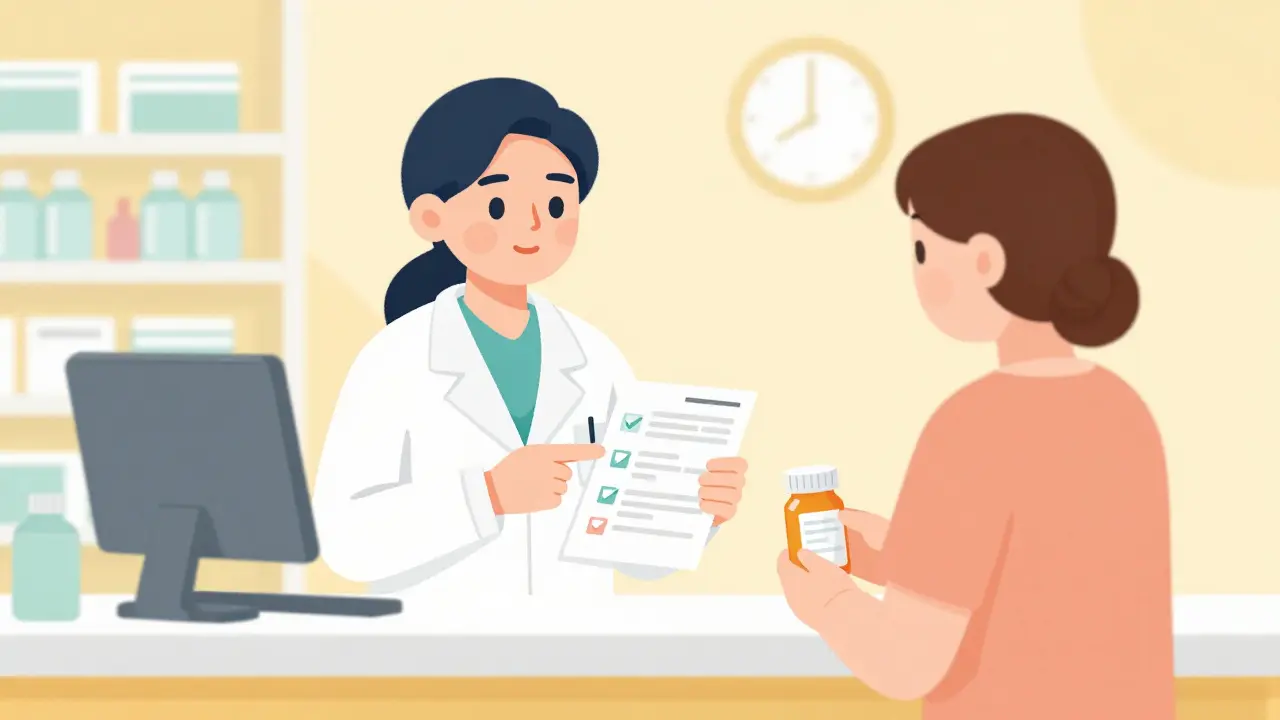
Every year, over 1.5 million people in the U.S. are harmed by medication errors. But you don't have to be one of them. The key? Asking the right medication safety questions at the pharmacy. These questions help you understand your prescriptions and avoid dangerous mistakes.
Why Asking Questions Saves Lives
The World Health Organization launched the 'Medication Without Harm' initiative in 2017 because medication errors cause serious harm. Pharmacists are trained to catch issues you might miss. For example, a 2022 American Pharmacists Association survey found 89% of pharmacists identify harmful drug interactions during consultations. That's why asking questions isn't just helpful-it's critical for your safety.
What is this medication for?
It seems obvious, but you'd be surprised how often patients take pills without knowing why. Suppose you get a prescription for a new pill. If you don't know it's for high blood pressure, you might not realize why it's important. Pharmacists confirm the purpose and explain how it works. A 2023 study in the Journal of the American Pharmacists Association showed patients who understood their medication's purpose were 40% less likely to skip doses. Knowing why you're taking it helps you stay on track.
How and when should I take it?
Timing matters more than you think. Some medications need food to avoid stomach upset, while others work better on an empty stomach. For example, taking antibiotics like doxycycline with dairy blocks absorption. If you're supposed to take it at bedtime but have heartburn, your pharmacist can adjust the timing. The CDC reports improper dosing causes 25% of medication errors in adults. Always ask about the exact schedule and whether to take it with food or water.
What side effects should I watch for?
Not all side effects are dangerous, but some need immediate attention. For instance, if you're on blood thinners, unusual bruising or bleeding could signal a problem. Your pharmacist will tell you which side effects are normal and which require a doctor's call. Dr. Erika Brown from Gundersen Pharmacy notes that some medications increase sun sensitivity. 'I've seen patients get severe sunburns because they didn't know their medication made them more sensitive,' she says. Knowing what to watch for keeps you safe.
Could this interact with my other medications?
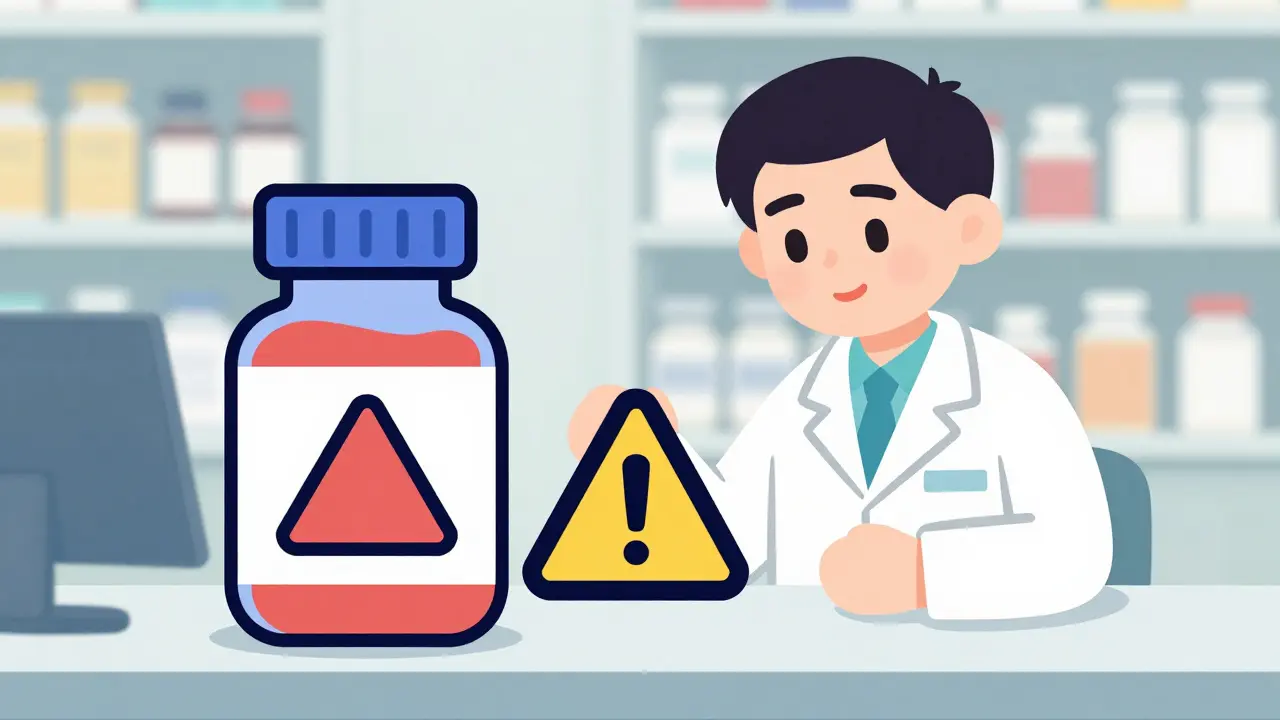
Drug interactions are a major risk. Taking ibuprofen with blood thinners like warfarin increases stomach bleeding risk by 40-60%, according to FDA reports. Even common supplements like St. John's Wort can interfere with birth control or antidepressants. Bring all your medications-prescription, over-the-counter, vitamins, and herbal remedies-to the pharmacy. A 2022 Johns Hopkins study showed this practice reduces polypharmacy risks by 29%. Your pharmacist checks for hidden dangers you might not see.
How should I store this medication?
Storage matters more than you think. Insulin left in a hot car can lose effectiveness. Some medications need refrigeration, while others should stay in a cool, dry place. A pharmacist in Pennsylvania recently shared a case where a patient stored insulin in their car glove compartment during summer, rendering it useless. The CDC says improper storage causes 15% of medication errors. Always ask where to keep your pills to ensure they work as intended.
Any ingredients I might be allergic to?
Allergies can be life-threatening. Pocono Pharmacy's 2023 guide notes medication allergies cause 106,000 ER visits yearly. If you're allergic to penicillin, you might react to similar antibiotics. Even inactive ingredients like dyes or preservatives can trigger reactions. Your pharmacist checks the full ingredient list and warns you about potential allergens. Don't assume 'it's just a pill'-allergens hide in unexpected places.
Can I repeat back what you said?
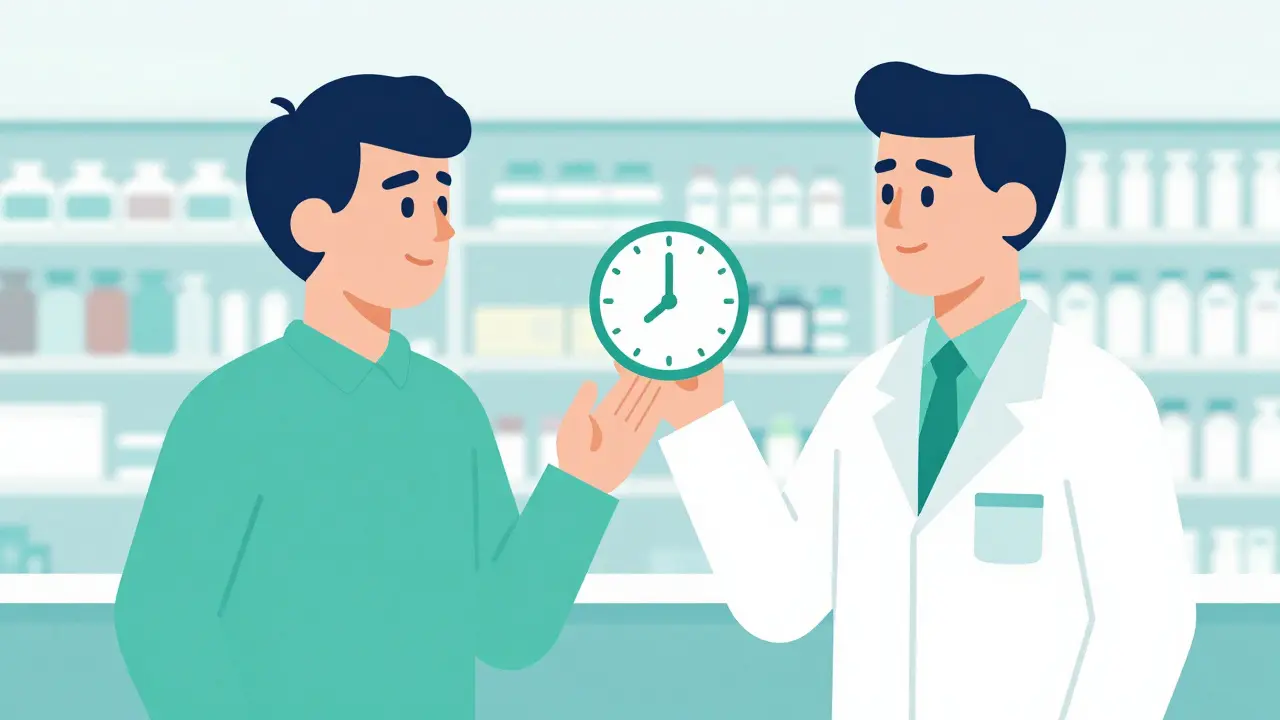
It's okay to say, 'Let me repeat that to make sure I understand.' This 'teach-back' method reduces communication errors by 31%, according to a 2020 study. If your pharmacist says 'take twice daily,' repeat 'I'll take it at 8 a.m. and 8 p.m.' This catches misunderstandings before they cause harm. Pharmacists at Pocono Pharmacy implemented this in 2023, cutting medication-related readmissions by 44%. It's a simple way to ensure clarity.
What to do if you miss a dose?
Missing a dose happens. Should you take it late? Double up? It depends on the medication. For example, missing a birth control pill requires different steps than missing a blood pressure pill. Your pharmacist gives clear instructions for your specific case. A 2023 Brown Health survey found 78% of patients who asked about missed doses avoided adverse events. Never guess-ask for exact guidance.
How to prepare for your pharmacy visit
Bring all your medications in a bag. This includes prescription drugs, over-the-counter pills, vitamins, supplements, eye drops, and topical creams. Having everything together helps your pharmacist see the full picture. The URMC Rochester prescription quiz emphasizes this: 56% of hospital admissions involve medication discrepancies. Also, keep an updated list of your medications and dosages. This simple step prevents errors and makes your consultation more effective.
What should I bring to the pharmacy for my medication review?
Bring all medications in their original containers-prescription drugs, over-the-counter pills, vitamins, supplements, eye drops, and skin products. This helps your pharmacist see exactly what you're taking and catch potential interactions. A Johns Hopkins study showed this practice reduces polypharmacy risks by 29%.
Why is it important to ask about drug interactions?
Drug interactions can cause serious harm, like increased bleeding or reduced effectiveness. For example, combining ibuprofen with warfarin raises stomach bleeding risk by 40-60%, per FDA reports. Pharmacists check all your medications and supplements to prevent dangerous combinations. Asking about interactions is a simple step that saves lives.
How can I tell if a side effect is dangerous?
Your pharmacist will explain which side effects are normal and which need immediate attention. For instance, if you're on blood thinners, unusual bruising or bleeding requires a doctor's call. If you experience severe dizziness, chest pain, or difficulty breathing, seek emergency help. Always ask for clear signs to watch for.
What should I do if I miss a dose?
Never guess. Missing a dose depends on the medication. For some, take it as soon as you remember; for others, skip it. Your pharmacist gives exact instructions for your specific drug. A 2023 Brown Health survey found 78% of patients who asked avoided adverse events by getting clear guidance.
Can I take over-the-counter medicines with my prescription?
Not always. Many OTC drugs interact with prescriptions. For example, antacids can reduce antibiotic absorption. Always check with your pharmacist before taking any non-prescription medicine. They'll know if it's safe or if timing adjustments are needed.
Comments (12)
Sam Salameh
February 6, 2026 AT 20:31Hey everyone, this is super important! As Americans, we need to take charge of our health. Pharmacists are there to help, so always ask questions. Don't be shy - it could save your life!
Cullen Bausman
February 8, 2026 AT 16:17Medication errors are serious. Pharmacists prevent them. Ask questions. Safety first.
Cole Streeper
February 8, 2026 AT 17:20Pharmacists are part of the system. They don't want you to know the real risks. Always check the ingredients. The government hides the truth. Don't trust them blindly. Ask about hidden dangers. Your life depends on it.
Dina Santorelli
February 9, 2026 AT 05:05I've seen too many cases where people don't ask questions. It's dangerous. You should really check everything. Don't be lazy. Your life is on the line.
Arjun Paul
February 9, 2026 AT 09:34This is basic knowledge. Everyone should know this. Why are people not asking these questions?
divya shetty
February 9, 2026 AT 22:54It's imperative to ask about drug interactions.
Nancy Maneely
February 10, 2026 AT 18:39OMG this is so importnat! I almost died because i didn't ask about interactions. Always check with your pharmacist!
Phoebe Norman
February 12, 2026 AT 03:00Pharmacists identify drug interactions effectively. 89% in studies. Critical for patient safety. Understanding medication purpose reduces skip doses by 40%. Timing matters. Antibiotics with dairy block absorption. Improper dosing causes 25% errors. Side effects vary. Blood thinners need monitoring. Allergies in inactive ingredients. Storage affects efficacy. Bring all meds to pharmacy. Teach-back method reduces errors. Missed dose guidance essential. OTC meds can interact. Always verify with pharmacist.
Thorben Westerhuys
February 13, 2026 AT 10:24This is so important! Always ask questions! It saves lives! Don't be lazy! Pharmacists are there to help! Check all interactions! Storage matters! Missed doses can be dangerous! Always verify! Safety first!
Laissa Peixoto
February 15, 2026 AT 10:13Reflecting on medication safety, it's clear that communication with pharmacists is key. Understanding why you take a drug helps adherence. Timing and storage affect efficacy. Drug interactions can be deadly. Always bring all medications for review. The teach-back method ensures clarity. Safety is a shared responsibility. Knowledge empowers.
Samantha Beye
February 16, 2026 AT 07:49You've got this! Asking these questions is easy and could save your life. Don't hesitate - your pharmacist wants to help. Stay safe!
Rene Krikhaar
February 16, 2026 AT 10:34Pharmacists are here to help. Don't hesitate to ask about side effects. It's better to be safe. Always verify. Your health is worth it.