
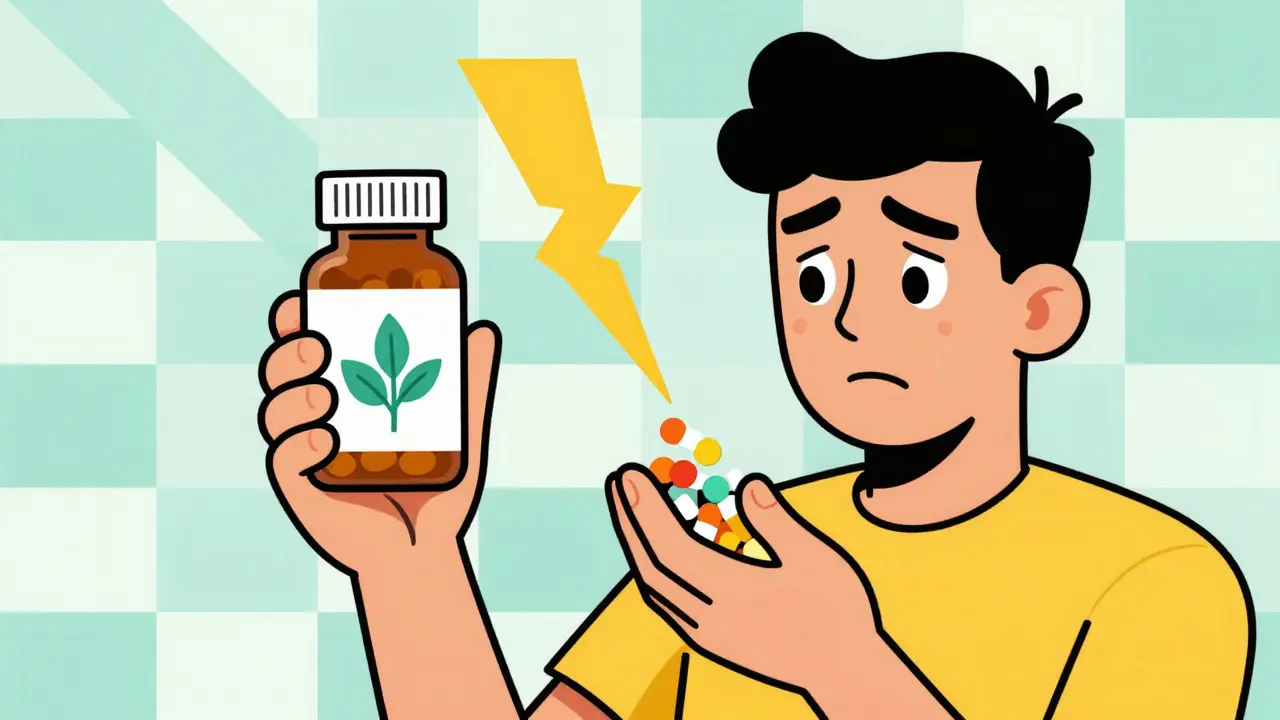
You probably think of herbal supplements as harmless bits of nature. After all, they are "natural," right? But that assumption could be dangerous. When you mix certain herbs with prescription medications, the results can range from ineffective treatment to life-threatening emergencies. It is not just about taking too much medicine; it is about how your body processes these substances when they collide.
The reality is stark. Approximately 23% of adults in the United States use dietary supplements containing herbs, and nearly 40% of those users are also on prescription drugs. That creates a massive pool of potential conflicts. The World Health Organization notes that up to 80% of people in developing nations rely on traditional herbal medicines as their primary healthcare. Even in developed countries, half of patients in some studies combine herbal remedies with conventional treatments. This widespread mixing means understanding supplements and drug interactions is no longer optional-it is essential for staying safe.
How Herbs Mess With Your Medications
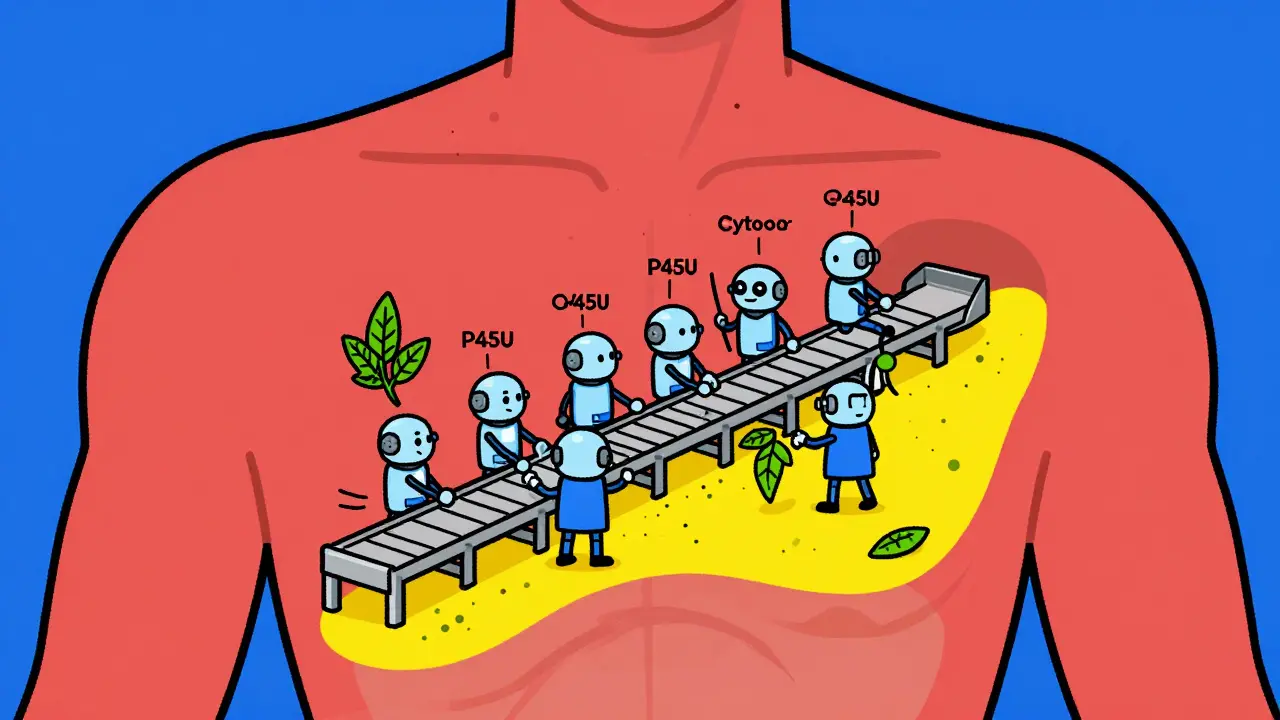
To understand why this happens, you need to look inside your liver. Your body uses enzymes, specifically a group called cytochrome P450 (CYP), to break down most drugs. Think of these enzymes like factory workers processing products on an assembly line. Some herbs act like foremen who speed up the workers, while others act like saboteurs who slow them down or shut them off entirely.
Cytochrome P450 (CYP) enzymes are a family of enzymes primarily found in the liver that metabolize approximately 50% of all prescribed drugs, playing a critical role in determining how quickly medications leave your system. When herbal compounds interfere with these enzymes, drug levels in your blood can spike to toxic heights or drop to ineffective lows.
There are two main ways this goes wrong:
- Enzyme Induction: Some herbs tell your liver to produce more enzymes. This speeds up drug metabolism. If your body breaks down a medication too fast, it never reaches the therapeutic level needed to work. You might feel fine, but your condition is actually getting worse because the drug is clearing out before it can help.
- Enzyme Inhibition: Other herbs block the enzymes. This slows down metabolism. The drug stays in your system longer than intended, leading to an accumulation that can cause toxicity. This is often where serious side effects come from.
Another player here is P-glycoprotein (P-gp), a transporter protein that pumps drugs out of cells. Herbs can affect this pump too, changing how much drug gets absorbed into your bloodstream or how quickly it is eliminated through your kidneys.
The High-Risk Offenders
Not all herbs are created equal when it comes to risk. While many have low interaction potential, a few stand out as particularly dangerous culprits. Knowing which ones to watch for is your first line of defense.
| Herb | Primary Mechanism | Affected Drug Classes | Potential Consequence |
|---|---|---|---|
| St. John's Wort | Induces CYP3A4 and P-gp | HIV protease inhibitors, oral contraceptives, immunosuppressants (cyclosporine) | Drug failure, organ rejection, unintended pregnancy |
| Ginkgo Biloba | Inhibits CYP2C9/CYP2C19; anti-platelet effect | Warfarin (blood thinners), SSRIs | Increased bleeding risk, serotonin syndrome |
| Garlic | Induces CYP3A4; anti-platelet effect | Saquinavir (HIV), Warfarin | Reduced drug efficacy, increased bleeding |
| Goldenseal | Inhibits CYP3A4 and CYP2D6 | Dextromethorphan, metoprolol, docusate | Toxicity, increased heart rate, respiratory issues |
| Danshen | Inhibits platelet aggregation | Anticoagulants, Digoxin | Bleeding, irregular heartbeat |
St. John's Wort is widely considered the king of drug interactions. It induces CYP3A4 so powerfully that it can reduce plasma concentrations of affected drugs by 20% to 70%. A study published in Frontiers in Pharmacology showed it decreased cyclosporine levels by 57% in transplant patients. For someone relying on that drug to prevent their new kidney from being rejected, that drop is catastrophic. It also reduces the effectiveness of HIV medications and birth control pills, leading to documented cases of unintended pregnancies and viral rebound.
Ginkgo Biloba, often taken for memory support, inhibits different enzymes and has its own blood-thinning properties. When combined with warfarin, it doesn't just add to the effect; it multiplies the risk. A meta-analysis of five studies involving 1,200 patients found that combining ginkgo with warfarin increases bleeding risk by approximately 30%. Hematologists report seeing unexplained spikes in International Normalized Ratio (INR) values frequently linked to undisclosed ginkgo use.
Why Doctors Often Miss These Conflicts
If these risks are so well-documented, why do they still happen? The answer lies in communication gaps. Patients rarely volunteer information about their supplement use. They assume doctors know, or they believe "natural" means "safe." Conversely, healthcare providers often fail to ask specific questions.
A 2016 study of Israeli inpatients revealed that while 25% consumed herbal supplements, hospital teams were unaware of this in 72% of cases. Why? Because standard intake forms often ask about "medications" or "prescriptions," leaving room for patients to exclude teas, tinctures, and capsules. Another study found that using visual aids-showing pictures of common herbal bottles-increased patient disclosure by 47% compared to verbal questioning alone.
There is also a knowledge gap among providers. A 2024 systematic review concluded that only 3% of primary care providers routinely screen for high-risk herb-drug combinations. Many clinicians simply do not have the time or training to memorize the complex pharmacokinetics of hundreds of botanicals. This isn't negligence; it's a systemic issue in modern healthcare where specialization leaves little room for integrative knowledge.
Regulatory Gaps and Market Realities
The market for herbal supplements is booming, reaching $104.8 billion globally in 2023. However, the regulatory framework hasn't kept pace. In the United States, the Dietary Supplement Health and Education Act (DSHEA) of 1994 treats supplements closer to food than to drugs. Manufacturers do not need to prove safety or efficacy before selling their products. They certainly do not need to test for drug interactions.
This creates a dangerous blind spot. Of the 23,000 dietary supplement products marketed in the U.S. in 2022, only 15% included warnings about drug interactions. Consumers are left to navigate this minefield alone. Surveys show that 77% of supplement users believe natural products are safer than prescriptions, even though 62% of them are also taking prescription meds. This cognitive dissonance fuels the problem.
The FDA does monitor adverse events, but underreporting is significant. Between 2004 and 2013, the FDA’s Adverse Event Reporting System documented only 1,287 cases potentially related to herb-drug interactions. Experts estimate that 40-60% of clinically significant interactions remain undocumented because patients attribute symptoms to other causes or simply don't connect the dots.
Practical Steps for Safer Use
You do not need to become a pharmacist to stay safe, but you do need to change your habits. Here is how to protect yourself:
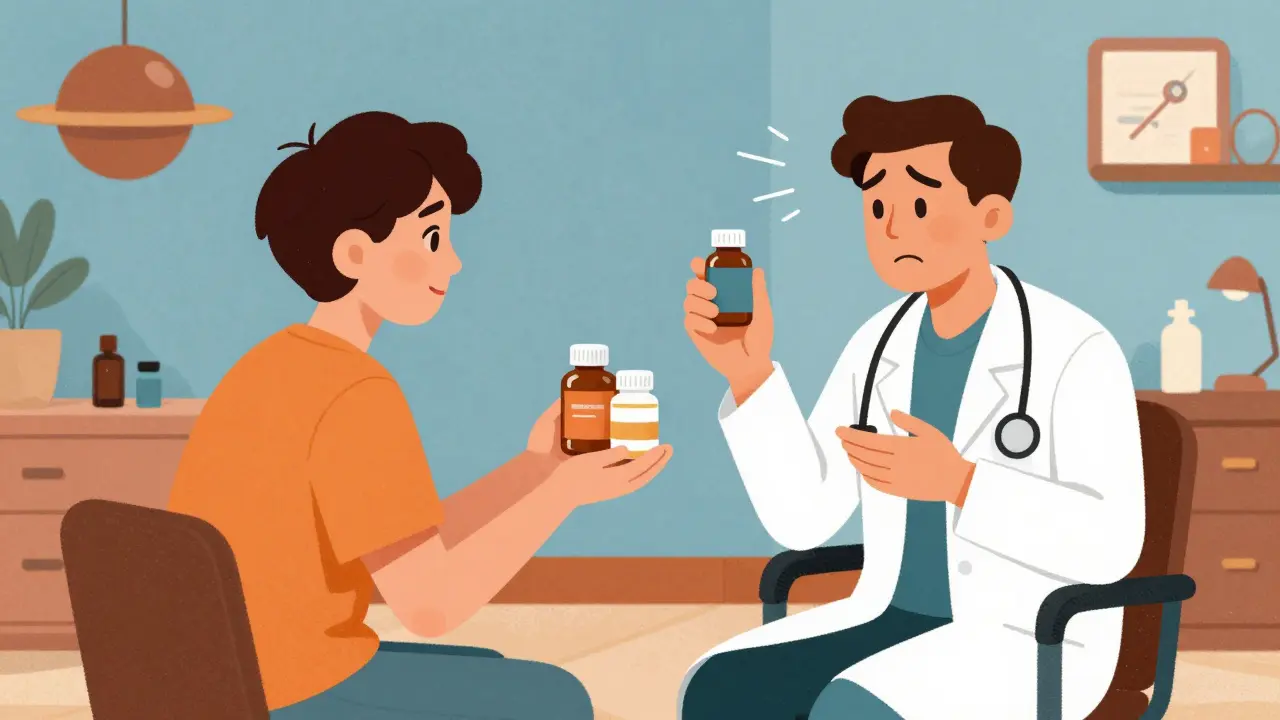
- Disclose Everything: Tell your doctor and pharmacist about every pill, powder, tea, and tincture you take. Be specific. Don't just say "vitamins." Say "I take St. John's Wort for mood and garlic for cholesterol."
- Use Visual Aids: If you are unsure what to mention, bring the actual bottles to your appointment. Seeing the label helps providers identify active ingredients and dosages.
- Check Reliable Sources: Do not rely on marketing claims on supplement labels. Use reputable databases like the National Center for Complementary and Integrative Health (NCCIH) or Clinical Pharmacology’s Interactive Guide to Natural Products.
- Monitor for Changes: If you start a new herb and notice changes in your energy, bleeding, digestion, or mental state, stop taking it and contact your provider immediately. These could be signs of an interaction.
- Ask About Timing: Sometimes, spacing out the administration of a drug and a supplement can mitigate minor interactions, though this does not work for severe enzyme inducers like St. John's Wort.
Pharmacists are your best allies here. At Mayo Clinic, pharmacists spend an average of 12 minutes counseling patients on high-risk combinations. Ask for this consultation. It is not an extra step; it is a critical safety check.
Future Directions and AI Tools
The landscape is slowly improving. Regulatory bodies are waking up to the issue. The European Medicines Agency now requires comprehensive interaction studies for herbal medicinal products approved as medicines. The FDA has issued draft guidance recommending mandatory interaction testing for new botanical drugs. Research funding is increasing, with the NIH allocating $12.7 million in 2023 specifically for herb-drug interaction research.
Technology is also stepping in. Artificial intelligence tools, such as the University of California's Herb-Drug Interaction Prediction Engine released in March 2024, analyze thousands of known interactions to predict new risks with 87% accuracy. These tools promise to make screening faster and more accurate for both providers and patients. However, until these tools are integrated into every electronic health record and pharmacy system, the responsibility largely falls on you.
Knowledge is your safest supplement. By understanding that "natural" does not mean "inert," and by actively communicating with your healthcare team, you can enjoy the benefits of herbal products without risking your health.
Can I take St. John's Wort with antidepressants?
No, you should generally avoid combining St. John's Wort with antidepressants, particularly SSRIs and SNRIs. St. John's Wort affects serotonin levels and can lead to serotonin syndrome, a potentially life-threatening condition characterized by agitation, confusion, rapid heart rate, and high blood pressure. Always consult your psychiatrist before adding any herbal supplement to your regimen.
Does garlic interact with blood thinners?
Yes, garlic has mild anti-platelet properties, meaning it can prevent blood clots. When taken with prescription blood thinners like warfarin, aspirin, or clopidogrel, it can increase the risk of bleeding. While culinary amounts are usually safe, concentrated garlic supplements pose a higher risk and should be discussed with your doctor.
Are all herbal supplements unsafe with medications?
No, not all herbs carry high risks. Supplements like black cohosh, cranberry, milk thistle, saw palmetto, and valerian generally have low interaction potential with most medications. However, individual responses vary, and valerian may potentiate sedatives. It is always best to verify specific combinations with a healthcare professional.
Why don't supplement labels warn about drug interactions?
Under the Dietary Supplement Health and Education Act (DSHEA) of 1994, supplements are regulated as food, not drugs. Manufacturers are not required to conduct pre-market safety testing or prove efficacy. Consequently, they are not legally obligated to test for or list drug interactions on labels, although voluntary warnings are encouraged.
What should I do if I suspect an herb-drug interaction?
Stop taking the herbal supplement immediately and contact your healthcare provider or pharmacist. Describe your symptoms and provide the names of all medications and supplements you are taking. Do not wait for the next scheduled appointment if you experience severe symptoms like excessive bleeding, difficulty breathing, or extreme dizziness; seek emergency care.