
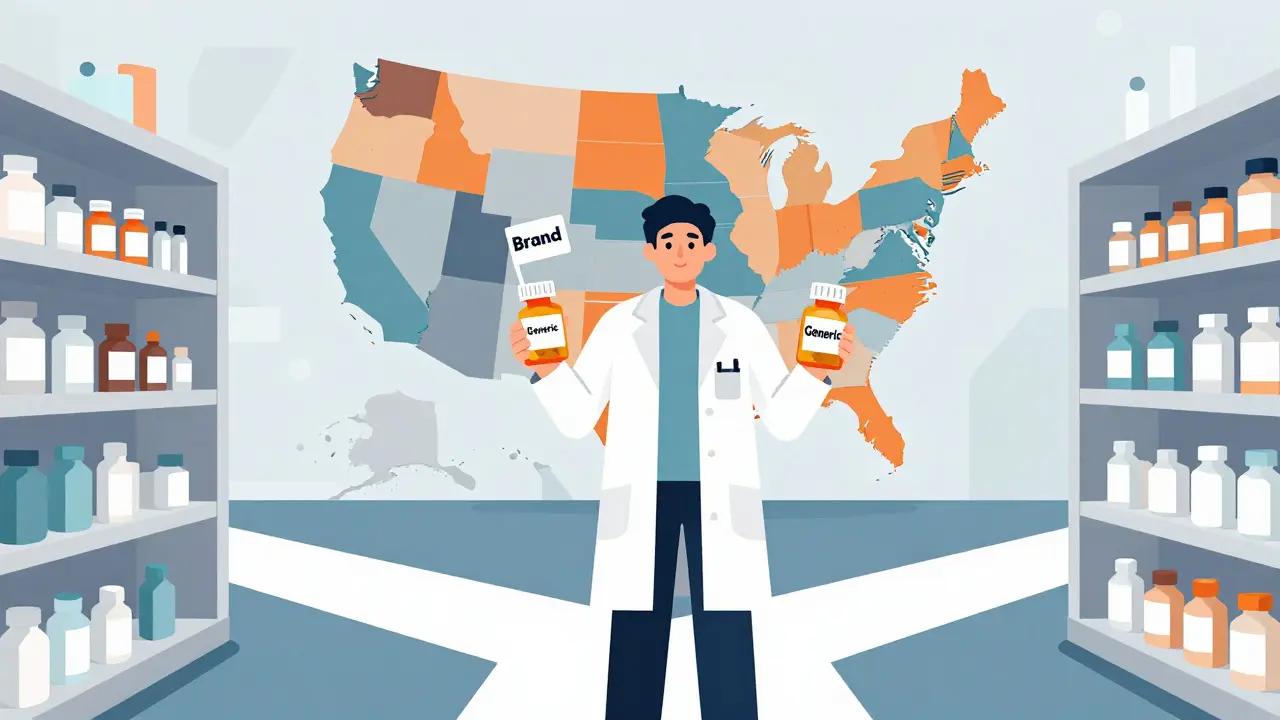
Imagine you are a pharmacist working in a multi-state telepharmacy role. One minute you are filling a prescription in California, and the next you are processing one in Oklahoma. The rules for swapping a brand-name drug for a generic alternative change completely between those two states. This isn't just a minor administrative detail; it is a legal minefield that affects patient safety, your liability, and the bottom line of healthcare systems across the country. With over $1.68 trillion saved by generic drugs between 2008 and 2017, understanding these laws is critical for anyone involved in pharmaceutical distribution.
The landscape of generic substitution, which is the practice of dispensing a therapeutically equivalent generic drug instead of a prescribed brand-name medication is not uniform. It is a patchwork of 50 different state laws plus Washington, DC. These regulations determine when you can swap drugs, whether you need patient consent, and if you are protected from lawsuits if something goes wrong. For pharmacists, this complexity creates significant daily friction. A 2023 survey by the National Community Pharmacists Association found that 78% of pharmacists spend 15-20 minutes every single day just checking state-specific substitution rules. This guide breaks down exactly how these laws work, where they differ, and what you need to know to stay compliant.
How State Substitution Laws Are Structured
To understand the variation, you first need to know the two main frameworks states use. Most states fall into one of two categories: mandatory or permissive. According to a comprehensive 2020 study published in JAMA Internal Medicine by Dr. Aaron Kesselheim and colleagues, 19 states have mandatory substitution laws, which are regulations requiring pharmacists to automatically substitute generic drugs unless the prescriber explicitly prohibits it. In these states, the default action is to dispense the generic. The other 31 states plus DC operate under permissive frameworks, meaning substitution is allowed but not required. In permissive states, the decision often rests more heavily on the pharmacist's judgment or specific formulary guidelines.
Within these frameworks, states use different tools to define which drugs can be swapped. Some use a "positive formulary," which lists only the specific generics that are approved for substitution. Others use a "negative formulary," which lists the few brand-name drugs that cannot be substituted, implying all others are fair game. California, for example, requires pharmacists to base substitutions strictly on the FDA Orange Book, which is a publication by the U.S. Food and Drug Administration listing approved drug products with therapeutic equivalence evaluations. New York, however, allows broader therapeutic equivalence determinations. Oklahoma stands out as an outlier, requiring explicit authorization from either the prescriber or the purchaser for any substitution at all. Understanding which system your state uses is the first step in compliance.
The Critical Difference Between Generics and Biosimilars
If you think small-molecule generic substitution is complex, wait until you deal with biologics. The regulatory gap here is massive. While 90% of eligible small-molecule prescriptions are filled with generics, biosimilars (generic versions of biologic drugs) account for only 14.3% of eligible prescriptions, according to Avalere Health's 2025 analysis. Why? Because the laws are much stricter. As of 2023, 45 states plus DC have implemented significantly more stringent requirements for biosimilars than for traditional generics.
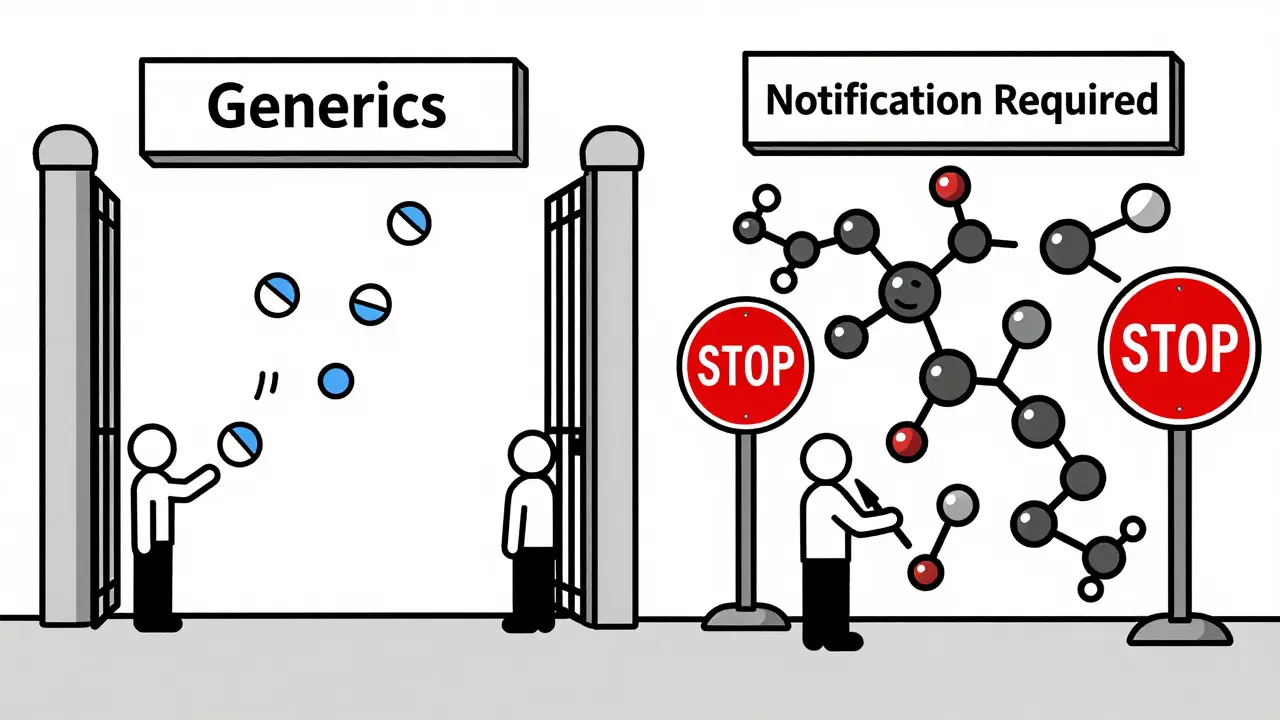
The primary difference lies in notification. For small-molecule generics, many states do not require explicit patient notification beyond standard packaging labels. For biosimilars, 45 states require physician notification within a specific timeframe after substitution. California mandates that this notification happen within five days via an entry electronically accessible by the prescriber. Additionally, 38 states require direct patient notification for biologic substitutions. The FDA's 2024 Biosimilars Action Plan highlights that this inconsistency is the single greatest barrier to biosimilar adoption. Commissioner Robert Califf stated in February 2024 congressional testimony that inconsistent state laws hinder the cost-saving potential of these complex drugs. You must treat biosimilar substitution as a separate legal category entirely from generic substitution.
| Requirement | Small-Molecule Generics | Biosimilars (Biologics) |
|---|---|---|
| Mandatory Substitution States | 19 states | Varies, often stricter |
| Physician Notification Required | Not required in most states | Required in 45 states + DC |
| Patient Notification Required | Required in 31 states + DC | Required in 38 states |
| Uptake Rate | ~90% | ~14.3% |
Patient Consent and Notification Rules
You might assume that patients always have a say in whether their drug is substituted. Surprisingly, that is not the case everywhere. Only seven states plus DC require explicit patient consent for generic substitution. In the remaining 43 jurisdictions, substitution can occur without the patient signing off on it beforehand. However, notification is a different story. Thirty-one states plus DC mandate that patients be notified independent of packaging. This usually means a verbal explanation or a written notice at the counter.
The impact of these rules on patient trust is measurable. A 2023 National Poll on Health conducted by the University of Michigan found that 68% of patients in states requiring explicit consent felt more informed about their medications compared to only 42% in states without consent requirements. From a safety perspective, inconsistent notification protocols create risks. Dr. Michael Cohen of the Institute for Safe Medication Practices warned in a 2022 JAMA commentary that inadequate notification leads to errors. An ISMP study found that 22% of medication errors involving substitution occurred in states with weak notification protocols. If you are in a state without explicit consent requirements, proactive communication is still your best defense against errors and liability.
Pharmacist Liability and Protection
This is perhaps the most stressful aspect of substitution law for practitioners. When you substitute a drug, you are taking responsibility for its therapeutic equivalence. If the patient has an adverse reaction, who is liable? In 26 states, pharmacists have explicit statutory protection from liability when substituting generics according to state law. But in 24 states, there is no such explicit protection. This leaves nearly half of all pharmacists potentially exposed to legal risk even when following standard practice.
In Connecticut, for example, pharmacist Sarah Jennings told Pharmacy Times that without clear liability protection, she refuses to substitute high-risk medications like warfarin, even when therapeutically appropriate. This caution is understandable but limits cost savings. If you practice in a state without liability protection, you should document every substitution meticulously. Keep records of the therapeutic equivalence rating from the FDA Orange Book, any prescriber communications, and patient acknowledgments. Documentation is your only shield in the absence of statutory immunity.
Economic Impact and Market Data
Why does this matter beyond compliance? Money. Generic drugs represented $356 billion of the $621 billion total U.S. prescription drug market in 2023, according to IQVIA. They account for 90.2% of all prescriptions filled but only 18% of total spending. States with mandatory substitution laws see higher generic utilization rates-85.3% versus 76.6% in permissive states-and lower per capita costs ($1,042 versus $1,097 annually), based on CMS data analyzed by the USC Schaeffer Center in 2023.
The Federal Trade Commission found in 2007 that mandatory substitution laws increased generic utilization by 5-10 percentage points, saving approximately $1.2 billion annually. However, the current fragmented system is expensive to maintain. Pharmacy chains spend an average of $1.2 million per year per state to comply with these varying regulations, totaling roughly $61.2 million nationally, according to the National Association of Chain Drug Stores' 2024 report. Independent pharmacies struggle more, with 68% reporting substitution-related errors compared to 42% of chain pharmacies, highlighting a resource disparity in navigating these complex rules.
Navigating the Future: Harmonization Efforts
The good news is that the industry is moving toward simplification. The National Association of Boards of Pharmacy launched the Model State Pharmacy Act Revision Project in January 2024. This initiative proposes reducing the current 51 unique frameworks to three regional models, with implementation targeted for 2026-2027. Several states are already acting. Texas, Illinois, and Pennsylvania passed laws in 2023-2024 to align small-molecule and biologic substitution requirements, aiming to reduce confusion.
The Congressional Budget Office projects that harmonized laws could generate an additional $14.3 billion in savings over ten years. However, full federal preemption faces political hurdles. Despite this, technology is helping bridge the gap now. Systems like the ScriptPro SP 200 include real-time state-specific substitution rules, reducing regulatory errors by 37% in a recent trial. If you rely on manual checks, consider upgrading your software. The average pharmacist spends 8.2 hours monthly reviewing these regulations; automation can reclaim that time.
What is the difference between mandatory and permissive substitution laws?
Mandatory substitution laws require pharmacists to automatically dispense a generic drug unless the prescriber writes "dispense as written." Permissive laws allow substitution but do not require it, leaving the decision to the pharmacist or formulary guidelines. Nineteen states have mandatory laws, while 31 states plus DC are permissive.
Do I need patient consent to substitute a generic drug?
Explicit patient consent is only required in seven states plus Washington, DC. In most other states, substitution can occur without prior consent, though many states do require some form of patient notification, either verbally or in writing, to ensure awareness.
Are biosimilars treated the same as generic drugs?
No. Biosimilars face much stricter regulations. Forty-five states plus DC impose more stringent requirements for biologics, including mandatory physician notification within specific timeframes (e.g., five days in California) and direct patient notification in 38 states. They are not subject to the same automatic substitution rules as small-molecule generics.
Am I legally protected if a patient has an adverse reaction to a substituted generic?
It depends on your state. Twenty-six states provide explicit statutory liability protection for pharmacists who substitute generics according to law. In 24 states, there is no explicit protection, meaning you may face legal exposure. Meticulous documentation of therapeutic equivalence and patient communication is essential in unprotected states.
How can I stay updated on changing state substitution laws?
The National Association of Boards of Pharmacy provides a free online resource updated quarterly. Additionally, using pharmacy management software with built-in, real-time regulatory updates (like ScriptPro) can help automate compliance. Be aware that 17 states introduced reforms in 2023-2024, so regular checks are necessary.
Comments (8)
Lando Neal
May 4, 2026 AT 16:06Wow! This is a massive amount of information to digest all at once! I am really impressed by the level of detail here, especially regarding the differences between mandatory and permissive states. It is fascinating how much variation exists across just fifty jurisdictions. The fact that pharmacists spend up to twenty minutes daily checking these rules is staggering! I wonder if there is any hope for real-time automation becoming standard soon? The section on biosimilars was particularly eye-opening; I had no idea the notification requirements were so strict compared to small-molecule generics. It makes sense why adoption rates are so low when the administrative burden is this high. Thanks for breaking down the liability protections too; that part felt like a minefield waiting to happen. I feel like I learned something new today about healthcare logistics!
Spencer Farrell
May 4, 2026 AT 23:20One must consider the epistemological implications of such regulatory fragmentation. The dichotomy between mandatory and permissive substitution laws reveals a fundamental tension in the American legal framework: the desire for uniformity versus the illusion of state sovereignty. To suggest that a pharmacist’s judgment can be standardized across fifty disparate legal entities is to ignore the very nature of professional discretion. Furthermore, the reliance on the FDA Orange Book as a singular arbiter of therapeutic equivalence is a philosophical oversimplification. Equivalence is not merely a chemical metric but a clinical reality that varies with patient physiology. The data presented, while statistically robust, fails to account for the qualitative erosion of trust that occurs when patients are unaware of substitutions. We are building a house of cards on shifting sands of bureaucratic convenience.
Kartik Agarwal
May 5, 2026 AT 02:36As someone deeply embedded in the pharma-tech ecosystem, I can attest to the sheer complexity of navigating these interoperability challenges. The distinction between small-molecule generics and biosimilars isn't just semantic; it's a critical differentiator in our supply chain logic gates. When we talk about 'therapeutic equivalence,' we're really discussing bioequivalence metrics that vary significantly based on the assay sensitivity and the specific Cmax/AUC ratios defined by the FDA. The 14.3% uptake rate for biosimilars is directly correlated with the lack of seamless integration between PMS (Pharmacy Management Systems) and state-specific regulatory APIs. We need better middleware solutions that can dynamically parse these negative formularies in real-time. The current manual intervention required is not just inefficient; it's a systemic failure in our digital health infrastructure. Let's leverage AI-driven compliance engines to mitigate these risks.
Kelly Feehely
May 6, 2026 AT 17:47This entire system is a scam designed to keep you confused and compliant. They want you to think you have choices, but they don't. The 'liability protection' is a lie told by big pharma to cover their tracks when things go wrong. You think those statistics are accurate? Please. They are cooked books from industry-funded studies. The real reason biosimilar adoption is low is because they don't work as well as the originals, and the government knows it. They force these swaps to save money for the insurance companies, not for you. Wake up! The next time you get a generic, remember who really benefits. It's all about control and profit margins. Don't let them push you around with their 'mandatory' laws. It's tyranny disguised as healthcare.
princess lovearies
May 7, 2026 AT 09:21I think it is important to look at this from a human perspective rather than just numbers. Every time a pharmacist has to double-check a rule, they are taking time away from connecting with a patient. That personal touch matters so much. I appreciate the effort put into this guide because it shows someone cares about making this complex world easier to understand. We should all support each other in learning these changes instead of fighting over who is right or wrong. Maybe if we all worked together, we could make the process smoother for everyone involved. It is nice to see resources like this being shared openly.
Allison Maier
May 8, 2026 AT 23:10boring stuff lol. nobody reads this long text. just give us the tl;dr already. why do we need to know about every single state law? it's not like i'm moving around that much. the charts are ugly too. waste of space. :/
Jimmy Crocker
May 10, 2026 AT 02:00It is quite amusing to observe the sheer ignorance displayed by the average consumer when confronted with the nuanced intricacies of pharmaceutical jurisprudence. One might assume that having access to such detailed information would lead to enlightenment, but alas, most individuals prefer the comfort of their preconceived notions. The author, while perhaps well-intentioned, fails to grasp the deeper societal implications of these regulations, which are merely symptoms of a larger cultural decay. The obsession with 'efficiency' and 'cost-saving' is a hallmark of a society that values profit over principle. It is pathetic, really. How many more articles will we need before people realize that their health is a privilege, not a right? The typographical errors in my previous draft aside, the sentiment remains clear: we are doomed by our own apathy.
Joel Bonstell
May 10, 2026 AT 13:58hey guys, i work in a pharmacy chain and this hits home hard. we literally lose so much time on these checks. the software updates are always behind the actual laws, so we end up calling prescribers constantly. its frustrating for everyone. the part about liability scares me the most. i've seen colleagues refuse to sub warfarin even when it makes sense, just bc they are scared of getting sued. it sucks. hopefully the harmonization efforts mentioned actually happen soon. until then, we are stuck playing guesswork. good luck to anyone dealing with this daily.