
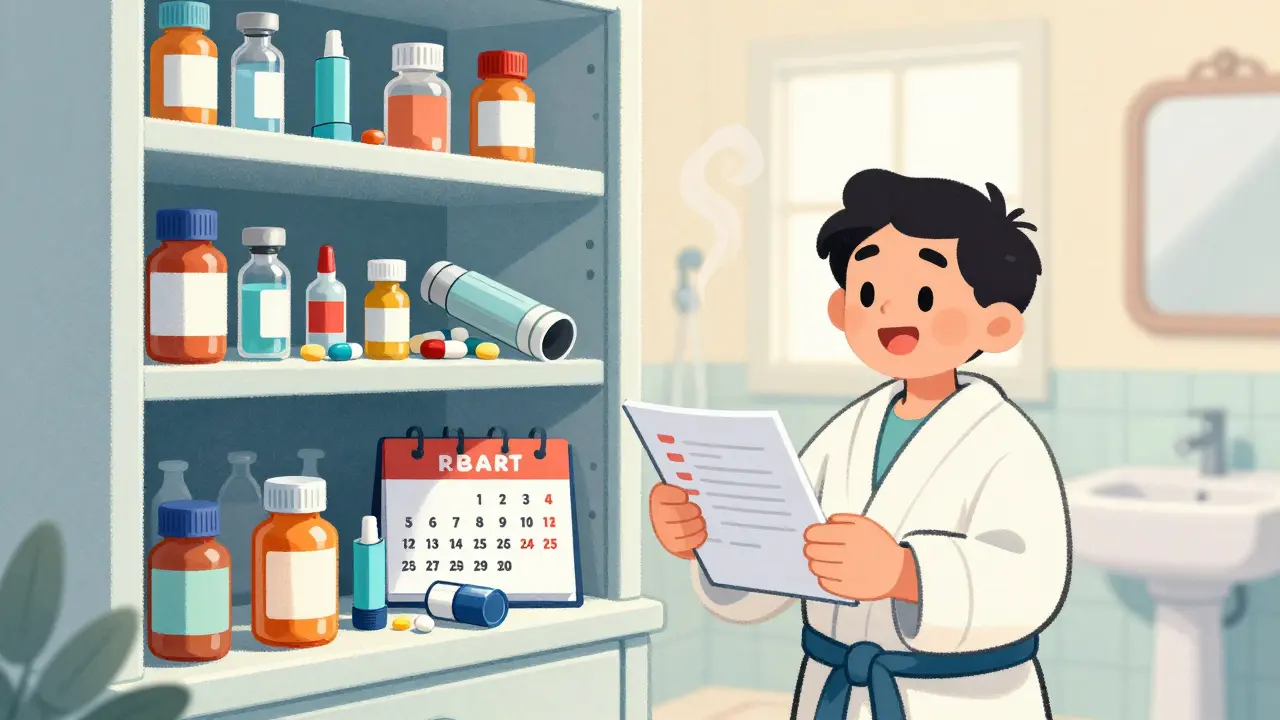
Every year, Americans throw away medications that are still good-while others take pills that have lost their power. It’s not just a waste of money; it’s a health risk. Think about insulin that doesn’t lower blood sugar, or an asthma inhaler that fails during an attack. These aren’t hypotheticals. In 2023, over 76% of home medication errors involved expired drugs, according to the Southwestern Vermont Medical Center. The good news? You can stop this with a simple, repeatable system. Creating a medication expiration review schedule isn’t about being overly cautious-it’s about making sure your medicine works when you need it most.
Why Expiration Dates Matter (And When They Don’t)
Expiration dates aren’t arbitrary. The FDA requires them based on stability testing. That means a drug is guaranteed to be safe and effective up to that date-when stored properly. But here’s the twist: many pills stay potent long after that date. A 2015 Mayo Clinic study found 90% of tested drugs were still effective 15 years past expiration, if kept dry, cool, and dark. So why do we toss them?
Because storage isn’t ideal for most people. Heat, humidity, and light break down medications faster. Insulin, nitroglycerin, and liquid antibiotics? They degrade quickly. Don’t risk it. For everything else-like antibiotics, pain relievers, or blood pressure pills-expiration dates are more about manufacturer liability than science. Still, you can’t guess. That’s why you need a schedule.
What to Include in Your Review Schedule
Start by gathering every medication you take-prescription, over-the-counter, vitamins, supplements. Don’t forget the ones in your bathroom cabinet, car, or purse. Check each bottle for the expiration date. If it’s printed on the label, great. If it’s on a sticker or hard to read, write it clearly with a permanent marker.
Next, sort them into three groups:
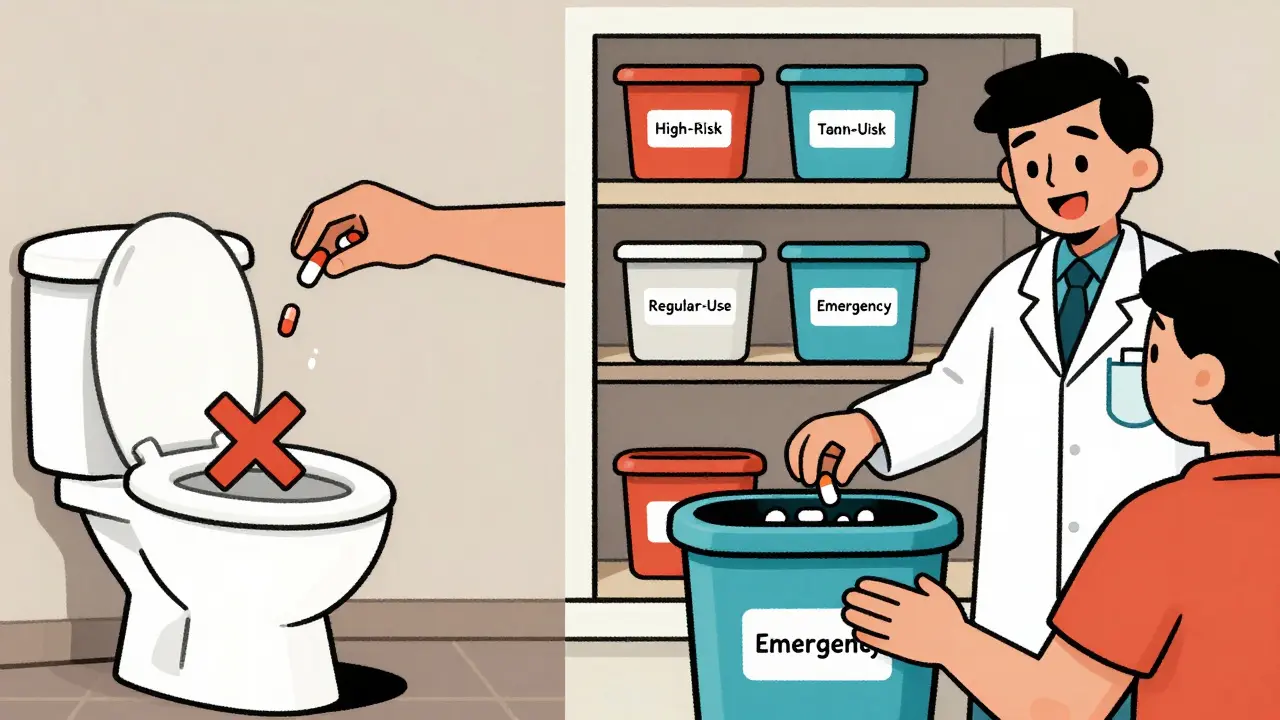
- High-risk: Insulin, epinephrine auto-injectors, nitroglycerin, liquid antibiotics, seizure meds, and birth control pills. These need weekly or monthly checks.
- Regular-use: Blood pressure, diabetes, cholesterol, thyroid meds. Review every 3 months.
- Emergency or occasional: Pain relievers, antihistamines, anti-nausea meds. Check twice a year.
Don’t forget refills. A prescription is usually good for one year after it’s written-unless it’s a controlled substance. Schedule II drugs (like oxycodone) can’t be refilled at all. Schedule III and IV (like Adderall or Xanax) can be refilled up to five times in six months. Write down the refill deadline too.
How Often to Review
Frequency depends on the drug and where you store it. The American Society of Health-System Pharmacists (ASHP) recommends:
- Weekly: Insulin, epinephrine, nitroglycerin. Store these in the fridge (if instructed) and check color and clarity. If insulin looks cloudy or has particles, toss it.
- Monthly: Medications kept in the bathroom or near a window. Heat and moisture kill potency fast.
- Quarterly: All other pills and capsules stored in a cool, dry place like a bedroom drawer.
- Biannually: Emergency meds like epinephrine auto-injectors (if not used regularly) and backup pain relievers.
Set calendar reminders. Use your phone, a paper planner, or a sticky note on your medicine cabinet. Pick a consistent day-like the first Monday of every month. Make it part of your routine, like checking your smoke detectors.
Tools to Make It Easy
You don’t need fancy tech. But if you’re tired of flipping through bottles, here’s what works:
- Free apps: Medisafe and MyTherapy let you scan barcodes, set alerts, and track refills. They even notify you when a pill is expired.
- Pill organizers: Hero Health’s dispenser tracks doses and sends alerts. It costs $499, but for someone on 5+ meds, it pays for itself in saved trips to the pharmacy.
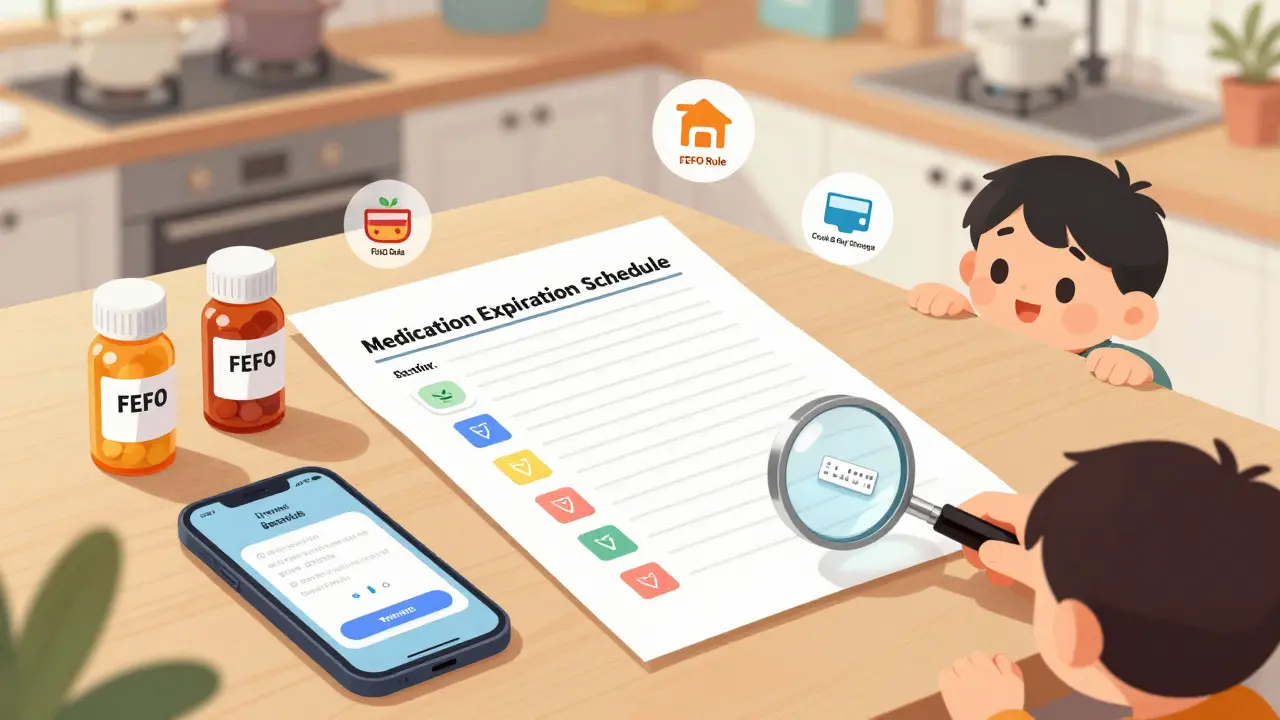
- Simple paper log: Download the National Council on Aging’s free Medication Expiration Log. List each drug, expiration date, storage location, and next review date. Update it every time you refill.
- Original containers: Never transfer pills to random jars. The original bottle has the NDC code, lot number, and storage instructions. These matter if something goes wrong.
Pro tip: Use the First Expired, First Out (FEFO) rule. When you buy a refill, put the new bottle at the back. Use the oldest one first. It’s how pharmacies do it-and it works at home too.
What to Do When a Medication Expires
Don’t flush it. Don’t throw it in the trash. The FDA and DEA recommend safe disposal. Most pharmacies now have take-back bins. CVS, Walgreens, and many local police stations host drug disposal events. You can also use the DEA’s National Prescription Drug Take Back Day (twice a year). Since 2021, over 8,300 collection sites are available nationwide.
If no drop-off is nearby, mix pills with coffee grounds or cat litter in a sealed bag. This makes them unappealing to kids or pets. Then throw it in the trash. Remove or black out personal info on the bottle before recycling it.
And never take expired high-risk meds. If your epinephrine auto-injector is past its date, get a new one. If your insulin is cloudy or has been left out for days, call your pharmacy. A new one is cheaper than an ER visit.
Common Mistakes to Avoid
Most people mess up in these ways:
- Storing meds in the bathroom. Humidity ruins pills. Keep them in a cool, dry drawer instead.
- Ignoring the difference between manufacture and expiration dates. The expiration date is what matters. The manufacture date is for the manufacturer.
- Assuming ‘it still looks fine’ means it’s safe. You can’t see potency loss. A pill that looks perfect might have lost 30% of its strength.
- Waiting until you run out to refill. If your blood pressure med expires in March, refill it in February. Don’t wait until you’re out.
- Not telling your pharmacist about all the meds you take. They can spot duplicates, interactions, and expiration risks you miss.
One survey found 48.7% of seniors struggle to read small print on expiration labels. If that’s you, ask your pharmacist for a large-print label. Or use a magnifying glass. Don’t guess.
How Long Does It Take to Set Up?
Initial setup takes 45 to 60 minutes for most households. Gather everything. Sort it. Write it down. Set your reminders. After that, it’s 5 minutes a month. The first time is the hardest. After two or three reviews, it becomes automatic.
For caregivers managing meds for an elderly parent or child, it’s worth every minute. A 2022 CVS Health study showed patients using their MedSchedule app cut expired medication incidents by 37.2% in just one year. That’s not magic-it’s consistency.
What Happens If You Skip This?
Medication waste costs Americans $7.2 billion a year. But the real cost is health. The FDA estimates 125,000 deaths each year in the U.S. are tied to improper medication use. That includes taking too much, too little, or the wrong drug.
Expired medications don’t just lose strength. Some break down into harmful compounds. Tetracycline antibiotics, for example, can damage kidneys if taken after expiration. While rare, it’s preventable.
And think about emergencies. If your child has a seizure and your anti-seizure med is expired, you’re not just inconvenienced-you’re in danger.
Final Thought: It’s Not About Perfection
You don’t need a perfect system. You just need a reliable one. Start small. Pick one high-risk medication. Set a reminder for next month. Check it. Then add another. In six months, you’ll have a full system. No apps needed. No fancy gear. Just a calendar, a pen, and a little discipline.
Medications save lives. But only if they work. A schedule isn’t extra work-it’s insurance. And in healthcare, insurance is the one thing you can’t afford to skip.
Can I still use a medication after its expiration date?
For most solid pills like ibuprofen or metformin, yes-if stored properly in a cool, dry place. But never use insulin, nitroglycerin, liquid antibiotics, or epinephrine after expiration. They lose potency fast and can be dangerous. Always consult your pharmacist before using any expired medication.
How do I know if a medication has gone bad?
Look for changes in color, smell, or texture. Pills that are cracked, discolored, or sticky should be thrown out. Liquid medications that are cloudy, have particles, or smell off are no longer safe. Insulin that looks cloudy or clumpy should never be used. If in doubt, toss it and ask your pharmacist for a replacement.
Where’s the best place to store medications at home?
A cool, dry place away from sunlight and moisture. A bedroom drawer or kitchen cabinet (not above the stove) works best. Avoid bathrooms-they’re too humid. If your medication requires refrigeration (like insulin), keep it in the fridge, not the door where temperatures fluctuate.
What should I do with expired medications?
Use a drug take-back program. Most pharmacies, police stations, or hospitals offer free disposal bins. If none are nearby, mix pills with coffee grounds or cat litter in a sealed bag, then throw them in the trash. Remove personal info from the bottle first. Never flush medications unless the label specifically says to.
Do I need to check vitamins and supplements too?
Yes. Vitamins and supplements degrade over time too. They won’t hurt you if taken after expiration, but they may not give you the full dose. If your vitamin C tablets are discolored or smell odd, replace them. For high-dose supplements like vitamin D or B12, potency matters-especially if you’re using them to treat a deficiency.
How do I keep track of refills and expiration dates together?
Use a simple spreadsheet or app like Medisafe. List each medication, its expiration date, refill date, and pharmacy contact. Set alerts for both. Many pharmacies will text you when a refill is ready. Don’t wait until you’re out-refill a week before expiration to avoid gaps.
If you’re managing medications for someone else-like an aging parent or a child with chronic illness-this system isn’t optional. It’s essential. Start today. One bottle at a time.
Comments (14)
lisa Bajram
January 8, 2026 AT 22:26OMG YES-this is the exact system I started last year after my grandma nearly took a 3-year-old aspirin that turned to dust. I made a color-coded spreadsheet: red for high-risk, yellow for regular, green for emergency. Now I get a calendar alert every first Monday. No more guessing. My mom says I’m obsessive-but I’d rather be obsessive than in the ER.
Paul Bear
January 9, 2026 AT 03:51While the general framework is sound, the author fundamentally misunderstands the FDA’s expiration date paradigm. Expiration dates are not ‘liability-driven’-they are statistically derived from accelerated stability testing under ICH guidelines Q1A(R2). The 90% potency retention statistic from Mayo is misleading because it conflates solid oral dosage forms with biologics. Insulin’s degradation kinetics are non-linear and temperature-dependent-no amount of ‘cool storage’ negates the loss of tertiary structure. This is why the FDA mandates 100% potency assurance up to the labeled date. Misinterpreting this as ‘it’s still fine’ is a public health hazard.
Dwayne Dickson
January 10, 2026 AT 23:21Let me be clear: this is the most responsible, clinically grounded guide I’ve seen on this topic in years. The FEFO principle alone deserves a Nobel Prize in Pharmacy. I’ve been a hospital pharmacist for 22 years, and I’ve seen too many patients collapse because they trusted ‘it still looks fine.’ The distinction between Schedule II and III refills? Spot on. The bathroom storage warning? Mandatory reading for every college student with a drawer full of Adderall. Thank you for writing this. Someone should turn this into a CDC pamphlet.
Jake Nunez
January 11, 2026 AT 21:54I just started using Medisafe last month. It scans the barcode, tells me when to take it, and flags expired meds. I didn’t realize my ibuprofen was from 2020 until it popped up. Now I don’t even look at the bottle anymore. Just check the app. Life changed.
Jake Kelly
January 12, 2026 AT 05:44For anyone managing meds for a parent or loved one-this isn’t just helpful, it’s essential. I’ve been doing this for my dad since his diagnosis. It’s not glamorous, but it’s the quiet kind of care that keeps people out of hospitals. Start with one bottle. That’s all you need to begin.
Ashlee Montgomery
January 13, 2026 AT 03:47Why do we treat medicine like it’s a can of soup? We don’t eat expired food and call it ‘fine.’ Why do we do it with pills? Maybe because we don’t see the degradation. But it’s happening. The body doesn’t care if the label says 2025. It only knows what’s in the tablet.
neeraj maor
January 14, 2026 AT 05:21Did you know the FDA and pharmaceutical companies are in cahoots to make you buy new meds? Expiration dates are a scam. I’ve been taking my 18-year-old blood pressure pills since 2006. They’re in a sealed glass jar in my basement. I’ve never felt better. The government doesn’t want you to know this. They profit from constant refills. Don’t be fooled.
Ritwik Bose
January 15, 2026 AT 08:58Thank you for sharing this thoughtful and well-researched approach. I live in India, and access to proper storage and disposal is often limited. Still, I’ve adapted the FEFO system for my family’s medicines. We use a small wooden box with labeled compartments. Even without apps, the discipline matters. 🙏
Jaqueline santos bau
January 16, 2026 AT 17:36Wait… so you’re telling me I’m not a hero for keeping my mom’s expired Xanax because ‘she still needs it’? I mean, she’s been on it for 12 years and it’s literally her only peace. You think she’s gonna just ‘get a new one’? Like, what’s the alternative? Her crying in the dark? I’m not throwing away her safety net just because some label says so. You’re not my mom.
Kunal Majumder
January 18, 2026 AT 14:18Bro, I used to toss meds like trash. Then my cousin had a seizure and his meds were expired. He’s fine now, but man-I started checking everything. Now I write dates on all bottles with a Sharpie. Took me 20 minutes. Best 20 minutes ever.
Aurora Memo
January 18, 2026 AT 14:57I appreciate how this balances practicality with caution. I’m a caregiver for my sister with epilepsy, and this system gives me peace of mind without overwhelming me. I don’t need to check her meds daily-I just set a monthly reminder. That’s enough. Small steps, big impact.
chandra tan
January 19, 2026 AT 02:06Same. In India, most people don’t even know what expiration dates mean. I started showing my neighbors how to write dates on bottles. One guy had his diabetes pills from 2018. He didn’t know they could go bad. Now he checks every month. It’s tiny, but it matters.
Bradford Beardall
January 20, 2026 AT 15:18Anyone else use the National Council on Aging’s log? I printed it and taped it to my fridge. Every time I refill, I update it. I don’t even think about it anymore. It’s just there. Like a grocery list for medicine.
McCarthy Halverson
January 21, 2026 AT 20:25Do it. One bottle. One reminder. Start today. No excuses. Your life depends on it.