
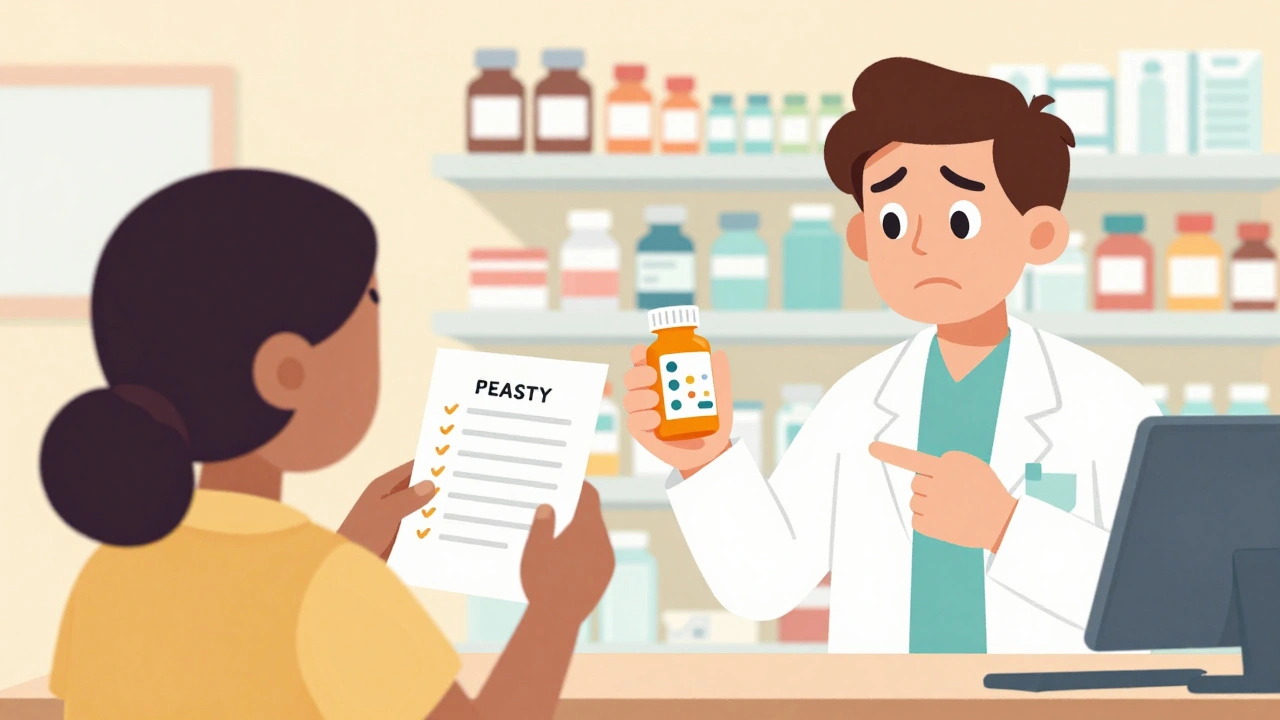
Every year, millions of people around the world take the wrong dose, mix dangerous drugs, or get pills that don’t match their prescription-often because no one asked them to double-check. Medication errors aren’t rare. They happen in hospitals, pharmacies, and at home. And while doctors and nurses play a big part, patients are the last line of defense. You’re the one who actually takes the pills. You know how your body feels. You notice when something looks off. That’s not just helpful-it’s essential.
What You Need to Know About Your Medications
You don’t need to be a doctor to keep yourself safe. You just need to know three things: what the medicine is for, how much to take, and when. Too many people assume the pharmacist or nurse will explain everything. But studies show that 65% of patients leave the clinic without fully understanding their new prescription. That’s why keeping a personal medication list is one of the most powerful tools you have.Write down every pill, patch, inhaler, or injection you take-including vitamins, herbal supplements, and over-the-counter drugs like ibuprofen or melatonin. Include the dose and how often you take it. Keep this list in your wallet, phone, or a note app. Bring it to every appointment. When a doctor changes your meds, compare it to your list. If something doesn’t match, ask why. Research shows that patients who use this simple habit cut their risk of medication mistakes by 42% during hospital stays or transitions between care settings.
Seven Actions That Save Lives
The Institute for Safe Medication Practices identified seven key behaviors that reduce harm. You don’t have to do all of them perfectly, but even one or two can make a difference.- Know the names and why you’re taking them. Don’t just say “the blood pressure pill.” Know it’s lisinopril, and it’s to lower your blood pressure. If you don’t know, ask. This alone reduces error risk by 35%.
- Understand your dosing schedule. Is it once a day? Every 8 hours? Before food? Confusion over timing causes 28% of missed or extra doses. Use a pill organizer if you need to.
- Recognize side effects. If you feel dizzy, nauseous, or unusually tired after starting a new drug, write it down. Don’t wait for it to get worse. Early detection catches 63% of serious reactions before they become emergencies.
- Check the pill’s appearance. If your new prescription looks different from last time-color, shape, markings-ask the pharmacist. One in five dispensing errors are caught this way.
- Question unexpected changes. If your doctor suddenly adds five new pills or switches your main drug without explaining why, speak up. Patients who ask questions catch 15% of prescription errors that providers miss.
- Report everything you take. Many people don’t mention supplements. But St. John’s Wort can interfere with antidepressants. Garlic pills can thin your blood before surgery. Disclosing all substances reduces dangerous interactions by 22%.
- Participate in medication reconciliation. This is when your care team reviews your full list during transitions-like leaving the hospital. Ask: “Is this list complete? Are any drugs being stopped?” Patients who join this process cut discrepancies by half.
Why Asking Questions Isn’t Being Difficult
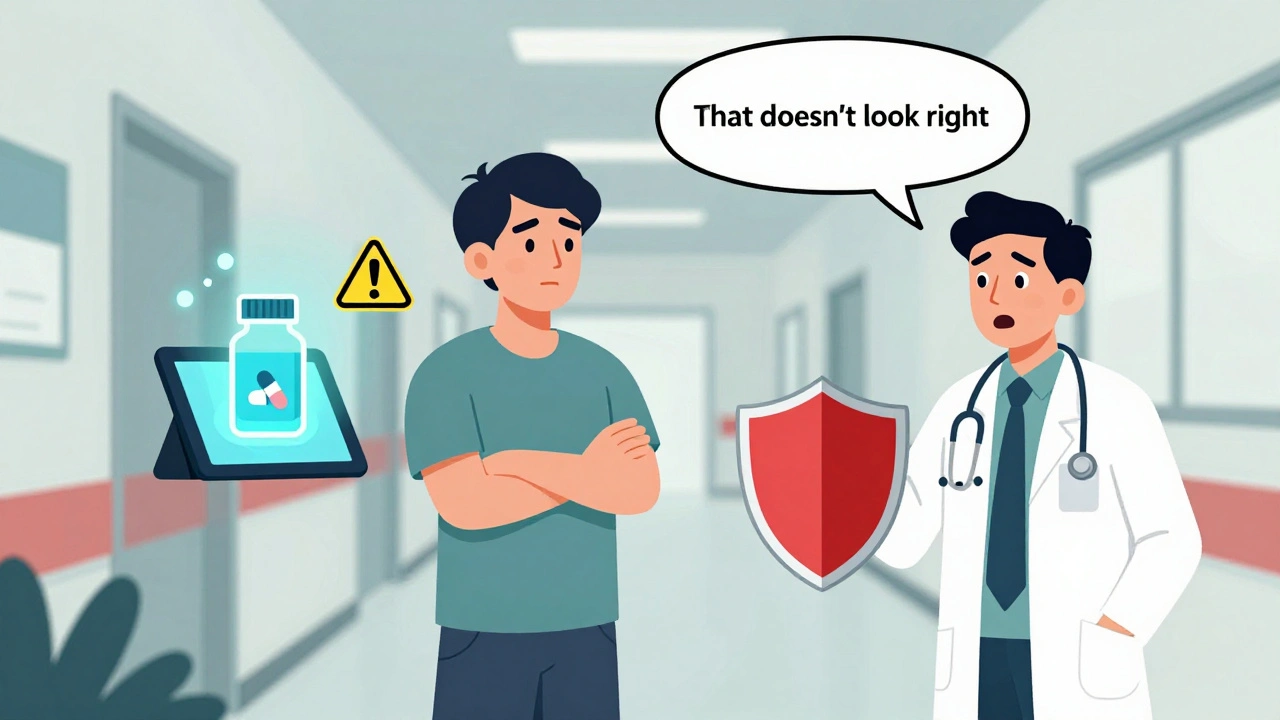
A lot of patients stay quiet because they’re afraid of sounding stupid or annoying. But the truth is, providers expect you to ask. Dr. Tejal Gandhi, president of the Institute for Healthcare Improvement, says patients serve as the final safety checkpoint in 83% of near-miss events. That means you’re not just a passive recipient-you’re part of the team.One woman on Reddit shared how she caught a 10-fold overdose in her child’s antibiotic dose because the label didn’t match what the doctor said. A nurse on r/nursing said 70% of her near-misses were caught when patients said, “That doesn’t look right.” Yet, only 33% of patients say they feel comfortable questioning providers. That gap is dangerous.
If you’re dismissed-“You’re overreacting,” “That’s not possible”-don’t give up. Say: “I’d like a second opinion,” or “Can we check the prescription again?” If you’re still ignored, ask to speak with a pharmacist or patient advocate. Your life matters more than someone’s pride.
The Digital Divide and Who Gets Left Behind
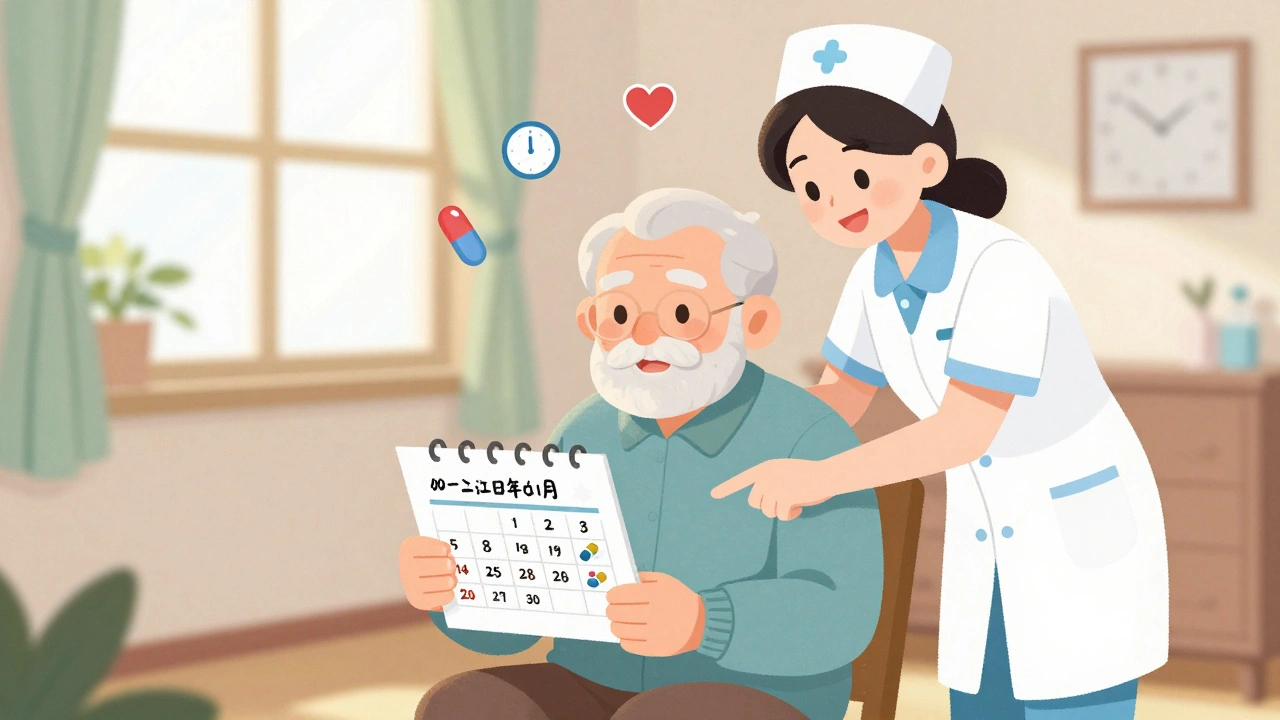
Many hospitals now offer patient portals where you can view your meds, set reminders, or message your doctor. These tools help-especially when they’re interactive. But not everyone can use them. Only 44% of adults over 65 regularly use digital health tools, compared to 78% of people under 45. That’s not just inconvenient-it’s unfair. Older adults are at higher risk for medication errors, yet they’re often excluded from the most effective safety systems.Don’t let technology replace human help. If apps feel too complicated, ask for printed materials. Ask for a family member or caregiver to help. Use a simple paper calendar. Write the day and time next to each pill. A 2023 study found that low-tech methods worked just as well as apps for people with limited digital skills.
When Patient Safety Falls Short
Patient involvement isn’t a magic fix. It doesn’t work well in emergencies. In urgent care or trauma settings, people are in pain, scared, or unconscious. That’s when systems need to be designed to catch mistakes without relying on the patient. In fact, 67% of preventable errors in emergency rooms happen because patients couldn’t speak up.Also, some patients face real barriers: low health literacy, language differences, or cognitive challenges. The U.S. has 88 million adults with basic or below-basic health literacy. That means they struggle to read a prescription label or understand “take twice daily.” Hospitals must provide plain-language instructions, visual aids, and interpreters-not just hand out a pamphlet.
That’s why tools like the Universal Medication Schedule matter. Instead of saying “take with food,” it says: “Take at breakfast, dinner, bedtime.” Four clear times a day. No confusing abbreviations. Pilot programs using this system reduced dosing errors by 44%.
What’s Changing-and What’s Coming
The system is slowly waking up. The FDA now trains patients as “Safety Ambassadors” to teach others in their communities. CMS ties 8% of hospital payments to how well they engage patients in safety. The Joint Commission now requires hospitals to review medications with every patient during discharge. And by 2027, 85% of healthcare organizations plan to have formal programs where patients are treated as true partners-not just recipients.AI tools are also emerging. New apps can scan your pill bottle and tell you if it matches your prescription. Others can alert you if a new drug interacts with something you’re already taking. These won’t replace you-but they’ll help you do your job better.
Your Power, Your Responsibility
Medication safety isn’t just the doctor’s job. It’s yours too. You spend 100% of the time with your own body. Providers spend seconds per dose. You’re the one who notices the swelling, the rash, the dizziness, the weird taste. You’re the one who sees the wrong color pill. That’s not an inconvenience-it’s your role.You don’t need to memorize medical jargon. You don’t need to be perfect. You just need to care enough to ask, check, and speak up. Start today. Write down your meds. Ask one question at your next appointment. Tell your pharmacist if something looks off. You’re not being difficult. You’re being smart.
And if someone tells you to relax? Say: “I’m not relaxing. I’m protecting my life.”
Comments (13)
Gillian Watson
December 4, 2025 AT 05:26I just started keeping a list on my phone after my grandma almost got double-dosed on blood thinners. Best thing I ever did. No fancy app needed, just notes.
Simple. Free. Life-saving.
Jessica Baydowicz
December 4, 2025 AT 07:52OMG YES. I told my dr last week that my new pill looked like a different color and they were like 'oh crap you're right' - turned out it was a mix-up with someone else's med. I felt weird asking but now I'm the queen of asking questions. You're not annoying, you're the hero.
Pavan Kankala
December 6, 2025 AT 02:57This whole 'patient as safety net' thing is just corporate laziness dressed up as empowerment. Doctors get paid to know this stuff. We get paid to survive it. They outsource their competence to us while charging us $500 for a 7-minute visit. The system is broken. Asking questions won't fix that. Only defunding the profit machine will.
Benjamin Sedler
December 7, 2025 AT 18:06I love how this article makes patients sound like superheroes while ignoring that 70% of us are too tired, poor, or medicated to care. You want us to memorize drug names? Cool. Now go try that after working two jobs, raising kids, and surviving a panic attack before your appointment. This isn't empowerment. It's gaslighting with footnotes.
Gareth Storer
December 9, 2025 AT 10:50Ah yes, the classic 'just ask more questions' solution. Brilliant. Next time you have a heart attack, just politely ask the ER nurse if she’s sure the defibrillator isn’t set to 'tickle mode'.
Elizabeth Crutchfield
December 9, 2025 AT 14:41i just started writin down my meds on a sticky note and puttin it on my mirror. it helped me not take my bp pill twice. i feel like a genius now lol
Joe Lam
December 10, 2025 AT 08:04The real issue here isn't patient ignorance - it's the systemic deprofessionalization of medicine. When providers are incentivized to see 30 patients an hour, they can't possibly educate. Blaming the patient for the collapse of care standards is not just irresponsible - it's a moral failure dressed in bullet points.
Jenny Rogers
December 12, 2025 AT 05:59It is imperative to underscore the ethical obligation incumbent upon healthcare institutions to ensure that all patients, irrespective of socioeconomic status, are provided with comprehensible, linguistically appropriate, and cognitively accessible pharmaceutical instructions. Failure to do so constitutes a violation of the Hippocratic Oath’s foundational tenet of beneficence.
Carolyn Ford
December 13, 2025 AT 18:04This is why we can't have nice things. You're telling people to 'speak up' - but 80% of the population can't even spell 'pharmacist' correctly. This article is a joke. If you can't read, you shouldn't be allowed to take pills. Simple.
Yasmine Hajar
December 14, 2025 AT 23:25I work in a clinic and I’ve seen it all. A man came in once because his wife was ‘acting weird’ after a new med. Turns out she was on 10x the dose because the label got swapped. She’s fine now. But she didn’t speak up because she thought her doctor knew best. That’s not ignorance. That’s trust. And we broke it. So now we ask for more. And we owe them better.
michael booth
December 16, 2025 AT 07:14The Universal Medication Schedule is a game changer. I've seen clinics reduce errors by over 40% just by replacing 'bid' and 'q8h' with 'breakfast and dinner'. No jargon. No confusion. Just clear language. This should be mandatory everywhere.
Rebecca Braatz
December 17, 2025 AT 05:15To anyone reading this who thinks they're too tired or scared to ask: You're not alone. But your life is worth one question. One. That's all it takes. Write it down. Say it out loud. Even if your voice shakes. You're not being difficult - you're being brave. And you're not doing it alone anymore.
John Filby
December 17, 2025 AT 10:20I use a pill organizer with alarms now. Also took a pic of every pill bottle and saved it in a folder called 'My Meds'. When I went to the ER last month, I just showed the nurse my phone. She said 'wow, you're the first one who actually did this'. I felt weirdly proud. 😊