
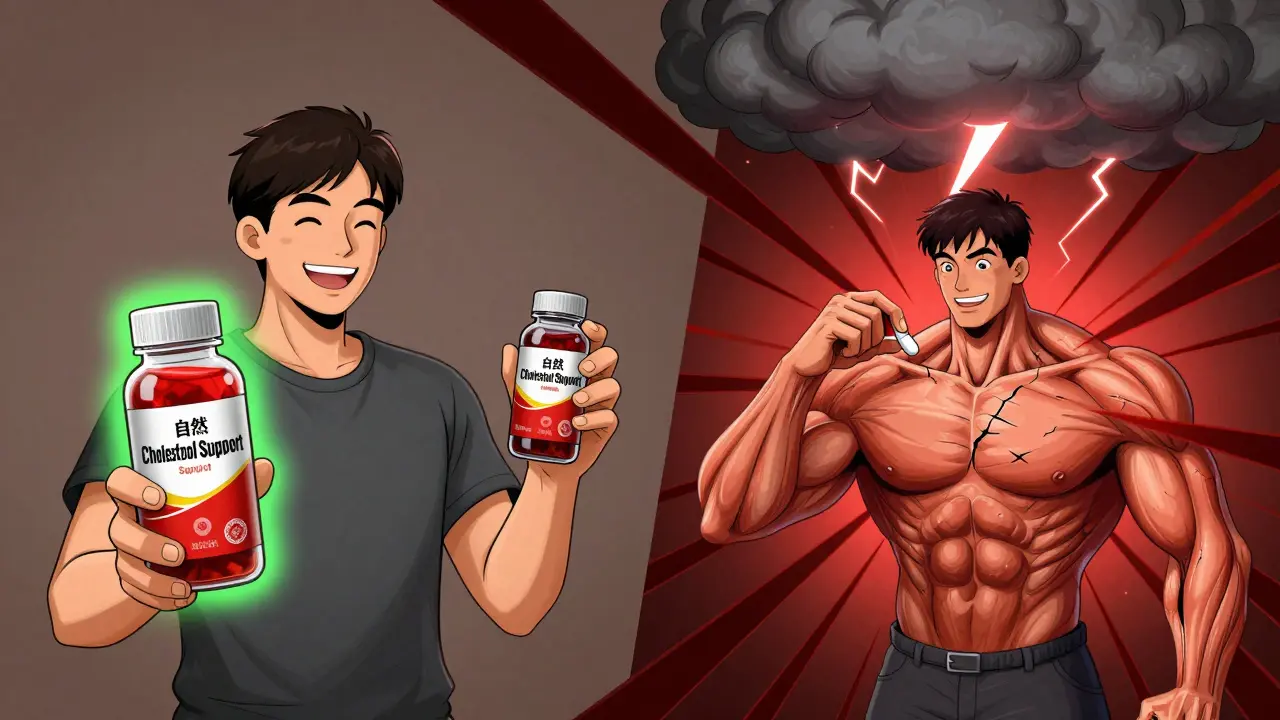
Statins & Red Yeast Rice Risk Calculator
This calculator estimates your risk of muscle damage when taking red yeast rice with statins. Red yeast rice contains monacolin K (identical to statins), so combining them increases your risk of rhabdomyolysis. Enter your medications below to see if your combination is dangerous.
People turn to red yeast rice because they want something "natural" to lower their cholesterol. It’s marketed as a gentle alternative to statins, especially for those who get muscle pain or other side effects from prescription drugs. But here’s the truth most labels won’t tell you: red yeast rice isn’t just a herbal supplement-it’s essentially a hidden statin. And taking it alongside a real statin isn’t just risky. It’s potentially life-threatening.
What’s Actually in Red Yeast Rice?
Red yeast rice is made by fermenting rice with a mold called Monascus purpureus. For centuries in China, it was used for digestion and circulation. But in 1979, scientists discovered something shocking: one of its active compounds, monacolin K, is chemically identical to lovastatin-the first statin drug ever made. That means every time you take red yeast rice, you’re ingesting a pharmaceutical-grade HMG-CoA reductase inhibitor, the same enzyme blocker that statins target to lower LDL cholesterol. The problem? There’s no standardization. One capsule might have 2 mg of monacolin K. Another might have 15 mg. A 2022 ConsumerLab.com test found only 30% of red yeast rice products matched their label claims. Some even contained citrinin, a toxic mold byproduct linked to kidney damage. The FDA has issued over a dozen warning letters since 2008, calling these products unapproved drugs. Yet they’re still sold on Amazon, in health stores, and online with no prescription needed.Why Combining It With Statins Is a Bad Idea
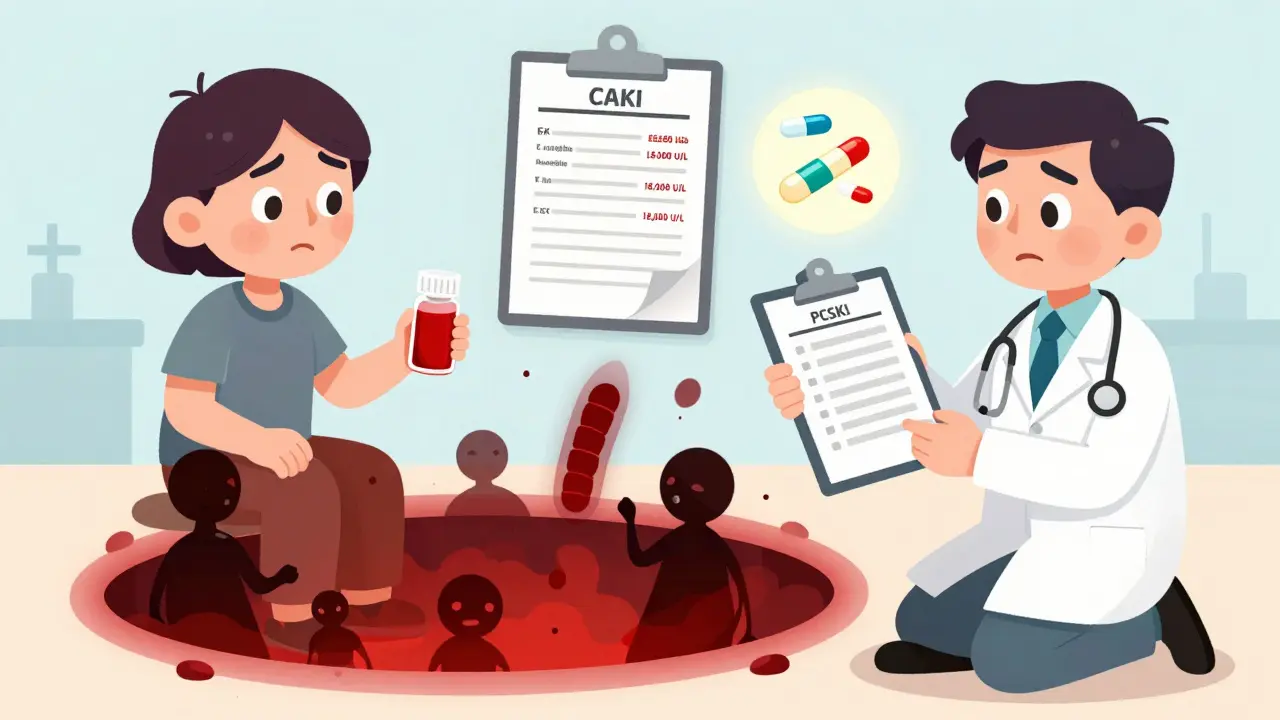
If you’re already taking a statin-say, atorvastatin, rosuvastatin, or simvastatin-and you add red yeast rice, you’re doubling down on the same mechanism. You’re not getting extra benefit. You’re doubling your risk. The result? A spike in muscle damage. Case reports show people ending up in the ER with creatine kinase (CK) levels over 10,000 U/L (normal is under 200). One Reddit user, taking 1,200 mg of red yeast rice with 20 mg of atorvastatin, hit 18,500 U/L. He needed hospitalization. That’s rhabdomyolysis-a condition where muscle tissue breaks down and floods your kidneys with toxic proteins. It can cause permanent kidney failure or death. The Mayo Clinic rates this interaction as "Major-Use Alternative." Studies show the risk of muscle damage triples when you combine the two. The American Heart Association, the American College of Cardiology, and the FDA all warn against it. There’s no safe threshold. Even low-dose red yeast rice can push you over the edge if you’re already on a statin.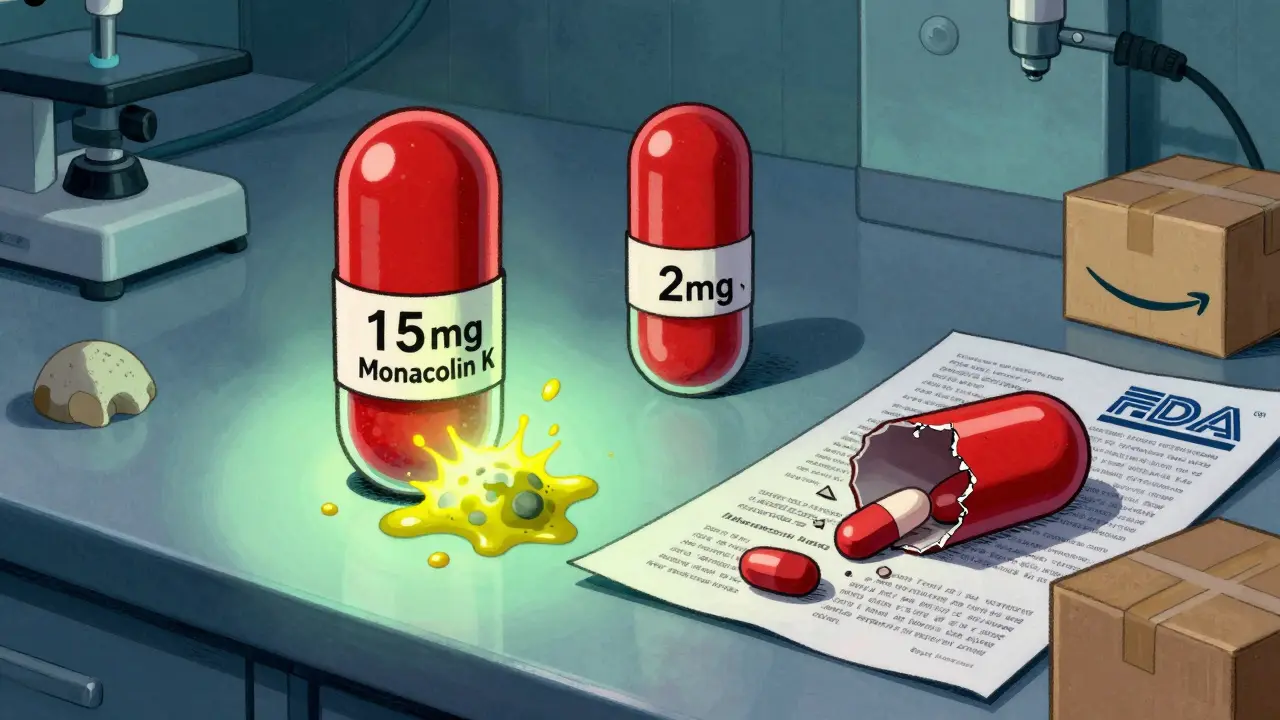
Who Uses Red Yeast Rice-and Why
About 3.2 million Americans take red yeast rice, according to 2022 NHANES data. Most are people who stopped their statins because of muscle pain, fatigue, or liver enzyme spikes. For some, it works. A 2017 study found 60% of statin-intolerant patients could tolerate 1,800 mg of red yeast rice daily, lowering LDL by 25-30%. That’s similar to low-dose statins. But here’s the catch: those who succeed are using it alone. Not with statins. Not with other cholesterol drugs. Just red yeast rice, under a doctor’s watch. The positive reviews on Amazon? Mostly from people who switched from statins to red yeast rice-not added it on top. The real danger is the assumption that "natural" means "safe" or "compatible." People think, "I’m taking a little bit, so it won’t hurt." But monacolin K doesn’t care if it came from a pill or a powder. Your liver doesn’t know the difference. Your muscles don’t either.What You Should Do Instead
If you can’t tolerate statins, there are safer, proven options:- Ezetimibe: Blocks cholesterol absorption in the gut. Works well with or without statins. Minimal muscle side effects.
- PCSK9 inhibitors: Injectables like evolocumab or alirocumab. Lower LDL by 50-60%. Used for high-risk patients. Costly, but covered by many insurance plans now.
- Bempedoic acid: Oral pill that works in the liver, not muscles. Fewer muscle side effects than statins.
- Lifestyle changes: Soluble fiber (oats, beans, psyllium), plant sterols, and regular exercise can drop LDL by 10-20% on their own.
Red yeast rice isn’t the only path. And if you’re still considering it, don’t skip the testing. Get your liver enzymes (ALT, AST) and CK levels checked before starting-and again after 3 months. Use only USP-verified brands. Avoid grapefruit juice. And tell your doctor-every time-what you’re taking. A 2021 Mayo Clinic study found 45% of patients never mentioned their supplements during visits.
Why the FDA Lets It Stay on Shelves
The Dietary Supplement Health and Education Act of 1994 lets companies sell supplements without proving they’re safe or effective first. The FDA can only act after harm is done. That’s why red yeast rice is still sold-despite being a drug in everything but name. The market is worth $150 million a year. Companies profit from ambiguity. But things are shifting. In 2023, the FDA issued a new warning about citrinin contamination. USP verification-third-party testing for purity and potency-is now on 15% of products, up from 5% in 2020. The American Herbal Pharmacopoeia updated its standards in January 2023, requiring minimum monacolin K levels and maximum citrinin limits. These are steps forward. But they’re still voluntary.Bottom Line: Don’t Mix Them
Red yeast rice has a role-for people who can’t take statins and want a natural option. But only if used alone. Only if monitored. Only if you know exactly what’s in the bottle. If you’re on a statin, don’t take red yeast rice. Period. The risk isn’t theoretical. It’s documented. It’s in ER records. It’s in case reports. It’s in the FDA’s own database. If you’re thinking of switching from statins to red yeast rice, talk to your doctor first. Get your cholesterol checked. Get your liver and muscle enzymes checked. Don’t assume it’s safer just because it’s labeled "supplement." Your heart deserves more than guesswork. Your muscles deserve protection. And your future self will thank you for choosing clarity over convenience.Can I take red yeast rice instead of a statin?
Yes, for some people with statin intolerance, red yeast rice can be an alternative-but only under medical supervision. Studies show it lowers LDL by 20-30% when taken alone at doses of 1,200-1,800 mg daily, providing about 3-5 mg of monacolin K. However, because potency varies widely between brands, it’s critical to use USP-verified products and monitor liver enzymes and muscle pain regularly.
Is red yeast rice safer than statins?
Not necessarily. While some people tolerate red yeast rice better than statins, it carries the same risks: muscle damage, liver stress, and kidney issues. The key difference is unpredictability. Statins have fixed, tested doses. Red yeast rice doesn’t. One capsule might be safe; another might be equivalent to a high-dose statin. That variability makes it riskier, not safer.
What happens if I accidentally take red yeast rice with a statin?
You increase your risk of rhabdomyolysis-a serious condition where muscle tissue breaks down and can damage your kidneys. Symptoms include severe muscle pain, weakness, dark urine, and fatigue. If you’ve taken both together, stop the supplement immediately and contact your doctor. Blood tests for CK and liver enzymes are essential. The FDA has documented over 120 cases of severe muscle injury from this combination between 2018 and 2022.
How do I know if my red yeast rice product is safe?
Look for the USP Verified mark on the label. This means the product was independently tested for monacolin K content, absence of citrinin, and proper manufacturing. Only about 15% of red yeast rice products on the market have this certification. Avoid products that don’t list monacolin K content or make vague claims like "natural cholesterol support."
Are there any other supplements I should avoid with red yeast rice?
Yes. Avoid grapefruit juice, niacin, fibrates, cyclosporine, and certain antibiotics like clarithromycin. These all interact with the same liver enzyme (CYP3A4) that metabolizes monacolin K, increasing the risk of side effects. Also avoid combining it with other cholesterol-lowering supplements like berberine or fish oil unless your doctor approves it. The more you stack, the higher the risk.
Comments (14)
Sarah Williams
December 19, 2025 AT 15:28Red yeast rice is just statin in disguise. The FDA has been warning about this for over a decade. Labels don’t have to list monacolin K content because it’s classified as a supplement, not a drug. That’s regulatory arbitrage at its finest. Companies profit while people end up in the ER with rhabdomyolysis. No magic here-just bad math and greed.
Cara C
December 21, 2025 AT 13:35I get why people turn to this stuff. Statins wrecked my legs. I couldn’t walk without pain. I tried red yeast rice on my own-no statin-and it actually helped. My LDL dropped. But I got it USP-verified, checked my CK every 3 months, and told my doctor everything. It’s not about natural vs synthetic-it’s about knowing what’s in your body and being responsible.
Grace Rehman
December 22, 2025 AT 06:01So we’re supposed to trust a pill made by a mold on rice more than a drug developed by scientists with double-blind trials? The irony is thick enough to spread on toast. Natural doesn’t mean safe-it means unregulated. And unregulated means someone’s getting rich off your ignorance. You wouldn’t drink wild mushroom tea if you didn’t know what kind it was. Why treat pills any differently?
Christina Weber
December 23, 2025 AT 13:02There is no such thing as a "gentle" statin. The term is a marketing lie. Monacolin K inhibits HMG-CoA reductase. That is the exact same mechanism as atorvastatin, simvastatin, rosuvastatin. The body does not distinguish between a capsule labeled "natural" and one labeled "prescription." The liver metabolizes the compound identically. Therefore, combining them is not merely unwise-it is pharmacologically indefensible.
Erika Putri Aldana
December 23, 2025 AT 14:14they just want you to take the $1000/month shot. the supplement is cheaper and "natural" lol. who even trusts big pharma anymore?? 🤡
Sandy Crux
December 24, 2025 AT 17:12...and yet, we live in a society where a fermented rice product can be sold as a "dietary supplement," while a precisely dosed, clinically proven statin is treated as a controlled substance. The regulatory framework is not just broken-it is a farce designed to enrich corporations and confuse the public. The FDA’s hands are tied by 1994 legislation written by lobbyists. We are not being protected. We are being sold.
Jackie Be
December 25, 2025 AT 08:34OMG I tried red yeast rice and my muscles felt like jelly but I thought it was just "detoxing" 😭 then I got dark urine and panicked and went to the ER-my CK was 14k. I’m never doing that again. DO NOT MIX. I’m alive but I still get cramps at night. This isn’t a warning-it’s a cry for help.
Theo Newbold
December 26, 2025 AT 11:183.2 million Americans taking this? That’s not a trend. That’s a public health failure. The fact that this is still on Amazon, sold with no warning labels, no mandatory testing, no physician oversight-it’s criminal negligence. And the companies know it. They’re banking on the fact that most people won’t read the fine print, won’t check for USP, won’t get bloodwork, and won’t tell their doctors. That’s not a loophole. That’s a trap.
Jay lawch
December 28, 2025 AT 06:37Let me tell you something about the West. They sell poison labeled as medicine. Red yeast rice? It’s a colonial trick. In China, they used it for circulation, not to replace Western drugs. Now you’re taking it with statins because you don’t trust your doctor? Who made you think your doctor is your enemy? The FDA doesn’t control this because the pharmaceutical giants own the system. They want you to buy their $1000 shots and ignore the cheap alternative-so they let the cheap alternative kill you slowly. It’s all connected.
mukesh matav
December 28, 2025 AT 11:40I’ve been on statins for 8 years. Muscle pain was bad at first, but my doctor lowered the dose and added ezetimibe. Now I feel fine. I saw someone online say they switched to red yeast rice and felt better-I didn’t try it. I trusted my doctor’s plan. Sometimes the best choice isn’t the most exciting one. Just because something sounds natural doesn’t mean it’s better. Sometimes, science is the gentlest option.
Jerry Peterson
December 30, 2025 AT 09:46My uncle in Delhi used red yeast rice for years. He never took statins. He ate a lot of garlic, oats, and walked 5k steps every day. His LDL stayed around 110. He didn’t need a drug. But he also never bought it off Amazon-he got it from a trusted Ayurvedic shop that tested every batch. Context matters. The problem isn’t the rice-it’s the American way of buying supplements like candy.
Dan Adkins
December 31, 2025 AT 04:58It is imperative to emphasize that the ingestion of red yeast rice in conjunction with statin therapy constitutes a pharmacological contraindication of the highest clinical significance. The synergistic inhibition of HMG-CoA reductase precipitates an exponential increase in the likelihood of rhabdomyolysis, as documented in multiple peer-reviewed case series. Furthermore, the absence of standardized dosing renders risk stratification impossible. Therefore, the concurrent use of these agents must be categorically prohibited.
Peggy Adams
December 31, 2025 AT 06:46you think the FDA gives a damn? they let nicotine and sugar be legal. red yeast rice is the least of our problems. they just want you to pay for the expensive shot. it's all about the money. i took it with my statin for 6 months and i'm fine. maybe my body is just different 😎
Jon Paramore
December 31, 2025 AT 10:31For statin-intolerant patients, ezetimibe + PCSK9i (if cost-prohibitive, bempedoic acid) are the only evidence-based alternatives with acceptable safety profiles. Red yeast rice has a CV risk reduction profile comparable to low-dose statins-but only when used in isolation, with USP verification, and with monitoring of CK, ALT, AST. Any deviation from this protocol increases rhabdo risk by >300%. This isn't opinion. It's meta-analysis data from JAMA Cardiology 2021 and Circulation 2023.