
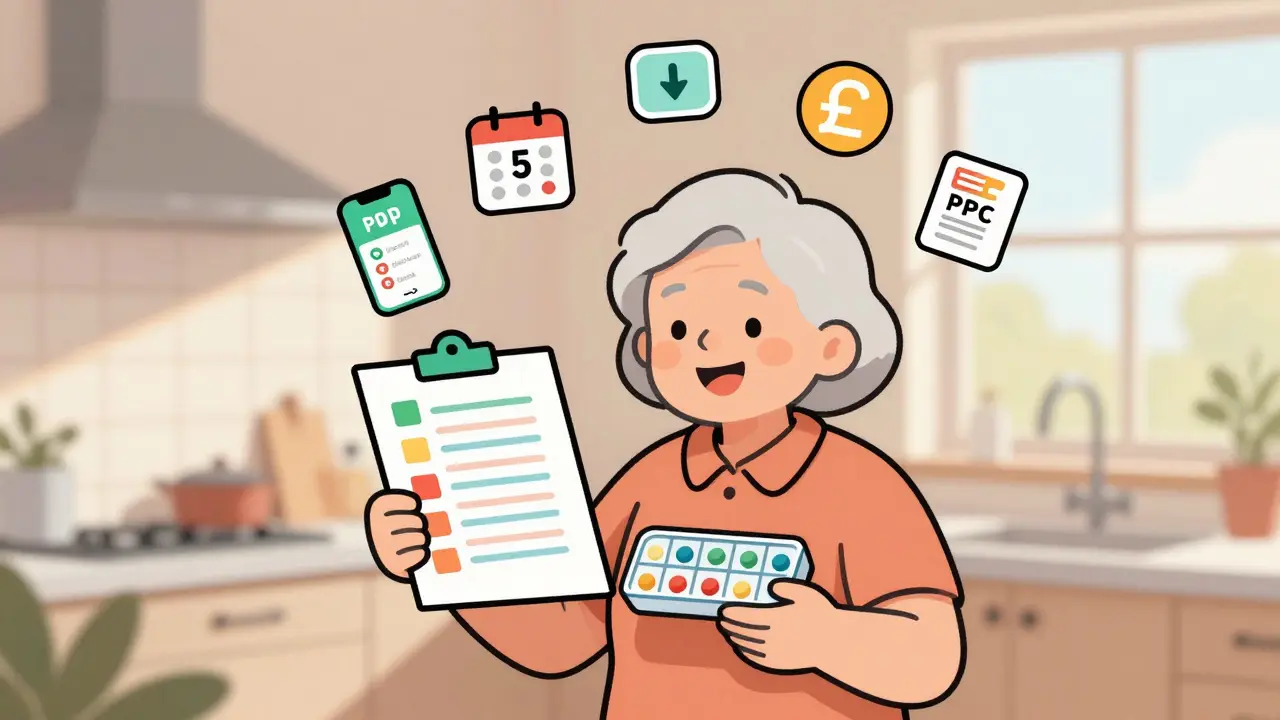
Managing medication costs doesn’t have to be a guessing game. If you’re paying for prescriptions out of pocket-whether it’s for diabetes, high blood pressure, or a chronic condition-you’ve probably felt the pinch. Rising drug prices, surprise co-pays, and running out of pills at the worst time aren’t just annoying. They’re dangerous. The good news? You don’t need a hospital budgeting team to take control. With a few smart systems, you can build your own medication budgeting and auto-refill alerts that keep you on track, save money, and prevent gaps in care.
Start with What You’re Actually Spending
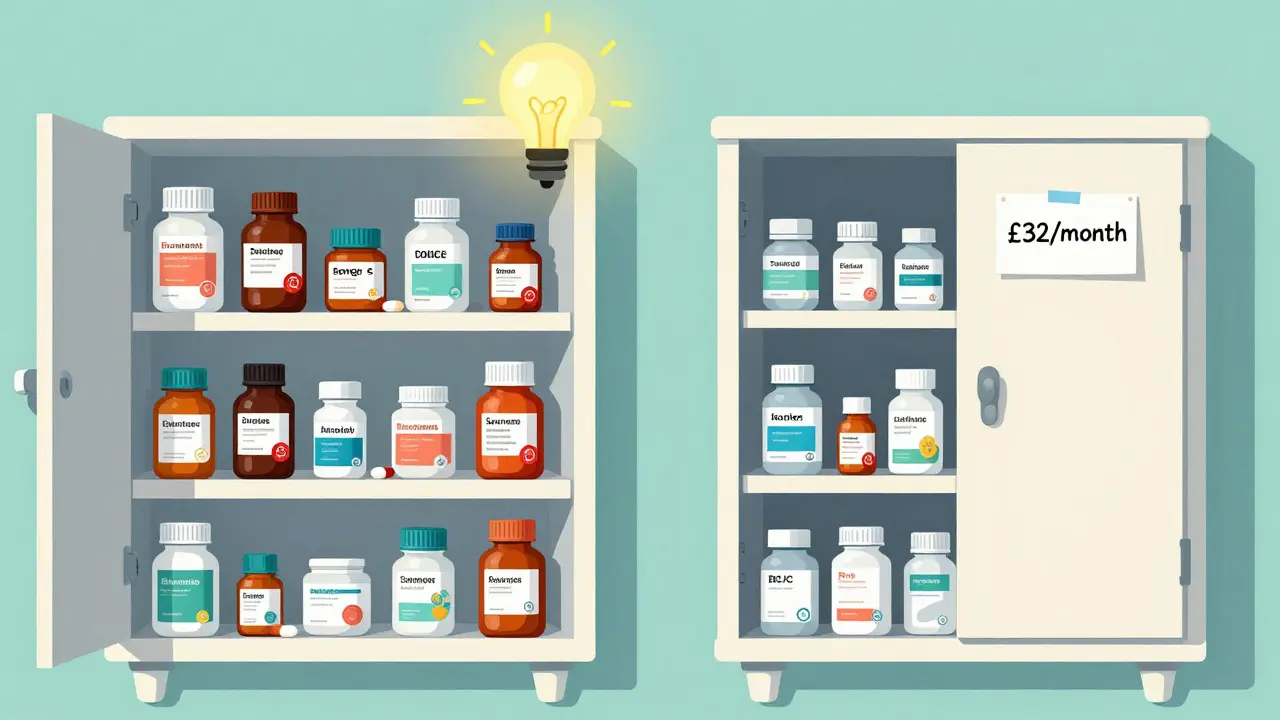
Before you set up anything automated, you need to know where your money is going. Most people think they know their monthly drug costs-until they look at their receipts. You might be paying £45 for one pill, £12 for another, and £0 for a third because your insurance covers it. That’s not a budget. That’s confusion. Grab your last three months of pharmacy receipts or log into your pharmacy app. Write down every medication you take, how much you pay per refill, and how often you refill it. Don’t forget supplements or over-the-counter drugs you use daily. A 75-year-old woman in Birmingham I spoke to recently realized she was spending £180 a month on three separate blood pressure pills-only to find out a generic combo pill existed for £32. That’s a £150 monthly savings. Just by knowing what she was buying. This step isn’t glamorous, but it’s the foundation. You can’t fix what you don’t measure. And if you’re on NHS prescriptions, you’re already paying the prescription charge of £9.95 per item. Multiply that by how many items you get each month. That’s your baseline.Build Your Personal Medication Budget
Now that you have the numbers, create a simple monthly budget. List each medication, its cost per refill, and how often you refill it. For example:- Metformin 500mg - £3.20 every 28 days - £3.20 x 1 = £3.20/month
- Atorvastatin 20mg - £5.50 every 28 days - £5.50 x 1 = £5.50/month
- Levothyroxine 50mcg - £0 (NHS exemption) - £0/month
- Paracetamol 500mg - £2.50 every 14 days - £2.50 x 2 = £5.00/month
Set Up Auto-Refill Alerts That Actually Work
Most pharmacies offer auto-refill programs. But most people set them up and forget them. Then they get a text saying “Your prescription is ready,” and they realize they haven’t taken their pills in three days. That’s not helpful. That’s a risk. Here’s how to make auto-refill alerts useful:- Use your pharmacy’s app (like Boots, Lloyds, or Superdrug) and enable auto-refill for each prescription.
- Set the refill trigger to happen when you have 5 days left-not 1 day. Why? Because delivery can take 2-3 days, and holidays happen.
- Turn on notifications on your phone. Not just text. Use push notifications. They’re harder to ignore.
- Link your alerts to a calendar. When your refill is due, block 15 minutes to pick it up or schedule delivery. Treat it like a doctor’s appointment.
Use Your NHS Benefits to Cut Costs
If you’re paying for prescriptions, you might be eligible for a Prescription Prepayment Certificate (PPC). It costs £111 for 12 months or £31 for 3 months. If you take more than 4 prescriptions a month, the PPC pays for itself. For 6 prescriptions a month? You save £180 a year. That’s a free holiday weekend. Check if you qualify for free prescriptions. You’re eligible if you’re over 60, pregnant, have certain medical conditions (like diabetes or epilepsy), or are on low income. You don’t have to apply for each one-just get the exemption certificate once. It lasts five years. Also, ask about the NHS Low Income Scheme. Even if you earn too much for benefits, you might still qualify for partial help. You can apply online. It takes 10 minutes. The difference between paying £9.95 per item and £0 is huge over time.Track Changes and Adjust Monthly
Your medication budget isn’t set in stone. It’s a living plan. Every month, review what you spent versus what you planned. Did you refill early? Did a drug price go up? Did you stop taking something? A 68-year-old man in Solihull started tracking his meds after a £47 surprise bill for a new cholesterol drug. He found out his GP had switched him to a more expensive brand without telling him. He called his pharmacist, asked for the generic, and saved £120 a month. That’s not luck. That’s awareness. Use a simple spreadsheet or even a notes app. Title it “My Meds: Cost & Refill.” Update it every time you refill. After three months, you’ll start seeing patterns. Maybe you always run out of your inhaler in winter. Maybe your blood sugar test strips cost more than your insulin. That’s insight. That’s power.What to Avoid
Don’t assume your pharmacy will warn you about price changes. They won’t. They’ll just refill and charge you. Don’t ignore expired pills. If you’ve got old meds in your drawer, they’re not just clutter-they’re a financial drain. You might be paying for them again without realizing you still have them. Don’t wait for an emergency. If you run out of your heart medication, you’ll pay more at the pharmacy. You’ll stress. You might go to A&E. All avoidable.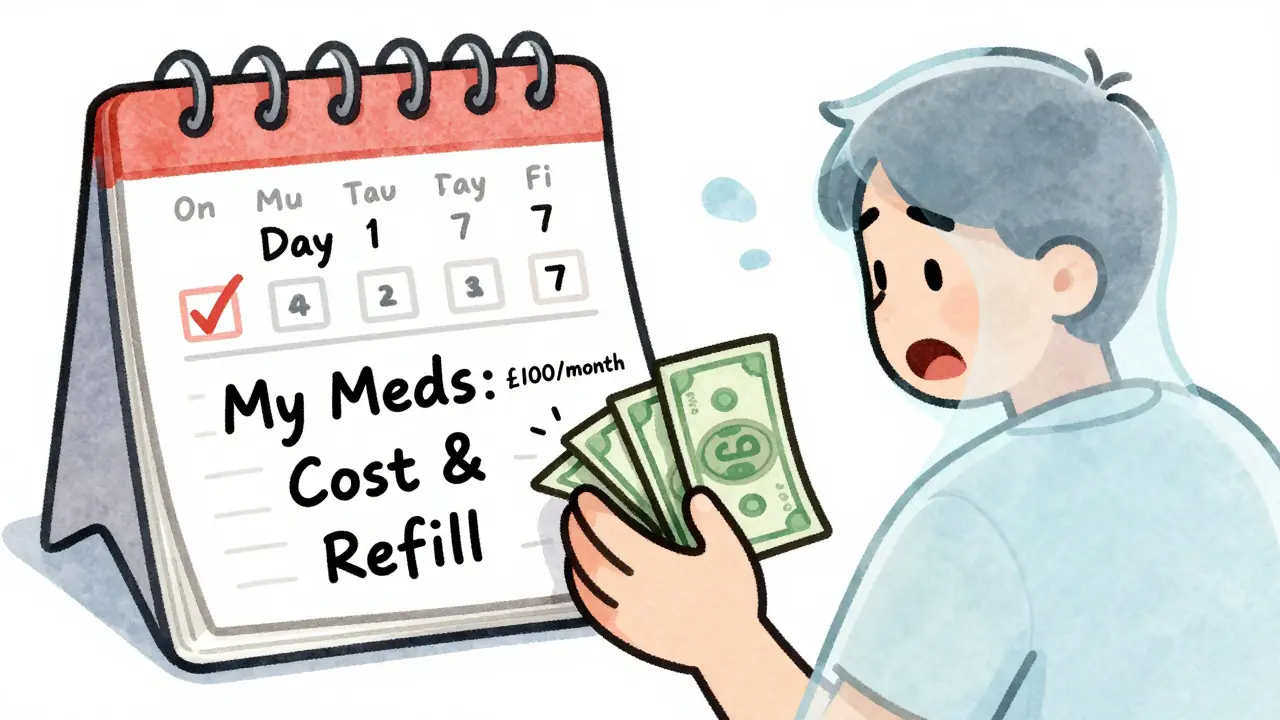
Real-Life Example: How One Woman Saved £800 a Year
Carol, 72, from Solihull, took six medications. She paid £100 a month out of pocket. She thought it was normal. Then she started tracking. She found:- Two of her drugs had cheaper generics available.
- She was refilling her inhaler every 14 days-but it lasted 21.
- She didn’t know she qualified for a PPC.
- Her GP had prescribed a branded statin when a generic was just as effective.
Next Steps: Your 7-Day Action Plan
Day 1: Gather all your prescription receipts or app records. Write down every medication, cost, and refill frequency. Day 2: Calculate your monthly total. Add 15% for buffer. That’s your budget. Day 3: Log into your pharmacy app. Enable auto-refill for each prescription with a 5-day trigger. Day 4: Check if you qualify for a PPC or free prescriptions. Apply if eligible. Day 5: Ask your pharmacist: “Is there a cheaper version of this?” for every drug you take. Day 6: Set a recurring calendar reminder: “Review meds” every first Monday of the month. Day 7: Celebrate. You just took control. No one else has to do this for you.Can I set up auto-refill alerts without a smartphone?
Yes. Most pharmacies still allow you to set up auto-refills over the phone. Call your pharmacy, ask for the prescription refill service, and request to be enrolled. You can also ask for paper reminders or weekly phone calls. The system works even if you don’t use apps-just make sure you’re clear about when you want to be reminded.
What if my medication price suddenly goes up?
Pharmacies don’t always notify you before a price change. If you notice a spike, ask if there’s a generic alternative. Ask your GP if another drug in the same class could work. You can also check online price comparisons through NHS Prescription Pricing Authority data. Sometimes, switching to a different pharmacy-even within the same chain-can save you £10-£20 per month.
Do I need special software to track my medication budget?
No. A free notes app on your phone, a simple spreadsheet, or even a paper notebook works fine. The goal isn’t fancy tech-it’s awareness. What matters is consistency. If you update your list every time you refill, you’ll see trends. That’s all you need.
Can auto-refill alerts cause me to get too much medication?
Only if you don’t review your prescriptions regularly. If your condition changes-like if your doctor reduces your dose or you stop taking a drug-the auto-refill will keep sending it. That’s why monthly reviews are critical. If you’re unsure, call your pharmacy and say: “I want to pause my refill until my next doctor’s appointment.” They’ll help you adjust it.
Is it worth getting a Prescription Prepayment Certificate?
If you pay for more than 3 prescriptions a month, yes. The 12-month PPC costs £111. If you pay £9.95 per item, that’s 11 prescriptions. If you take 4 or more, you’re already saving money. Many people don’t know they qualify, especially if they’re over 60 or have long-term conditions. It’s free to check eligibility online.
Comments (8)
Bhaskar Anand
February 25, 2026 AT 09:06This is why India's healthcare system is collapsing. People waste money on brand-name drugs while generics exist. No one teaches this. No one cares. You think the NHS is helping? It's a glorified pharmacy with a flag. You track your meds? Good. Now stop being passive and demand cheaper options. Your life isn't a spreadsheet. It's a battle. And you're losing if you're still paying £9.95 per item. Fix it. Or die broke.
William James
February 25, 2026 AT 09:58i just want to say how amazing this is. you dont need to be a financial wizard to take control of your health. i used to be scared of meds because i didnt know how much theyd cost. now i use a sticky note on my fridge. its not fancy. but it works. every month i write down what i spent. and if i see a spike? i call my pharmacist. theyre usually super helpful. seriously. try it. youll be surprised how much you can save. and no, you dont need an app. just a little attention. thats all.
David McKie
February 25, 2026 AT 14:51Carol saved £816 a year? That’s adorable. You think that’s the solution? You think tracking your meds is enough? Let me tell you something - the real problem is that the NHS is a bankrupt joke. The government doesn’t care. Pharmacies don’t care. Your GP switches you to a more expensive drug because they get kickbacks. You think you’re empowered? You’re a pawn. And this whole post? It’s a Band-Aid on a hemorrhage. You’re not saving money. You’re just delaying the inevitable collapse. Stop pretending you’re in control. You’re not.
Southern Indiana Paleontology Institute
February 25, 2026 AT 19:26you guys are overcomplicating this. if you take meds, just ask for the generic. its that simple. no apps. no spreadsheets. no 'buffer percentages'. just go to the pharmacy and say 'is there a cheaper one?' theyll tell you. if they dont know, ask for the pharmacist. theyre paid to know this stuff. also, if you're over 60, you dont pay at all. stop letting them scam you. i did this last week. saved $18 on a single script. it was easy. you're overthinking it. just ask.
lela izzani
February 25, 2026 AT 20:10I really appreciate how practical this guide is. I’ve been helping my mom manage her meds since she turned 70, and this aligns perfectly with what we’ve been doing. We use a simple Google Sheet - one tab for meds, one for refill dates, one for PPC eligibility. She’s not tech-savvy, but she loves checking it off each week. The biggest win? She found out she qualified for free prescriptions after we looked up her condition on the NHS site. Took 7 minutes. Now she’s saving £100/month. Small steps, huge impact.
Spenser Bickett
February 26, 2026 AT 23:58oh wow. someone actually wrote a guide that doesn’t end with 'just ask your doctor'. groundbreaking. i’m sure the 17 people who read this will now magically know how to navigate a system designed to confuse the elderly and the poor. congrats. you turned a structural failure into a personal responsibility checklist. brilliant. next up: how to fix climate change by composting your anxiety.
Christopher Wiedenhaupt
February 27, 2026 AT 01:16The structure of this post is very clear and well-organized. I particularly appreciate the breakdown of costs and the emphasis on monthly review. Many people overlook the fact that medication costs are dynamic. I’ve worked in pharmacy administration for over a decade, and the most common error is assuming refill schedules are static. The 5-day trigger recommendation is spot on. Also, the PPC advice is critical - many patients are unaware of its existence, even when they qualify. Thank you for making this accessible.
John Smith
February 28, 2026 AT 16:46You spent 2000 words telling people to ask for generics and use a calendar. Congrats. You just turned healthcare into a DIY puzzle. Meanwhile, real people are choosing between insulin and rent. This isn’t empowerment. It’s victim-blaming wrapped in a spreadsheet.