

Imagine walking into a grocery store and the hum of the refrigerator feels like a jackhammer. Or hearing a child laugh in the next room and it triggers a wave of pain in your ears. This isn’t just being sensitive-it’s hyperacusis. It’s a real, measurable condition where everyday sounds-like dishes clinking, traffic, or even your own voice-feel unbearably loud, sharp, or even physically painful. And it’s more common than most people think. About 1 to 2% of the population lives with clinically significant hyperacusis, meaning their daily life is shaped by how loud things sound. For many, it’s not just about volume-it’s about fear, anxiety, and isolation.
What Exactly Is Hyperacusis?
Hyperacusis isn’t hearing loss. People with this condition often have perfectly normal hearing on standard audiograms. The problem isn’t in the ears-it’s in the brain. The auditory system, which normally adjusts how loud sounds feel, gets stuck in overdrive. A sound that should register at 60 decibels (like normal conversation) feels like 80 or 90. That’s the same difference between a quiet room and a vacuum cleaner. This isn’t imagination. Brain imaging studies show increased activity in the auditory cortex and emotional centers like the amygdala when exposed to ordinary noise.
Unlike tinnitus, which involves ringing or buzzing, hyperacusis is about loudness distortion. It can happen suddenly after a loud event-a concert, explosion, or even a car backfire-or develop slowly over time. It often shows up alongside anxiety, PTSD, or migraines. Some people develop it after head injuries or viral infections like Lyme disease or Ramsay Hunt syndrome. It doesn’t discriminate by age or background. Musicians, factory workers, and even office employees who use headphones too loudly are at higher risk.
Why Avoiding Sound Makes It Worse
The most common reaction to hyperacusis is to protect yourself. Earplugs, noise-canceling headphones, avoiding public places-it seems logical. But here’s the catch: the more you shield yourself, the more your brain learns to fear sound. Studies show that complete sound avoidance can make symptoms worse by 30 to 40% over time. Your auditory system becomes like a muscle that’s been frozen in place-it forgets how to handle normal input. The result? Even softer sounds start to feel overwhelming.
Medications don’t help much either. Anti-anxiety drugs or painkillers might dull the emotional response, but they don’t fix the core problem: the brain’s misinterpretation of sound. Hearing aids are usually useless too. They’re designed to amplify quiet sounds for people with hearing loss, not to gently retrain a brain that’s too sensitive. What’s needed isn’t silence or amplification-it’s controlled exposure.
The Science Behind Desensitization Therapy
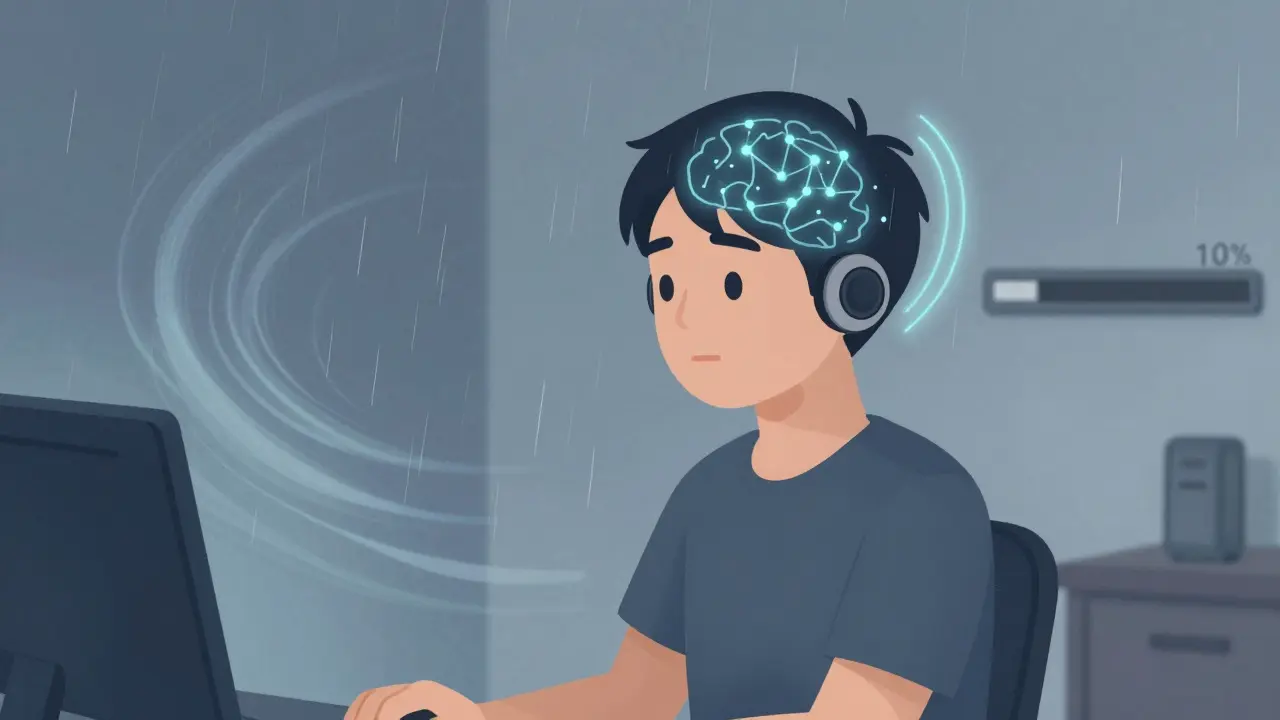
Desensitization therapy, also called sound enrichment therapy, was developed in the 1980s by Dr. Pawel Jastreboff. It’s built on a simple but powerful idea: the brain can be rewired. The therapy doesn’t try to block sound-it teaches the brain to tolerate it. Using a device called a sound generator, patients listen to low-level broadband noise-like static or gentle rain-for several hours a day. The volume is set just below the point where it becomes uncomfortable, often starting at barely audible levels.
The goal isn’t to make you louder. It’s to lower your brain’s internal volume knob. Over weeks and months, the nervous system learns that these sounds aren’t dangerous. The limbic system, which triggers fear, gradually stops reacting. The autonomic nervous system, which causes your heart to race when a door slams, calms down. This isn’t magic-it’s neuroplasticity. Your brain literally changes how it processes sound.
Studies show this works. In clinical trials, 60 to 80% of patients see meaningful improvement. One 2014 study in the American Journal of Audiology found that after 12 months, most participants could tolerate sounds they once avoided-restaurants, public transport, even family gatherings. Success is highest in cases caused by noise exposure or acoustic trauma, with up to 85% improvement. But it’s not a quick fix. It takes 6 to 18 months of daily practice.
What the Therapy Actually Looks Like
It starts with a detailed assessment. An audiologist measures your loudness discomfort levels (LDLs) across different frequencies. This tells them exactly where your sensitivity starts. From there, they program a sound generator-small, wearable devices that cost between $200 and $800-to play noise at 10 to 15 decibels above your threshold. You wear them while doing quiet activities: reading, cooking, working. The sound is low, barely noticeable. Some people don’t even realize it’s on.
Every week, the volume increases by 1 to 2 decibels. It’s slow. Too fast, and you risk making things worse. Many people quit because progress feels invisible. One Reddit user wrote, “After six months, I only gained five extra decibels. I felt hopeless.” But those five decibels matter. They’re the difference between fleeing a coffee shop and sitting in one. Progress isn’t linear. Some days you feel worse. That’s normal. It’s called a “flare-up,” and it’s part of the process.
Therapy moves from quiet rooms to noisy ones. Week 1: home. Week 12: the backyard. Week 24: a busy street. By month 10, many people start leaving earplugs at home. They stop checking the volume on the TV. They stop flinching when someone drops a spoon.
Why Professional Guidance Is Non-Negotiable
Self-managed therapy fails more often than not. A 2021 survey by the American Academy of Audiology found that 33% of people who tried it on their own started too loud and made symptoms worse. Others used apps that didn’t produce the right type of noise. Commercial sound apps on the App Store average just 3.2 out of 5 stars-mostly because they’re poorly designed for this use.
Working with a trained audiologist makes all the difference. People who received professional care were nearly twice as likely to finish the program. Audiologists don’t just set the volume-they teach you how to track your progress, manage flare-ups, and adjust your environment. They use tools like sound level meter apps to measure real-world noise. They help you understand why you’re feeling anxious and how to separate fear from actual danger.
Specialized clinics in the UK and Europe have higher success rates than those in North America, partly because protocols are followed more strictly. The British Tinnitus Association updated its guidelines in January 2024 to include real-time physiological monitoring-measuring heart rate and stress levels during sessions to fine-tune the therapy.
What Doesn’t Work-and What Might Soon
Desensitization therapy isn’t perfect. About 20 to 30% of people drop out because it’s too slow or too hard. Success drops to 40% in people with misophonia (anger at specific sounds) or severe neurological conditions. Some cases are caused by damage to the inner ear itself, not the brain, and those won’t respond to central retraining.
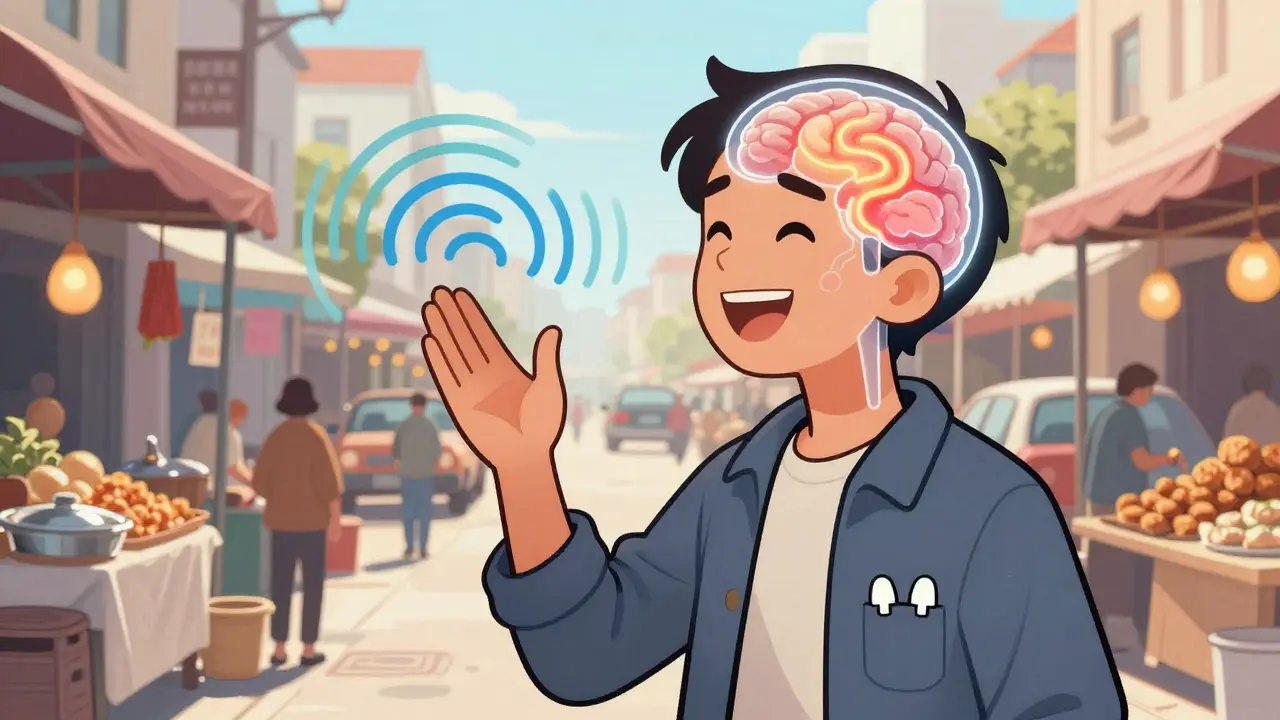
But new tools are emerging. In 2023, the FDA cleared the Lenire device, which combines sound with mild electrical pulses to the tongue. In a trial of 320 patients, 67% saw improvement. MIT is testing machine learning algorithms that personalize sound therapy based on your brain’s real-time response. These aren’t magic bullets, but they’re promising.
Right now, only 22% of U.S. audiology clinics offer formal hyperacusis programs. And only 35% of audiologists are certified in the technique. That means many people never get the right help. If you think you have hyperacusis, don’t wait. Find a clinic that specializes in auditory processing disorders. Ask if they use the Jastreboff model. Ask to see their protocol. You deserve better than silence.
Real People, Real Results
On the Hyperacusis Research Limited forum, 1,200 people shared their stories. 68% said they had “significant improvement” after 9 to 12 months. One user wrote: “I used to avoid my own kids’ laughter. Now I can sit in the living room while they play. I didn’t think that day would come.” Another said, “I went from hiding in my room to going to concerts again-not loud ones, but live music. That was the moment I knew I was getting better.”
It’s not about becoming immune to noise. It’s about reclaiming your life. You don’t have to live in fear of the world around you. The brain can heal. But it needs time, patience, and the right approach.
Is hyperacusis the same as tinnitus?
No. Tinnitus is hearing sounds that aren’t there-like ringing or buzzing. Hyperacusis is when real sounds feel too loud or painful. Many people have both, but they’re different conditions. One affects what you hear; the other affects how loud everything feels.
Can hyperacusis go away on its own?
Sometimes, especially if it’s caused by a temporary event like a loud concert or illness. But if it lasts more than 3 to 6 months, it’s unlikely to resolve without treatment. The longer you wait, the more your brain locks into the over-sensitive pattern. Early intervention makes a big difference.
Do earplugs help with hyperacusis?
Only in extreme situations-like a fireworks display or construction noise. Constant use makes symptoms worse by training your brain to fear sound. If you’re using earplugs daily, you’re probably making it harder to recover. The goal is to gradually reduce reliance on them, not rely on them forever.
How long does desensitization therapy take?
Most people need 9 to 18 months. The average is about 12.7 months. You’ll need to listen to low-level sound for 4 to 6 hours a day, every day. Progress is slow-sometimes barely noticeable. But small gains add up. Skipping days or rushing the process reduces your chances of success.
Is desensitization therapy covered by insurance?
Sometimes. In the UK, it may be available through the NHS if referred by an ENT specialist. In the U.S., coverage varies. Many insurance plans cover the audiologist visits but not the sound generators. Some patients pay out of pocket for the devices. Ask your provider if they offer CPT code 92620 for auditory integration therapy.
Can children have hyperacusis?
Yes. Children with autism, ADHD, or sensory processing disorders are more likely to develop it. The therapy can be adapted for kids using toys, games, and music they enjoy. Early treatment is critical-children’s brains adapt faster than adults’. But they need support from parents and therapists who understand the condition.
What should I look for in a therapist?
Look for an audiologist certified in hyperacusis or tinnitus retraining therapy (TRT). Ask if they use the Jastreboff model. They should measure your loudness discomfort levels and create a personalized plan-not just hand you a sound generator. Avoid anyone who recommends complete sound avoidance or says “it’s all in your head.”
Are there any side effects of desensitization therapy?
The main side effect is temporary worsening of symptoms in the first few weeks. This is normal and expected. If it lasts longer than 4 weeks or becomes unbearable, your volume may be too high. A good therapist will adjust it. Rarely, people develop anxiety about the therapy itself. That’s why counseling is often combined with sound therapy.
Next Steps If You Think You Have Hyperacusis
If you’re struggling with sound sensitivity, start by tracking your symptoms. Note which sounds trigger discomfort, how loud they feel, and what you do to cope. Then find a specialist. Look for clinics affiliated with university hospitals or major audiology centers. Don’t settle for a general audiologist unless they specifically mention experience with hyperacusis.
Prepare for a long road. It won’t be easy. But thousands have walked it before you-and come out on the other side. You don’t have to live in silence. Your brain can learn to hear the world again.
Comments (11)
anggit marga
January 1, 2026 AT 12:57So you're telling me the solution to hearing too loud is to listen to more noise? That's like treating a burn by pouring gasoline on it. In Nigeria we just turn up the music and dance until the pain goes away. Your Western science is overcomplicating everything.
Joy Nickles
January 2, 2026 AT 13:10Okay but like... have you considered that maybe hyperacusis is just anxiety in disguise?? I mean I had this same thing after my breakup and I was like 'OMG the microwave is SCREAMING' but then I started journaling and doing breathwork and boom - problem solved. Also your therapist probably doesn't know about the 7 chakras and sound frequencies??
Emma Hooper
January 2, 2026 AT 19:24OMG I’ve been living this. I used to cry when my cat sneezed. Now? I can sit through my neighbor’s mariachi band practice. It took 14 months. The sound generator felt like a betrayal at first - like my brain was being tortured with static. But then one day, I heard a dog bark and didn’t flinch. I cried again. This time from joy. The key? Consistency. Not perfection. Not silence. Just... showing up. Even on days when the world sounds like a drill sergeant screaming into your skull.
Martin Viau
January 3, 2026 AT 20:38Interesting. But statistically, the sample size for Jastreboff trials is underpowered. The 85% improvement rate cited is likely inflated by publication bias. Also, the placebo effect in auditory therapies is notoriously high. I’d need to see a double-blind RCT with fMRI confirmation before I’d call this evidence-based. And why are we ignoring the role of dopamine dysregulation in auditory filtering? The literature is silent on this.
Marilyn Ferrera
January 5, 2026 AT 01:13Hyperacusis isn't about volume. It's about threat perception. The brain mistakes ordinary sound for danger. Desensitization works because it reteaches the amygdala: 'This isn't a lion.' It's not magic. It's neuroscience. And yes - it's slow. But it's the only thing that actually changes the wiring. Don't rush it. Don't quit. The silence you're avoiding? It's the prison.
Robb Rice
January 5, 2026 AT 02:00I appreciate the depth of this article. It’s clear, well-researched, and compassionate. I’ve struggled with this for years and never found a resource that explained it so accurately. The part about earplugs making it worse? That was a revelation. I’ve been using them daily since 2020. I’m going to start therapy next week. Thank you.
Urvi Patel
January 5, 2026 AT 04:53Let’s be real - this is just a fancy way of saying ‘get over it.’ If you can’t handle normal sounds, maybe you’re just too fragile. I work in a factory, I’ve got tinnitus, I don’t wear earplugs, I don’t cry when someone drops a spoon. You’re not special. Stop treating your sensitivity like a disability. It’s just bad coping skills. And that sound generator? Sounds like a scam to sell overpriced gadgets to vulnerable people
Harriet Hollingsworth
January 5, 2026 AT 17:16THIS IS WHY PEOPLE AREN’T TAKING THIS SERIOUSLY. You’re telling people to expose themselves to pain? That’s not therapy - that’s abuse. What if someone has PTSD from a gunshot? You’re just gonna make them listen to static until they break? This is dangerous. And who approved this? Who gave permission to traumatize people under the guise of science? I’m calling the ADA.
Deepika D
January 7, 2026 AT 14:50Hey everyone - I’m a speech therapist in Delhi and I’ve worked with 37 hyperacusis patients in the last 3 years. Let me tell you - it’s not just about the sound generator. It’s about the relationship. One girl, 12, autistic, couldn’t tolerate the sound of her own pencil on paper. We started with a tiny rain sound at 5 decibels above her threshold. She’d hold my hand while listening. We made it a game - ‘Can you count how many birds you hear in the static?’ After 8 months? She asked to go to the school cafeteria. Now she sings in the choir. This isn’t just therapy - it’s love with a device. Don’t give up. You’re not broken. Your brain just needs a gentle guide. And if you’re reading this - you’re already healing.
Bennett Ryynanen
January 8, 2026 AT 22:17Bro. I had this after a car crash. I thought I was going insane. I avoided my own voice. I’d leave rooms when someone talked. I tried everything - meds, yoga, crystals (yes, really). Then I found a clinic that did Jastreboff. Started at 2 decibels above my limit - I could barely hear it. First week? I wanted to quit. Month 6? I heard my daughter laugh and didn’t cry. Now I go to concerts. Not front row. But I’m there. It’s not fast. It’s not easy. But it’s real. You’re not alone. Keep going.
Chandreson Chandreas
January 9, 2026 AT 08:25Life’s a symphony. Sometimes the notes are too loud. But the music’s still there. 🎵 The brain’s a garden. Weeds grow fast. But so do flowers. Just water it. Slowly. With patience. And maybe a little static. 🌱🎧