
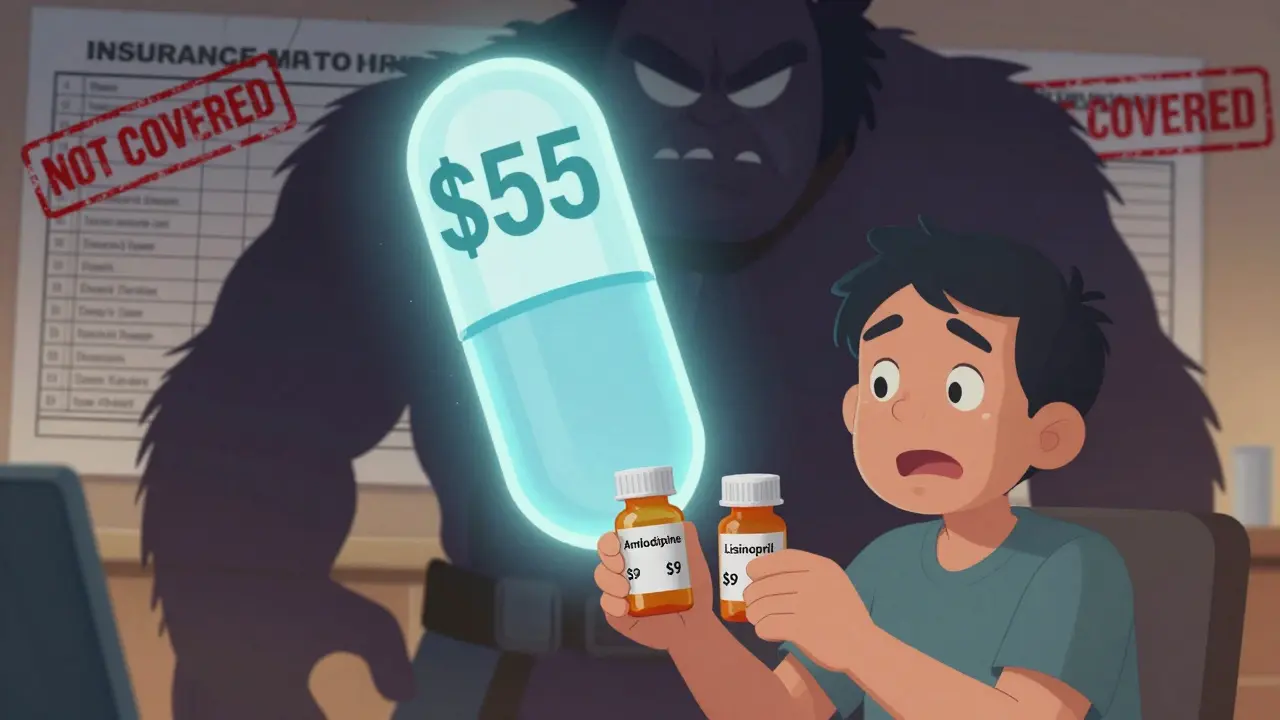
When you’re on multiple medications, your insurance plan might cover them in two very different ways: as a single combination pill or as two separate generic drugs. Sounds simple, right? But the difference in what you pay out-of-pocket can be hundreds of dollars a year-and it’s not always obvious why one option costs more than the other.
Let’s say you take medication for high blood pressure and diabetes. Your doctor prescribes a combo pill that contains two generic ingredients in one tablet. But your plan doesn’t cover that combo. Instead, it covers each ingredient separately, at $12 a month per drug. That’s $24 total. But if you tried to buy the combo pill, even though it’s generic, your plan would charge you $55 a month. Why? Because your insurer treats them as different products. And that’s not a glitch-it’s standard practice.
How Insurance Plans Decide What to Cover
Most U.S. insurance plans, including Medicare Part D and private drug plans, use something called a formulary. This is just a list of drugs they’ll pay for, sorted into tiers. Tier 1 is usually for generics with the lowest copay-sometimes even $0. Tier 2 is for preferred brand-name drugs. Tier 3 and above are for non-preferred or expensive drugs. The goal? Keep costs down for everyone by steering patients toward cheaper options.
But here’s the catch: a combination drug-even if it’s generic-is treated as a single product. If that combo pill isn’t on your plan’s formulary, you might have to buy the two generic ingredients separately. And if the combo pill is covered, but the individual drugs aren’t, you could end up paying more for two pills than one.
According to a 2022 analysis of over 4 million Medicare Part D prescriptions, 84% of drug combinations were covered only as generics. That means brand-name versions were almost always excluded. But coverage doesn’t mean equal cost. A generic combo might be placed on a higher tier than its individual components, especially if the manufacturer doesn’t offer discounts or if there’s no competition.
Why Generic Combinations Can Cost More Than Separate Generics
It sounds backwards: two pills should cost more than one, right? But in insurance terms, it’s not about the number of pills-it’s about how the plan structures its pricing.
Some insurers only cover the combo pill if it’s cheaper than buying the two drugs separately. If the combo is priced higher, they may refuse to cover it at all. That forces you to get two prescriptions, pick up two bottles, and pay two copays. Sounds inconvenient? It is. But it can save you money.
Take a common combo for hypertension: amlodipine and lisinopril. In 2024, a 30-day supply of the generic combo cost $48 at a major pharmacy. But buying amlodipine and lisinopril separately? Each was $9. That’s $18 total. The combo pill was more than double the price-even though it’s generic. Why? Because the manufacturer of the combo didn’t offer rebates to insurers, while the individual drugs had multiple competitors driving prices down.
This happens often with single-source generics-drugs made by only one company. Without competition, prices don’t drop. The FDA says generic drugs are usually 80-85% cheaper than brand names. But when there’s only one maker of the generic version? That discount can vanish.
Medicare Part D and the Real-World Impact
Medicare Part D plans cover over 90% of seniors. Since 2012, the percentage of generic-only coverage has jumped from 69% to 84%. That’s good news for most people. But not everyone benefits equally.
One user on the Medicare Rights Center forum shared: “My combo went generic. My monthly cost dropped from $45 to $7. No change in how I felt. Just cheaper.” Another said: “My plan covers the two generics for $10 each. The combo? $50. I had to ask my doctor to write two prescriptions just to save money.”
That’s not rare. In fact, 68% of Medicare beneficiaries need help understanding their drug coverage. Formularies are confusing. Tier placements change. And the rules aren’t always clear online. AARP found that only 42% of Part D plans made their formulary easy to read on their websites.
And then there’s step therapy. Some plans require you to try the cheaper option first-even if your doctor says it won’t work for you. If you’re on two separate generics and your plan says “try the combo,” you might be stuck paying full price until you get approval. That process can take 72 hours. For someone with unstable blood pressure, that’s too long.
What Changed in 2024? The Inflation Reduction Act
Starting January 1, 2024, Medicare Part D eliminated deductibles for prescription drugs and capped out-of-pocket spending at $2,000 per year. That’s huge. For people taking multiple meds, this means your total drug costs won’t keep climbing past that limit.
But here’s what most people don’t realize: the cap applies to what you pay out of pocket. If your combo pill is on a higher tier and costs $50 a month, you’re still spending $600 a year on it. If you could switch to two $10 generics, you’d only spend $240. The cap doesn’t change what your plan charges-it just stops you from paying more than $2,000 total. So saving money on your drugs still matters.
Another change: a federal court ruling in September 2023 banned copay accumulator programs. These were sneaky practices where insurers wouldn’t count manufacturer coupons toward your out-of-pocket maximum. That hurt people on expensive brand-name drugs. But for those on generics? It meant less confusion. Now, if you get a discount on your generic combo, it counts toward your $2,000 cap.
What You Can Do to Save Money
You don’t have to guess which option is cheaper. Here’s how to take control:
- Check your plan’s formulary-go to your insurer’s website and search for both the combo drug and the individual ingredients. Look at the tier and copay for each.
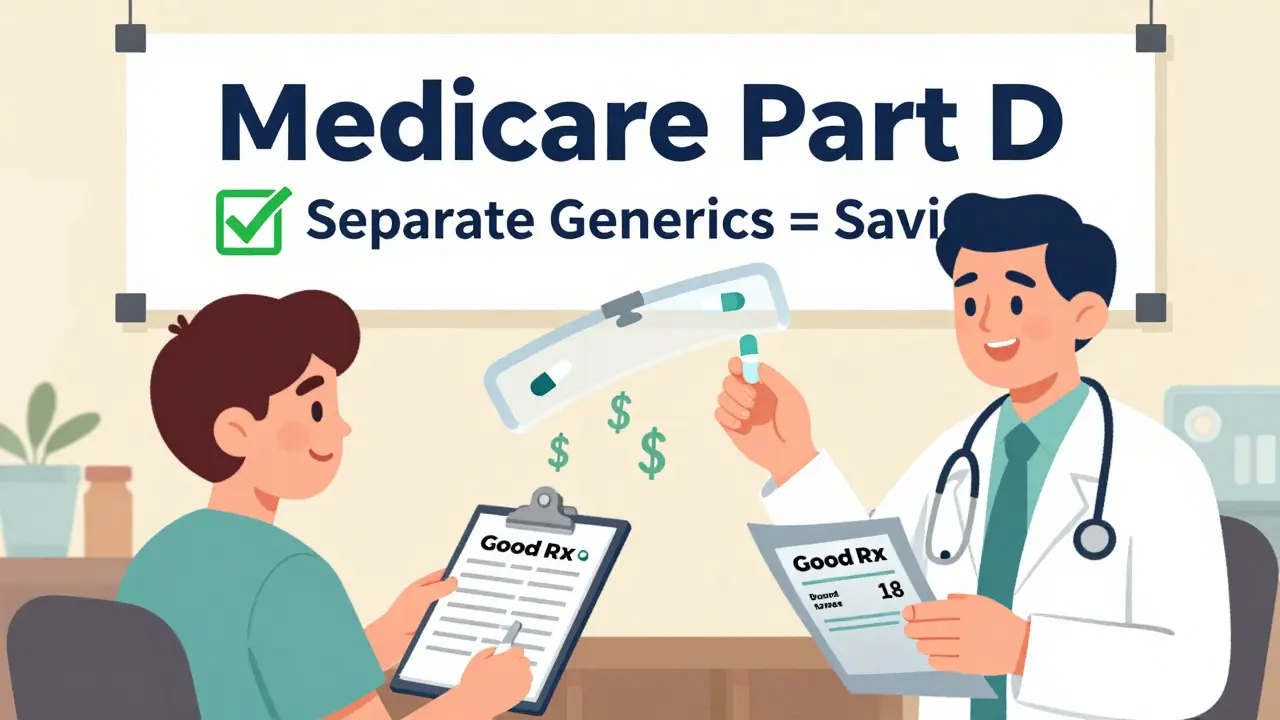
- Compare prices at pharmacies-use GoodRx or the Medicare Plan Finder. Sometimes the combo is cheaper at one pharmacy, even if your plan doesn’t prefer it.
- Ask your doctor to write two prescriptions-if the individual generics are cheaper, your doctor can prescribe them separately. Many insurers allow this without prior authorization.
- Request a coverage exception-if the combo is medically necessary and cheaper for you, your doctor can submit a formal appeal. It takes 72 hours for a standard request, 24 hours for urgent cases.
- Use mail-order or 90-day supplies-some plans offer lower copays for longer supplies. That’s where savings add up.
One patient in Birmingham told me: “I switched from the combo to two generics after seeing the price difference. I’m paying $20 a month instead of $50. My doctor didn’t even blink. Said, ‘If it works, go for it.’”
The Bigger Picture: Why This Matters
Combination drugs make up about 15% of all prescriptions but account for 28% of top-selling medications. That’s because they’re convenient. One pill instead of two. Fewer doses. Better adherence.
But convenience doesn’t always mean cost-effective. Insurance companies design formularies to reduce spending. Sometimes that means pushing you toward the cheapest option-even if it’s two pills. Other times, they lock you into a combo because they got a better deal from the manufacturer.
And it’s not just about money. A 2023 study found that patients on combination pills were 30% more likely to stick with their treatment than those managing multiple pills. That’s huge for chronic conditions like diabetes, heart disease, and high cholesterol.
So the real question isn’t just “Which is cheaper?” It’s: “Which option helps me stay healthy-and keeps me from quitting my meds because I can’t afford them?”
What’s Next? More Generic Combinations Coming
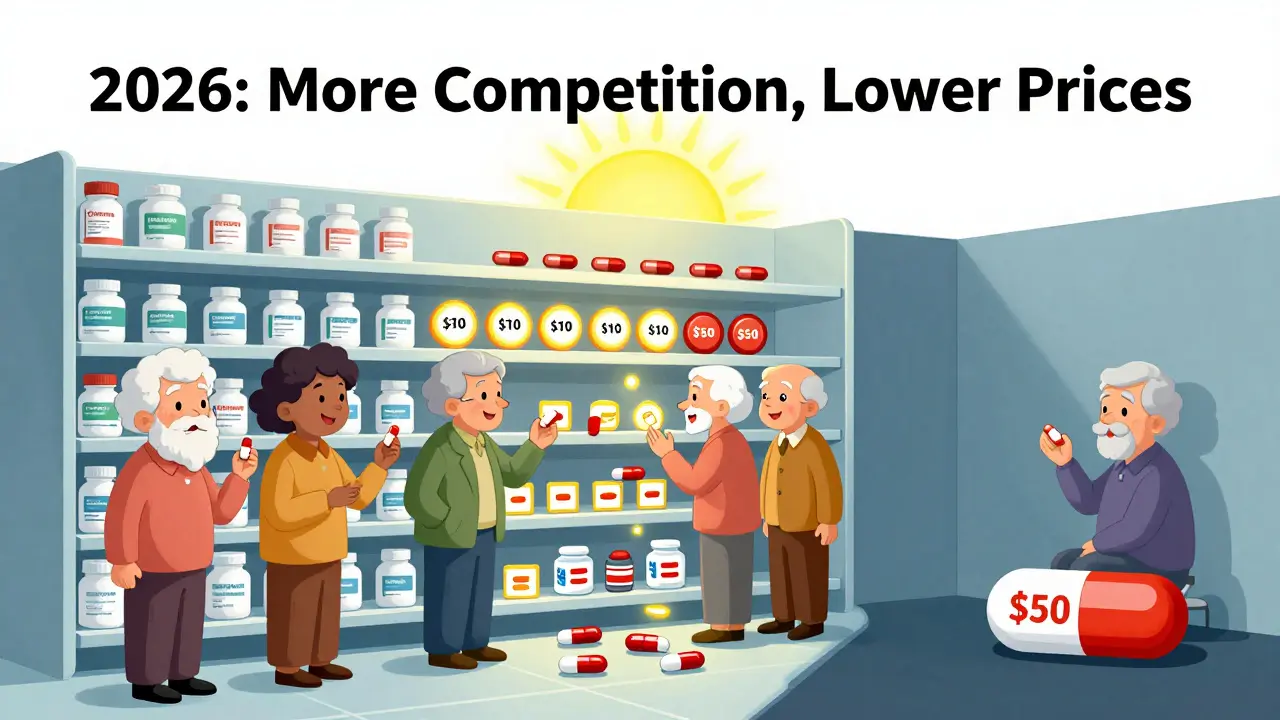
The FDA’s Generic Drug User Fee Amendments (GDUFA) III, running through 2027, is speeding up approval of generic drugs-including complex combinations. More than 20 new generic combos are expected to hit the market by 2026.
That means more competition. More price drops. More options.
Right now, the U.S. generic drug market is worth $135 billion. By 2028, it’s projected to hit $219 billion. As more combo drugs go generic, insurers will have to make better choices. And patients? They’ll finally have real power to choose what works best-for their health and their wallet.
Why is my generic combination more expensive than the two separate generics?
It happens because your insurance plan’s formulary treats the combo as a single product, and it may be placed on a higher tier. Even if it’s generic, if the manufacturer doesn’t offer rebates or if there’s no competition, the price stays high. Meanwhile, the individual generics might have multiple manufacturers competing, driving prices down. Always compare copays on your plan’s formulary and check prices at pharmacies like GoodRx.
Can I ask my doctor to prescribe the two generics separately instead of the combo?
Yes, absolutely. Many doctors will do this if it saves you money and is medically appropriate. In fact, some insurers encourage it. Just make sure your doctor checks for drug interactions and confirms that splitting the dose won’t affect effectiveness. For common combos like blood pressure or diabetes meds, this is routine.
Does Medicare Part D always cover generic combinations?
Medicare Part D plans cover generic drugs in 84% of cases, but not all combinations. Coverage depends on the plan’s formulary. Some plans cover the combo, others don’t. Always check your specific plan’s formulary before assuming coverage. You can use the Medicare Plan Finder tool to compare plans based on your exact medications.
What if my insurance won’t cover the generic combo I need?
You can request a coverage exception. Your doctor submits a form explaining why the combo is medically necessary-often because the individual drugs don’t work well together or cause side effects. The plan has 72 hours to respond for a standard request, or 24 hours if it’s urgent. If denied, you can appeal. Many patients succeed, especially with strong medical documentation.
Are there risks in switching from a combo pill to two separate generics?
For most people, no. Generic drugs are required by the FDA to be bioequivalent to brand-name versions. But for drugs with a narrow therapeutic index-like blood thinners or seizure meds-even small differences matter. If you’re on one of these, talk to your doctor before switching. For common conditions like hypertension or diabetes, switching is usually safe and often saves money.
Comments (9)
Sam Pearlman
February 15, 2026 AT 11:59So let me get this straight-you’re telling me I have to take two pills instead of one because the insurance company is being cheap? Sounds like a scam designed by someone who’s never had to swallow a pill before. I mean, come on. I’m not a robot. I don’t have a pill organizer. I forget to take my meds when they’re in one container, let alone two. This isn’t saving me money-it’s saving them money while I’m over here juggling bottles like a circus act.
Steph Carr
February 16, 2026 AT 20:10It’s wild how we’ve turned healthcare into a logic puzzle where the answer is always ‘it depends.’ We’ve got people on Medicare trying to calculate the cost-per-milligram of their blood pressure meds like they’re doing quantum chemistry homework. Meanwhile, the real villain isn’t the combo pill-it’s the entire system that lets a single manufacturer jack up prices because no one else is allowed to make it. We call it ‘generic’ but it’s just capitalism with a Band-Aid.
Logan Hawker
February 17, 2026 AT 15:37It's not merely a formulary issue-it's a pharmacoeconomic alignment failure. The insurer's formulary architecture, governed by PBMs, incentivizes tiered placement based on rebate structures, not clinical utility. The generic combination, despite being bioequivalent, is often classified as a non-preferred agent due to lack of volume-based rebates. Meanwhile, the individual generics, produced by multiple manufacturers, engage in price wars-thereby achieving lower Average Wholesale Prices (AWPs), which translates into lower copays under the tiered system. This is not a glitch; it's a feature.
James Lloyd
February 18, 2026 AT 03:01I’ve been a pharmacist for 18 years. I’ve seen this exact scenario play out a thousand times. The combo pill isn’t expensive because it’s ‘bad’-it’s expensive because the manufacturer didn’t negotiate rebates. The two separate generics? They’re cheap because there are 12 companies making them. One company makes the combo? No competition = no pressure to drop price. It’s basic economics. The real win? When patients ask their doctor for separate prescriptions. It’s legal. It’s safe. And it’s almost always cheaper. I’ve had patients save $300/month just by asking.
Digital Raju Yadav
February 18, 2026 AT 03:47Why are Americans so clueless? In India, we have 50 generic manufacturers for every drug. One pill, one price, no drama. You think this mess is normal? This is what happens when you let private insurance run healthcare. We don’t have formularies. We don’t have tiers. We just have affordable pills. Maybe if the U.S. stopped worshiping corporate profits and started thinking about people, this wouldn’t be a problem. But no-better to let old people choose between insulin and groceries.
Carrie Schluckbier
February 19, 2026 AT 01:37You know what’s really going on? The drug companies are in cahoots with the insurers. The combo pill? It’s designed to look like a deal-but it’s actually a trap. They charge you $55 so you’ll go for the two $12 pills… then they raise the price of those next month. It’s a pyramid scheme. And the FDA? They’re in on it. They approve these combos knowing they’ll be priced unfairly. Why? Because Big Pharma owns them. You think this is about health? It’s about control.
Liam Earney
February 19, 2026 AT 17:12Oh, I see… so the system is designed to confuse, to frustrate, to make us feel like we’re failing because we can’t navigate a labyrinth of corporate incentives… and yet we’re supposed to be grateful? I mean, really? I’ve been on four different medications for seven years, and every single time I think I’ve figured it out, the copay changes. And now I’m supposed to be thrilled that I can pay $24 instead of $55? That’s not a win-that’s just the bar being lowered so low that I’m crawling on my belly just to touch it. And don’t even get me started on mail-order… I’ve waited six weeks for a refill. Six weeks. I have hypertension. I don’t have time for this.
guy greenfeld
February 20, 2026 AT 03:40It’s all an illusion, isn’t it? We think we’re making rational choices-checking formularies, comparing prices, asking doctors-but we’re just playing a game where the rules are written in invisible ink. The real question isn’t ‘Which is cheaper?’ It’s ‘Who benefits?’ The system doesn’t want you to be healthy. It wants you to be compliant. It wants you to take your pills, pay your money, and never ask why. And if you do ask? You get a 72-hour appeal process. That’s not healthcare. That’s performance art. And we’re all just extras in a play written by lobbyists.
Adam Short
February 21, 2026 AT 09:09Let’s be honest-this is what happens when you let corporations run medicine. In the UK, we don’t have this nonsense. The NHS negotiates bulk prices. Everyone gets the same drug at the same cost. No tiers. No formularies. No ‘coverage exceptions.’ Just medicine. And guess what? People live longer. We don’t need 15 steps to get a blood pressure pill. We just need common sense. The U.S. isn’t broken-it’s deliberately designed to extract money. And you’re all just paying the toll.