
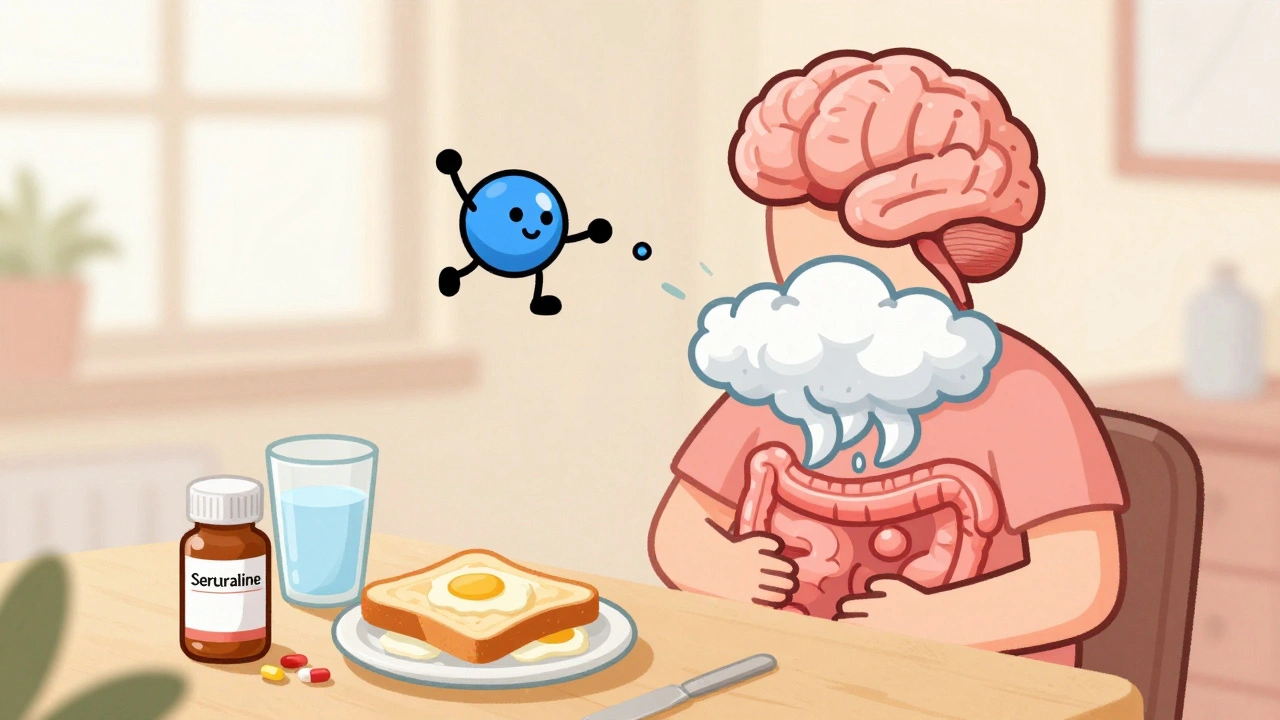
SSRI Side Effect Comparison Tool
Based on your current medication:
With Sertraline, you're experiencing 25-30% nausea risk and 10-15% diarrhea risk. The article shows that 28.7% of people quit within 8 weeks due to these side effects. Consider:
- Trying ginger or taking with food to reduce nausea
- Switching to Escitalopram which has 30% lower GI risk
- Discussing a lower dose with your doctor if symptoms persist beyond 2 weeks
When you start taking sertraline, the goal is to feel better - not to spend your days feeling sick. But for about 25-30% of people, the first few weeks bring nausea, diarrhea, or both. It’s not rare. It’s not your fault. And it doesn’t mean the medication won’t work. In fact, most of these side effects fade as your body adjusts. The question isn’t whether they’ll happen - it’s how to handle them so you don’t quit before the benefits kick in.
Why Sertraline Causes Nausea and Diarrhea
Sertraline doesn’t just affect your brain. About 95% of your body’s serotonin is in your gut. That’s not a mistake - serotonin helps control digestion, appetite, and bowel movements. When sertraline boosts serotonin levels, it doesn’t know the difference between brain and gut receptors. So your intestines get overstimulated. That means faster movement, more fluid, and less tolerance for food - leading to nausea and diarrhea.It’s not just you. A 2022 analysis of over 5,000 patients found sertraline had the highest risk of digestive side effects among all common SSRIs - even higher than fluoxetine or paroxetine. About 25% of people get nausea. At least 10% get diarrhea. And in some cases, it’s worse: a small number develop microscopic colitis, a type of gut inflammation linked to long-term sertraline use.
When to Expect Relief
The good news? Most people feel better within 2 to 6 weeks. Clinical trials show 87% of nausea and diarrhea symptoms ease up by week 6. If you’re still struggling after that, it’s time to talk to your doctor - not to quit cold turkey, but to adjust your plan.Here’s what most people experience:
- Days 1-7: Worst symptoms. Nausea hits hardest in the morning or after meals.
- Weeks 2-3: Symptoms start to dull. Diarrhea may become less frequent.
- Weeks 4-6: Most people notice major improvement. Some feel completely normal.
- Week 7+: If symptoms persist or get worse, it’s not normal. This needs attention.
One study found that 28.7% of people stopped sertraline in the first 8 weeks - mostly because of stomach issues. That’s a lot. But many of them could’ve stayed on it with the right adjustments.
What to Do When Nausea Hits
Taking sertraline on an empty stomach is like throwing gasoline on a fire. Food isn’t just helpful - it’s essential.Take it with food - especially a meal with protein. A 2022 study showed that taking sertraline with a full meal reduced nausea by 35-40%. Crackers, toast, eggs, or yogurt work better than just a sip of water.
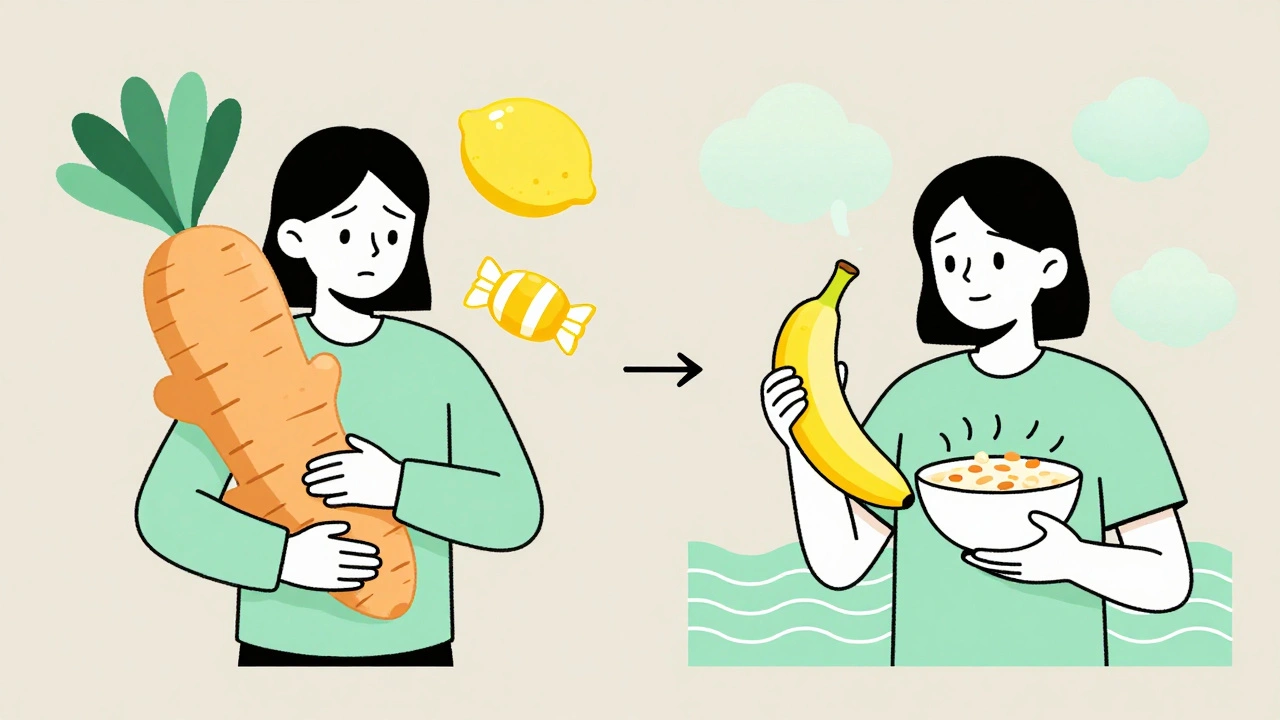
Avoid heavy, greasy, or spicy foods. These make nausea worse. Stick to bland, simple meals: rice, bananas, applesauce, chicken broth. The NHS and Mayo Clinic both recommend this.
Try ginger. It’s not just for pregnant women. A 2021 clinical trial found ginger reduced nausea severity by 27% compared to placebo. Drink ginger tea, chew ginger candies, or take 250mg capsules with your dose. Many Reddit users swear by it.
Suck on sugar-free hard candy. This helps by stimulating saliva and distracting your brain from nausea signals. Mint or lemon flavors work best.
Eat smaller meals more often. Instead of three big meals, try five small ones. Your gut won’t feel overwhelmed.
Managing Diarrhea: What Works
Diarrhea from sertraline isn’t infectious - it’s chemical. So antibiotics won’t help. But diet and timing can make a big difference.Avoid triggers: Caffeine, alcohol, artificial sweeteners, and fried foods all speed up your gut. Cut them out for at least 2 weeks. Even one cup of coffee can undo your progress.
Stay hydrated. Diarrhea drains fluids and electrolytes. Drink water, broth, or oral rehydration solutions. Coconut water is a good natural option.
Try soluble fiber. Oats, bananas, and peeled apples help firm up stools. Avoid raw veggies, bran, and high-fiber cereals - they make diarrhea worse.
Don’t panic over frequency. If you’re going 3-4 times a day but feeling okay otherwise, that’s often normal early on. But if it’s 6+ times, watery, or bloody - call your doctor. That’s not just side effects.
A 2020 study in Gut showed patients who avoided trigger foods saw diarrhea resolve 45% faster than those who didn’t.
When It’s Time to Talk to Your Doctor
You don’t have to suffer for weeks. If your symptoms are severe, persistent, or worsening, your doctor has options.Wait too long? You might quit. The American Psychiatric Association says if nausea lasts beyond 2-3 weeks, lower the dose to 25-50mg daily and slowly increase again. Many people tolerate a slower ramp-up perfectly.
Diarrhea lasting over 4 weeks? It could be microscopic colitis. This is rare but real. Your doctor may need to do a colonoscopy to rule it out. If confirmed, stopping sertraline often resolves it.
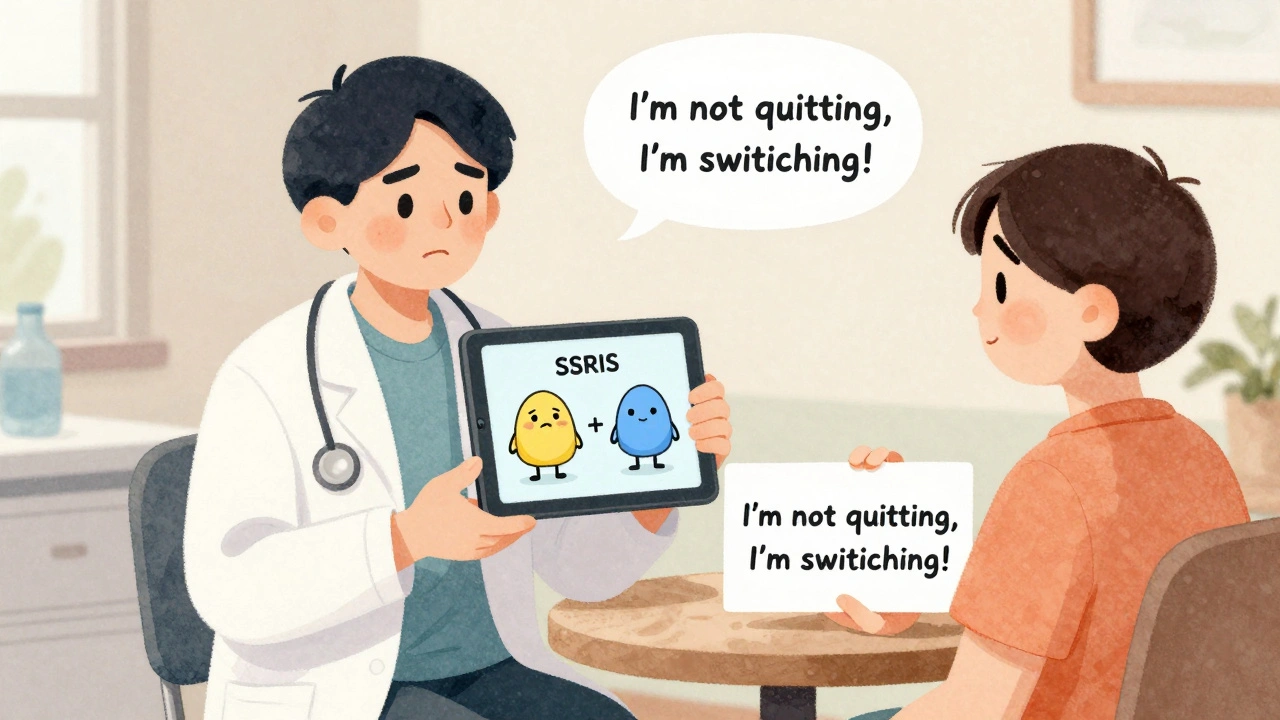
Consider switching. NICE UK guidelines say if GI side effects are still bad after 2 weeks, switching to escitalopram is a smart move. It’s just as effective for depression but causes 30% fewer stomach issues. A 2023 study found 34.7% of doctors now prefer escitalopram as a first choice - up from 22% in 2018.
Don’t stop suddenly. Even if you hate the side effects, quitting cold turkey can cause withdrawal. Always taper under medical supervision.
What Other Antidepressants Are Easier on the Stomach?
Not all SSRIs are created equal. Here’s how they compare based on real-world data:| Medication | Nausea Risk | Diarrhea Risk | Best For |
|---|---|---|---|
| Sertraline | 25-30% | 10-15% | Effective, but highest GI risk |
| Fluoxetine | 20-25% | 8-12% | Longer half-life, slower onset |
| Paroxetine | 18-22% | 7-10% | Can cause weight gain |
| Escitalopram | 15-20% | 5-8% | Lowest GI risk, high efficacy |
| Citalopram | 17-21% | 6-9% | Similar to escitalopram |
Escitalopram is now the go-to for people with sensitive stomachs. It’s not magic - but it’s gentler.
What’s Next for Sertraline and Gut Health?
Researchers are working on smarter versions of sertraline. One experimental drug, TD-8142, targets serotonin only in the brain - not the gut. In early trials, it cut GI side effects by 62% while keeping the same antidepressant power. That’s huge.Another study, SERTRAL-2025, is tracking 5,000 people to find out why some get terrible nausea and others don’t. Early signs point to a gene called HTR3A - if you have certain variants, you’re more likely to react badly. Soon, doctors might test for this before prescribing.
For now, though, the tools we have work. You don’t have to choose between mental health and physical comfort. With the right adjustments, most people find a way forward.
Frequently Asked Questions
How long does sertraline-induced nausea last?
For most people, nausea peaks in the first week and starts fading by week 2. By week 4 to 6, 87% of users report significant improvement. If it’s still bad after 3 weeks, talk to your doctor - don’t wait. Lowering your dose or switching meds can help.
Can I take anti-nausea medicine with sertraline?
Over-the-counter options like dimenhydrinate (Dramamine) or meclizine are usually safe for short-term use, but check with your doctor first. Avoid prescription anti-nausea drugs like ondansetron unless prescribed - they can interact with sertraline. Natural options like ginger are safer and often just as effective.
Does taking sertraline at night help with nausea?
Sometimes. If nausea hits hardest in the morning, taking sertraline with dinner or right before bed can help. But if diarrhea is your main issue, nighttime dosing won’t fix it - the gut keeps working. Food and avoiding triggers matter more than timing.
Is diarrhea from sertraline dangerous?
Usually not - it’s a side effect, not an infection. But if it lasts more than 4 weeks, is severe, bloody, or accompanied by abdominal pain, it could be microscopic colitis. This is rare but serious. Your doctor may need to do a colonoscopy. Don’t ignore persistent diarrhea.
Should I switch from sertraline to another antidepressant?
If side effects are keeping you from sticking with treatment, yes. Escitalopram has significantly lower GI side effects and is just as effective. NICE UK guidelines recommend switching if problems persist after 2 weeks. Staying on a medication you can’t tolerate doesn’t help your mental health - finding one you can live with does.
What to Do Next
If you’re just starting sertraline: take it with food, avoid spicy or greasy meals, try ginger, and give it 3 weeks. Track your symptoms - write down when nausea or diarrhea happens. That helps your doctor decide what to do next.If you’ve been on it for a month and still feel awful: schedule a call with your prescriber. Ask about lowering your dose or switching to escitalopram. Don’t wait until you’re ready to quit.
There’s no shame in needing to adjust. Antidepressants aren’t one-size-fits-all. What matters isn’t which pill you take - it’s that you keep moving forward toward feeling better.
Comments (9)
Sandridge Nelia
December 3, 2025 AT 23:21Just started sertraline last week and the nausea was brutal. Took it with a peanut butter toast and ginger tea-huge difference. Still a little queasy, but I’m holding on. You got this.
Siddharth Notani
December 4, 2025 AT 12:25Respected sir, I am pleased to inform you that the scientific literature supports the efficacy of ginger in mitigating serotonin-mediated gastrointestinal distress. A randomized controlled trial published in the Journal of Clinical Pharmacology (2021) demonstrated a statistically significant reduction in nausea severity (p < 0.01) with 250 mg of standardized ginger extract administered concurrently with SSRIs.
Akash Sharma
December 5, 2025 AT 00:56I’ve been on sertraline for 11 weeks now and honestly, the diarrhea didn’t fully go away until I cut out coffee AND artificial sweeteners-like, everything with aspartame or sucralose. I didn’t realize how much my ‘diet’ soda was wrecking my gut. Also, I started eating peeled apples and oatmeal every morning and it’s been a game-changer. I used to go 6-7 times a day, now it’s maybe twice, and it’s solid. I know it sounds weird, but food is medicine here. Also, I tried ondansetron once because I was desperate, but it made me dizzy as hell, so I stuck with ginger and diet tweaks. Honestly, if you’re still struggling after 4 weeks, your doc should be looking at microscopic colitis. I didn’t know that was a thing until my GI doc mentioned it. Don’t just assume it’s ‘normal.’
Justin Hampton
December 6, 2025 AT 11:52Everyone’s acting like this is some groundbreaking advice. Sertraline messes with your gut? Duh. It’s a serotonin reuptake inhibitor. Serotonin’s in your gut. Shocking. Also, switching to escitalopram? That’s just the pharma industry’s way of selling you a new pill. Same drug, different label. You’re not getting ‘better’-you’re just being upsold.
Pooja Surnar
December 7, 2025 AT 02:29Ugh why do people take meds like this like they’re candy? Just eat clean and meditate. No one needs antidepressants. You’re just weak. Ginger? LOL. Try prayer. I got over anxiety by fasting for 3 days. No meds. No excuses.
Jessica Ainscough
December 7, 2025 AT 20:46Thank you for this. I’ve been on sertraline for 5 weeks and was about to quit because of the diarrhea. I cut out coffee and started eating bananas with breakfast. It’s not gone, but it’s way better. I’m keeping going. You’re not alone.
May .
December 8, 2025 AT 14:35took it with food and it got better
Tom Costello
December 9, 2025 AT 08:20I appreciate how thorough this is. I’m a nurse and I’ve seen so many patients quit because they thought the nausea meant it wasn’t working. It’s not a failure-it’s adaptation. I always tell them: think of it like starting a new workout. First week sucks. Week 3? You’re stronger. Same here. And yeah, ginger tea is underrated. I keep a thermos of it at my desk. Also, don’t underestimate the power of timing. If you take it right after a big meal, you’re giving your gut a buffer. I’ve had patients who swear by taking it with a spoonful of peanut butter. Weird? Maybe. Works? Absolutely.
And to the person who said ‘just meditate’-that’s not helpful. Mental health isn’t a moral failing. This is biology. Your gut and your brain are wired together. Sertraline’s not the enemy. Not knowing how to manage it is.
One more thing: if you’re still having diarrhea after 6 weeks, don’t just push through. Ask for a colonoscopy. Microscopic colitis is real, rare, but treatable. I’ve had two patients with it. They were so relieved to find out it wasn’t ‘just anxiety.’
And escitalopram? Yeah, it’s gentler. I’ve switched 8 patients to it in the last year. All of them stayed on it. Three of them had been on sertraline for months and were ready to quit. Now they’re doing great. No magic bullet, just better matching.
Also, if you’re thinking about ondansetron-talk to your doctor first. It’s not dangerous, but it can mess with your heart rhythm if you’re on other meds. Ginger’s safer. And cheaper. And you can drink it while watching Netflix.
You’re not broken. You’re adjusting. Keep going.
Mark Gallagher
December 11, 2025 AT 01:13Why are we letting Big Pharma dictate our gut health? In America, we’re just medicating everything. In my country, we eat real food, we walk, we sleep. No pills needed. You people are weak. This is why the West is falling apart.