
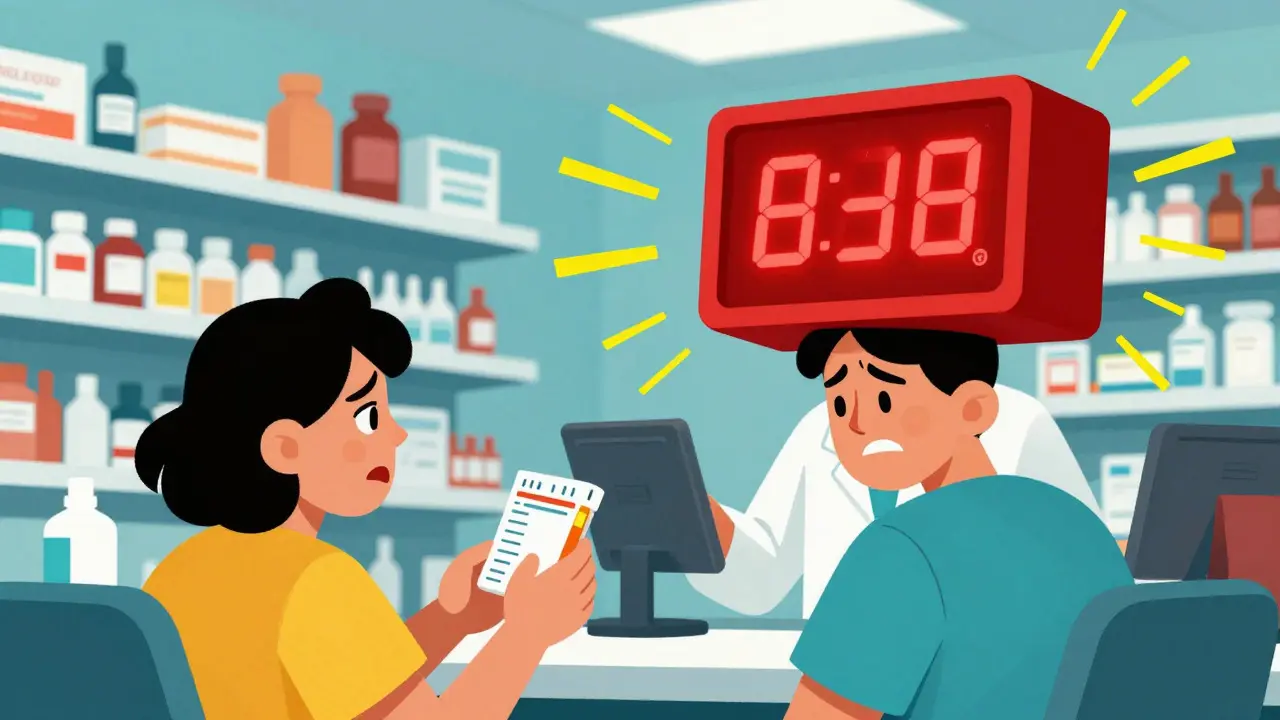
That loud beep from the pharmacy computer is supposed to save your life. It’s a pharmacy allergy alert, a digital red flag designed to stop a doctor or pharmacist from handing you a medication that could cause a severe reaction. But here is the problem: most of these alerts are wrong, outdated, or based on misunderstandings about what an "allergy" actually is.
If you have ever been prescribed a new antibiotic only for the system to scream "ALLERGY," you know how frustrating this is. You might remember getting sick as a child, but was it a true immune response? Or was it just a stomach ache? The difference matters immensely for your health today. Understanding how to read these alerts helps you advocate for better care and avoid unnecessary restrictions on your treatment options.
The Anatomy of an Allergy Alert
To understand why the system flags a drug, you need to look at what triggers the warning. These alerts live inside Electronic Health Record (EHR) systems like Epic or Cerner. When a provider types in a prescription, the software instantly compares that drug against every note in your medical history labeled as an "allergy."
There are two main types of alerts you will encounter:
- Definite Allergy Alerts: These happen when the prescribed drug matches exactly with a drug listed in your allergy profile. For example, if you list penicillin as an allergy and the doctor orders amoxicillin (which is a type of penicillin), the system fires a definite alert.
- Possible Allergy Alerts: These are trickier. They trigger due to cross-reactivity. This means the system thinks Drug A might react because you are allergic to Drug B, even though they are different medications. About 90% of all drug allergy alerts fall into this category.
The alert usually shows color-coded severity levels. Yellow often means mild, orange moderate, red severe, and black life-threatening. However, these colors don't always reflect reality. A study found that nearly half of EHR systems lack precise documentation of reaction types, leading to overly broad warnings that scare providers more than they protect patients.
Allergy vs. Side Effect: The Critical Distinction
This is where things get messy. In the medical world, not every bad reaction is an allergy. Yet, many patients-and even some doctors-use the word "allergy" loosely.
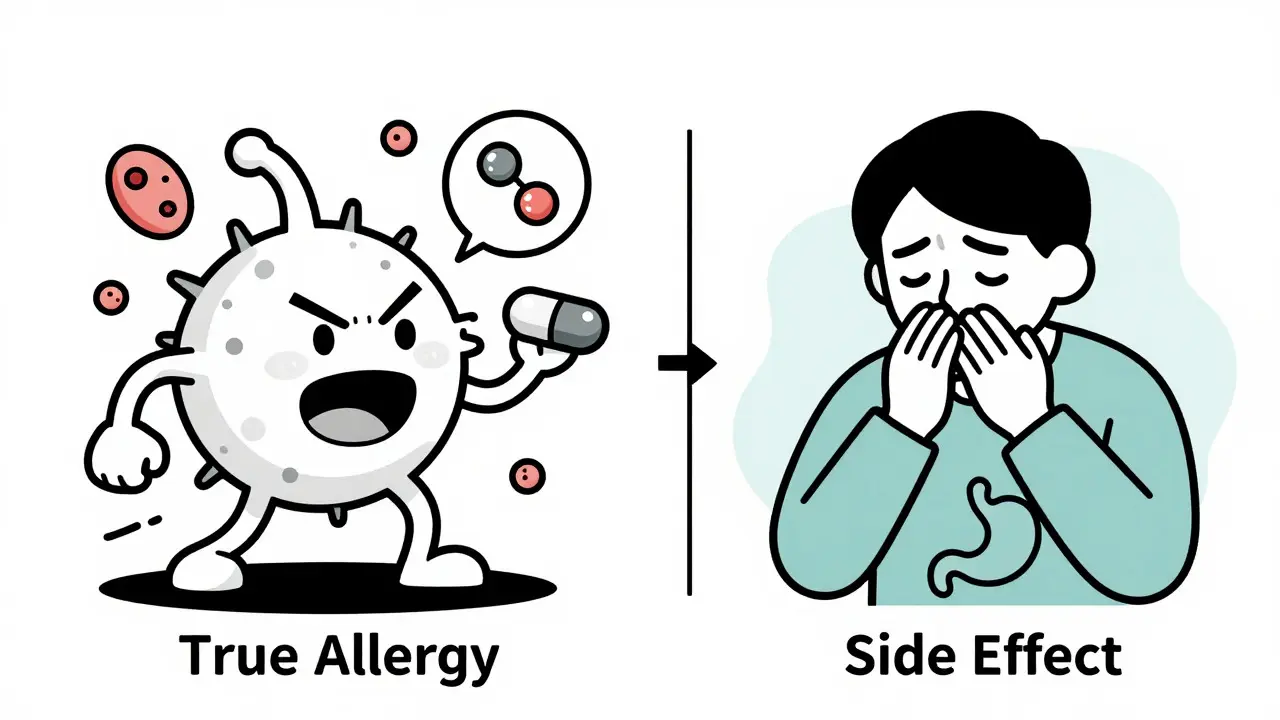
A true drug allergy involves your immune system attacking the medication. Symptoms include hives, swelling, difficulty breathing, or anaphylaxis. These are rare, occurring in only 5-10% of adverse drug reactions.
On the other hand, a side effect is a non-allergic reaction. Nausea from metformin, dizziness from blood pressure meds, or a rash that looks like an infection but isn't caused by the immune system-these are side effects. If a patient tells their doctor, "I'm allergic to Metformin because it made me throw up," the doctor might type "Metformin Allergy" into the chart. Now, every time you visit a hospital, the computer will block Metformin, even though you could safely take it again if needed.
Dr. Kimberly Blumenthal, an allergist at Harvard Medical School, noted that more than half of drug allergy alerts are triggered for medications that patients have previously tolerated or were deemed not truly allergic to. This confusion leads to dangerous "alert fatigue," where clinicians start ignoring warnings because so many are false alarms.
Understanding Cross-Reactivity
Cross-reactivity is the biggest source of anxiety for patients with allergies. It occurs when your immune system confuses one drug for another because they share similar chemical structures. The classic example is penicillin and cephalosporins.
For decades, doctors believed that if you were allergic to penicillin, you had a high chance of reacting to cephalosporins (another common antibiotic class). Because of this old rule, older EHR systems would flag almost all cephalosporins for penicillin-allergic patients.
However, modern science has debunked much of this fear. A 2019 Cochrane review showed that the actual cross-reactivity rate between penicillins and later-generation cephalosporins is less than 2%. Despite this, 89% of EHR systems still generate high-severity alerts for these combinations. This means you might be denied a highly effective antibiotic unnecessarily, forcing your doctor to use broader-spectrum drugs that can harm your gut health or contribute to antibiotic resistance.
| Drug Class A | Drug Class B | Old Belief | Current Evidence |
|---|---|---|---|
| Penicillins | Cephalosporins (3rd/4th Gen) | High risk of reaction | Less than 2% risk |
| Ibuprofen | Other NSAIDs | Automatic avoidance | Risk depends on specific reaction type; not all NSAIDs cross-react |
| Sulfa Antibiotics | Sulfa Diuretics | Related chemicals | No significant cross-reactivity; different chemical structures |
Why Clinicians Override Alerts
You might wonder, if the alert is there to help, why do doctors ignore it? The data is stark. Studies show that override rates for certain alert types exceed 95%. Even for severe reactions like anaphylaxis, alerts are overridden 75-82% of the time.
This isn't negligence; it's frustration. Imagine ordering a single dose of vancomycin for a patient who has a documented "penicillin allergy" from childhood-which was actually just a stomachache. The system might fire 17 different alerts because of vague historical data. The clinician knows the risk is negligible, so they click "Override" to proceed with the correct treatment.
Dr. Eric Macy, Director of Allergy/Immunology Research at Kaiser Permanente, pointed out that only one-third of documented drug reactions are potentially immune-mediated, and only one-tenth are severe. When the signal-to-noise ratio is this low, humans naturally tune out the noise.

How to Advocate for Better Documentation
The good news is that you have power over your own medical record. The accuracy of these alerts starts with how your allergies are documented. Here is how you can ensure your chart reflects reality:
- Clarify the Reaction: When updating your allergy list, don't just say "Allergic to X." Describe what happened. Did you get hives? Swelling? Anaphylaxis? Or did you just feel nauseous? Specificity prevents future errors.
- Distinguish Timing: True allergic reactions usually occur within hours to two weeks of exposure. If your "reaction" happened years after starting a daily medication, it was likely not an allergy.
- Request De-labeling: If you suspect a past allergy label is incorrect, ask your primary care provider or an allergist for a "drug challenge" or testing. If you pass, ask them to remove the allergy from your chart and replace it with a note saying "Allergy ruled out via challenge/testing."
- Check Your Portal: Many health systems now allow patients to view their records through portals. Regularly check your allergy list and report inaccuracies immediately.
A study at Johns Hopkins Hospital showed that structured allergy documentation protocols increased accurate allergy documentation from 39% to 76% within six months. You can drive this change by being specific during your visits.
The Future of Smarter Alerts
Technology is catching up. The industry is moving away from blanket warnings toward "risk-stratified alerting." Newer versions of EHR systems, like Epic's 2023.2 release, use machine learning to predict whether an alert is clinically relevant based on your specific history. This approach reduced low-value alerts by 37% in initial tests.
Additionally, regulatory pressures like the 21st Century Cures Act require EHR systems to support structured allergy documentation, meaning simple labels like "Penicillin Allergy" are becoming less acceptable without detailed reaction data. By 2026, experts predict that 70% of major EHR systems will implement these smarter, risk-based alerts, potentially cutting down the noise while keeping you safe.
Until then, stay informed. Know the difference between a side effect and an allergy, question vague alerts, and work with your healthcare team to keep your medical record accurate. Your safety depends on it.
What does a yellow allergy alert mean?
A yellow allergy alert typically indicates a mild or potential interaction. It suggests that the prescribed medication shares some characteristics with a drug you are allergic to, or that the reaction history is vague. It requires clinical judgment but is not an immediate emergency like a red or black alert.
Can I be allergic to a drug and take it again safely?
Yes. Many people lose drug allergies over time, especially those developed in childhood. Penicillin allergies, for instance, wane in about 80% of patients within 10 years. An allergist can perform skin testing or a supervised drug challenge to confirm if you are still allergic.
Why does my pharmacy alert me about ibuprofen if I'm only allergic to aspirin?
This is due to cross-reactivity concerns between Non-Steroidal Anti-Inflammatory Drugs (NSAIDs). While not everyone with an aspirin sensitivity reacts to ibuprofen, the chemical similarity prompts the system to warn the pharmacist. However, recent studies suggest that not all NSAIDs cross-react, so a specialist evaluation can clarify your specific risks.
What is "alert fatigue" in pharmacy?
Alert fatigue occurs when healthcare providers receive too many irrelevant or low-priority warnings. Over time, they may subconsciously ignore or override alerts, increasing the risk of missing a genuine, critical warning. This is a major reason why improving the specificity of allergy data is crucial.
How can I remove a false allergy from my medical record?
You cannot edit your medical record directly, but you can request a correction. Speak to your primary care provider or an allergist. Provide evidence that the reaction was a side effect, not an allergy, or undergo testing to prove tolerance. Once verified, they can update your Electronic Health Record (EHR) to reflect the accurate status.