
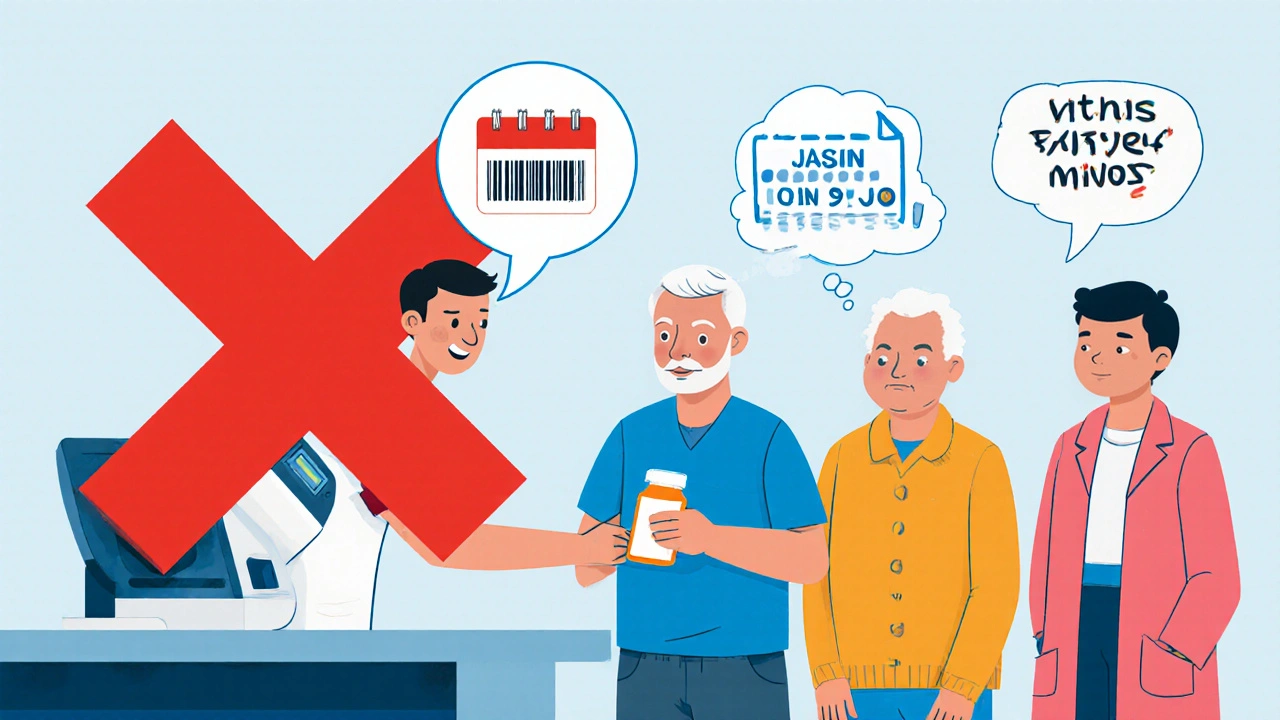
Every year, thousands of people in the U.S. get the wrong medication because a pharmacy accidentally gave it to them instead of the right person. It’s not rare. It’s not a one-off mistake. It’s a systemic problem that happens at the counter, often when staff are rushed, names sound alike, or patients pick up prescriptions for family members. And the consequences? They can be deadly. A patient with a heart condition gets a diabetes pill. Someone allergic to penicillin walks out with amoxicillin. Or worse - a cancer patient doesn’t get their chemo because someone else picked it up. These aren’t hypotheticals. They’re documented cases tracked by the Joint Commission and the Institute for Safe Medication Practices (ISMP). The good news? Wrong-patient errors are 100% preventable. You don’t need magic. You just need the right steps - and the discipline to follow them every single time.
Why Wrong-Patient Errors Happen
It’s easy to blame the pharmacy tech for a slip-up. But the real problem isn’t laziness or incompetence. It’s how the system is built. Most errors happen because verification is inconsistent, rushed, or optional. Let’s break down the top reasons:- Sound-alike or look-alike names: James Wilson and Jason Wilson. Maria Garcia and Mariana Garcia. These aren’t edge cases - they account for nearly 22% of all wrong-patient errors, according to ECRI Institute.
- Multiple prescriptions picked up at once: A parent grabs three scripts for their kids. A caregiver collects meds for two elderly relatives. The stack gets mixed up before the final check.
- Peak-hour pressure: Lunch rush. After-work rush. Flu season. When the line snakes out the door, staff start skipping steps to keep things moving.
- Reliance on memory: “I know Mrs. Johnson - she always picks up her blood pressure pill.” That’s how errors start. You can’t trust memory when you’re handling 50 prescriptions a day.
- Patients don’t always speak up: Many older adults or non-native speakers don’t challenge staff, even when something feels off. They assume the pharmacy knows best.
The Two-Point Verification Rule
This isn’t new. It’s not fancy. But it’s the single most effective tool in the pharmacy’s arsenal. The Joint Commission and the National Association of Boards of Pharmacy (NABP) both require it: use two patient identifiers before handing over any medication. That means:- Full legal name
- Date of birth
- Pharmacist or tech asks: “May I have your full name and date of birth, please?”
- They compare that to the name and DOB on the prescription label.
- They cross-check it against the pharmacy’s digital record.
- Only after all three match - and the patient confirms - is the medication released.
Barcode Scanning: The Game Changer
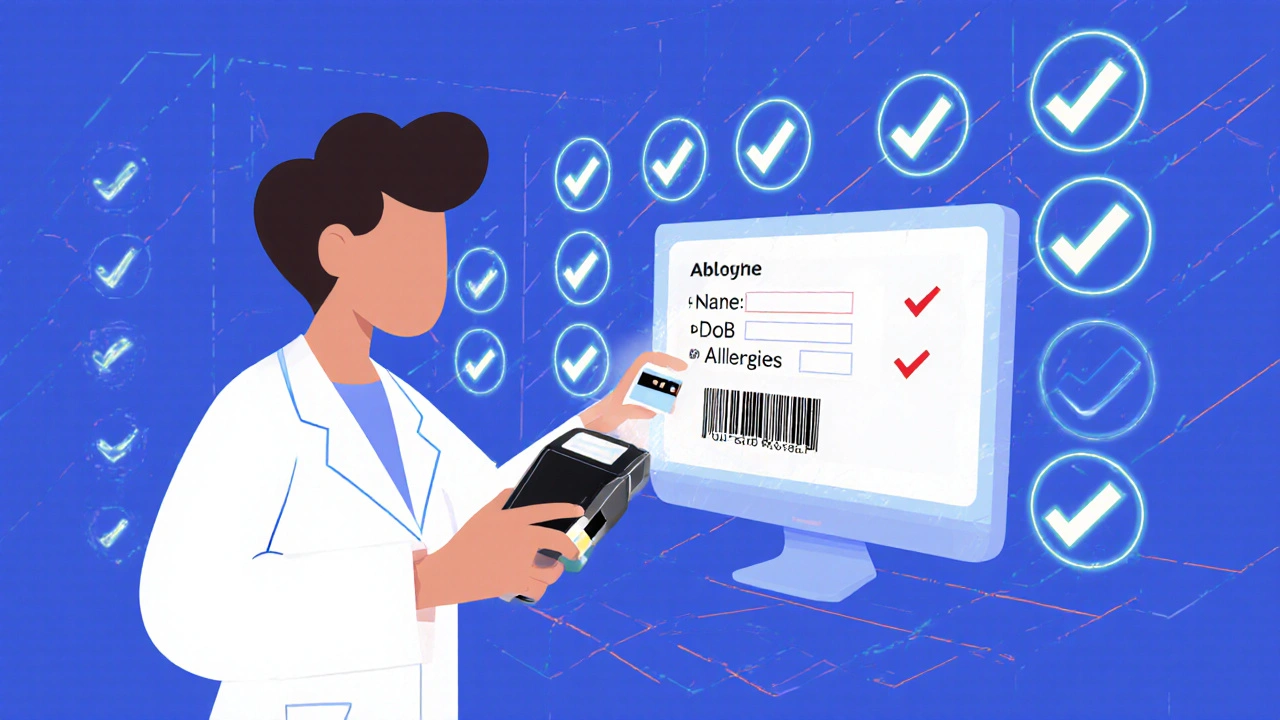
Two-point verification is essential - but it’s not enough on its own. Human error still slips through. That’s where technology steps in. Barcode scanning isn’t science fiction. It’s standard in most big pharmacy chains. Walgreens rolled it out across all 9,000+ locations in 2021. CVS and Walmart followed. The result? A 63% drop in wrong-patient errors within 18 months. How it works:- The patient presents a photo ID, insurance card, or a dedicated pharmacy loyalty card with a unique barcode.
- The tech scans the barcode, which pulls up the patient’s profile.
- The system checks the prescription against the profile - name, DOB, allergies, current meds.
- If anything doesn’t match, the system locks the transaction. No override. No bypass.
The Power of Counseling - The Final Safety Net
Here’s something most people don’t realize: the final moment when the pharmacist hands the bag to the patient isn’t just a formality. It’s the last line of defense. Pharmacy Times reports that 83% of dispensing errors are caught during counseling - the brief conversation where the pharmacist says, “This is your new blood thinner. Take it with food, and avoid grapefruit.” That’s not just advice. That’s verification. If the patient says, “I don’t take that,” or “I’ve never been on this before,” the pharmacist stops. They recheck. They call the prescriber if needed. This step is free. It doesn’t need new software. It just needs time - and the courage to pause. Many pharmacies cut this step short to save time. That’s a dangerous trade-off. The cost of one wrong-patient error - in lawsuits, lost trust, or worse - can run over $12,500 for an independent pharmacy, according to the National Community Pharmacists Association (NCPA). A two-minute conversation is the cheapest insurance you can buy.What Works Best: The Combined Approach
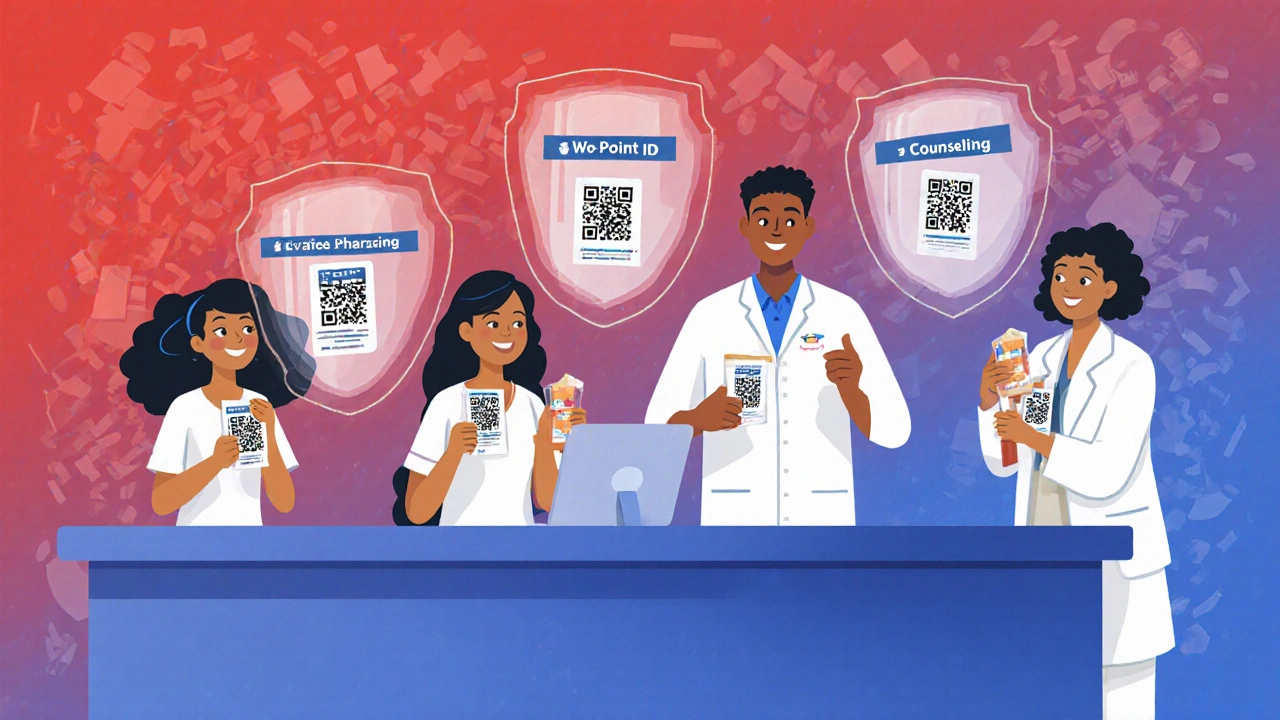
No single method is perfect. But when you stack them, the results are dramatic. A 2023 study in the Journal of the American Pharmacists Association looked at pharmacies that used:- Two-point identification (name + DOB)
- Barcode scanning
- Consistent patient counseling
Challenges and How to Overcome Them
No system is perfect. Staff and patients push back. Here’s what you’ll hear - and how to respond. “It’s too slow!” Yes, verification adds time. But here’s the truth: a 30-second delay is better than a 30-minute ER visit. The fix? Schedule verification during lulls. Train staff to do it while printing labels or checking refills. Don’t wait until the patient is at the window. “I’m tired of being asked the same questions.” Patients get frustrated - especially seniors or those with memory issues. The solution? Explain why it matters. Post a sign: “We ask for your name and birthdate to make sure you get the right medicine. It’s for your safety.” A simple note reduces resistance by 40%, according to ECRI’s 2024 patient survey. “We can’t afford the scanners.” Hardware and software for barcode systems cost $15,000-$50,000 per location. That’s a big hit for small pharmacies. But here’s the math: one wrong-patient error can cost $12,500 in legal fees, fines, and lost business. Investing in prevention pays for itself in less than a year. Many states now require two-point ID by law. Independent pharmacies that delay adoption risk losing contracts with Medicare Part D plans - which now penalize pharmacies with error rates above 0.5%.What’s Next: AI and the Future of Safety
The next wave of prevention is coming fast. AI-powered voice recognition is being tested in pilot pharmacies. Imagine walking up, saying your name, and the system cross-checks your voiceprint with your profile. Facial recognition is also in trials. Dr. Robert99 of Lumistry predicts that by 2027, 70% of pharmacies will use some form of biometric or AI-assisted identification. That could bring wrong-patient errors close to zero. But technology alone won’t fix this. The real breakthrough comes from culture - not code. As Dr. Beth Kollisch from ECRI Institute says: “Pharmacies that eliminate these errors share one thing: any staff member can stop the process if something feels off. No one gets in trouble for speaking up.” That’s the secret. It’s not about having the fanciest scanner. It’s about creating a place where safety is louder than speed.What Patients Can Do
You’re not powerless. Even if your pharmacy doesn’t have scanners, you can protect yourself:- Always bring your ID - even if you’ve been there for years.
- Ask: “Is this my medication?” and “What is this for?”
- Check the label against the prescription you were given.
- If something looks wrong - a different color, shape, or name - say something.
- Don’t let anyone rush you. Your life is worth the extra minute.
What are the most common causes of wrong-patient errors at pharmacies?
The most common causes are sound-alike or look-alike patient names, picking up multiple prescriptions at once, staff rushing during peak hours, relying on memory instead of verification, and patients not speaking up when something seems off. Sound-alike names alone account for about 22% of these errors, according to ECRI Institute.
Is asking for name and date of birth enough to prevent errors?
It’s the minimum standard - and it reduces errors by about 45%. But it’s not foolproof. Staff can still make mistakes during busy times or assume they recognize a patient. Combining name and date of birth with barcode scanning and patient counseling cuts errors by up to 89%, according to a 2023 study in the Journal of the American Pharmacists Association.
Do barcode scanners really work in preventing wrong-patient errors?
Yes. Walgreens implemented barcode scanning across all 9,000+ locations in 2021 and saw a 63% drop in wrong-patient errors within 18 months. CVS and Walmart reported similar results. The system works because it forces a digital match between the patient’s ID and the prescription - removing human guesswork.
Why do some patients dislike being asked for their ID every time?
Many patients, especially older adults or those with memory issues, find repeated questions frustrating or feel like they’re being treated like a suspect. But when pharmacies explain that the check is for safety - not suspicion - patient resistance drops by about 40%. Signs like “We ask to make sure you get the right medicine” help build understanding.
Can small, independent pharmacies afford safety technology?
Barcode systems cost $15,000-$50,000 per location, which is a barrier for small pharmacies. But one wrong-patient error can cost over $12,500 in legal fees and lost business. Many states now require two-point ID verification by law, and Medicare Part D penalizes pharmacies with error rates above 0.5%. Prevention is cheaper than punishment.
What role do patients play in preventing these errors?
Patients are the last line of defense. Always bring your ID, check the label against your prescription, and ask, “Is this my medication?” and “What is this for?” If the pill looks different or you’ve never taken it before, speak up. Kroger Health went 18 months with zero wrong-patient errors across 2,200 pharmacies - not because of tech alone, but because they trained patients to be safety partners.
Comments (10)
Monica Lindsey
November 30, 2025 AT 21:19Wow. Finally someone with a brain writes about this. Most pharmacies treat patients like disposable widgets. Two-point ID? Barely happening. Barcode scanning? Only if the manager’s watching. And counseling? Ha. They hand you the bag like it’s a fast-food order. You’re lucky if they even look up from their phone. This isn’t healthcare. It’s a liability roulette game.
jamie sigler
December 1, 2025 AT 19:17Ugh. I just got my blood pressure med yesterday and the girl didn’t even ask for my DOB. I didn’t say anything because I was tired. Now I’m just waiting for the other shoe to drop. Why does everything have to be so damn stressful?
Bernie Terrien
December 3, 2025 AT 06:19Let’s cut the fluff: pharmacies are walking disasters with a pharmacy license. Two-point ID is a Band-Aid on a severed artery. Barcode scanning? Great - until someone hacks the system or the scanner misreads a smudged barcode. AI voice recognition? Cute. But when your grandma’s voice cracks from Parkinson’s, and the system flags her as ‘unverified,’ who gets blamed? The tech? Or the patient who just wanted her damn pills? We’re automating safety like it’s a video game. Reality doesn’t have a reset button.
stephen idiado
December 4, 2025 AT 06:24Two-point verification is a performative compliance metric. The real issue is pharmacoeconomic austerity. Pharmacies operate under margin compression paradigms that incentivize throughput over fidelity. Biometric integration is a capital expenditure that defies ROI calculus in community-based models. Until systemic reimbursement structures align with safety KPIs, this remains theater.
Subhash Singh
December 4, 2025 AT 13:46Thank you for this meticulously researched piece. The statistical evidence presented - particularly the 89% reduction with a triad of verification methods - is compelling. I am curious, however, whether any longitudinal studies have been conducted to assess the durability of these improvements over a five-year horizon, especially in rural or underserved areas where staffing turnover is high and infrastructure is limited?
Geoff Heredia
December 5, 2025 AT 02:47Barcodes? AI voice recognition? Please. This is all a distraction. The real agenda? Big Pharma and the government are using ‘safety protocols’ to build a national patient ID database. They’re tracking every pill you take. Soon, your insurance will deny your meds if your ‘health score’ drops. That’s why they’re pushing this - it’s not about safety. It’s control. Wake up.
Tina Dinh
December 6, 2025 AT 21:29THIS. IS. EVERYTHING. 🙌 I work at a clinic and I’ve seen people get the WRONG MEDS. Like, actual horror stories. But when we started doing the full check + counseling? ZERO errors for 6 months! 🎉 People think it’s annoying - but your life is worth the 30 seconds. Tell your pharmacy to step up! 💪❤️
Sullivan Lauer
December 8, 2025 AT 10:45Let me tell you something - I’ve been in this game for 22 years. I’ve seen pharmacies cut corners because they’re understaffed, underpaid, and overworked. And yes, the system’s broken. But here’s the truth no one wants to say: it’s not just the pharmacy’s fault. We’ve trained patients to be passive. We’ve normalized being rushed. We’ve told people, ‘Just take what they give you.’ That’s the real disease. The solution isn’t just tech - it’s culture. It’s teaching every single person that they have the right - the duty - to stop the line. I’ve had patients yell at me for asking their DOB. And I’ve had patients cry because I caught a mix-up that could’ve killed them. You don’t need fancy scanners to save a life. You need someone who refuses to look away. So if you’re reading this - next time you walk up to the counter? Don’t just hand over your card. Look them in the eye. Say, ‘I need to be sure.’ And mean it. Because your life? It’s not a transaction.
Latika Gupta
December 10, 2025 AT 00:10Can I just say... I’m 72 and I get my meds from the same pharmacy for 15 years. They know me. They know my husband’s meds too. Why do I have to say my DOB again? It’s embarrassing. I feel like I’m being interrogated. I don’t want to be a problem. But I’m scared now... what if they mix them up? I don’t know what to do.
Sohini Majumder
December 10, 2025 AT 05:04Okay but like… why are we even talking about this? It’s 2025. We have facial recognition in our phones, but my pharmacy still asks me my DOB like I’m in 2003?? 😩 And don’t even get me started on the ‘counseling’ - they read the label like a robot and say ‘take with food’ and leave. Like… I’m not stupid. I know what warfarin does. But I’m not gonna say anything because I don’t wanna be the ‘difficult’ old lady. And now I’m just sitting here wondering if I got the right pill. I’m literally shaking. 😭 #pharmacytrauma