
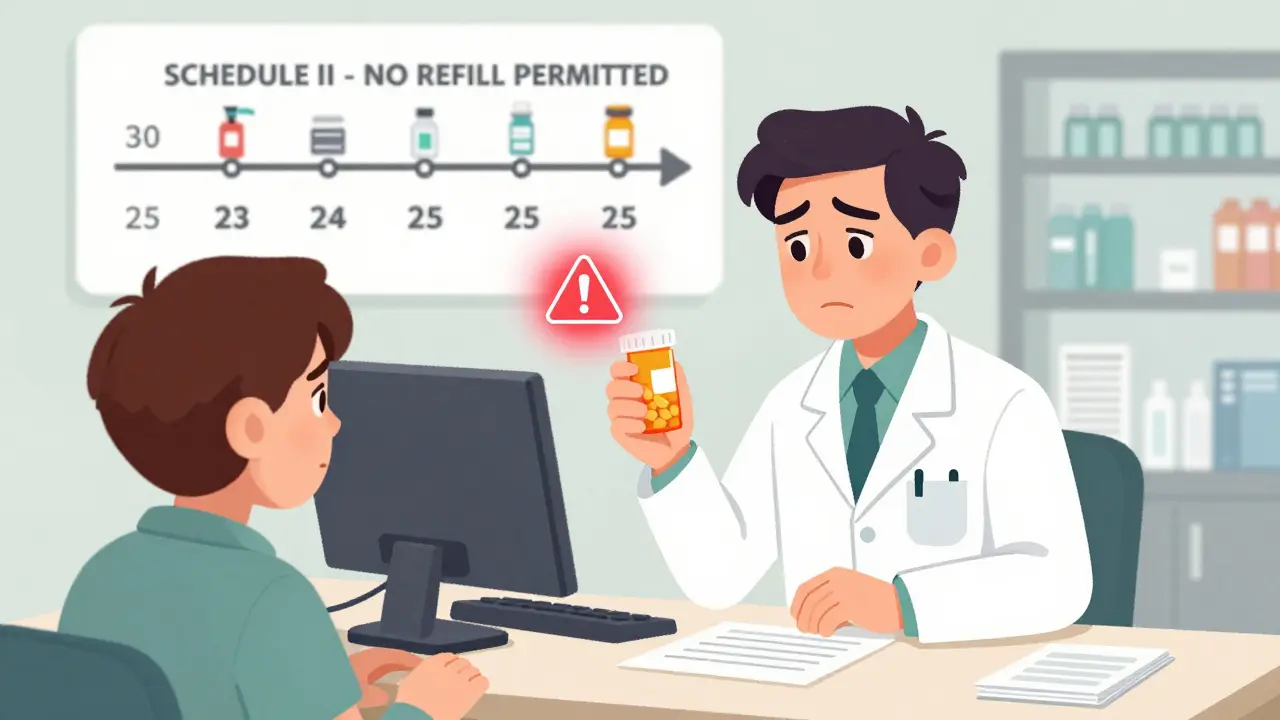
Every month, pharmacists face the same problem: patients showing up a week early for their prescription, claiming they "ran out" or that their insurance "lets them get it early." Some even say their doctor wrote it, so they should get it. These aren’t just inconvenient requests-they’re red flags for early refills and duplicate therapy, two of the most dangerous medication errors in community pharmacies today.
Think about this: a patient fills a 30-day supply of oxycodone on the 25th, then shows up again on the 28th asking for another. They say they lost the first bottle. Another patient gets hydrocodone from one pharmacy and gabapentin from another, both prescribed for pain, but neither prescriber knows the other has written a script. This isn’t rare. It’s systemic. And it’s putting lives at risk.
Why Early Refills Are a Red Flag
Early refills aren’t just about patients being impatient. They’re often signs of misuse, diversion, or poor medication management. The DEA strictly prohibits refills for Schedule II drugs like oxycodone, fentanyl, and Adderall-period. No exceptions. But many patients don’t know this. Others exploit confusion around insurance policies.
Most insurance plans allow a 30-day prescription to be filled up to 5 days early. But patients hear "5 days early" and think they can use up the medication in 25 days and still get a refill. That’s not how it works. The 5-day window is for logistical reasons-holidays, travel, pharmacy closures-not to stretch out your supply. Yet, pharmacists still get calls like: "My insurance says I can get it early, so why won’t you fill it?"
Pharmacies in Birmingham and across the UK have started enforcing stricter policies. Some only allow controlled substances to be filled 2 days early-and even then, only if the patient has a documented medical reason. No exceptions for "I forgot," "I lost it," or "I paid cash."
Duplicate Therapy: When Two Prescriptions Do More Harm Than Good
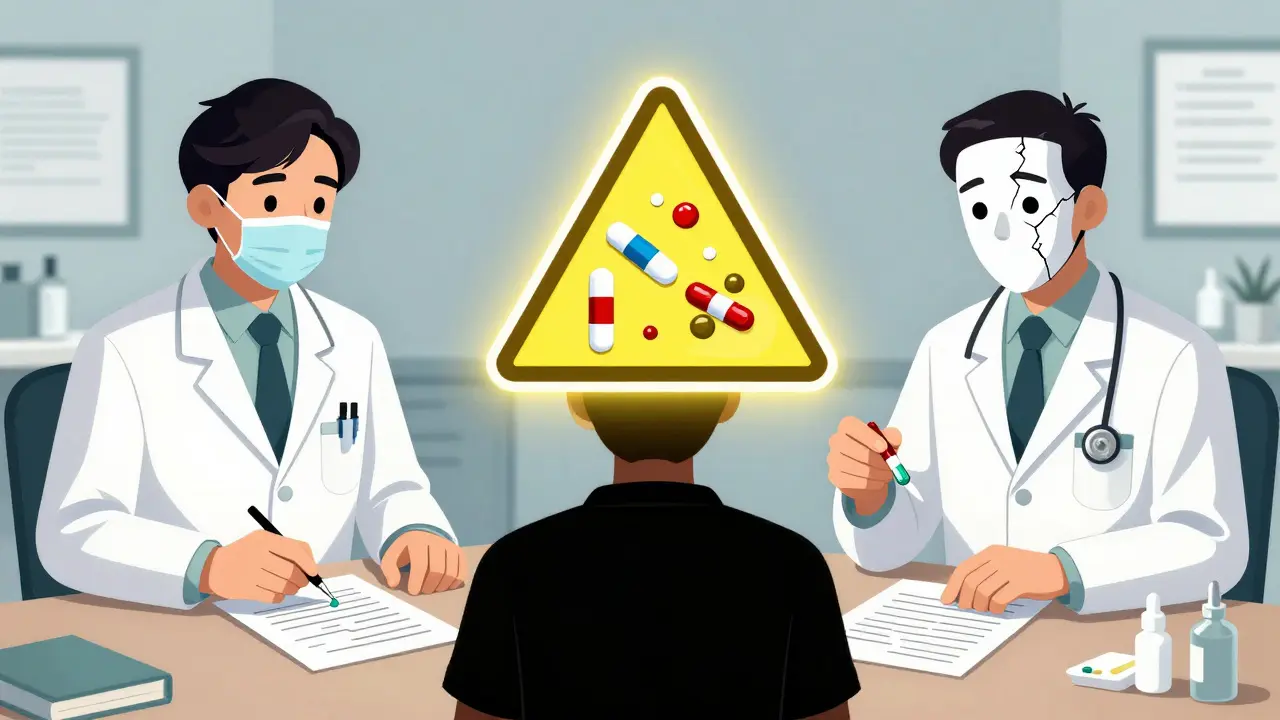
Duplicate therapy happens when a patient gets two drugs with the same or similar effects from different providers. Imagine someone on simvastatin for cholesterol gets another statin prescribed by a cardiologist who doesn’t know about the first. Or a patient on tramadol for pain gets codeine from a dentist. Both are opioids. Both can cause respiratory depression. Together? That’s a recipe for overdose.
Studies show that 12-18% of patients on multiple prescribers end up with duplicate therapy. Many don’t even realize they’re taking two drugs in the same class. Patients often don’t tell their GP about specialists they see. Pharmacists are often the last line of defense.
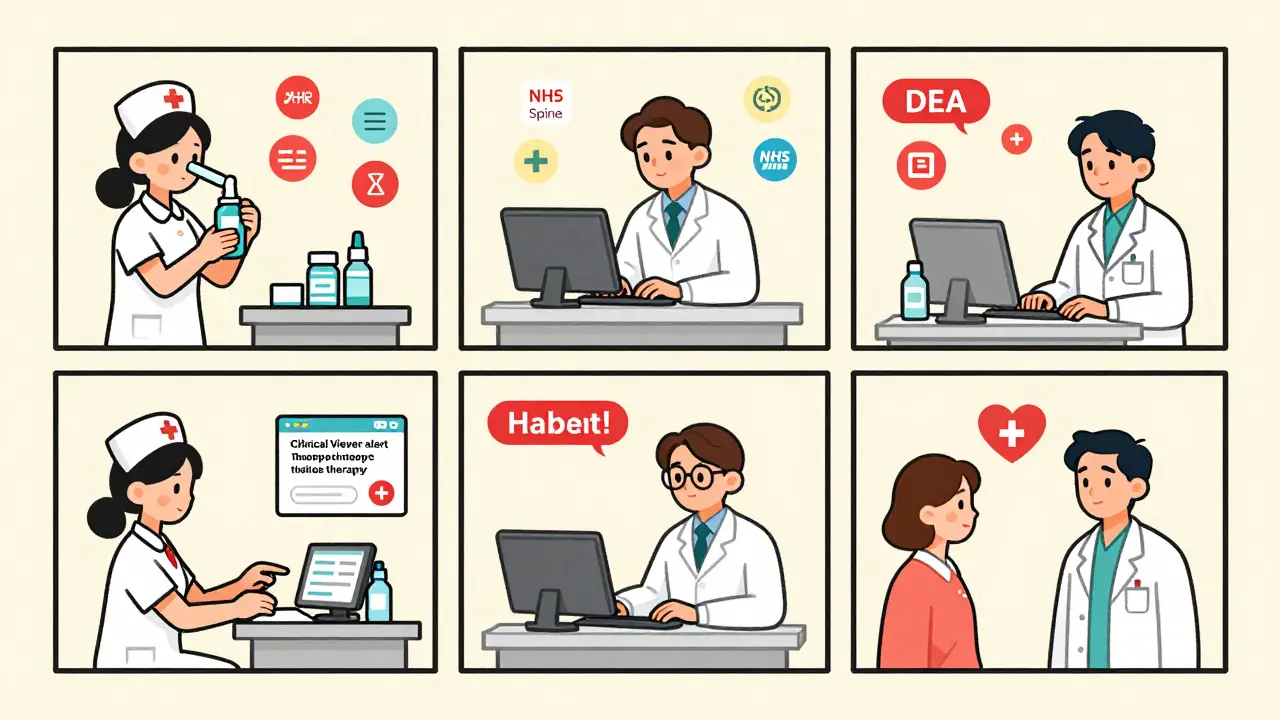
That’s why tools like Clinical Viewers matter. In the UK, systems like the NHS Spine and the Electronic Prescription Service now let pharmacists see what’s been dispensed at other pharmacies-even if the patient used different providers. If someone fills a benzodiazepine at one pharmacy and a similar sedative at another, the system flags it. Not every case is abuse. Sometimes it’s just poor communication. But you won’t know unless you check.
How to Build a Refill Protocol That Works
Randomly deciding whether to refill a prescription? That’s how mistakes happen. The best pharmacies use structured, evidence-based refill protocols. These aren’t just rules-they’re decision trees that guide staff.
Here’s how one UK practice structured theirs:
- Low-risk meds (e.g., nasal steroids, topical creams): Automatic refill if it’s been 30 days since last fill, no provider input needed.
- Chronic condition meds (e.g., metformin, lisinopril): Can be refilled for 90 days if the patient had a visit within the last 90 days. Otherwise, require a follow-up.
- Controlled substances (e.g., oxycodone, alprazolam): Only 2 days early, max. Must have a documented reason. If the patient has requested early refills more than twice in 6 months, trigger a provider alert.
- High-risk combinations (e.g., opioid + benzodiazepine): Block refill unless both prescribers have approved the combination in writing.
These protocols cut down on staff time. One study found that 24% of refill requests were automatically approved by nurses using these rules, and 18% were handled by medical assistants scheduling lab tests or follow-ups-instead of waiting for the doctor to respond.
Technology Is Your Best Ally
Manual checks don’t scale. You can’t remember every patient’s refill history across three different pharmacies. That’s why EHRs and pharmacy management systems with Clinical Decision Support (CDS) are non-negotiable.
Modern systems do three things automatically:
- Flag early refill requests based on date and drug class.
- Check for duplicate therapies across all dispensed medications in the patient’s profile.
- Alert you if the patient has filled similar drugs at other pharmacies in the last 30 days.
For example, if a patient fills a prescription for gabapentin on Monday, and then tries to fill another one on Wednesday at a different pharmacy, the system should pop up a warning: "Duplicate therapy detected. Last fill: 2 days ago at [Pharmacy Name]."
Some systems even let you send automated messages to prescribers: "Patient X requested early refill for oxycodone. Last fill: 2 days ago. Please review."
Don’t rely on memory. Use alerts. Use flags. Use data.
Training Staff to Say No-Without Losing Patients
Pharmacists aren’t cops. But they’re the ones who have to say "no" when a patient is clearly pushing boundaries. The trick? Make it about safety, not suspicion.
Instead of: "I can’t refill this because you’re abusing it," try: "I want to make sure you’re getting the right dose safely. Let’s check in with your doctor to see if we need to adjust your plan."
Patients respond better when they feel cared for, not accused. Training staff to use empathetic language cuts down on conflict and builds trust. One pharmacy in Birmingham reported a 60% drop in patient complaints after staff were trained to use "safety check" phrases instead of "policy" language.
Also, make sure your team knows the law. Schedule II drugs cannot be refilled. Ever. No exceptions. Even if the patient has a note from their doctor. Even if they’re in pain. The DEA doesn’t care. Your pharmacy does.
What to Do When You Spot a Pattern
One early refill? Maybe an accident. Three in a month? That’s a pattern. And patterns matter.
If a patient is consistently getting early refills for controlled substances, especially from multiple prescribers or pharmacies:
- Document every request in their profile.
- Check if they’ve had recent lab tests or visits. If not, flag for follow-up.
- Call the prescriber. Don’t assume they know.
- Use the NHS Spine or Clinical Viewer to see if they’ve filled similar meds elsewhere.
- If abuse is suspected, report to the local Controlled Substances Monitoring Unit. You’re not turning them in-you’re protecting them.
The goal isn’t to punish. It’s to interrupt the cycle before it leads to overdose, addiction, or death.
Real Consequences, Real Cases
One patient in the West Midlands filled oxycodone at three different pharmacies over 10 days. She died of respiratory failure. The autopsy found three opioids in her system. All prescribed legally. None of the prescribers knew about the others.
Another patient with hypertension got two different ACE inhibitors from two doctors. His potassium spiked to 6.8. He had a cardiac arrest. He survived-but barely.
These aren’t outliers. They’re preventable.
When you catch a duplicate therapy or early refill, you’re not being difficult. You’re saving lives.
Final Checklist for Every Refill
Before you dispense any refill, ask yourself:
- Is this medication eligible for refill? (Check DEA schedule and pharmacy policy.)
- Has it been at least 28 days since the last fill? (Don’t rely on insurance rules.)
- Is there a duplicate therapy? (Check all dispensed meds in the system.)
- Has the patient had a recent clinical visit? (If not, pause and consult.)
- Does the patient have a history of early refills? (Check your internal logs.)
- Am I comfortable with this refill? If not, call the prescriber. Always.
These six questions take 30 seconds. But they could prevent a death.
Can a pharmacy refuse to refill a prescription even if the patient has insurance coverage?
Yes. Insurance coverage doesn’t override clinical safety or legal restrictions. Pharmacies are legally allowed-and often required-to refuse refills for controlled substances that are not permitted under DEA rules, or when duplicate therapy or early refill patterns suggest misuse. Your duty is to the patient’s safety, not just the insurer’s policy.
How do I know if a patient is using multiple pharmacies to get early refills?
Use your pharmacy’s Clinical Viewer or NHS Spine access to see prescriptions filled at other pharmacies. Look for gaps in refill timing-like a 30-day supply ending on day 22, then a new one starting on day 23 at another pharmacy. Also watch for the same drug from different prescribers, or frequent requests for controlled substances with no documented medical reason.
What should I do if a patient claims their doctor said they could get an early refill?
Verify it. Call the prescriber directly. Don’t accept screenshots, messages, or verbal claims. Many patients misunderstand what their doctor meant. Others lie. If the prescriber confirms the request, document the conversation and note the reason. If they say no, stand firm. Your license protects you when you follow protocol.
Are there legal consequences for filling an early refill without checking?
Yes. Filling a Schedule II drug refill without authorization violates DEA regulations and can lead to fines, license suspension, or criminal charges. Even if you didn’t know, ignorance isn’t a defense. Pharmacists are held to a professional standard of care. Failing to check for duplicate therapy or early refill patterns can be considered negligence.
How can I reduce staff burnout when handling refill requests?
Automate what you can. Use refill protocols to let nurses and medical assistants approve low-risk refills. Use CDS tools to flag high-risk cases so only the pharmacist needs to review them. Training staff to follow clear guidelines cuts down on guesswork and conflict. One pharmacy reduced refill-related staff stress by 70% after implementing a tiered protocol system.
Comments (9)
Melissa Starks
March 15, 2026 AT 21:20Man I wish more pharmacies in the US would adopt the UK-style protocols. We got pharmacies here where the techs just shrug and say "oh they said their insurance lets them" and refill like it's a free coffee coupon. I've seen patients come in every 12 days for oxycodone like clockwork. No one checks the history. No one calls the doc. It's wild. The DEA doesn't care if you're "just helping"-you're on the hook if it goes sideways. We need mandatory CDS flags, not just suggestions. And training? Stop making pharmacists the bad guy. Train the whole team to say "let me check with your provider" instead of "no, policy." It's not about being tough-it's about being smart. And yeah, I know some people game the system, but most are just scared, confused, or in pain. We can do better than this.
Lauren Volpi
March 16, 2026 AT 19:38Lmao so now pharmacists are cops? Who gave you the right to play gatekeeper? My cousin got his pain meds early because his dog died and he couldn't sleep. You think he's a junkie? Nah. He's grieving. You people turn every request into a crime scene. Insurance says 5 days early? Then 5 days early. Stop overcomplicating everything with your "protocols" and "clinical viewers." It's just medicine. Let people live.
Kal Lambert
March 17, 2026 AT 03:45The 2-day early rule for controlled substances is spot on. No exceptions. I've seen too many overdoses from people stacking prescriptions. Just flag the duplicates, call the prescriber, document it. Done. No drama. Your job isn't to judge-it's to prevent death. Simple.
cara s
March 18, 2026 AT 08:01It is of paramount importance to recognize that the systemic failures surrounding early refill protocols and duplicate therapy are not isolated incidents but rather the predictable outcome of a fragmented healthcare infrastructure. The absence of real-time interoperability between electronic health records and pharmacy dispensing systems creates dangerous blind spots that are, frankly, indefensible in a modern medical context. Moreover, the reliance on human memory-despite the overwhelming cognitive load placed upon frontline pharmacy staff-is not merely inefficient, it is ethically indefensible. The implementation of automated clinical decision support tools is not a luxury; it is a professional obligation. Furthermore, the emotional labor required of pharmacists to navigate patient resentment while upholding regulatory compliance is grossly underappreciated and, in many cases, uncompensated. The solution lies not in punitive measures but in structural investment: integrated data platforms, standardized national protocols, and dedicated support personnel to manage flag reviews. Anything less is negligence dressed as policy.
Amadi Kenneth
March 19, 2026 AT 22:32Wait... so you're telling me the government and pharmacies are working together to control people's pain? I knew it. They're using "duplicate therapy" as an excuse to cut off opioids. But what about people with real chronic pain? The system is rigged. They don't want you to have relief. They want you to suffer so you'll go back to work. And don't get me started on the NHS Spine-how do you know it's not tracking your every move? My cousin got flagged for filling gabapentin and now his Social Security got audited. Coincidence? I think not. This isn't healthcare. It's surveillance. And you're all part of it.
Shameer Ahammad
March 21, 2026 AT 15:28I must express my profound disappointment in the tone of this post. While the data presented is statistically sound, the underlying assumption-that pharmacists are the primary arbiters of patient safety-is dangerously paternalistic. Patients are not children to be managed, nor are they criminals to be monitored. The real issue is the erosion of physician autonomy and the overreach of institutional bureaucracy. Why should a pharmacist, with no clinical history, be empowered to block a prescription based on algorithmic flags? The solution is not more software-it is better communication between prescribers. If a cardiologist and a neurologist are unaware of each other's prescriptions, the fault lies with the EHR systems, not the pharmacy technician. This entire framework is a band-aid on a hemorrhage.
Alexander Pitt
March 23, 2026 AT 04:38The checklist at the end? Perfect. Print it. Tape it to the counter. Every tech, every pharmacist, every intern. 30 seconds saves lives. No excuses.
Manish Singh
March 23, 2026 AT 16:08I come from a small town in India where we don’t have fancy systems like NHS Spine or CDS tools. We have handwritten scripts, shared phones, and pharmacists who know their patients by name. We don’t have the tech, but we have something better-trust. My uncle’s pharmacist remembers he lost his pain meds after a house fire. Didn’t ask for proof. Didn’t call the doctor. Just gave him the script and said, "Take care of yourself, beta." We don’t need more rules-we need more humanity. Not every early refill is abuse. Not every patient is lying. Sometimes, they’re just broken. And if we treat them like criminals, we’ll never fix the real problem.
Nilesh Khedekar
March 24, 2026 AT 00:01Okay but have you seen what happens when someone gets caught with multiple prescriptions? They get blacklisted from ALL pharmacies. No more meds. No more help. And guess who gets blamed? The pharmacist. But what if the doctor wrote it? Or the insurance approved it? Who's really responsible here? The system is a joke. I had a friend who got flagged for "duplicate therapy" because he took Tylenol 3 and then got tramadol for a toothache. They denied him BOTH. He ended up in the ER with a tooth infection. This isn't safety-it's chaos. And the people running it? They don't even know what a toothache feels like.