
It’s cold season. Your kid has a fever. Your throat hurts. Your nose is running. You grab the thermometer, check the symptoms, and wonder: is this bacterial or viral? And more importantly - do you need antibiotics?
Most people think if they’re sick enough to miss work or school, they need antibiotics. But that’s not true. And taking them when you don’t need them isn’t just useless - it’s dangerous.
What’s the Real Difference Between Bacteria and Viruses?
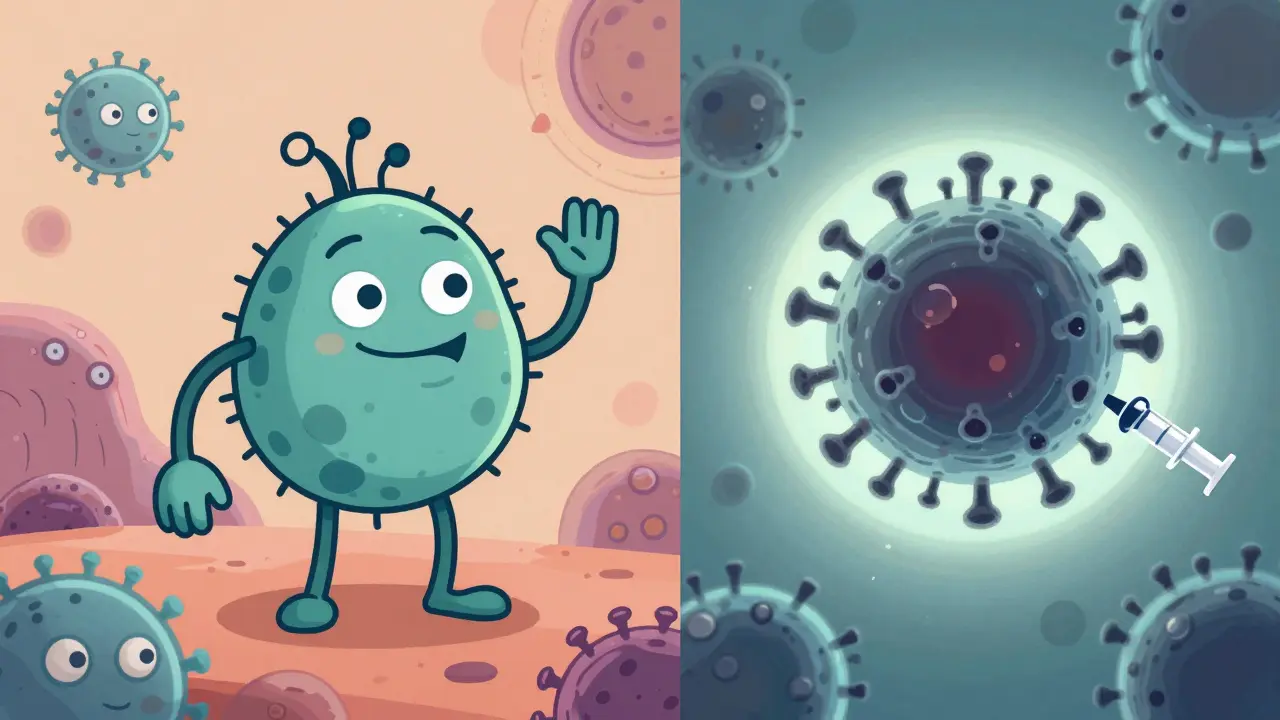
Bacteria are alive. They’re single-celled organisms that can move, eat, and reproduce on their own. You’ll find them everywhere - in soil, water, your gut, even on your skin. Most don’t hurt you. Some even help.
Viruses aren’t alive. They’re just genetic material wrapped in protein. They can’t do anything on their own. They need to sneak into your cells and hijack them to copy themselves. No host? No replication. That’s why viruses spread so fast - they’re built to invade.
This basic difference changes everything. Antibiotics attack living cells - they break bacterial walls, stop protein production, mess with their DNA. Viruses don’t have walls or their own machinery. Antibiotics? Useless on them. It’s like trying to shut down a car by removing the fuel pump when the car doesn’t even have an engine.
Common Infections: Which Is Which?
Here’s what you’re likely to run into:
- Bacterial: Strep throat, urinary tract infections (UTIs), some sinus infections, tuberculosis, whooping cough.
- Viral: Common cold, flu, COVID-19, chickenpox, most coughs and bronchitis, most sore throats.
Strep throat? Almost always bacterial. A runny nose with a cough? Almost always viral. But here’s the trap: both can cause fever, fatigue, and sore throat. That’s why guessing is risky.
Think about it: 85% of acute bronchitis cases are viral. But 70% of people still get antibiotics for it. Why? Because it’s hard to tell without a test.
Symptoms: How to Spot the Clues
There’s no perfect symptom that says “bacterial” or “viral” - but patterns help.
More likely viral:
- Fever under 100.4°F (38°C)
- Runny nose, sneezing, congestion
- General body aches, fatigue
- Cough that gets worse before it gets better
- Symptoms improve in 7-10 days
More likely bacterial:
- Fever over 101°F (38.3°C)
- Symptoms last more than 10-14 days
- Worsening after initial improvement (like feeling better, then crashing again)
- Pus on tonsils, thick yellow-green mucus lasting more than 10 days
- Pain localized to one area - like ear pain, sinus pressure, or painful urination
But here’s the catch: viral infections can lead to bacterial ones. Half of hospitalized COVID-19 patients develop a secondary bacterial pneumonia. That’s why doctors sometimes prescribe antibiotics later - not for the virus, but for the complication.
Testing: How Doctors Know for Sure
Doctors don’t guess anymore. They test.
For strep throat, a rapid antigen test gives results in 10 minutes with 95% accuracy. If it’s negative but suspicion is high, they’ll do a throat culture - the gold standard, 98% accurate.
For flu or COVID, PCR tests detect viral RNA. They’re 90-95% accurate if done within the first 72 hours.
And now there’s something new: FebriDx. Approved in 2020, it’s a finger-prick test that checks two biomarkers - CRP (inflammation) and MxA (a viral signal). It tells you whether the infection is likely bacterial or viral with 94% accuracy. In 10 minutes. That’s changing how clinics operate.
Doctors also use tools like the Centor Criteria for sore throats: fever, swollen lymph nodes, tonsil exudate, no cough. Score 3 or higher? Time for a test. Score 1 or 2? Probably viral - rest and fluids.
Treatment: What Actually Helps
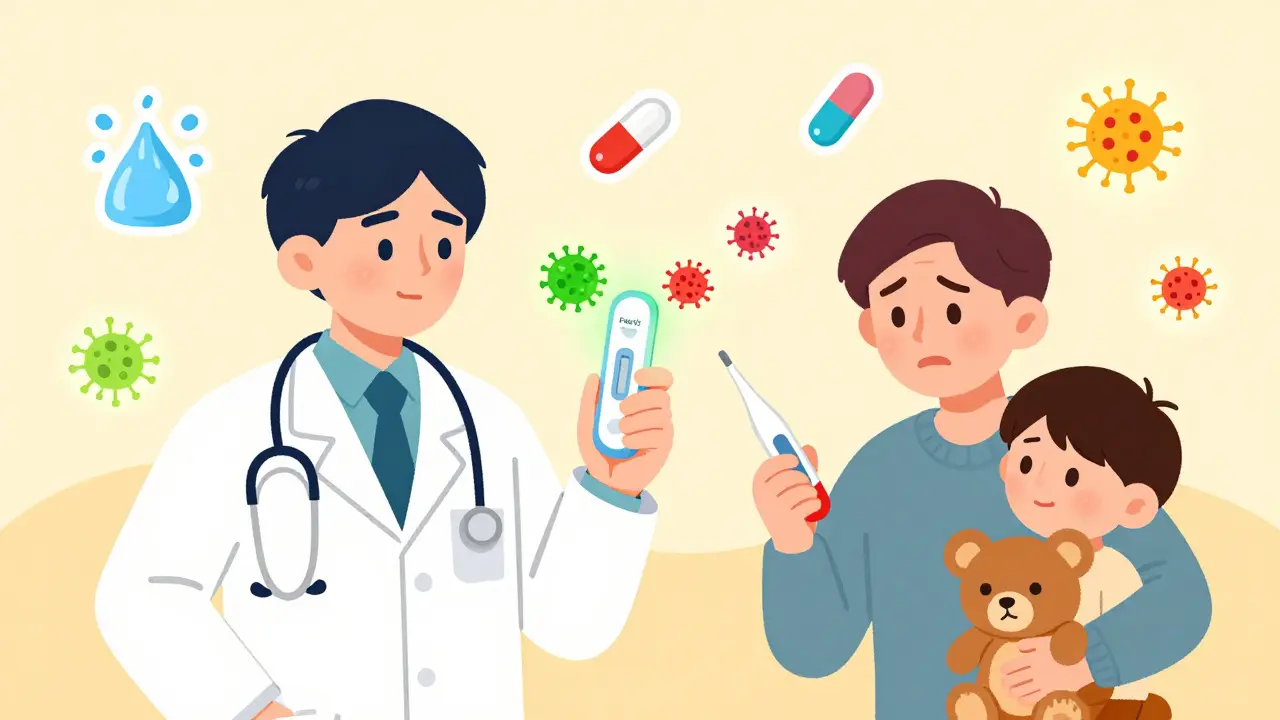
If it’s bacterial - antibiotics work. But not all are the same.
- Strep throat? Penicillin or amoxicillin for 10 days.
- UTI? Nitrofurantoin or trimethoprim-sulfamethoxazole for 3-7 days.
- Sinus infection? Amoxicillin-clavulanate if symptoms last over 10 days.
But antibiotics aren’t magic. They kill bacteria - not symptoms. You still need rest, fluids, pain relief.
If it’s viral - antibiotics do nothing. Zero. Nada.
What helps instead?
- Rest. Your body fights viruses better when it’s not running on empty.
- Hydration. Thins mucus, keeps your throat moist.
- Acetaminophen or ibuprofen. Lowers fever, eases pain.
- Saline nasal spray or steam. Relieves congestion.
For some viruses, antivirals exist - but timing matters.
- Oseltamivir (Tamiflu) for flu: must start within 48 hours. Cuts illness by 1-2 days.
- Remdesivir for severe COVID: given in hospital to shorten recovery.
- Acyclovir for chickenpox or shingles: helps if started early.
Outside of those, it’s all about support. No pill will cure a cold. But your immune system can - if you give it a chance.
Why Taking Antibiotics for Viruses Is a Big Problem
Every time you take an antibiotic you don’t need, you help create superbugs.
Antibiotics don’t just kill the bad bacteria. They wipe out the good ones too - the ones in your gut that help digestion, protect against invaders, even regulate your mood.
Then, the tough, resistant bacteria survive. They multiply. They spread.
Right now, antibiotic-resistant infections kill 1.27 million people a year globally. That’s more than HIV/AIDS or malaria. By 2050, it could be 10 million - more than cancer.
In the U.S. alone, 47 million unnecessary antibiotic prescriptions are written every year - mostly for colds, coughs, and sore throats that are viral.
And it’s not just about future risks. Right now, Clostridioides difficile (C. diff) - a deadly gut infection caused by antibiotic disruption - kills over 12,800 Americans annually.
People who get unnecessary antibiotics are also 65% more likely to come back for the same symptoms later. Why? Because they expect a pill to fix it - even when it’s not needed.
What You Can Do Right Now
You don’t need to be a doctor to make smart choices.
- Don’t demand antibiotics. Ask: “Is this bacterial? Do we need a test?”
- Track your symptoms. If you’re getting better after 5-7 days, you probably don’t need anything stronger than rest.
- Use tests when available. If your clinic has a rapid strep or flu test, insist on it.
- Never save or share antibiotics. A full course is needed to kill all the bacteria. Partial doses breed resistance.
- Get vaccinated. Flu shots, pneumococcal vaccines, and now COVID boosters prevent viral infections - and reduce the chance of secondary bacterial ones.
And if you’re a parent? Know this: kids get 6-8 viral upper respiratory infections a year. That’s normal. It’s not a failure. It’s how their immune system learns.
The Bigger Picture
This isn’t just about your cold. It’s about the future of medicine.
Resistance is rising. New antibiotics are scarce. The last major class was discovered in the 1980s.
But hope is coming. Researchers are testing phage therapy - using viruses that only attack bacteria. Early trials in Europe show 85% success against resistant infections.
Scientists are also designing narrow-spectrum antibiotics - drugs that target one specific bug, not everything in your body. Less collateral damage.
And universal coronavirus vaccines? In Phase III trials. If they work, they could prevent the next pandemic.
But none of that matters if we keep treating every fever like it needs a pill.
Knowing the difference between bacterial and viral infections isn’t just smart - it’s a public health duty.
Frequently Asked Questions
Can a viral infection turn into a bacterial one?
Yes. Viral infections like the flu or COVID-19 can weaken your airways and immune defenses, making it easier for bacteria to move in. This is called a secondary infection. About half of hospitalized COVID-19 patients develop bacterial pneumonia. That’s why doctors may start antibiotics after a few days - not for the virus, but for the complication.
Does green mucus mean I need antibiotics?
No. Green or yellow mucus is just your immune system working. White blood cells and dead bacteria or viruses create that color. It can happen with both viral and bacterial infections. The key isn’t the color - it’s how long symptoms last. If they’re getting better after 7-10 days, it’s likely viral. If they’re worse after day 10, or you develop a high fever, then it might be bacterial.
Why do some doctors still prescribe antibiotics for colds?
Sometimes it’s pressure. Patients ask for them. Sometimes it’s time - testing takes longer than writing a prescription. But it’s outdated. Guidelines from the CDC and WHO are clear: don’t prescribe antibiotics for viral upper respiratory infections. Doctors who do are contributing to the global antibiotic resistance crisis.
Are there home tests to tell bacterial from viral infections?
Not yet for most cases. Rapid strep and flu tests are available in clinics. A new test called FebriDx can distinguish bacterial from viral causes with 94% accuracy in 10 minutes - but it’s only used in medical settings right now. No reliable at-home test exists for the average person. Don’t trust apps or symptom checkers that claim to diagnose - they’re not accurate enough.
What if I took antibiotics for a virus? Will it hurt me?
One course won’t ruin your health. But it’s not harmless. Antibiotics kill good bacteria in your gut, which can cause diarrhea or yeast infections. More importantly, every time you take them unnecessarily, you help resistant bacteria survive and spread. That puts your family, your community, and future patients at risk. It’s not just about you - it’s about everyone.
Can I prevent viral infections?
Yes - and it’s easier than you think. Wash your hands often. Avoid touching your face. Get vaccinated for flu, COVID, and other preventable viruses. Stay home when you’re sick. These simple steps cut transmission dramatically. Most viral infections spread through droplets - you can block them.
What Comes Next
If you’ve been taking antibiotics for every fever or cough, start questioning it. Ask your doctor: “What’s the evidence this is bacterial?”
If you’re a parent, remember: kids get sick often. It’s not a sign of weakness. It’s how their bodies learn to fight.
And if you’re a patient - don’t be afraid to say no. Antibiotics aren’t a cure-all. Sometimes, the best medicine is time, rest, and patience.
The next time you’re sick, don’t reach for the pill. Reach for the thermometer. Track your symptoms. Wait a few days. And if you’re unsure - get tested. Your body, and the world, will thank you.
Comments (11)
CAROL MUTISO
December 16, 2025 AT 03:46Let’s be real - we’ve all been there. Fever, green snot, and a doctor who looks at you like you just asked if the moon is made of cheese. I used to beg for antibiotics like they were candy. Then I got C. diff. Now I treat my immune system like a garden - water it, don’t poison it. Antibiotics aren’t a cure. They’re a sledgehammer. And we’re using them to crack open a walnut.
Anna Giakoumakatou
December 17, 2025 AT 12:18Oh wow. Another ‘educational’ post about how *we* are the problem. How quaint. Did you also write a 5,000-word essay on why breathing is overrated? The real tragedy isn’t antibiotic misuse - it’s that people still believe medicine is a science and not a corporate marketing scheme dressed in white coats.
BETH VON KAUFFMANN
December 19, 2025 AT 01:31FebriDx has a sensitivity of 94% but specificity only around 89% in real-world settings. The Centor criteria have a PPV of ~40% for strep. You’re citing stats like gospel, but ignoring the Bayesian reality: pre-test probability matters. Most primary care providers aren’t doing PCR on every cough. And yes - green mucus *can* be bacterial. It’s not binary. You’re oversimplifying a complex clinical algorithm.
Martin Spedding
December 19, 2025 AT 18:41lol so now we’re all supposed to be doctors? my kid had a temp of 102. i gave him tylenol and waited. turned out to be RSV. but hey, at least i didn’t ‘contribute to antibiotic resistance’ like some elitist germaphobe. also, why do you people always type like you’re writing a thesis? just say ‘no antibiotics’ and be done.
Raven C
December 19, 2025 AT 22:13How dare you imply that the human body is capable of healing itself without pharmaceutical intervention? The very notion is dangerously naive. We have spent centuries advancing medical science - and now you’d have us retreat to the age of herbal poultices and prayer? This isn’t wellness culture. This is public health negligence.
Donna Packard
December 21, 2025 AT 21:22I just wanted to say thank you for this. My daughter had bronchitis last winter, and the doctor didn’t give us antibiotics. I was scared. But she got better in 10 days. I didn’t know that was normal. This post helped me feel less alone.
Erik J
December 22, 2025 AT 23:15Interesting. You mention phage therapy. Any data on long-term ecological impact? Most antibiotics disrupt microbiomes broadly. Phages are highly specific - but could they select for phage-resistant strains? And if so, how would that interact with existing bacterial resistance? Just curious.
Sam Clark
December 22, 2025 AT 23:24Thank you for the thorough and evidence-based breakdown. I’ve shared this with my patients who frequently request antibiotics for viral illnesses. The key isn’t just education - it’s trust. When patients feel heard, they’re more willing to accept ‘wait and see.’ This post gives clinicians a solid foundation to build that conversation.
Jessica Salgado
December 24, 2025 AT 01:13Wait - so if I get a fever after a cold, and my mucus turns green, and I feel worse on day 9… that’s not automatically bacterial? But if I wait until day 12, and still feel awful, THEN it’s okay to suspect one? How do you even live with that uncertainty? My anxiety is screaming right now.
Linda Caldwell
December 25, 2025 AT 22:28You got this. Your body’s smarter than you think. Rest. Hydrate. Trust the process. No pill needed.
Patrick A. Ck. Trip
December 26, 2025 AT 07:45I appreciate the depth of this post. As someone who works in public health outreach, I’ve seen firsthand how misinformation spreads faster than viruses. This is the kind of content that can shift behavior. I’ve already scheduled a community workshop around these principles. Thank you for doing the work.