
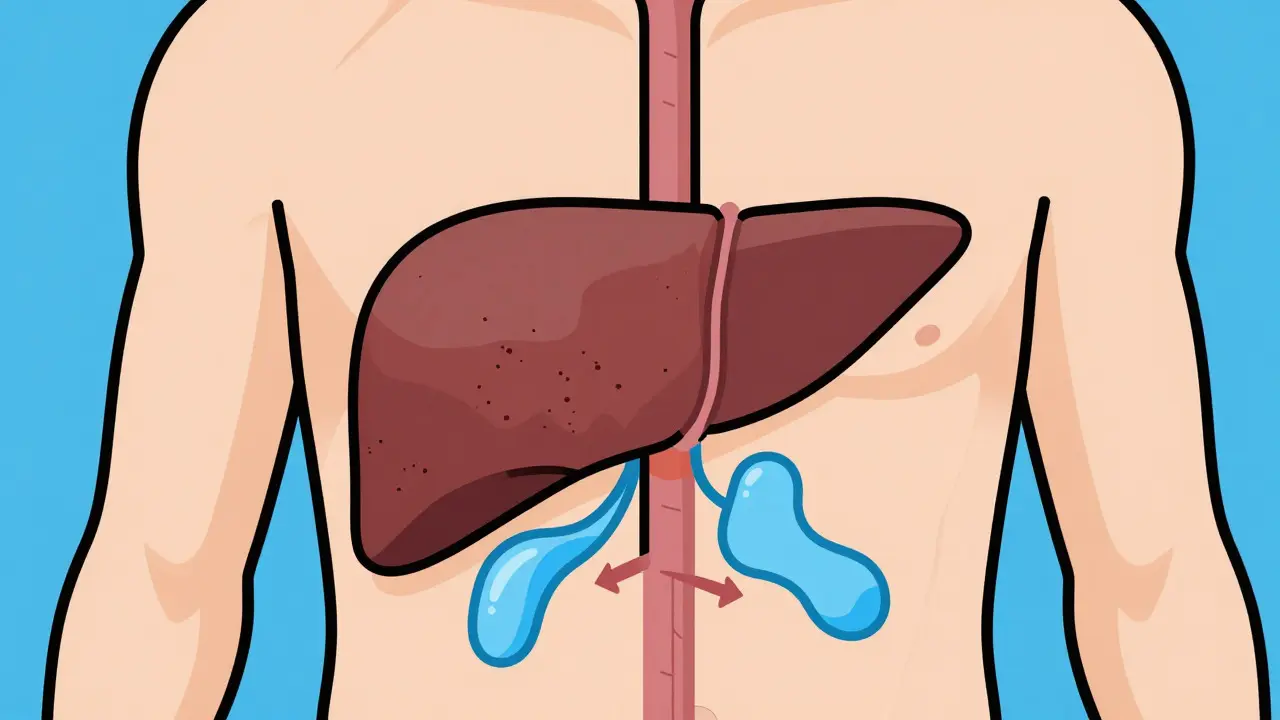
Imagine waking up with a belly that feels tight, heavy, and swollen. For people living with advanced liver cirrhosis, this isn't just discomfort-it's a sign of ascites, the buildup of fluid in the abdomen. About half of all patients with cirrhosis develop this condition within ten years of diagnosis. It marks a turning point in the disease, signaling that the liver is struggling to keep up with the body's needs.
The good news? Ascites is manageable. The standard approach relies on two main pillars: cutting back on salt and using specific medications called diuretics. But here’s the twist-recent research is challenging how strict we need to be with salt. Are we restricting too much? Could less salt actually help more? Let’s break down what works, what doesn’t, and how you can navigate this complex landscape safely.
Understanding Why Fluid Builds Up
To manage ascites, you first need to understand why it happens. It’s not just "water weight." It’s a mechanical and chemical failure caused by portal hypertension. When scar tissue builds up in the liver, blood flow slows down. Pressure rises in the portal vein-the main vessel bringing blood to the liver. When this pressure exceeds 12 mmHg, fluid leaks out into the abdominal cavity.
At the same time, your kidneys think your body is dehydrated. Even though you’re holding onto extra fluid, your brain signals the kidneys to hold onto even more salt and water. This creates a vicious cycle: high pressure pushes fluid out, and low effective blood volume pulls salt in. Breaking this cycle requires both reducing the intake (salt) and increasing the output (diuretics).
The Salt Debate: How Much Is Too Little?
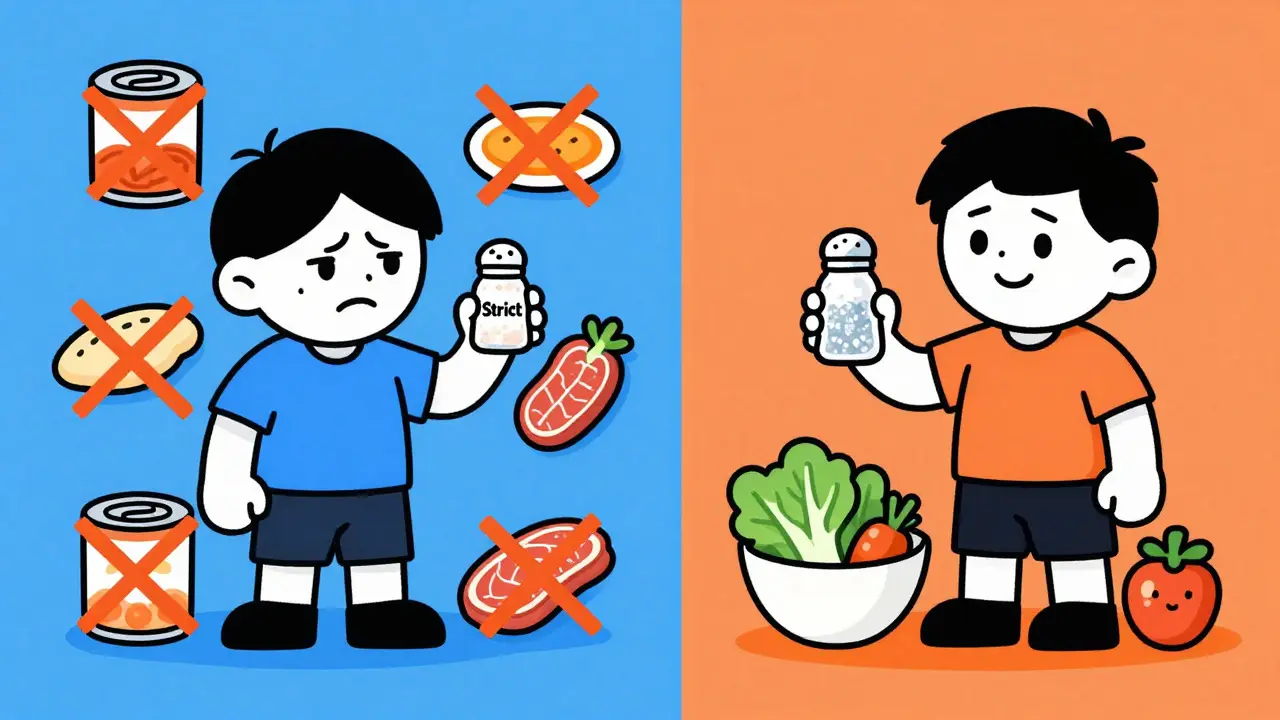
For decades, the rule was simple: cut salt drastically. Guidelines from major organizations like the American Association for the Study of Liver Diseases (AASLD) recommend limiting sodium to under 2 grams per day. That’s about one teaspoon of table salt total-not just what you sprinkle on food, but everything you eat.
But here’s where things get controversial. Two recent randomized controlled trials found something surprising. Patients who ate a moderate amount of salt (5-6.5 grams per day) had better outcomes than those on strict diets. In fact, 45% of the moderate-salt group saw their ascites resolve, compared to only 16% in the strict-restriction group. They also needed fewer invasive procedures like large-volume paracentesis.
| Approach | Daily Sodium Limit | Pros | Cons | |
|---|---|---|---|---|
| Strict Restriction (Traditional) | <2g (approx. 5g salt) | Standard guideline; widely accepted | Hard to adhere (<40% success); risk of malnutrition; may worsen kidney function | |
| Moderate Restriction (Emerging Evidence) | 5-6.5g salt (approx. 2-3g sodium) | Better adherence; higher ascites resolution rates in some studies; lower renal complication risk | Contradicts traditional guidelines; requires careful monitoring |
Why might strict restriction fail? Your kidneys need a certain amount of sodium to maintain blood flow. If you starve them of salt, they may reduce filtration further, potentially triggering hepatorenal syndrome, a serious kidney complication. Experts like Dr. Pere Gines argue that strict limits are counterproductive when combined with diuretics. Meanwhile, Dr. Guadalupe Garcia-Tsao maintains that restriction remains essential but should be balanced against the risk of malnutrition.
How Diuretics Work in Ascites Treatment
If diet alone isn’t enough-and for most patients, it isn’t-diuretics are the next step. These medications help your kidneys excrete excess sodium and water. The gold standard combination involves two drugs:
- Spironolactone: A potassium-sparing diuretic that blocks aldosterone, a hormone that causes salt retention. Starting dose is typically 100-200 mg daily, adjustable every 72 hours up to 400 mg.
- Furosemide: A loop diuretic that works faster but loses potassium. Starting dose is usually 40 mg daily, maxing out at 160 mg.
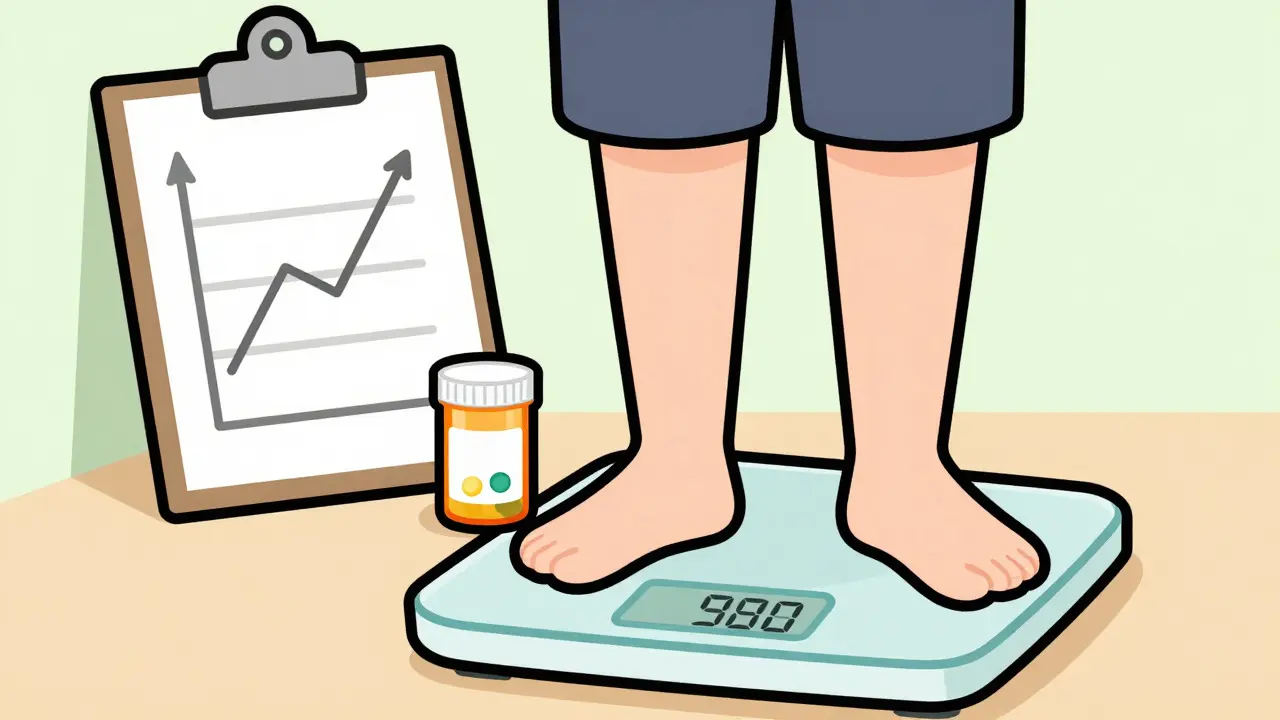
The goal is balance. You want to lose weight steadily-no more than 0.5 kg per day if you don’t have leg swelling, or 1 kg per day if you do. Rapid loss can shock your system. Doctors monitor serum sodium levels closely, checking at least twice a week during initiation. Hyponatremia (low blood sodium) affects 30-40% of ascites patients and requires adjusting doses or restricting fluids.
Monitoring Safety and Side Effects
Treating ascites is a balancing act. Push too hard, and you risk kidney damage or electrolyte imbalances. Go too slow, and the fluid keeps building, raising the risk of infection. One major concern is spontaneous bacterial peritonitis (SBP), an infection of the ascitic fluid that occurs in 10-30% of cases and carries a high mortality rate if untreated.
Watch for these red flags:
- Sudden fever or chills
- Abdominal pain or tenderness
- Confusion or increased drowsiness (signs of hepatic encephalopathy)
- Rapid weight gain despite medication
Also, avoid certain medications entirely. Nonsteroidal anti-inflammatory drugs (NSAIDs) like ibuprofen and naproxen can severely reduce kidney blood flow. ACE inhibitors and ARBs, often used for blood pressure, increase the risk of end-stage renal disease by 2.3 times in cirrhotic patients. Always clear new meds with your hepatologist.
When Standard Therapy Fails: Refractory Ascites
About 5-10% of patients develop refractory ascites-fluid that won’t respond to maximum diuretic therapy. At this stage, options become more invasive. Large-volume paracentesis (LVP) involves draining liters of fluid through a needle. To prevent complications, doctors replace lost protein with albumin infusion (8g per liter removed). While effective, LVP has a 5-10% complication rate and requires hospitalization.
Other treatments include transjugular intrahepatic portosystemic shunt (TIPS), which creates a bypass to lower portal pressure, or liver transplantation, the only cure for underlying cirrhosis. Emerging therapies like vaptans (vasopressin antagonists) exist but are expensive ($5,000-$7,000 per course) and limited to short-term use.
Practical Tips for Daily Management
Living with ascites means making smart choices every day. Here’s how to stay on track:
- Weigh yourself daily: Same time, same scale, same clothes. Track trends, not just single numbers.
- Read labels carefully: 75% of dietary sodium comes from processed foods, not the salt shaker. Avoid canned soups, deli meats, and frozen dinners.
- Eat small, frequent meals: Cirrhosis increases metabolic demand. Malnutrition affects 35-90% of patients. Prioritize protein unless your doctor advises otherwise due to encephalopathy.
- Limit alcohol completely: Any amount stresses the liver further.
- Stay hydrated wisely: If you have hyponatremia, your doctor may restrict fluids to 1-1.5 liters per day.
Adherence is tough. Only 40% of patients stick to strict sodium limits. Consider working with a dietitian who specializes in liver disease. They can help you create a realistic plan that fits your taste preferences and lifestyle.
How quickly should I expect to see results from diuretics?
Most patients notice improvement within 1-2 weeks. Weight loss should be gradual-aim for no more than 0.5 kg/day without edema or 1 kg/day with edema. Faster loss risks kidney injury or electrolyte imbalance.
Can I ever stop taking diuretics?
In rare cases, if liver function improves significantly (e.g., after treating hepatitis C or stopping alcohol), diuretics may be tapered. However, most patients require lifelong management due to permanent scarring.
What foods are highest in hidden sodium?
Bread, pizza, sandwiches, soup, cured meats, and restaurant meals are top offenders. Even "healthy" options like pretzels or pickles can pack over 500mg per serving. Always check nutrition facts.
Is moderate salt restriction safe for everyone?
Not yet proven universally. Current evidence supports moderate restriction (5-6.5g salt/day) in select patients under close supervision. Discuss with your hepatologist before changing your diet.
When should I go to the emergency room?
Seek immediate care if you experience severe abdominal pain, vomiting blood, black stools, confusion, or difficulty breathing. These could signal SBP, variceal bleeding, or respiratory compromise from massive ascites.
Comments (8)
Charles PINSON
July 19, 2026 AT 19:54The entire premise of this article is built on the shaky foundation of observational bias disguised as clinical breakthrough. You cite two RCTs, conveniently ignoring the meta-analyses that suggest these outcomes are statistically insignificant when adjusted for baseline liver function scores. The notion that "moderate" restriction is superior is a classic case of regression to the mean being mistaken for therapeutic efficacy. Furthermore, the suggestion that strict sodium limitation causes malnutrition is a strawman argument; proper nutritional counseling mitigates this risk entirely. Most patients fail not because the diet is too hard, but because they lack the intellectual discipline to adhere to basic biochemical principles. It is frankly embarrassing how quickly hepatology guidelines pivot based on short-term data without considering long-term renal outcomes.
Kieran Healy
July 20, 2026 AT 02:37I found this really helpful, especially the part about reading labels! :) My dad has cirrhosis and he always struggles with knowing what to eat. It's so hard to find snacks that aren't loaded with salt. Thank you for explaining the difference between the strict and moderate approaches, it gives us something new to discuss with his doctor next week. I hope more people can benefit from this info! :)
Patrick Plummer
July 20, 2026 AT 15:41Oh, please. Another medical blog telling us we need to be careful? Careful?! We are all just walking time bombs here, aren't we? And now you want us to count every milligram of sodium like it's gold dust? It's absurd. The body knows what it needs. If your kidneys were working right, you wouldn't need diuretics. But no, let's blame the salt shaker instead of looking at the systemic failure of modern medicine to actually cure anything. It's all about managing symptoms until you drop. Typical. ::
John Anderson
July 21, 2026 AT 03:37You're eating processed garbage. That's why you're sick. Stop buying canned soup. Cook real food. Meat and vegetables. No salt added. It's simple if you try. Most people are lazy. They want quick fixes. There are no quick fixes. Just discipline. Eat clean. Live longer. Or don't. Your choice.
neal vince
July 21, 2026 AT 14:34It is imperative to note that the dosage protocols mentioned for spironolactone and furosemide are standard only in the absence of significant electrolyte disturbances. Many practitioners overlook the critical importance of monitoring serum potassium levels during the titration phase. A ratio of 100mg spironolactone to 40mg furosemide is generally maintained to prevent hyperkalemia or hypokalemia, yet deviations occur frequently due to poor patient education. Furthermore, the mention of NSAIDs is crucial, as many patients continue to take ibuprofen for arthritic pain, unaware that it precipitates acute kidney injury in the setting of portal hypertension. This oversight is negligent.
Sinead Doyle
July 22, 2026 AT 10:57the big pharma lobby is pushing the diuretic agenda because they make billions off spironolactone patents expiring soon. look into the funding sources of those 'recent trials'. its always tied to drug companies. the salt restriction debate is a smokescreen to keep us dependent on meds. natural remedies work better but nobody talks about them. also the table is misleading. typical corporate media spin. wake up sheeple. they want you weak and medicated. #bigpharma #liverlie
Samuel Friday
July 23, 2026 AT 05:05Charles Pinson (8911) clearly hasn't read the primary literature since the early 2000s. His dismissal of the recent RCTs is intellectually dishonest. The study by Ginès et al. demonstrated a clear reduction in hospitalizations for the moderate group. To call it 'regression to the mean' is lazy analysis. Meanwhile, Kieran Healy (8925) is asking naive questions that should be answered by a textbook, not a forum. And Patrick Plummer (8918), your existential dread is irrelevant to the physiological mechanisms of ascites. Let's focus on the data, not the drama. The evidence supports a nuanced approach, not the dogmatic adherence to outdated guidelines.
Kevin Burke
July 24, 2026 AT 08:58We must consider the metaphysical weight of our dietary choices. Is salt merely sodium chloride, or is it a symbol of preservation in a decaying world? When we restrict salt, do we restrict life itself? The body craves balance, yin and yang. Diuretics force the water out, but do they leave the spirit intact? Perhaps the true cure lies not in pills, but in alignment with the universal flow. Yet, practically speaking, one must heed the warnings about NSAIDs. They disrupt the harmony of the kidneys. Be mindful. Be aware. The path to health is internal.