
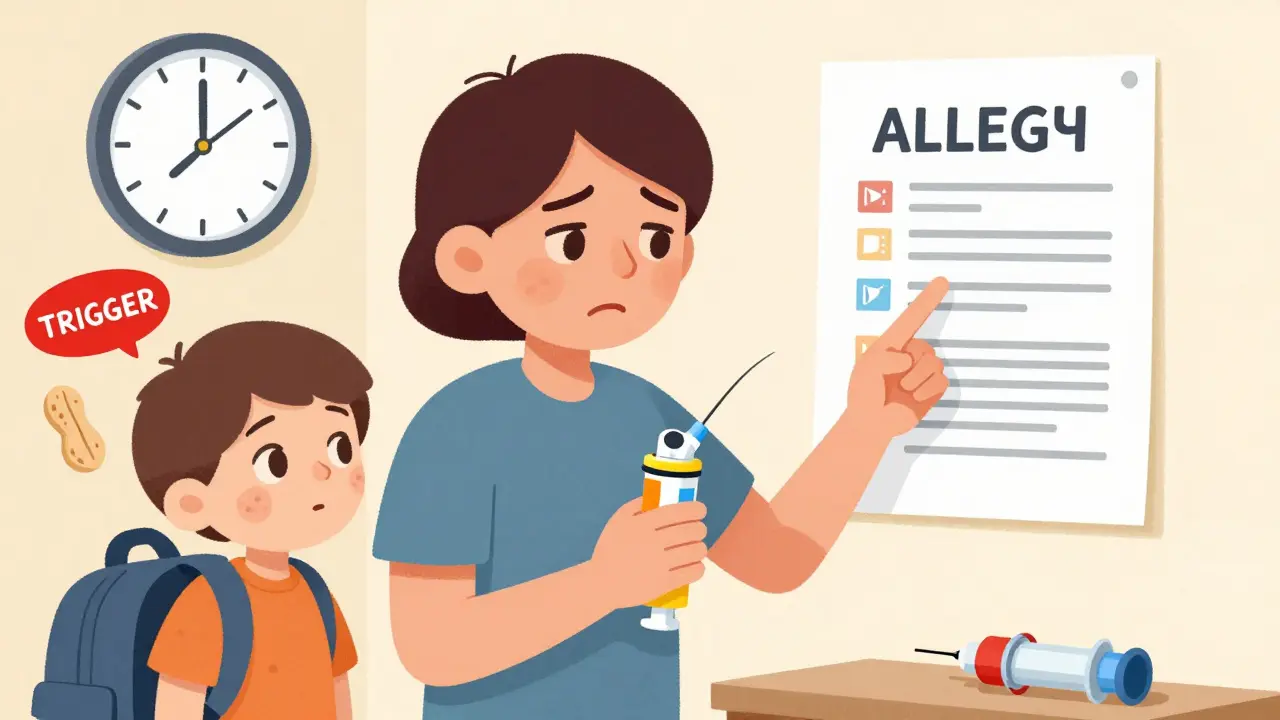
Carrying the right medications for an allergic reaction isn’t just a good idea-it’s a lifesaving habit. Whether you’re managing a child’s peanut allergy, your own severe bee sting reaction, or a history of anaphylaxis, having a clear, written allergy action plan makes all the difference when seconds count. This isn’t a vague reminder to “avoid nuts” or “keep Benadryl handy.” It’s a step-by-step medical guide that tells you exactly what to do, when to do it, and which medicine to reach for first.
What’s in Your Allergy Emergency Kit?
The cornerstone of every reliable allergy action plan is epinephrine. Not antihistamines. Not inhalers. Not waiting to see if symptoms get worse. Epinephrine is the only medication that stops a life-threatening reaction in its tracks. It works by tightening blood vessels, opening airways, and supporting heart function-all things your body desperately needs during anaphylaxis.
Epinephrine auto-injectors come in three standard doses:
- 0.10 mg for children weighing 7.5-13 kg (16.5-28.7 lbs)
- 0.15 mg for children weighing 13-25 kg (28.7-55.1 lbs)
- 0.30 mg for anyone over 25 kg (55.1 lbs) or adults
These doses aren’t suggestions-they’re based on clinical studies and updated by the American Academy of Pediatrics in 2022. Using the wrong dose can mean under-treatment or unnecessary side effects. Always check the label on your injector. If your weight changes, get a new prescription.
Some newer options are now available. In 2023, the FDA approved Neffy, a nasal spray version of epinephrine. It’s not a replacement for injectables in all cases, but it’s a useful backup for people who panic at needles or have trouble giving injections. Still, injectables remain the gold standard.
When to Use Epinephrine-No Guessing Allowed
Too many people wait. They think, “It’s just a few hives,” or “Maybe it’ll go away.” That’s how preventable deaths happen. According to the American Academy of Allergy, Asthma & Immunology, 78% of fatal anaphylaxis cases involved delayed or missed epinephrine use.
You don’t need to wait for a full list of symptoms. The rule is simple: Use epinephrine at the first sign of a severe reaction if you have a known allergy and any of these occur:
- Difficulty breathing or wheezing
- Swelling of the tongue, throat, or lips
- Dizziness, fainting, or sudden weakness
- Repeating vomiting or diarrhea after eating a known trigger
- In infants: sudden hives, persistent cough, or extreme lethargy
Even if symptoms seem mild at first, if you’ve had a serious reaction before-or if you have asthma-err on the side of caution. Asthma increases your risk of a deadly reaction by 300%. Don’t wait for it to get worse.
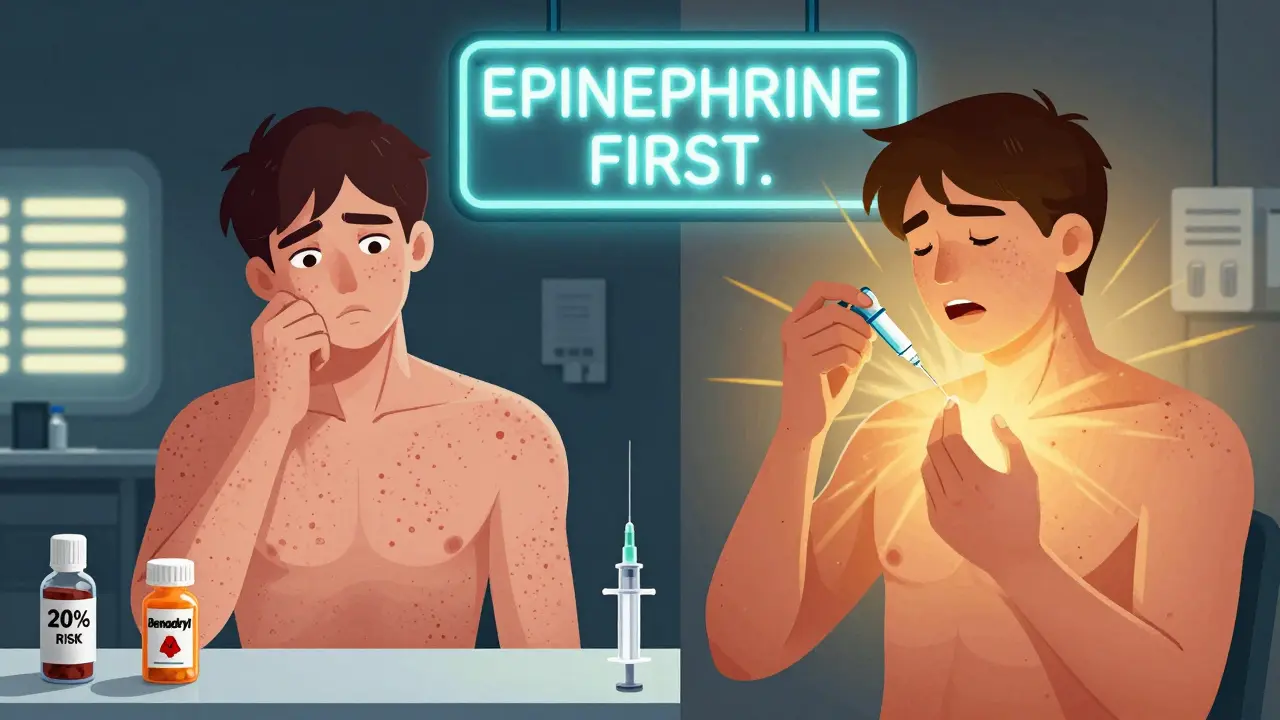
Here’s what not to do: Don’t give antihistamines first. Don’t try to “wait and see.” Don’t assume Benadryl will stop the reaction. Antihistamines like diphenhydramine (Benadryl) help with itching and hives, but they do nothing for airway swelling or low blood pressure. In fact, studies show people who take Benadryl first delay epinephrine by an average of 22 minutes-time that can cost lives.
What About Antihistamines and Inhalers?
Antihistamines still have a role-but only as a second step. If you have mild symptoms like a few hives or a runny nose with no breathing or circulation issues, you can use an antihistamine after confirming the trigger is gone. But if there’s any doubt, skip the antihistamine and go straight to epinephrine.
For people with asthma who also have food allergies, an albuterol inhaler should be part of the plan. If wheezing or tightness in the chest shows up during a reaction, use your inhaler after giving epinephrine. It won’t replace epinephrine, but it can help open airways while you wait for emergency help.
Important: Never use an inhaler instead of epinephrine. Never. Even if you’re wheezing. Epinephrine is the only thing that can reverse the full body response of anaphylaxis.
What to Do After Giving Epinephrine
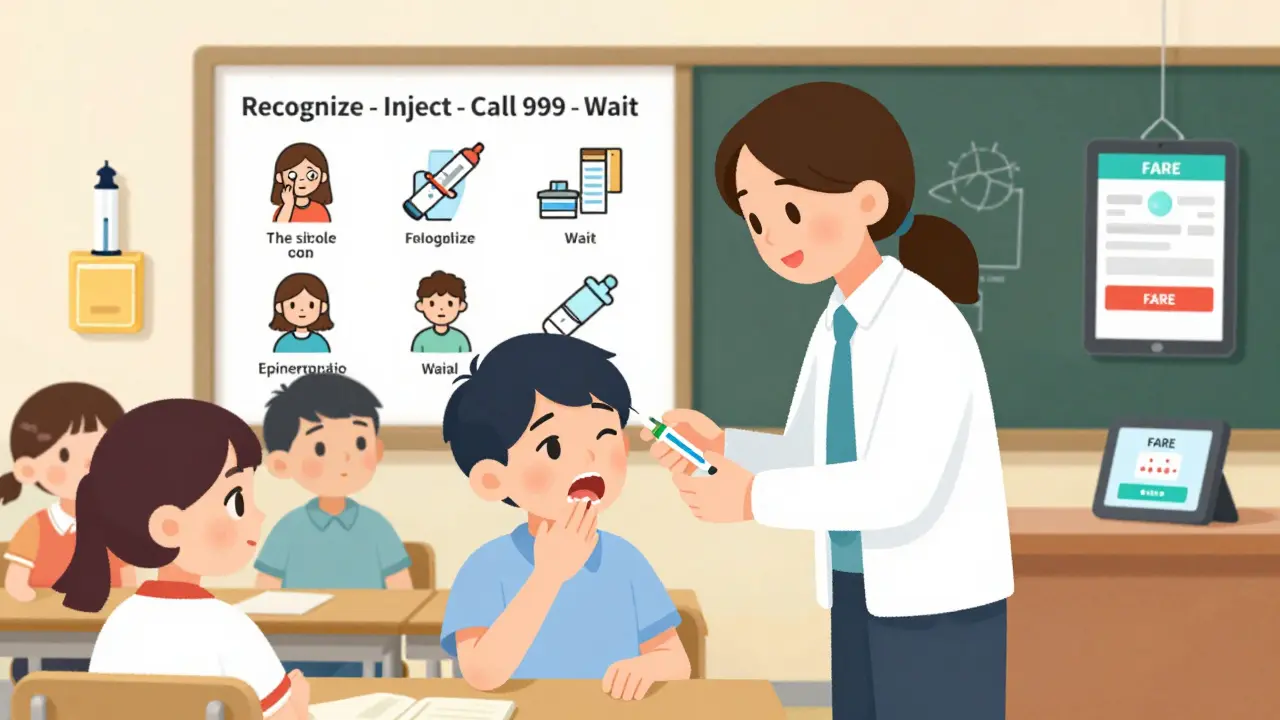
Giving epinephrine isn’t the end-it’s the beginning of emergency care. After you inject it:
- Call 999 (or your local emergency number) immediately. Even if symptoms improve.
- Stay lying down with legs elevated (unless breathing is hard-in which case sit up slightly).
- Keep the used injector with you. Paramedics need to know what was given.
- Be prepared for a second dose. If symptoms come back or don’t improve within 5-10 minutes, give another injection. You can safely give a second dose.
Why the wait? About 20% of people experience a biphasic reaction-symptoms return hours later without any new exposure. That’s why you need to be monitored in a hospital for 4 to 6 hours after the first dose. Going home too soon is risky.
Common Mistakes and How to Avoid Them
People mean well, but mistakes happen. Here are the top problems we see:
- Expired injectors: 32% of households have at least one expired epinephrine pen. Check expiration dates every time you refill. Keep a spare in your bag, car, and workplace.
- Confusion over dosing: A child who gains weight may still be using a 0.15 mg injector when they need 0.30 mg. Revisit your plan every year.
- Not sharing the plan: Schools, daycare centers, and relatives need copies. A 2023 study found that when teachers had the plan, response time dropped from 14 minutes to under 5 minutes.
- Assuming one dose is enough: If symptoms return, give a second dose. Don’t wait for EMS to arrive. Every minute counts.
Also, keep your plan updated. If you develop a new allergy, change medications, or have a new reaction, see your allergist. Plans should be reviewed at least once a year.
Digital Tools Are Changing the Game
More people are using apps to store their allergy plans. FARE’s mobile app, launched in March 2024, lets you store your personalized plan, set expiration alerts for your injector, and share emergency contacts with 999. Over 142,000 people use it now. It’s not a replacement for a printed copy, but it’s a powerful backup.
Future tools are coming too. Stanford’s 2023 pilot study showed an AI tool could identify anaphylaxis from video footage with 92% accuracy. Imagine your phone recognizing facial swelling or breathing trouble and automatically sending your action plan to emergency responders. By 2026, this could be standard.
Final Reminder: This Is Your Lifeline
An allergy action plan isn’t paperwork. It’s your safety net. It’s what lets teachers, strangers, and family members act quickly when you can’t. It’s what keeps you alive.
Make sure you have:
- A current epinephrine injector (not expired)
- A printed copy of your plan
- Extra injector(s) in your bag, car, and workplace
- Everyone who cares for you knows where it is and how to use it
If you don’t have a plan, ask your allergist for one. If you have one but haven’t looked at it in a year, pull it out today. Update it. Practice with someone. Make sure the doses still match your weight.
Your life depends on what you carry-and when you use it. Don’t wait for a crisis to figure it out.
Do antihistamines like Benadryl stop anaphylaxis?
No. Antihistamines like diphenhydramine (Benadryl) only help with mild symptoms like hives or itching. They do not treat airway swelling, low blood pressure, or shock-the life-threatening parts of anaphylaxis. Giving antihistamines first can delay the use of epinephrine, which is the only medication that can save your life during a severe reaction.
Can I use a nasal epinephrine spray instead of an injection?
Neffy, the FDA-approved nasal spray, is an option for people who can’t or won’t use injections. It works quickly and is easier for some to use. But it’s not a full replacement. Injectable epinephrine still delivers more consistent, reliable results and is recommended as the first choice by all major allergy organizations. Keep an injector as your primary tool and the spray as a backup.
How many epinephrine injectors should I carry?
At least two. One for everyday use, and one as a backup. Anaphylaxis can recur hours later (biphasic reaction), and you may need a second dose. Also, injectors can fail, get lost, or be left behind. Keep one at home, one in your bag, one in your car, and one at school or work if needed.
What if I’m not sure whether it’s a severe reaction?
If you have a known allergy and any symptom beyond mild hives or a runny nose-especially trouble breathing, swelling, dizziness, or vomiting-give epinephrine. The risk of not acting is far greater than the risk of using it unnecessarily. Epinephrine is safe even if you’re wrong. Delaying it isn’t.
Do I need to go to the hospital after using epinephrine?
Yes. Always. Even if you feel better. About 20% of people have a second wave of symptoms hours later, called a biphasic reaction. Hospitals can monitor you, give more treatment if needed, and prevent a second, possibly deadlier episode. Never skip this step.
Comments (15)
Lebogang kekana
March 4, 2026 AT 00:58This is the kind of life-saving info everyone needs to see. Epinephrine isn't optional-it's your body's last stand. I carry two injectors in my backpack, one in my car, and one at work. No excuses. If you're hesitating, you're already losing time. Just use it. Period.
Shivam Pawa
March 5, 2026 AT 12:51The 22-minute delay stat hits hard. Saw a friend use Benadryl first during a reaction and nearly lost her. Epinephrine first, always. Even if it's just a little swelling. No waiting. No guessing. The body doesn't negotiate.
Renee Jackson
March 6, 2026 AT 09:06As a pediatric allergist, I cannot emphasize this enough: every caregiver, teacher, and relative must be trained. A printed plan in a laminated sleeve taped to the fridge is not enough. Practice with a trainer pen monthly. Muscle memory saves lives.
Divya Mallick
March 6, 2026 AT 11:30Why do we still let people think antihistamines are enough? This isn't a mild cold. This is your airway shutting down. If you're waiting for hives to spread before acting, you're playing Russian roulette with your kid's life. I'm tired of seeing parents treat this like a suggestion.
Siri Elena
March 7, 2026 AT 08:09Oh wow, a whole article about not being an idiot. Who knew? I mean, I guess some people still think Benadryl is a magic wand. But hey, at least now there's a nasal spray so you don't have to stab yourself. Progress, I guess. 😏
Tildi Fletes
March 8, 2026 AT 00:12The 2022 AAP dosing guidelines are critical. Many parents don't realize that a child who gained 10 pounds in a year may now need the adult dose. Regular weight checks and plan updates are non-negotiable. I've seen too many cases where the injector was correct for the child's weight at age 4-not at age 8.
Callum Duffy
March 8, 2026 AT 23:11The biphasic reaction statistic is under-discussed. People think once epinephrine works, they're fine. But 20% experience a second wave. That's why hospital monitoring isn't bureaucracy-it's biology. Never leave early. Even if you feel fine. Your body is still in crisis mode.
Pankaj Gupta
March 10, 2026 AT 02:48I appreciate the clarity on Neffy. It's not a replacement. It's an adjunct. I have both. My daughter panics at needles, so we keep the nasal spray as backup. But we practice with the injector weekly. Familiarity reduces panic. And panic kills.
Jane Ryan Ryder
March 10, 2026 AT 23:54I don't get why people still carry expired pens. It's like keeping a broken fire extinguisher. If it's expired, it's trash. Replace it. Throw it out. Get a new one. Stop being lazy. Lives aren't saved by convenience.
Alex Brad
March 12, 2026 AT 06:54Two injectors minimum. One in your bag. One in your car. One at school. One at grandma's. No exceptions. If you can't afford that, you're not prioritizing safety. This isn't optional.
Matt Alexander
March 13, 2026 AT 20:04Epinephrine doesn't cure anything. It buys time. That's it. The real work happens in the ER. So yes, call 999. Yes, stay put. Yes, hand over the used injector. Don't try to be a hero. Let the pros take over.
Jessica Chaloux
March 13, 2026 AT 23:31I used to be scared to use mine... until my son went into anaphylaxis at a birthday party. I didn't think I could do it. But I did. And he's alive today because I didn't wait. If you're scared, practice with a trainer. You can do this. 💪❤️
RacRac Rachel
March 15, 2026 AT 04:17I love that FARE has the app now! I set alerts for my injectors and share my plan with my coworkers. My boss even printed a copy for the office fridge. I used to feel so alone with this... now I feel supported. 🌈✨
Levi Viloria
March 16, 2026 AT 17:11In my community, we've started doing 'Allergy Action Nights'-families gather to review plans, practice with trainers, and swap spare injectors. It's not just about medicine. It's about community. We look out for each other now.
Raman Kapri
March 17, 2026 AT 04:31The assertion that epinephrine is the only effective treatment is scientifically sound. However, the omission of corticosteroids as adjunctive therapy in the post-biphasic phase is a significant oversight. While they do not replace epinephrine, they reduce the incidence of biphasic reactions by up to 40% when administered in the emergency setting. This omission weakens the clinical rigor of the piece.