
Ever wonder why your pharmacist might suggest a generic version of your medication, or why your insurance company makes it much cheaper to pick a specific brand? It isn't just about the pharmacy making a quick buck. Behind the counter is a complex web of state-level generic prescribing incentives designed to keep healthcare costs from spiraling out of control. While the goal is simple-save money-the way states actually do it varies wildly, from the fine print in substitution laws to the lists your doctor uses to choose your meds.
The push for these incentives really picked up speed after the Hatch-Waxman Act of 1984. This law created the modern path for generic drugs to get approved, but it didn't automatically make doctors and patients switch. States had to step in with financial and regulatory nudges to make generic use the default choice rather than the alternative.
The Secret Weapon: Preferred Drug Lists (PDLs)
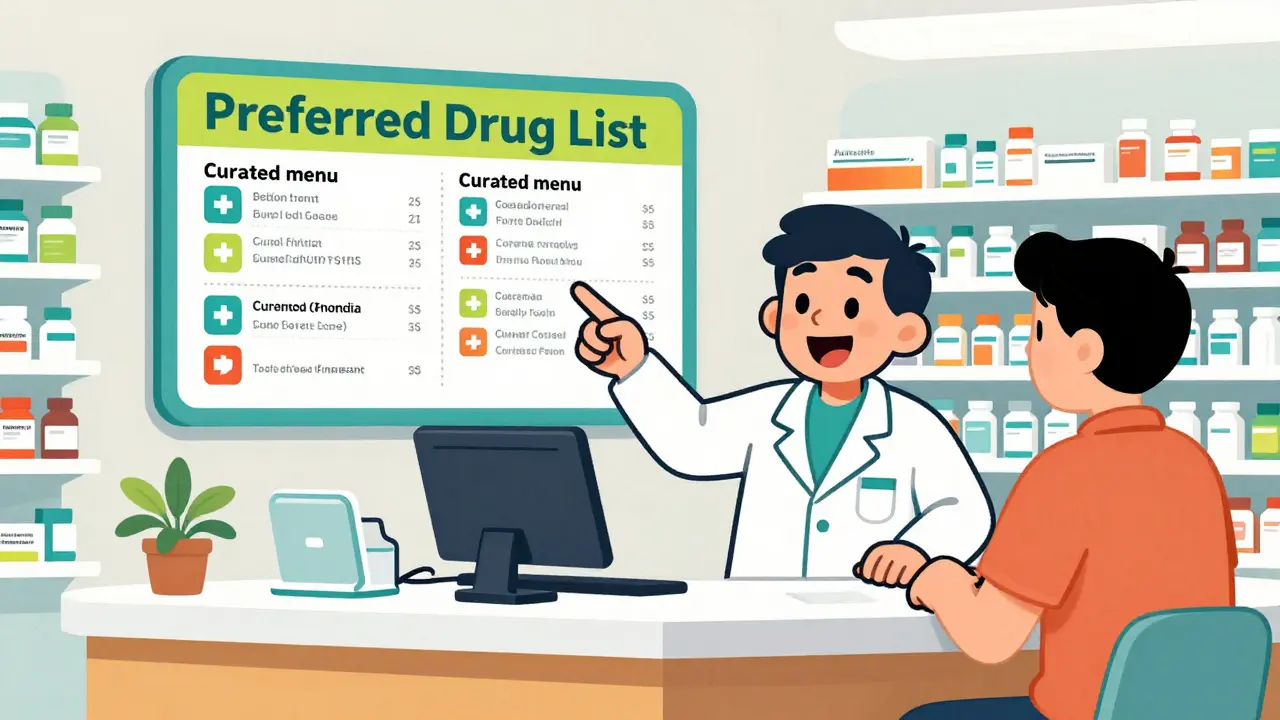
If you've ever had a prescription denied because it wasn't "on the list," you've encountered a Preferred Drug List, or PDL. A PDL is essentially a curated menu of medications that a state's Medicaid program prefers you use because they are cost-effective and therapeutically equivalent to brand names.
As of 2019, 46 out of 50 states used PDLs for their Medicaid fee-for-service prescriptions. But how are these lists actually managed? It's not just one person picking favorites. Different states use different gatekeepers:
- Pharmacy and Therapeutics (P&T) Committees: Used by 29 states to make clinical and cost decisions.
- Medicaid Agencies: 7 states let the agency handle the placements.
- Drug Utilization Review (DUR) Boards: 6 states rely on these boards for oversight.
To make these lists actually work, states use "carrots and sticks." For instance, if a doctor wants to prescribe a drug that isn't on the PDL, they often have to go through a prior authorization process-basically a bureaucratic hoop that proves the patient actually needs the brand-name version. Alternatively, states might slap a higher copayment on non-preferred drugs, making the generic option much more attractive to the patient's wallet.
Substitution Laws: Presumed vs. Explicit Consent
One of the most impactful ways states reward generic use is through substitution laws. These laws dictate whether a pharmacist can swap a brand-name drug for a generic without calling the doctor first.
There are two main frameworks here: Presumed Consent and Explicit Consent. In a presumed consent state, the pharmacist can switch to a generic unless the doctor specifically writes "Do Not Substitute" on the script. In explicit consent states, the pharmacist needs a green light from the patient or provider first.
Does it actually make a difference? Absolutely. A study published by the National Institutes of Health (NIH) found that presumed consent laws increase generic dispensing rates by about 3.2 percentage points. That might sound small, but the financial ripple effect is massive. The NIH estimated that if the 39 states using explicit consent switched to presumed consent, annual prescription spending in those states could drop from $297 billion to $246 billion.
| Feature | Presumed Consent | Explicit Consent |
|---|---|---|
| Pharmacist Action | Substitutes by default | Requires authorization |
| Impact on generic use | Significantly higher (+3.2%) | Lower generic utilization |
| Patient Experience | Faster, cheaper checkout | More control, potentially higher cost |
| System Savings | High (Est. $51B potential) | Moderate |
The Financial Engine: Rebates and the MDRP
While PDLs and substitution laws are the "front end," the real money moves in the background through the Medicaid Drug Rebate Program (MDRP). Established by the Omnibus Budget Reconciliation Act of 1990, this program requires drug manufacturers to give states a minimum 13% base rebate of the Average Manufacturer Price (AMP) for generic drugs.
States don't just stop at the minimum. Many negotiate "supplemental rebates." By promising a manufacturer that their drug will be the "preferred agent" on the PDL, the state can squeeze out even deeper discounts. As of 2019, 46 states were negotiating these extra rebates, effectively using their market power to lower the price of the drugs they encourage providers to prescribe.
Then there's the 340B Drug Pricing Program. This allows certain "safety-net" providers-like clinics serving low-income populations-to buy drugs at a massive discount (often 20-50% off). This creates an institutional incentive to lean heavily into generic use to maximize the stretch of their limited budgets.
Why Some Incentives Fail
You might think that making generics cheaper would always work, but the market is messy. For example, some states tried to give pharmacists higher dispensing fees for generic drugs. According to the Department of Health and Human Services (HHS), these provider-focused incentives were far less successful than patient-facing ones. Why? Because pharmacists already have a profit incentive to move generics; they don't need the state to tell them to do it. The real barrier is often the patient's or doctor's perception of the drug.
There's also a darker side to rebate-heavy strategies. A white paper by Avalere Health pointed out a dangerous loop: some generic manufacturers face "inflation rebates" even when they haven't raised prices. This happens during drug shortages or when input costs rise. If the rebate makes the drug unprofitable, the manufacturer might just stop selling it to Medicaid altogether. This leads to a paradox where a policy meant to increase generic access actually creates a shortage of cheap drugs.
The Future: Standardizing the "$2 List"
Looking ahead, the federal government is trying to simplify the chaos. The Centers for Medicare & Medicaid Services (CMS) is developing the Medicare $2 Drug List Model. The idea is to create a standardized list of low-cost generics with a flat, easy-to-understand cost-sharing model for Medicare Part D beneficiaries.
If this works, it could serve as a template for states to move away from complex, shifting PDLs and toward a more transparent system. The goal is to remove the guesswork for the patient and the paperwork for the doctor, making the generic choice a no-brainer.
What is a Preferred Drug List (PDL)?
A Preferred Drug List is a list of medications selected by a state's Medicaid program that are considered the most cost-effective and clinically appropriate. If a drug is on the PDL, it's usually easier to get approved and cheaper for the patient. If it's not, the doctor may need to provide a "prior authorization" to justify why the patient needs that specific brand.
How does presumed consent differ from explicit consent?
Presumed consent means the pharmacist can automatically switch a brand-name prescription to a generic unless the doctor explicitly says "do not substitute." Explicit consent requires the pharmacist to get a specific "okay" from the patient or provider before making the switch. Presumed consent laws generally lead to higher generic use and lower overall spending.
Do generic prescribing incentives only help the government?
While they significantly lower state budget expenditures through the Medicaid Drug Rebate Program, they also benefit patients by reducing out-of-pocket copayments. However, if rebate policies are too aggressive, they can accidentally make some generics unprofitable, leading to drug shortages in the Medicaid market.
What is the impact of the 340B program on generics?
The 340B program allows safety-net providers to purchase drugs at significantly discounted prices (20-50% savings). This encourages these institutions to prioritize generic utilization to save money, which they can then reinvest into patient care for underserved populations.
Why are some generic incentives less successful than others?
Incentives targeted at pharmacists (like higher dispensing fees) often fail because pharmacists are already motivated by profit to dispense generics. In contrast, consumer-facing incentives-like high copays for brands-are much more effective because they change the behavior of the person actually paying for the drug.
Next Steps and Troubleshooting
If you are a healthcare provider or a patient navigating these systems, here is how to handle the most common hurdles:
- Dealing with PDL Denials: If a patient needs a non-preferred drug, focus your prior authorization request on the specific clinical failure of the preferred generic alternatives. Evidence of allergic reactions or lack of therapeutic response is the fastest way through the review process.
- Maximizing Savings: Patients should check if their state allows for a "therapeutic substitution" where a pharmacist can suggest a similar but cheaper drug in the same class, even if it's not the exact generic of the prescribed brand.
- Monitoring Availability: Keep an eye on the "Medicaid inflation rebates" issue. If you notice a specific generic is suddenly unavailable through Medicaid but available via private insurance, it may be a sign of a manufacturer withdrawal due to rebate pressures.
Comments (8)
Sam Dyer
April 15, 2026 AT 12:37Absolute garbage that we let these bureaucrats decide what meds we get in the first place :-D these "incentives" are just a fancy way of saying the government wants to play God with our health while the big pharma sharks keep swimming in our tax dollars. It's a total circus 🤡
Clare Elizabeth
April 15, 2026 AT 21:05love seeing ways to make healthcare more affordable for everyone!! keep pushing for those savings!
Shaylia Helland
April 17, 2026 AT 16:36it's really interesting how the intersection of law and medicine works in these states and i've always felt that while the cost savings are great the human element of trusting a pharmacist over a doctor can be a bit unsettling for some folks who have spent years building a relationship with a specific provider and suddenly find their medication swapped out without a word because of some presumed consent law in their region
Jasmin Stowers
April 19, 2026 AT 00:53definitely helps the wallet
Anurag Moitra
April 19, 2026 AT 17:47The mention of the 340B program is quite pertinent. It serves as a vital mechanism for ensuring that underserved populations receive necessary care without the burden of prohibitive costs. It is a model of institutional efficiency that could be expanded further.
Brooke Mowat
April 20, 2026 AT 04:49it is such a trip how these systemic loops work!! like the inflation rebates part is just totaly mind boggling because you try to save a nickel and end up losing the whole dime lol. the universe has a funny way of making the simple things super complicated when money and poltitics get involved in our boddy's wellness
Billy Wood
April 21, 2026 AT 09:00GET THOSE COSTS DOWN!!! GREAT INFO!!!
Ikram Khan
April 22, 2026 AT 03:32Wait, you're telling me my pharmacist might just swap my meds and I wouldn't even know unless I checked the bottle?! That is absolutely insane!! 😱 I need to check my laws ASAP!