

Imagine waking up at 3 AM, coughing up material that looks like coffee grounds. You’re not alone. This is a classic sign of upper gastrointestinal bleeding, a medical emergency where blood leaks from the esophagus, stomach, or duodenum. It affects roughly 100 out of every 100,000 adults in the US each year. While it sounds scary, understanding the causes-mainly ulcers and varices-and how doctors stabilize these patients can turn panic into preparedness.
This isn't just about vomiting blood. It’s about recognizing the warning signs early, knowing why some people bleed more than others, and understanding the rapid-fire steps hospitals take to save lives. Whether you're dealing with a family member's diagnosis or just want to know what happens in the ER, here is the clear, no-nonsense breakdown.
What Actually Causes Upper GI Bleeding?
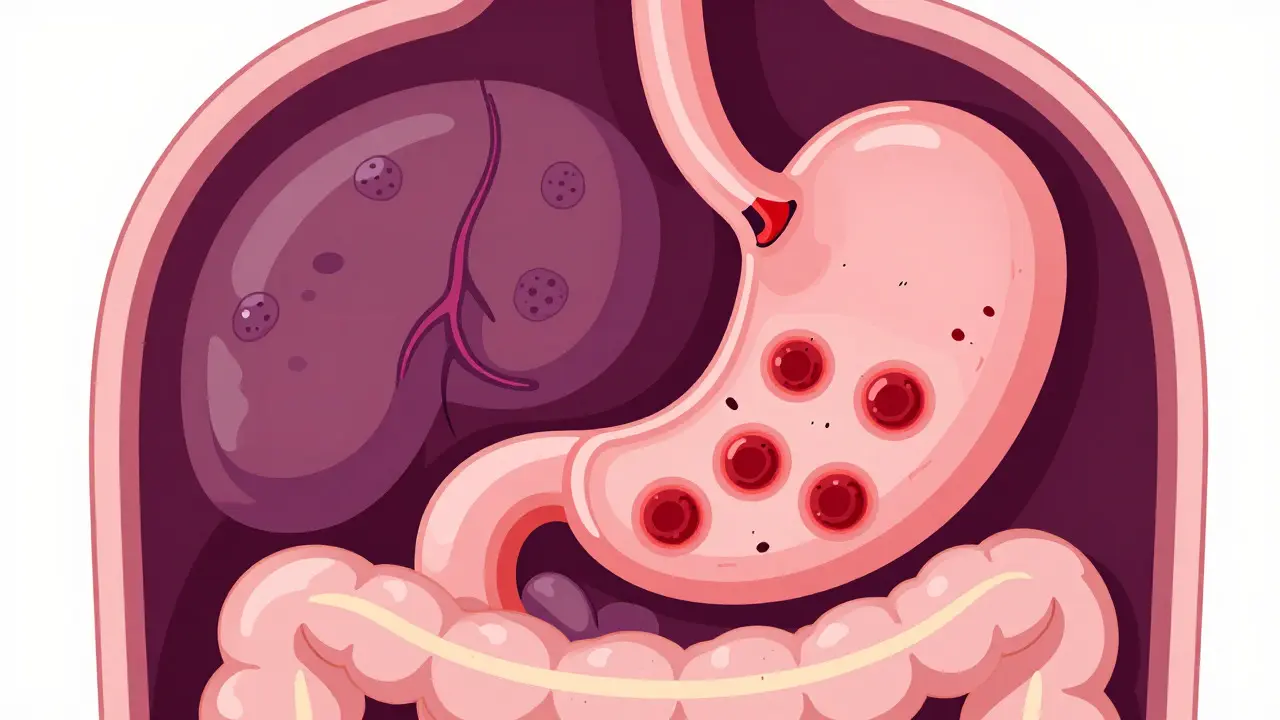
Most upper GI bleeds come from two main culprits: peptic ulcer disease and esophageal varices. Let’s break down who gets what.
- Peptic Ulcers (40-50% of cases): These are sores in the lining of the stomach or the first part of the small intestine (duodenum). If you have an ulcer, it’s usually either in the stomach (20-30%) or the duodenum (70-80%). The main drivers here are H. pylori bacteria and long-term use of NSAIDs like ibuprofen or aspirin.
- Esophageal Varices (10-20% of cases): These are swollen veins in your esophagus, usually caused by liver disease (cirrhosis) leading to high pressure in the portal vein. When they burst, the bleeding can be massive and fast. Mortality within six weeks of a variceal bleed is around 20%, making this a critical emergency.
- Other Causes: Erosive gastritis (15-20%), Mallory-Weiss tears (from violent vomiting), and less commonly, cancers or hiatal hernias.
Did you know? Taking SSRIs (common antidepressants) doubles your risk of upper GI bleeding compared to non-users. A 2022 study in JAMA Internal Medicine tracked 500,000 patients and found this link clear as day. So if you’re on these meds, talk to your doctor about protective measures.
Recognizing the Signs: It’s Not Just Red Blood
The symptoms can vary wildly depending on how fast the blood is moving through your gut. Here’s what to look for:
- Hematemesis: Vomiting blood. If it’s bright red, the bleed is fresh and likely active. If it looks like 'coffee grounds,' the blood has been sitting in your stomach and partially digested.
- Melena: Black, tarry, sticky stools. This means blood has traveled through the entire digestive tract. It smells terrible and sticks to the toilet paper.
- Hematochezia: Maroon or bright red stools. This usually indicates a very heavy, fast bleed where blood doesn’t have time to digest fully.
- Signs of Shock: Dizziness, fainting (syncope), rapid heart rate (tachycardia over 100 bpm), and low blood pressure (systolic under 90 mmHg).
If you see black, tarry stools or vomit anything that looks like coffee grounds, don’t wait. Go to the ER. Early detection saves lives.
The Triage Game: How Doctors Decide Who Needs What
When you arrive at the hospital, doctors don’t just guess. They use a scoring system called the Glasgow-Blatchford Score. Think of it as a traffic light for your severity.
This score looks at your hemoglobin levels, blood pressure, pulse, and whether you’ve had melena or fainted. A score of 0-1 often means you might not need endoscopy immediately. But a score of 2 or higher signals that you need hospitalization and urgent attention. In fact, this tool helps identify about 15% of patients who can safely go home without invasive procedures, saving them unnecessary stress and cost.
| Cause | Prevalence | Primary Risk Factor | Mortality Risk (6-week) |
|---|---|---|---|
| Peptic Ulcer Disease | 40-50% | H. pylori, NSAIDs | <5% (with treatment) |
| Esophageal Varices | 10-20% | Liver Cirrhosis | ~20% |
| Erosive Gastritis | 15-20% | Alcohol, Steroids | Low |
| Mallory-Weiss Tear | 5-10% | Violent Vomiting | Low |
Stabilization: The First Hour Matters Most
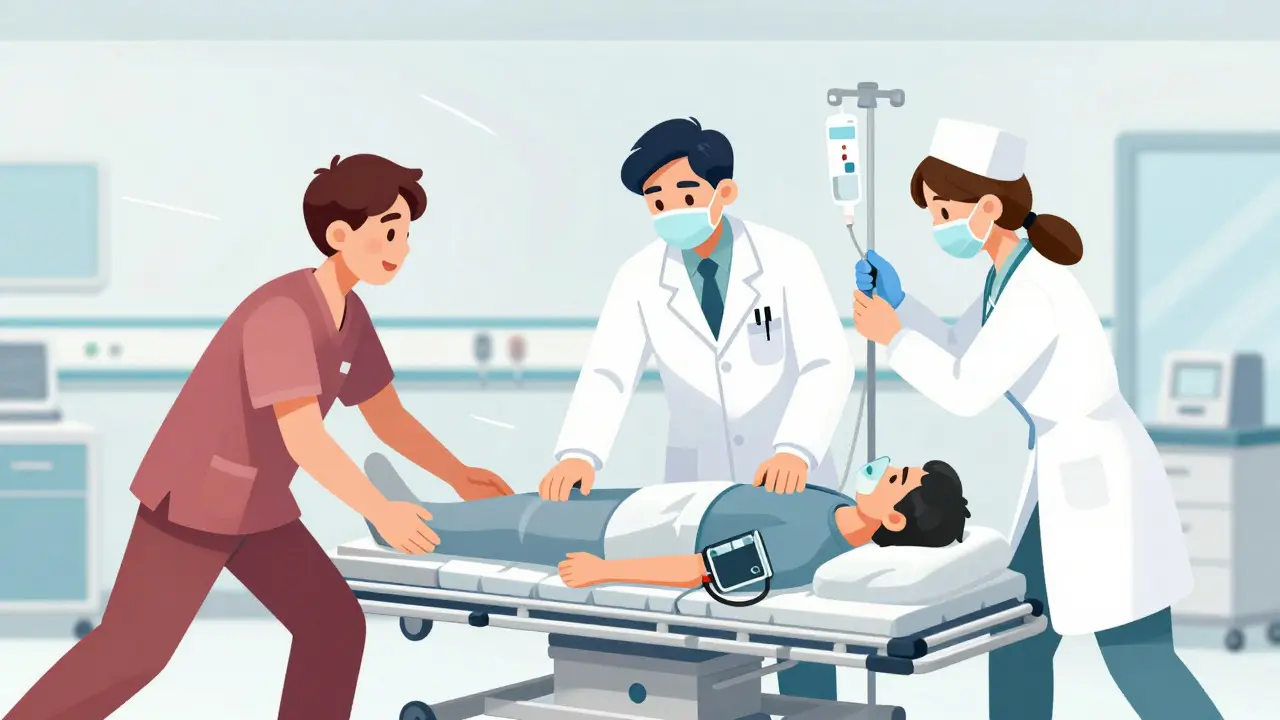
Once you’re in the ER, the clock starts ticking. The goal is to stop the bleeding before it becomes uncontrollable. Here is the standard protocol used in major hospitals:
- Rapid Assessment (0-30 mins): Nurses check your vitals, draw blood (CBC, INR, BUN/Creatinine ratio), and start IV lines. A BUN:creatinine ratio greater than 30:1 strongly suggests an upper GI bleed because digested blood increases urea nitrogen.
- Medication Infusion (Within 1 hour): For non-variceal bleeds, you’ll get high-dose proton pump inhibitors (PPIs). An 80mg IV bolus followed by an 8mg/hour infusion reduces rebleeding rates significantly. For variceal bleeds, doctors give vasoactive drugs like terlipressin or octreotide to shrink the veins, plus antibiotics (ceftriaxone) to prevent infection.
- Blood Transfusion: If your hemoglobin drops below 7g/dL, you’ll receive packed red blood cells. Each unit raises your hemoglobin by about 1g/dL. The target is usually keeping you between 7-9g/dL.
Hospitals that follow a structured 'Bleed Bundle'-which includes rapid assessment, scoring, timely PPIs, and quick endoscopy-have cut median time to endoscopy from 24.5 hours down to 9.2 hours. That speedup dropped 30-day mortality from 8.7% to 5.3%. Time is literally life here.
Endoscopy: Seeing the Source
After stabilization, you’ll undergo an esophagogastroduodenoscopy (EGD). This is a camera procedure that lets doctors see exactly where the bleeding is coming from. Guidelines recommend doing this within 24 hours, but for high-risk patients, getting it done within 12 hours reduces mortality by 25%.
During the scope, doctors use the Forrest Classification to grade the bleeding site:
- Class Ia: Spurting hemorrhage. High risk (90% rebleed without treatment).
- Class Ib: Oozing. Moderate risk (50% rebleed).
- Class IIa: Visible vessel. Moderate risk (50% rebleed).
Life After the Bleed: Prevention and Recovery
Getting out of the hospital isn’t the finish line. About 68% of patients report anxiety about having another episode within a month. Here’s how to manage that fear and protect your health:
- Stop NSAIDs: Unless your doctor says otherwise, avoid ibuprofen, naproxen, and aspirin. Use acetaminophen for pain instead.
- Treat H. pylori: If tests show you have this bacteria, complete the full antibiotic course. Eradicating it prevents future ulcers.
- Dietary Tweaks: Many patients reduce spicy foods, caffeine, and alcohol. While not strictly necessary for everyone, it helps soothe the stomach lining during healing.
- Follow-Up Care: See your gastroenterologist within 72 hours of discharge. Multidisciplinary follow-up ensures you’re on the right maintenance meds, like daily PPIs.
Don’t dismiss black stools as 'iron supplements.' One patient shared their story of being dismissed for two weeks until they collapsed with a hemoglobin of 5.8. Trust your gut-if something feels off, get checked.
Frequently Asked Questions
How long do I need to stay in the hospital after an upper GI bleed?
It depends on the cause and severity. Low-risk ulcer bleeds might require 2-3 days. Variceal bleeds or those needing multiple transfusions can take 5-7 days or longer. The key is when the bleeding stops and your vitals stabilize.
Can I eat normally after an upper GI bleed?
Usually, yes, once you’re stable. Doctors may start you on clear liquids, then advance to soft foods. Avoiding spicy, acidic, or hard-to-digest foods for a few days is common advice to let the lining heal, but strict restrictions aren't always required.
What is the difference between upper and lower GI bleeding?
Upper GI bleeding comes from above the ligament of Treitz (esophagus, stomach, duodenum) and often presents as coffee-ground vomit or black tarry stools. Lower GI bleeding comes from the colon or rectum and typically presents as bright red blood in the stool.
Do I need to take PPIs forever after an ulcer bleed?
Not necessarily. If the cause was H. pylori, you might only need short-term PPIs after eradication. If it was NSAID-related, you might stop them once the ulcer heals. However, if you have recurrent ulcers or specific risk factors, long-term low-dose PPIs may be recommended.
Is endoscopy painful?
Most patients feel little to no pain because mild sedation is used. You might feel some throat discomfort afterward, but it’s generally a quick and routine procedure that provides crucial diagnostic information.