
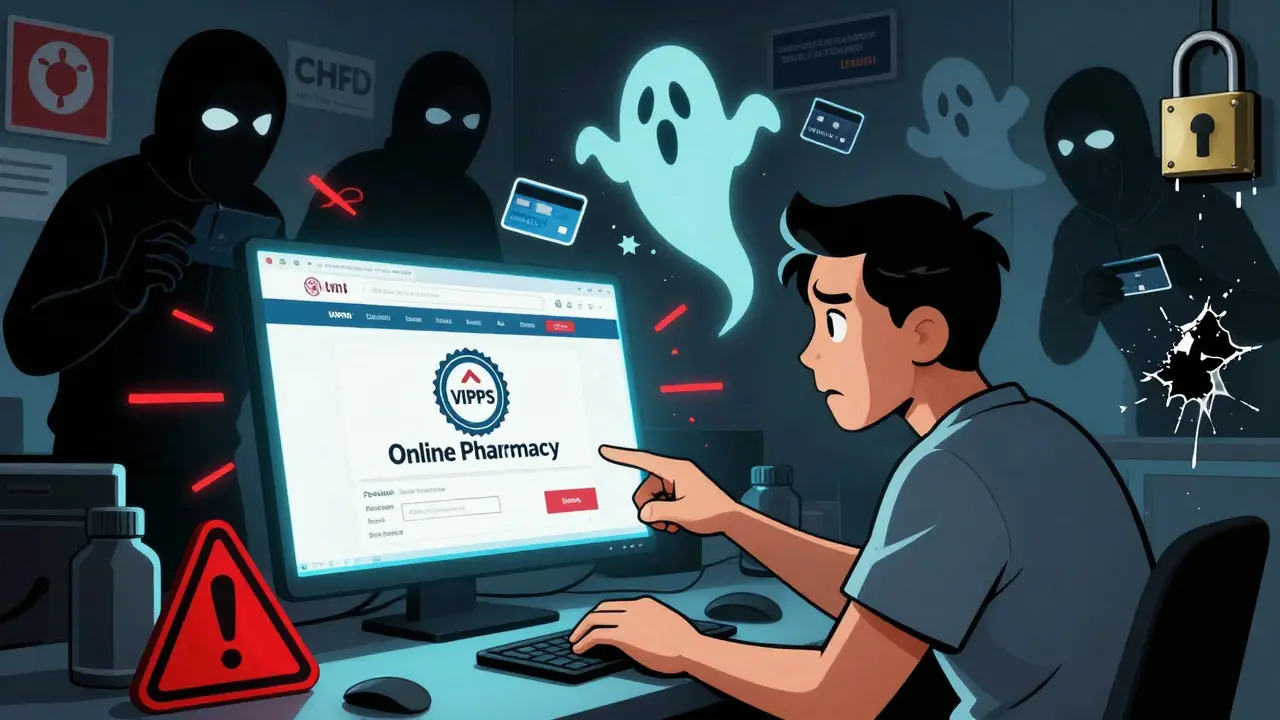
Buying medicine online sounds simple-click, pay, wait for delivery. But behind that convenience is a hidden risk: your personal health data. In 2026, more than 14 million Americans use online pharmacies every month. And yet, 96% of the websites selling prescription drugs online don’t follow basic safety rules, according to the National Association of Boards of Pharmacy (NABP). That means if you’re not careful, your prescription history, credit card details, and even your Social Security number could end up in the hands of scammers, hackers, or fake drug sellers.
Why Online Pharmacies Are a Target for Data Thieves
< p>Online pharmacies handle some of the most sensitive data there is: your diagnosis, medications, allergies, insurance info, and contact details. Unlike your local pharmacy, where a pharmacist sees you in person, online pharmacies rely entirely on digital systems. And many of them aren’t built to keep your data safe.Here’s what happens when things go wrong:
- You order a prescription for blood pressure medication, and within 24 hours, you start getting calls offering "discounted" diabetes pills.
- Your credit card gets charged for a shipment you never received-and the pharmacy website disappears.
- You get an email that looks like it’s from your insurance company, asking you to "verify your prescription details"-but it’s a phishing trap.
According to Consumer Reports, nearly 29% of people who used non-certified online pharmacies in 2024 experienced some kind of data misuse. And it’s not just spam. Some of these sites sell fake, expired, or even toxic drugs. The DEA estimates that over 50% of counterfeit medications sold online contain dangerous substances like fentanyl or rat poison.
The Difference Between Safe and Dangerous Online Pharmacies
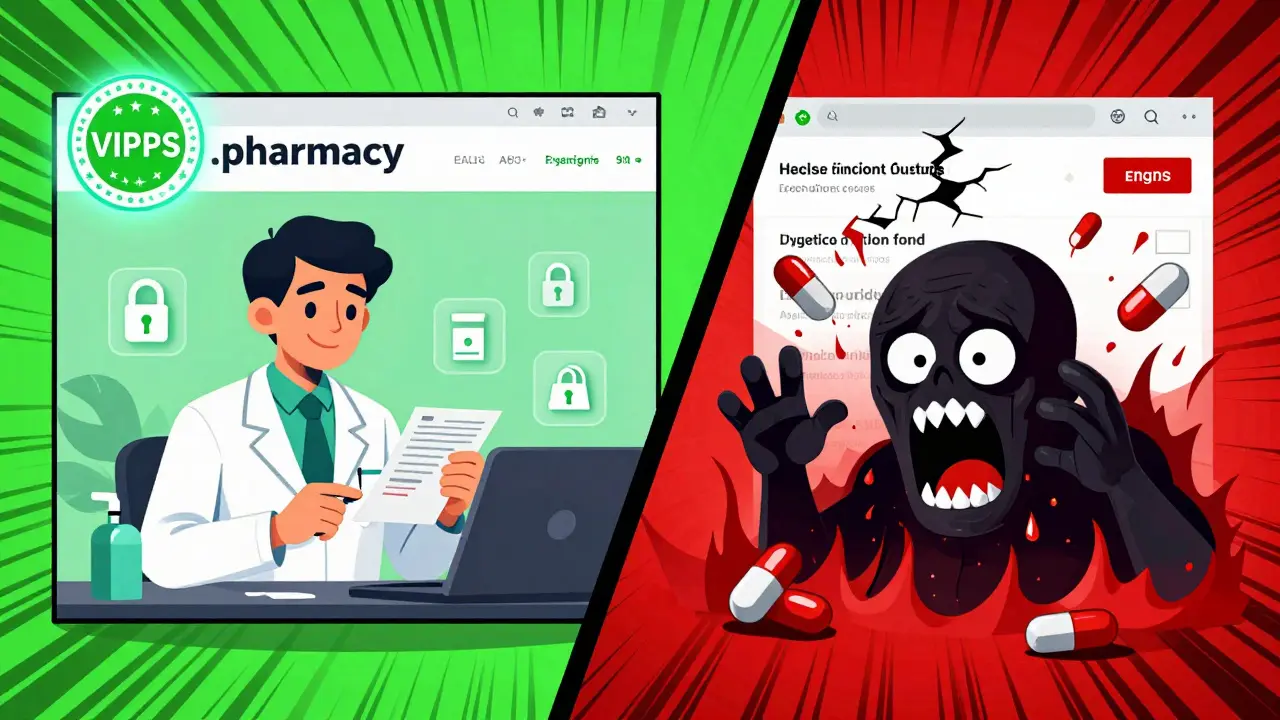
Not all online pharmacies are risky. There’s a big difference between a verified pharmacy and a fake one. The key is knowing what to look for.
Legitimate online pharmacies follow strict rules. They’re certified by the National Association of Boards of Pharmacy (NABP) and display one of two trusted signs:
- The .pharmacy domain name (like yourpharmacy.pharmacy)
- The VIPPS seal (Verified Internet Pharmacy Practice Sites)
These aren’t just logos. To earn them, a pharmacy must pass 47 verification checks. That includes proving they’re licensed in every state they operate in, have a real physical address, require valid prescriptions, and use encrypted systems to protect your data. Only 68 pharmacies in the entire U.S. had VIPPS certification as of February 2025.
Compare that to the thousands of fake sites out there. Many of them copy the look of real ones. They use fake seals, fake licenses, and even fake phone numbers. NABP found that 39% of fake pharmacy sites in 2025 used advanced graphic tools to mimic real verification badges. If you don’t know what to look for, you won’t spot the difference.
What Your Data Should Be Protected With
Legitimate online pharmacies follow the HIPAA Security Rule. That means they’re legally required to use strong encryption and access controls. Here’s what that looks like in practice:
- 256-bit AES encryption for all your data when it’s stored (at rest)
- TLS 1.3 encryption for everything sent between your device and their server (in transit)
- Multi-factor authentication for staff accessing your records
- 90-day password changes for all employees
- 6-year audit logs showing who accessed your file and when
But here’s the problem: 78% of non-compliant online pharmacies don’t use proper encryption. And 63% don’t even require staff to log in with two forms of identification. That means if a hacker breaks into their system, your entire medical history is up for grabs.
Even worse, many of these sites don’t verify your identity. The DEA’s new rules (effective March 21, 2025) require pharmacists to check your government-issued ID before filling any telemedicine prescription. But only 11% of illegal online pharmacies do this. That’s why you’ll see sites that say "no prescription needed"-they’re not just breaking the law, they’re skipping the most basic safety step.
How to Verify a Pharmacy Before You Order
You don’t need to be a tech expert to stay safe. Here’s a simple 5-step check before you enter your credit card:
- Check the web address. Does it end in .pharmacy? If not, walk away.
- Look for the VIPPS seal. Click it. It should link to the NABP verification page. If it doesn’t, or if the link is broken, it’s fake.
- Find their physical address. Legit pharmacies list a real street address-not just a PO box. Google it. Does it match a pharmacy? Are there reviews from real customers?
- They must require a prescription. If they sell controlled substances like Adderall, Xanax, or opioids without one, they’re illegal. Period.
- Check their contact info. Can you call them? Do they answer? Do they have a licensed pharmacist on staff you can speak to?
Take 15 minutes to do this. It’s the difference between getting your medication safely-and losing your identity.
What to Do If You’ve Already Used a Suspicious Site
If you’ve already ordered from a site you now suspect is fake, don’t panic-but act fast.
- Monitor your bank and credit card statements. Look for unfamiliar charges-even small ones like $1.99 for "shipping." Fraudsters test cards with tiny amounts first.
- Place a fraud alert. Contact one of the three major credit bureaus (Equifax, Experian, TransUnion). They’ll notify the others. This makes it harder for criminals to open accounts in your name.
- Report it. File a complaint with the NABP at www.nabp.pharmacy and the FTC at ReportFraud.ftc.gov. This helps track illegal operations.
- Change your passwords. If you used the same password for other accounts, change them now. Use a different one for every site.
- Watch for phishing. If you get an email about your order, don’t click links. Go directly to the pharmacy’s website by typing the address yourself.
Smart Habits for Safer Online Pharmacy Use
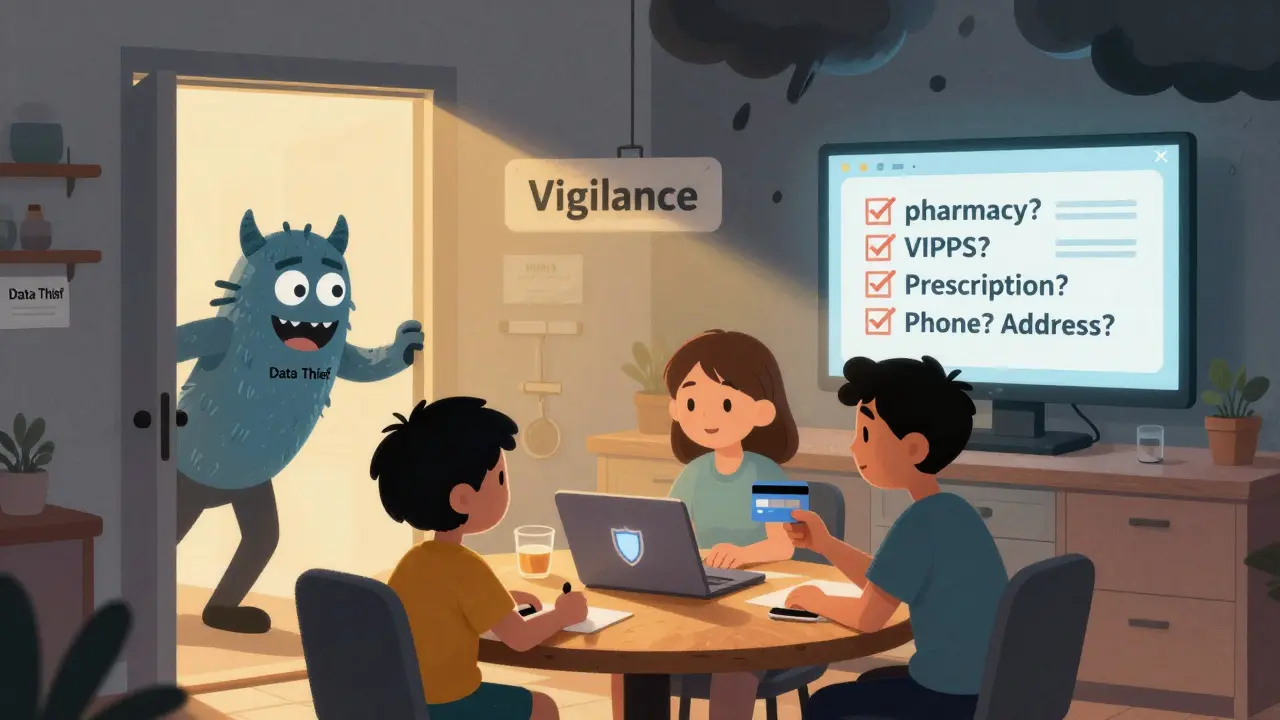
Here are practical tips from real users who’ve learned the hard way:
- Use a burner email. Create a new Gmail account just for pharmacy orders. Don’t use your main email-it’s less likely to be targeted in data leaks.
- Don’t use debit cards. Use a credit card instead. If fraud happens, you’re protected by federal law. Debit cards drain your bank account directly.
- Never save payment info. Even if the site offers to "remember your card," don’t. It’s a security risk.
- Use a VPN on public Wi-Fi. If you’re ordering from a coffee shop or library, your data is vulnerable. A VPN encrypts your connection.
- Ask your doctor for recommendations. Most doctors know which online pharmacies they trust. Ask them.
And remember: if a deal seems too good to be true-like $10 for a 30-day supply of Viagra-it is. Legitimate pharmacies don’t sell controlled substances at rock-bottom prices. They’re regulated, taxed, and inspected. That costs money.
The Bigger Picture: Why This Matters
This isn’t just about protecting your credit card. It’s about protecting your health. Fake drugs can kill. A 2024 FDA report found that 1 in 10 counterfeit pills sold online contained lethal doses of fentanyl. And if your medical data is stolen, it can be used to commit insurance fraud, get prescriptions under your name, or even blackmail you.
The good news? The rules are getting tighter. New York’s 2025 e-prescription law cut prescription fraud by 37%. The DEA is increasing inspections by 40%. And more pharmacies are finally upgrading their systems to meet the new 2025 security standards.
But enforcement can’t protect you if you don’t know how to spot the danger. The average person can’t tell a fake .pharmacy site from a real one. That’s why your vigilance matters more than ever.
How do I know if an online pharmacy is legit?
Look for the .pharmacy domain or the VIPPS seal. Click the seal to verify it links to the NABP’s official site. Legit pharmacies require a valid prescription, list a real physical address, and have a licensed pharmacist you can contact. If any of these are missing, avoid the site.
Can I trust online pharmacies that offer "no prescription needed"?
No. Any online pharmacy that sells prescription drugs without requiring a valid prescription is illegal and dangerous. The Ryan Haight Act of 2008 makes it a federal crime to sell controlled substances online without a legitimate prescription. These sites are often fronts for data theft or counterfeit drug sales.
What should I do if I think my data was stolen from an online pharmacy?
Immediately check your bank and credit statements for unauthorized charges. Place a fraud alert with one of the three major credit bureaus. Report the site to the FTC and NABP. Change all passwords associated with the pharmacy account, and monitor your medical records for any unfamiliar prescriptions or claims.
Are VIPPS-certified pharmacies more expensive?
Not necessarily. Many VIPPS pharmacies offer competitive pricing, especially for maintenance medications. The difference isn’t cost-it’s safety. You’re paying for verification, encryption, and licensed pharmacists-not just the pills. The cost of a data breach or counterfeit drug is far higher.
Why do some online pharmacies have fake verification seals?
Because consumers trust them. Scammers know that the VIPPS seal and .pharmacy domain signal safety. They use graphic design tools to copy the look of real seals to trick people into thinking they’re legitimate. Always click the seal to verify it leads to the official NABP website. If it doesn’t, it’s fake.
Comments (9)
Stacy Thomes
January 23, 2026 AT 09:50OMG I just realized I ordered from one of these sketchy sites last month-my bank flagged three tiny $2 charges I didn’t recognize. I thought it was just shipping fees. NOPE. Changed every password, filed a report, and now I only use .pharmacy sites. Don’t be me.
Dawson Taylor
January 23, 2026 AT 11:44The real issue isn’t the scams-it’s the systemic failure of regulation enforcement. We’ve created a market where profit incentivizes deception, and consumers are left to navigate a minefield of fake seals and phishing emails. The solution isn’t individual vigilance-it’s structural reform.
Sallie Jane Barnes
January 23, 2026 AT 11:47I appreciate how thorough this post is. As someone who manages elderly relatives’ prescriptions, I’ve had to vet at least a dozen online pharmacies in the past year. The .pharmacy domain is non-negotiable. I’ve printed out the 5-step checklist and taped it to the printer. No exceptions. Not even for ‘good deals.’
Kerry Evans
January 23, 2026 AT 17:55Anyone who uses a debit card for this is asking for trouble. You think you’re saving a few bucks on shipping, but when your checking account gets drained and you’re stuck waiting 7–10 business days for a refund, you’ll wish you’d just used a credit card like every sane person. This isn’t even a debate.
dana torgersen
January 24, 2026 AT 12:16Okay so like… I get that the .pharmacy thing is important… but… what if you’re in rural Kansas and the only pharmacy that ships to you is… um… not certified? Like… do you just suffer? Or… is there a loophole? I mean… people need meds… right? And… sometimes… you just… have to… take risks…? I don’t know… I’m just… asking…
Vanessa Barber
January 26, 2026 AT 09:32Wow, another fear-mongering article about online pharmacies. Let me guess-next you’ll tell us not to buy anything from Amazon because some guy in China sells fake AirPods? People have been ordering meds online for decades. Most are fine. The real danger is overregulation making everything more expensive and harder to access.
Andrew Smirnykh
January 27, 2026 AT 23:13In Japan, we have a system where pharmacies must display their license number visibly online, and you can verify it through the national pharmaceutical board’s portal. It’s simple, transparent, and works. Maybe the U.S. should adopt something similar instead of relying on seals that can be faked with Photoshop.
charley lopez
January 29, 2026 AT 00:52From a compliance standpoint, the absence of TLS 1.3 and AES-256 encryption on non-VIPPS sites constitutes a violation of NIST SP 800-52 Rev. 2 and HIPAA §164.312(a)(2)(iv). The 78% non-compliance rate indicates a critical gap in enterprise risk management. Organizations failing these controls are not merely negligent-they’re exposing themselves to material liability under state and federal statutes.
Susannah Green
January 29, 2026 AT 05:29Just wanted to add: if you're using a burner email, don't forget to check it every week! I had one set up for meds, ignored it for 3 months, and missed a notification that my prescription was delayed-turned out the pharmacy had been flagged by the DEA, and they shut down. I didn't know until I called my doctor. So… check your junk folder. And use a password manager. Please.