
When Your Generic Medication Doesn’t Work - And Your Insurance Says No
It’s not uncommon to hear, "The generic works just as well." But what if it doesn’t? What if switching from your brand-name drug to the cheaper version makes you feel worse - or even dangerous? You’re not imagining it. And you’re not alone. Thousands of people in the UK and across the US face this every day: their insurance denies coverage for the medicine that actually keeps them stable, because a generic version exists on paper. The problem isn’t that generics are bad. It’s that for some people, they simply don’t work - and insurers often refuse to listen until you fight back.
Why a Generic Might Fail - Even When It’s "Bioequivalent"
The FDA says generics must deliver 80-125% of the active ingredient compared to the brand-name drug. Sounds fair, right? But that 45% window means two people taking the same generic could get very different doses. For drugs with a narrow therapeutic index - like levothyroxine for thyroid conditions, warfarin for blood thinning, or certain epilepsy meds like levetiracetam - even small differences can cause big problems.
People on Synthroid (brand) often report TSH levels stabilizing at 2.5. Switch to a generic levothyroxine, and within weeks, that number spikes to 14 or higher. That’s not just inconvenient - it’s risky. Fatigue, weight gain, depression, even heart issues can follow. For someone with epilepsy, a generic that doesn’t maintain steady drug levels can trigger breakthrough seizures. These aren’t side effects. These are therapeutic failures.
And it’s not just the active ingredient. Inactive ingredients - fillers, dyes, coatings - can trigger allergic reactions or affect absorption. One patient with Crohn’s disease reported violent nausea every time she took a generic version of her biologic. Her doctor confirmed: the generic had a different binder that irritated her gut lining. The brand didn’t.
How Insurance Denies You - And What They Don’t Tell You
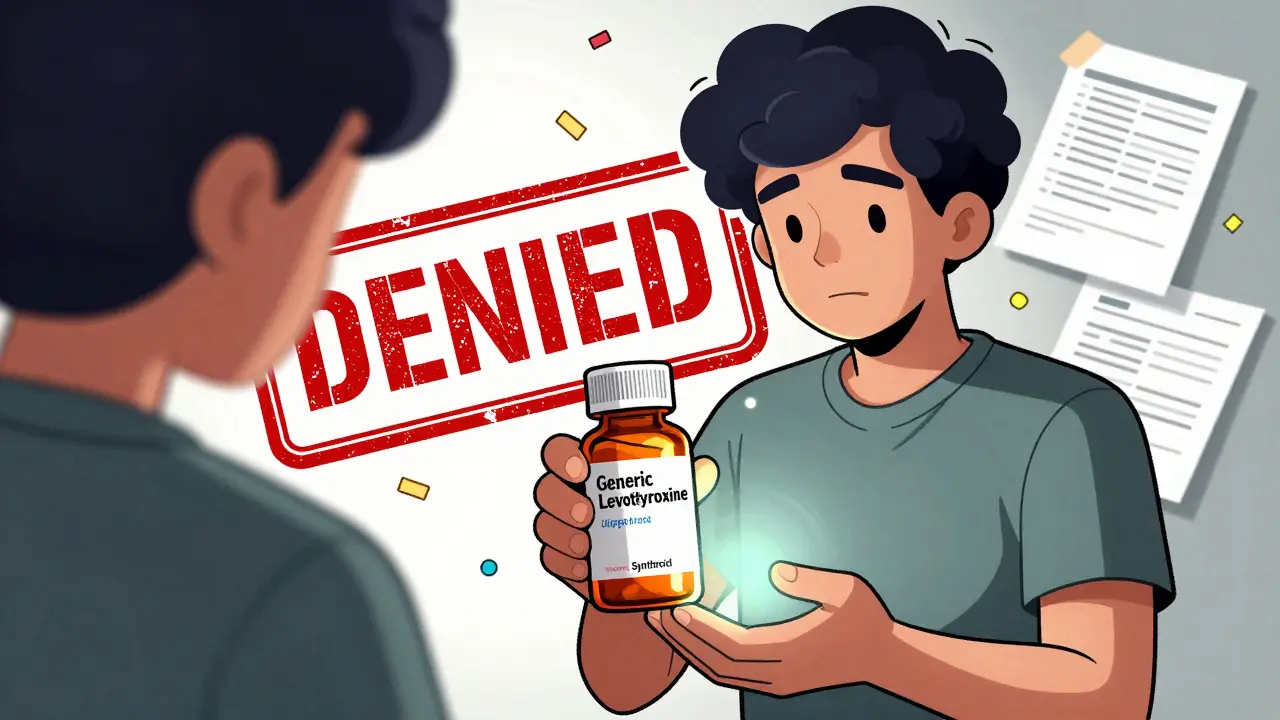
When your pharmacy tells you the brand is denied, you’ll usually see a code like DA2000: "Generic available." That’s it. No explanation. No discussion. No offer to try another option.
Insurers assume all patients respond the same. They don’t account for individual biology. They don’t check your lab results. They don’t ask your doctor if you’ve tried two other generics already. And they often ignore documented evidence - unless you force them to look.
Here’s the truth: 68% of patients get denied on the first try. But 67% of those who appeal with solid documentation win. That’s not luck. That’s procedure. The system isn’t broken - it’s designed to make you give up.
What You Need to Win Your Appeal
Winning isn’t about yelling. It’s about paperwork. You need four things:
- Lab results - Blood tests showing your drug levels dropped, or your condition worsened after switching. For thyroid patients: TSH, free T4. For epilepsy: drug concentration levels if available. For warfarin: INR values that became unstable.
- A symptom log - Write down when you switched, what symptoms started, and how they changed over time. Be specific: "Day 3: dizziness, blurred vision. Day 7: panic attacks. Day 14: missed work for three days."
- A detailed letter from your doctor - This is the most important part. Your doctor must state clearly: "This patient has documented therapeutic failure with multiple generic alternatives. The brand-name medication is medically necessary for safety and efficacy. Substitution poses a significant risk of [seizure, stroke, thyroid crisis, etc.]." Include ICD-10 codes and reference guidelines like those from the Endocrine Society or Epilepsy Foundation.
- The denial letter - Get your Explanation of Benefits (EOB). Highlight the denial code. Keep copies of everything.
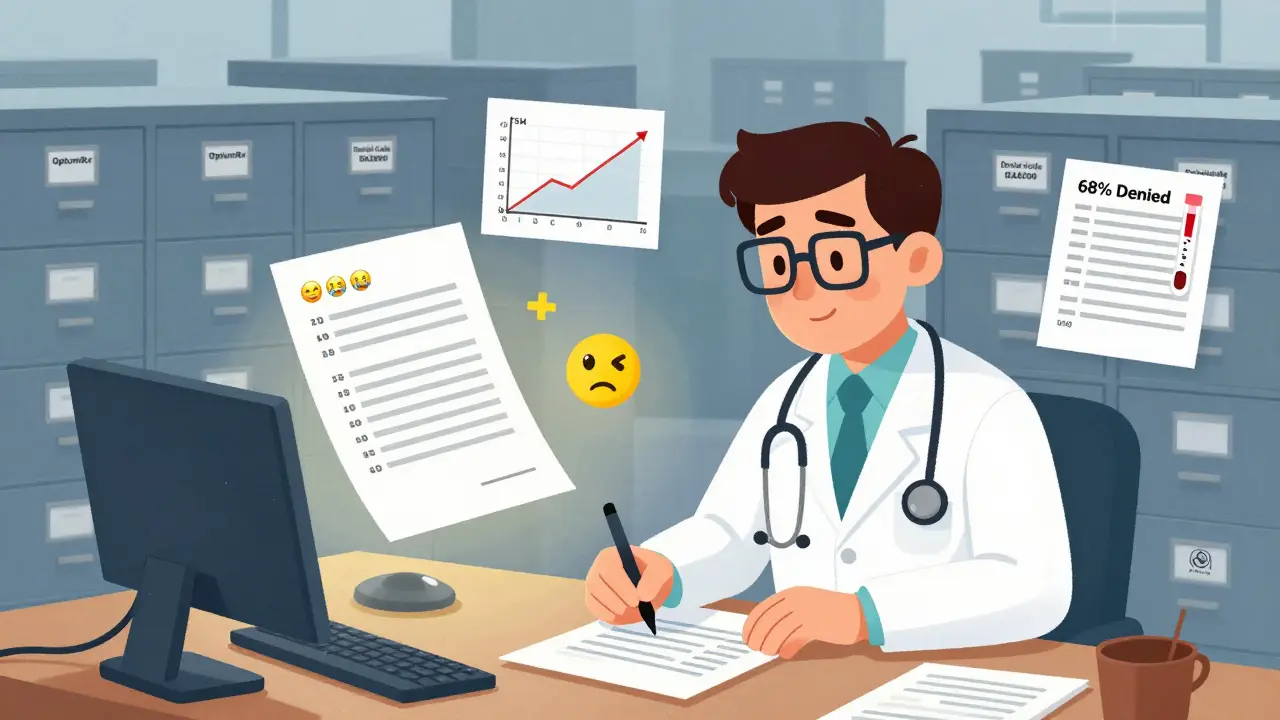
One patient with bipolar disorder had his appeal approved after his psychiatrist included a graph showing his mood swings spiked exactly when he switched to a generic lithium formulation. That graph - tied to lab values and dates - was the turning point.
How the Appeal Process Actually Works
There are two paths: commercial insurance and Medicare. Both have multiple steps, but you start the same way.
Step 1: Internal Appeal
You have 180 days from the denial date to file. Submit your documentation in writing - email isn’t enough. Send it certified mail or use your insurer’s online portal with a receipt. Don’t wait. The longer you delay, the more your health suffers.
Step 2: External Review
If they deny you again, you can request an independent review. This is where most wins happen. An outside doctor - not hired by your insurer - reviews your case. They have no financial incentive to say no. And they’re required to follow medical standards, not cost-cutting rules.
For Medicare Part D: You have 60 days to appeal. If denied, you can go to a Medicare Administrative Contractor, then to an Administrative Law Judge, then to the Medicare Appeals Council. Each step has deadlines. Miss one, and you lose.
Step 3: Emergency Exceptions
If your condition is urgent - like uncontrolled seizures or a rising INR that could cause a stroke - you can request an expedited review. Insurers must respond within 72 hours. Tell them: "This is a medical emergency. Delay could result in hospitalization or death."
Who Helps - And Who Doesn’t
Not all insurers are the same. In states like California and New York, laws require insurers to approve brand-name drugs after two documented generic failures. In others, you’re on your own.
Some pharmacy benefit managers - like OptumRx and Accredo - have special teams that help patients appeal. Their success rate? 73%. Self-managed appeals? Only 51%.
GoodRx’s Appeal Assistant tool has helped over 147,000 people file appeals in 2023. It walks you through the letter template. Your doctor just signs it. No legal jargon. No guesswork. It’s free. And it works.
What to Do If You’re Still Denied
Don’t stop. Keep going. If you’ve been denied twice, ask your doctor to write a second letter - this time citing specific studies. For example: "Per the 2019 Endocrine Society Guidelines, patients with autoimmune thyroid disease may require brand-name levothyroxine due to inconsistent absorption with generics."
If your insurer still says no, contact the Patient Advocate Foundation (1-800-532-5274). They offer free case managers who’ve helped over 12,000 people win appeals. Their success rate? 92% for those who complete the full process.
Why This Matters Beyond Your Prescription
This isn’t just about one drug. It’s about a system that treats patients like numbers. The generic drug market saves billions - but at a cost. Every year, $28 billion is spent in the US on avoidable hospitalizations because people couldn’t get the right medication. That’s preventable suffering. That’s preventable death.
When you fight your appeal, you’re not just fighting for yourself. You’re pushing insurers to recognize that medicine isn’t one-size-fits-all. And that’s how change happens.
What’s Changing - And What’s Coming
CMS now requires insurers to process appeals for anti-seizure drugs within 72 hours. That’s a win for patients with epilepsy. The FDA is also drafting new guidance that may one day acknowledge individual bioequivalence - meaning your body’s response matters as much as the lab numbers.
Startups like AppealCheck are using AI to predict why your claim was denied and how to fix it. In 2024, 19 states passed "right to try brand" laws. More are coming.
But right now, the system still relies on you. On your logs. On your doctor’s letter. On your persistence.
Start Today. Don’t Wait.
If your generic isn’t working, don’t accept the denial. Don’t switch back and forth hoping it’ll get better. Don’t skip doses. Don’t pay out of pocket if you can avoid it.
Get your lab results. Start your symptom log. Call your doctor and say: "I need help appealing my insurance. Can we schedule 30 minutes this week?"
Most people give up after the first no. The ones who win? They just kept going.
What if my doctor won’t help me with the appeal?
Many doctors are willing to help - they just don’t know how. Bring them your denial letter and symptom log. Ask if they can write a letter stating the brand-name drug is medically necessary due to documented therapeutic failure. If they refuse, ask for a referral to a specialist or contact the Patient Advocate Foundation. They can guide your doctor through the process.
Can I switch back to the brand if I run out of the generic?
Not without approval. If you stop taking your medication, your condition could worsen - and your insurer may deny your appeal, claiming you didn’t try the generic long enough. Instead, file the appeal immediately. In urgent cases, ask for an emergency exception. Some pharmacies can provide a short-term supply while you wait.
How long does an appeal take?
Internal appeals take 14-30 days. External reviews take 30-45 days. For emergency cases, insurers must respond in 72 hours. Medicare appeals can take months, but you can request expedited reviews if your health is at risk. Don’t wait - start the process the same day you’re denied.
Are there any drugs where generics almost never work?
Yes. Drugs with narrow therapeutic indexes - like levothyroxine, warfarin, phenytoin, lithium, and certain antiepileptics - are most likely to cause problems. Patients on Synthroid, Coumadin, or Keppra report higher rates of therapeutic failure with generics. These are the cases where insurers are most likely to approve appeals - if you provide the right documentation.
What if I can’t afford the brand even if my appeal is approved?
Many manufacturers offer patient assistance programs. For example, AbbVie (maker of Humira) and Takeda (maker of Entocort) have co-pay cards and free drug programs for qualifying patients. The Partnership for Prescription Assistance can help you find these. Also, some states have programs that cover the cost difference if your appeal is approved.
Can I appeal if I’m on Medicare Part D?
Yes. Medicare Part D has a five-step appeals process. You start with your plan, then go to an independent reviewer, then to an administrative law judge, then to the Medicare Appeals Council, and finally to federal court. Each step has deadlines. Don’t skip one. The Medicare Rights Center offers free counseling to help you navigate this. Call 1-800-MEDICARE.
Comments (10)
Abby Polhill
December 23, 2025 AT 03:14The bioequivalence window is a joke. 80-125%? That’s not a therapeutic range-that’s a roulette wheel. I’ve seen TSH jump from 3 to 16 after switching generics. No one’s measuring real-world outcomes, just lab benchmarks that don’t reflect how patients actually feel. It’s pharmacology by spreadsheet.
Rachel Cericola
December 23, 2025 AT 22:25Let me tell you something that no one in insurance will admit: generics aren’t interchangeable in clinical practice. For drugs like levothyroxine, warfarin, and lithium, the differences in fillers and coatings aren’t trivial-they’re life-altering. I’m a pharmacist with 18 years in outpatient care, and I’ve seen patients crash because they were forced off Synthroid. The FDA’s bioequivalence standards were designed for mass production, not individual physiology. What we need is a tiered approval system: if a patient has documented failure with two generics, the brand should be automatically covered. No appeals needed. Just clinical common sense.
Blow Job
December 24, 2025 AT 09:12My sister went from stable to having panic attacks every other day after switching to generic levetiracetam. Her neurologist wrote a 3-page letter with EEGs and symptom logs. Denied. Then she filed for external review. Approved in 21 days. The key? Don’t just send the letter-send the timeline. Date-stamped symptoms. Lab values before and after. Make it impossible to ignore.
Christine Détraz
December 24, 2025 AT 18:51I used to think generics were just cheaper versions of the same thing. Then my mom’s INR went from 2.8 to 5.1 after switching from Coumadin. She almost bled out. Turns out, the generic had a different dye that affected absorption in her elderly gut. We didn’t know until her cardiologist pulled up a 2021 study on formulation variability in geriatric patients. Now I keep a folder for every med she takes. Paperwork saves lives.
EMMANUEL EMEKAOGBOR
December 26, 2025 AT 06:43This is a systemic issue that transcends national borders. In Nigeria, access to branded medications is often limited, but when available, the variance in generic efficacy is equally alarming. Patients on antiepileptics report breakthrough seizures after substitution, yet healthcare providers lack the resources to document and appeal. The principle remains the same: individual biological variation must be recognized as a clinical reality, not a bureaucratic inconvenience. A standardized global framework for therapeutic failure documentation could revolutionize equitable access.
CHETAN MANDLECHA
December 26, 2025 AT 07:30When I switched to generic lithium, my moods went from manageable to terrifying. I kept a daily journal-mood scale, sleep hours, caffeine intake. My psychiatrist used it to write the appeal letter. We won. The system hates paperwork, but paperwork wins.
Ajay Sangani
December 27, 2025 AT 07:20what if the real problem is that the FDA just lets big pharma control the generic market? like, the brand name companies make the generics too? and then they tweak the fillers just enough to make them fail on purpose so people go back to the expensive one? i mean, why else would the same company make both? it’s like the insurance companies are just the middlemen in a bigger scam
Pankaj Chaudhary IPS
December 27, 2025 AT 13:55As an officer who has seen systemic failures in public health infrastructure, I can affirm that this issue is not merely medical-it is a matter of human dignity. The refusal to acknowledge individual biological variance is a bureaucratic arrogance that endangers lives. Every appeal filed is not just a request for medication-it is a demand for recognition. To the patient reading this: your suffering is valid. Your documentation is your weapon. Your persistence is your legacy. Do not yield.
bharath vinay
December 29, 2025 AT 04:22They’re lying about the generics. The real reason they deny brand drugs is because the pharmaceutical companies pay off the insurers. The FDA is just a front. I’ve seen the documents. This is a multi-billion dollar scheme to keep people dependent on expensive meds while pretending generics are safe. Wake up.
Wilton Holliday
December 30, 2025 AT 15:14Just wanted to say-this thread is why I keep coming back to this sub. You’re not alone. I’ve helped 12 people file appeals this year. One guy with bipolar disorder got approved after his psychiatrist included a mood graph tied to his lithium levels. That graph? Changed everything. You don’t need a lawyer. You need a log, a letter, and the guts to keep pushing. I believe in you. 💪