
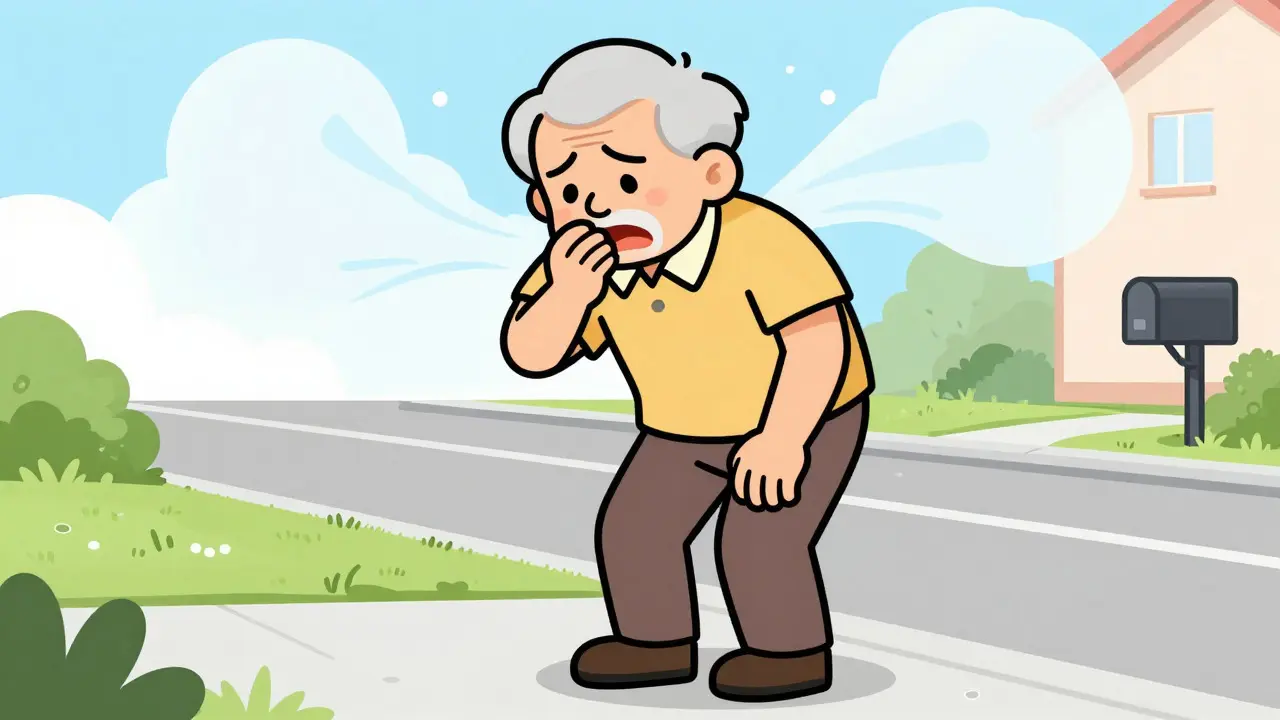
Imagine trying to walk to your mailbox and having to stop three times just to catch your breath. For millions of people living with chronic lung disease a group of conditions that cause long-term breathing problems, including COPD, asthma, and pulmonary fibrosis, this isn't a worst-case scenario-it’s daily life. You might feel like you’re fighting your own body every time you try to move around. But there is a proven way to take back control, and it doesn’t involve just another pill or inhaler.
That solution is pulmonary rehabilitation a comprehensive program designed to improve the physical and psychological well-being of patients with chronic respiratory diseases through exercise training, education, and behavior change. Think of it as physical therapy, but specifically tailored for your lungs and heart. It’s not a cure, but it is the most effective tool we have to help you breathe easier, move more freely, and live better with your condition.
What Exactly Is Pulmonary Rehabilitation?
At its core, pulmonary rehabilitation (PR) is a holistic approach to managing chronic respiratory disease long-term conditions affecting the airways and lung tissue that impair gas exchange and breathing mechanics. The American Thoracic Society and European Respiratory Society define it as a comprehensive intervention based on thorough patient assessment. It includes patient-tailored therapies such as exercise training, education, and behavior change strategies.
This isn't just about doing some light stretching in a hospital gym. It’s a structured medical program. When you enter PR, you work with a multidisciplinary team. This team typically includes physicians, nurses, respiratory therapists, physical therapists, dietitians, and psychologists. They look at the whole picture-your lung function, your muscle strength, your mental health, and your lifestyle-to create a plan that fits you.
The goal? To reduce symptoms like shortness of breath and fatigue while improving your ability to perform daily activities. Whether you can play with your grandchildren, climb stairs without stopping, or simply walk around the grocery store independently, PR aims to restore that quality of life.
Who Should Consider Pulmonary Rehab?
You don’t need to be in critical condition to benefit from PR. In fact, starting early can prevent decline. If you have been diagnosed with any of the following conditions and experience symptoms that limit your daily activities, you are likely a candidate:
- Chronic Obstructive Pulmonary Disease (COPD) a progressive lung disease characterized by airflow obstruction, including emphysema and chronic bronchitis: This is the most common reason people join PR programs. It helps regardless of severity, from mild to severe stages.
- Interstitial Lung Disease (ILD) a group of disorders causing scarring and stiffness of the lung tissue, leading to reduced oxygen transfer: PR helps maintain mobility and manage breathlessness associated with lung scarring.
- Pulmonary Hypertension high blood pressure in the arteries of the lungs, forcing the heart to work harder to pump blood: Supervised exercise can safely improve cardiovascular efficiency.
- Bronchiectasis: A condition where the airways become permanently widened and prone to infection.
- Cystic Fibrosis: A genetic disorder that causes thick mucus buildup in the lungs.
- Pre- and Post-Lung Transplant Care: Preparing the body for surgery or recovering afterward.
If you find yourself avoiding activities because you’re afraid of getting out of breath, PR is worth discussing with your doctor.
What Happens During a Program?
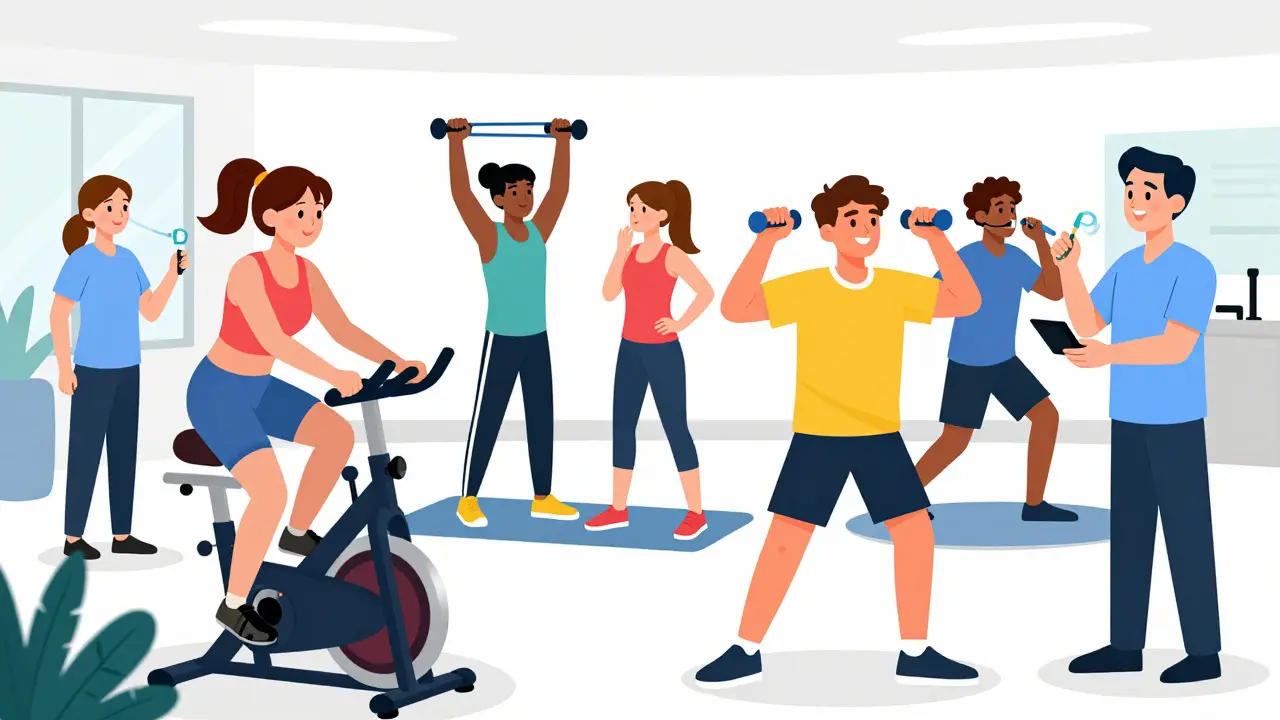
A typical pulmonary rehabilitation program lasts between 6 to 12 weeks. Most programs require you to attend 2 to 3 supervised sessions per week, with each session lasting 60 to 90 minutes. Here is what those sessions usually look like:
1. Comprehensive Assessment
Before you start exercising, the team needs to know your baseline. They will perform spirometry (a breathing test), measure your oxygen levels, and likely have you walk for six minutes to see how far you can go. They’ll also ask about your quality of life, anxiety levels, and nutritional status.
2. Exercise Training
This is the engine of the program. It’s not random; it’s calculated.
- Aerobic Training: You might use a treadmill, stationary bike, or elliptical machine. The intensity is set at 60-80% of your peak work rate. This builds endurance.
- Resistance Training: Using weights or resistance bands, you’ll target major muscle groups. Stronger muscles use less oxygen, which means your lungs don’t have to work as hard.
- Neuromuscular Electrical Stimulation: For severely deconditioned patients who struggle to move their limbs, this technique uses electrical impulses to stimulate muscle contraction.
3. Education and Self-Management
You’ll learn how your disease works. Understanding the pathophysiology helps demystify your symptoms. You’ll get training on:
- Proper inhaler technique (many people use them incorrectly).
- Energy conservation techniques (how to pace yourself).
- Pursed-lip breathing and diaphragmatic breathing exercises.
- Nutrition strategies to maintain healthy weight and muscle mass.
4. Psychological Support
Living with a chronic illness is isolating. PR provides a community. You meet others who understand exactly what you’re going through. Psychologists or social workers often address anxiety and depression, which are common companions to breathlessness.
Does It Actually Work?
Let’s talk numbers, because they are impressive. According to a massive review by the American Thoracic Society involving over 10,000 participants across 127 randomized controlled trials, pulmonary rehabilitation delivers clinically significant results.
| Outcome Measure | Improvement with PR | Significance |
|---|---|---|
| Exercise Capacity (6-Minute Walk Test) | +38.5 meters | Exceeds minimal important difference |
| Dyspnea (Shortness of Breath) | -0.8 points (MRC Scale) | Noticeable reduction in breathlessness |
| Quality of Life (SGRQ) | +8.7 points improvement | Clinically meaningful enhancement |
| Hospital Readmissions | -32% reduction | Within 12 months post-exacerbation |
Compare that to medication alone. Long-acting bronchodilators, while helpful, show significantly smaller effect sizes on dyspnea and exercise capacity. One study noted that PR produced greater improvements in exercise endurance than any single pharmacological intervention, with mean increases in endurance time of 152% compared to just 26% with medication like tiotropium.
Barriers to Accessing Pulmonary Rehab
If PR is so effective, why isn’t everyone doing it? The reality is stark: only 10-15% of eligible COPD patients in the United States participate in these programs. Why?
- Geography: Only 57% of US counties have a certified PR program. If you live in a rural area, you might face a long drive.
- Referral Gaps: Many doctors forget to refer patients, or patients aren’t told it exists. It’s not always automatic.
- Cost and Insurance: Medicare covers up to 36 sessions annually, but you need physician certification of medical necessity. Some private insurers have stricter limits. Despite coverage, 28% of non-participants cite cost concerns due to co-pays or transportation costs.
- Misconceptions: Some patients think they are “too sick” to exercise. Others fear that exertion will damage their lungs further. Both are myths.
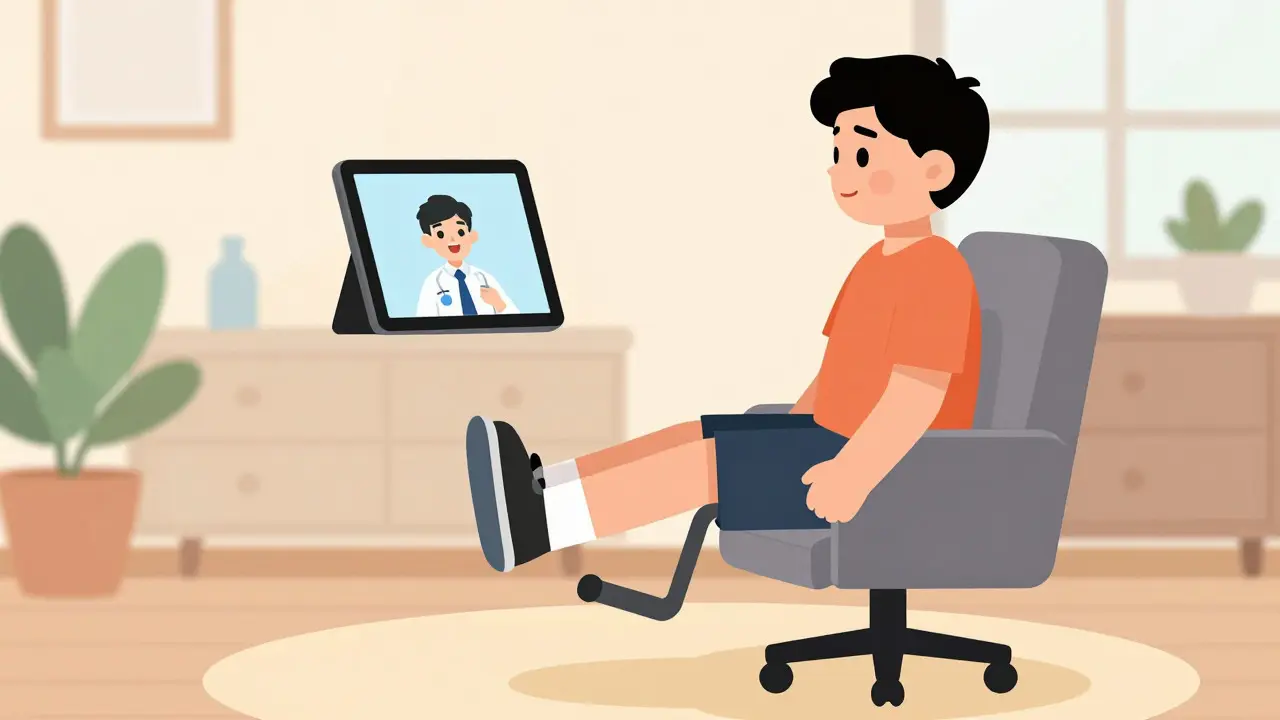
However, things are changing. Telehealth options are expanding. A 2023 trial published in JAMA Network Open showed that home-based telehealth PR can produce equivalent outcomes to in-person programs for exercise capacity and dyspnea. This is a game-changer for those who can’t travel.
How to Get Started
Ready to take the first step? Here is your action plan:
- Talk to Your Doctor: Ask specifically, “Am I a candidate for pulmonary rehabilitation?” Don’t wait for them to bring it up.
- Check Local Resources: Use the American Lung Association’s Lung HelpLine (1-800-LUNGUSA) to find programs near you. They field thousands of inquiries annually and can guide you to certified centers.
- Verify Coverage: Call your insurance provider. Ask if they cover outpatient pulmonary rehab and how many sessions are included. For Medicare beneficiaries, ensure your doctor submits the necessary certification forms.
- Prepare Mentally: Commit to the 6-12 weeks. Consistency is key. Missing sessions slows progress. Treat it like an important job appointment.
Frequently Asked Questions
Is pulmonary rehabilitation painful?
It should not be painful, though it can be challenging. You may feel muscle soreness similar to after a new workout routine, and you will feel breathless during exercise. However, the staff monitors your oxygen levels and heart rate closely. They adjust the intensity to keep you in a safe zone. The discomfort is temporary and leads to long-term gains.
How long do the benefits last?
The benefits are not permanent if you stop moving. PR teaches you skills and builds fitness, but you must maintain them. Studies show that without continued activity, fitness declines within a few months. Many programs offer maintenance classes or encourage joining local walking groups to sustain the gains.
Can I do pulmonary rehabilitation at home?
Yes. Home-based PR is becoming increasingly common, especially via telehealth. While supervised center-based programs are the gold standard, recent evidence shows that guided home programs can achieve similar improvements in exercise capacity and quality of life. This option is ideal for those with transportation barriers or who live in remote areas.
Does Medicare pay for pulmonary rehab?
Yes, Medicare Part B covers pulmonary rehabilitation for eligible patients. It typically allows for up to 36 sessions per year. Your doctor must certify that you have a chronic respiratory disease and that the program is medically necessary. There may be co-pays involved, depending on your specific plan.
What if I am too weak to exercise?
Being weak is exactly why you need PR. Programs are tailored to your current ability. If you are severely deconditioned, you might start with seated exercises or neuromuscular electrical stimulation. The progression is gradual. No one expects you to run a marathon on day one. The goal is to build from where you are now.