
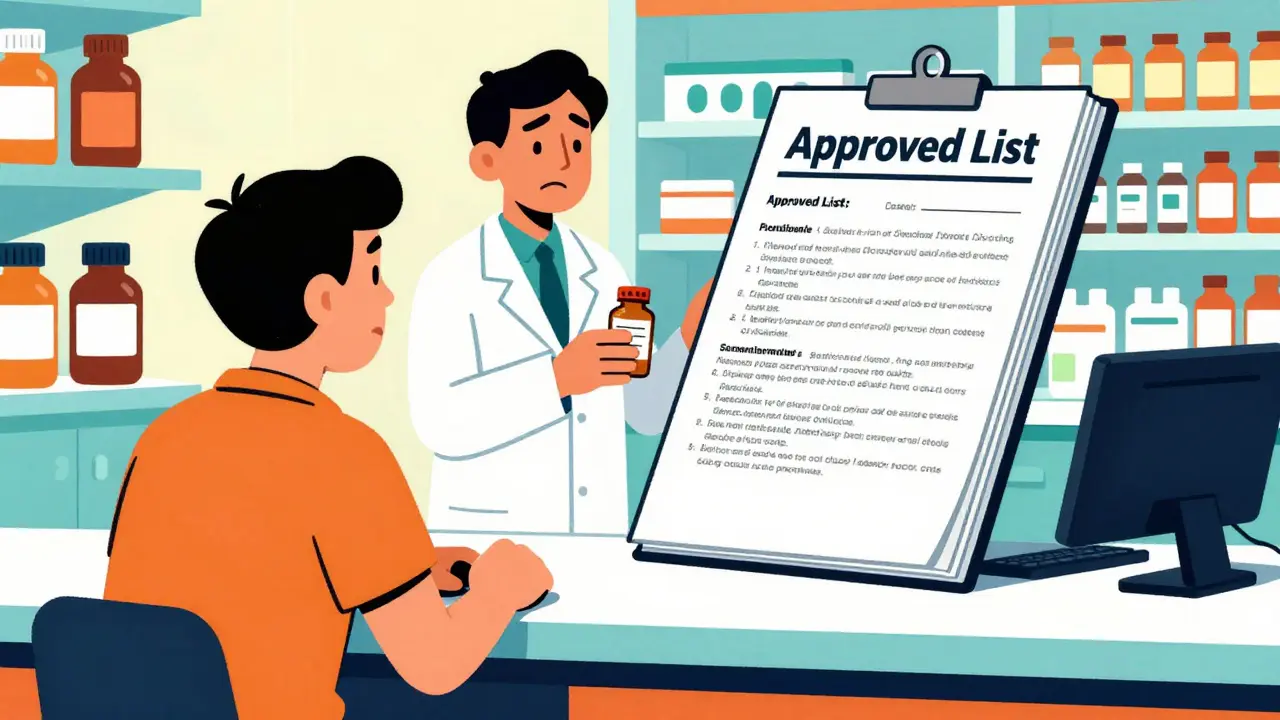
Why Your Generic Medication Request Was Denied
Most denials aren't personal; they're based on cost-containment strategies. Many commercial health plans use step therapy, a process where the insurer requires you to "fail" on a lower-cost generic drug before they agree to pay for a more expensive brand-name option. If your doctor prescribes a brand-name drug immediately, the insurance company may trigger a denial, claiming the treatment isn't medically necessary yet.
Another common hurdle is prior authorization. This is essentially a request for permission. The insurer wants a clinical justification before they commit to the cost. According to the American Medical Association, nearly 19% of these requests are denied initially. The gap here is usually a lack of specific documentation-the insurer doesn't have enough "proof" that the generic alternative is clinically inappropriate for your specific health profile.
The First Step: Deciphering Your Denial
Before you call your doctor or the insurance company, you need the Explanation of Benefits (EOB). This is the document that tells you exactly why the claim was rejected. By federal regulation, this document must include the specific reason for the denial and instructions on how to appeal. Don't ignore the fine print; look for the deadline. For most commercial plans, you have 180 days to file an internal appeal, while Medicare Part D gives you a shorter window of 120 days.
Check if the denial was based on a "lack of medical necessity" or because the drug is "not on the formulary." Knowing the exact reason allows your doctor to write a targeted letter rather than a generic one. A generic "this patient needs this drug" letter rarely works; a letter saying "the generic alternative caused a severe allergic reaction on June 12th" is much harder for an insurer to ignore.
How to File a Successful Internal Appeal
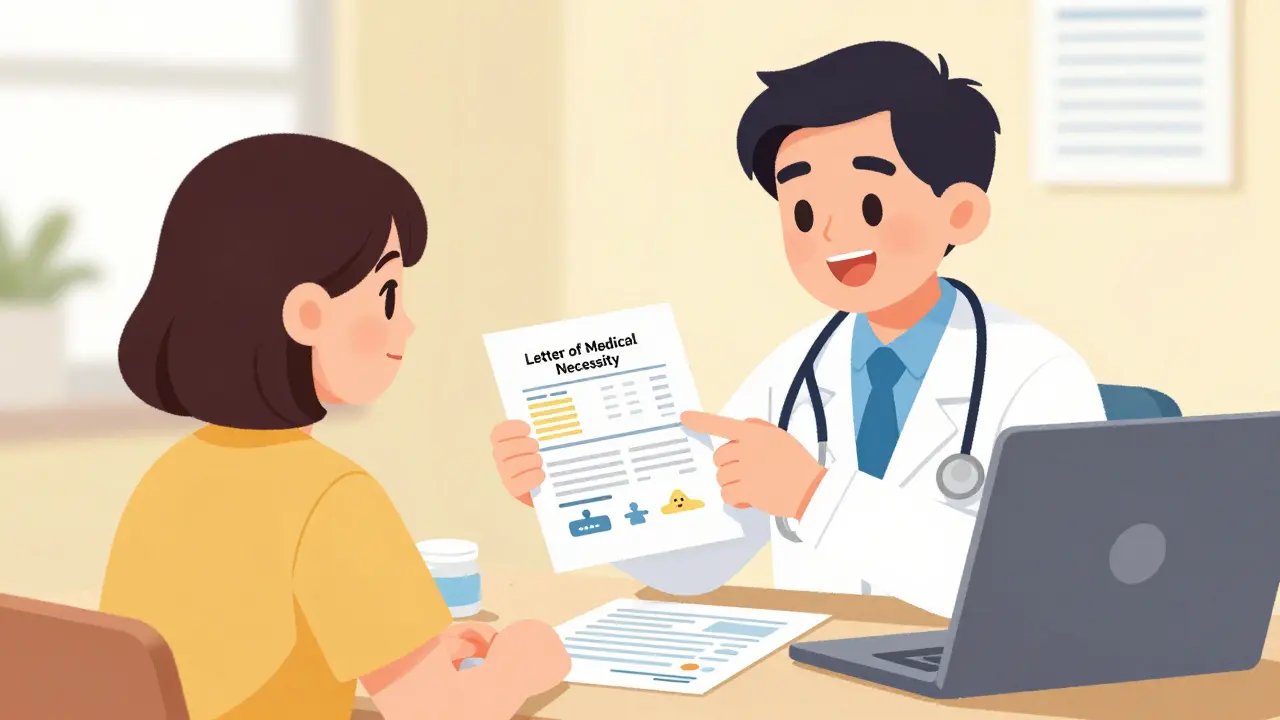
The internal appeal is your first formal chance to change the insurer's mind. You are essentially asking them to review their own decision. To do this effectively, you need a partnership with your healthcare provider. The most successful appeals are those backed by a strong Letter of Medical Necessity.
- Gather Clinical Evidence: Your doctor needs to document why the generic version is unsafe or ineffective. This includes a history of failed trials of other drugs. For example, the Crohn's & Colitis Foundation notes that appeals mentioning at least 2.7 failed alternatives have a significantly higher success rate.
- Cite Official Guidelines: Insurance reviewers love data. If your doctor references standards from the American College of Physicians or other specialty societies, it adds professional weight to the request.
- Detail Adverse Reactions: If you tried the generic and it didn't work, or it gave you a rash or nausea, get that in writing. Documentation of adverse reactions is a primary driver in 68% of overturned denials.
- Submit the Right Forms: Ensure you use the specific "Prescription Drug Prior Authorization" or "Step Therapy Exception" forms required by your state or insurer.
| Feature | Commercial Insurance | Medicare Part D | Medicaid |
|---|---|---|---|
| Appeal Levels | Typically 2 internal + 1 external | 5 distinct levels | Varies by state |
| Filing Deadline | 180 days | 120 days | State-specific |
| Standard Timeline | ~30 days (not started) | Variable (Standard/Expedited) | Follows 2016 Final Rule |
| Key Advantage | Flexible documentation | Standardized national framework | External review in 45 states |
When to Request an Expedited Appeal
Standard appeals can take a month or more, which is unacceptable if you're facing a health crisis. If your doctor can certify that a delay in treatment would seriously jeopardize your life or health, you can request an expedited appeal. In these cases, insurers are often required to provide a decision within four business days.
Be careful here. Many urgent appeals fail not because the patient isn't sick, but because the documentation is messy. A Johns Hopkins study found that 41% of unsuccessful urgent appeals were due to simple documentation errors. Make sure the request specifically uses the word "expedited" and includes the clinical urgency in the first paragraph.
The Power of Peer-to-Peer Reviews
If the internal appeal is denied, you have a "secret weapon": the peer-to-peer review. This is a phone call between your prescribing physician and the insurance company's medical director. Instead of a paper trail, it's a professional conversation where two doctors discuss the clinical merits of the case.
Peer-to-peer evaluations are incredibly effective, with success rates often exceeding 75%. The reason is simple: medical directors are more likely to be swayed by a colleague's clinical experience than by a form. If you've reached this stage, ask your doctor if they are willing to schedule a peer-to-peer call. It's often the fastest way to break a deadlock.
Escalating to External Reviews
If the insurance company says "no" a second time, you can take the fight outside the company. An external review involves an independent third party-someone not employed by your insurance company-who decides if the insurer's denial was fair. This is a legal right under the Affordable Care Act.
External reviews are particularly powerful because the insurer doesn't have a financial incentive to deny the claim in this phase. In some states, like California, you can also involve the Department of Insurance. Formal complaints to state insurance commissioners have shown resolution rates as high as 92%, as insurers generally dislike being audited by state regulators.
What is the difference between an internal and external appeal?
An internal appeal is a request for the insurance company to review its own decision using its own staff. An external review is conducted by an independent organization that has no affiliation with your insurer, providing an unbiased second opinion on whether the medication is medically necessary.
How long does the entire appeal process usually take?
While timelines vary, many patients report it takes about 52 days from the initial denial to a final approval if they move through the internal stages. Expedited reviews are much faster, often decided within 4 business days.
Can I pay for the drug first and ask for a refund later?
You can, but it's risky. If the appeal is denied, you will be responsible for the full cost. It is generally better to seek a "bridge supply" from the manufacturer or a temporary exception from the insurer while the appeal is pending.
What happens if my doctor is too busy to write the letter?
You can help by providing a draft or a structured template. Patients who use templates often see a 65% success rate compared to only 32% for those who try to draft appeals entirely on their own. Provide your doctor with a list of your failed medications and the dates you took them to make their job easier.
Do generic medications always have to be tried first?
Not always. If you have a documented allergy to an inactive ingredient in the generic, or if the generic version is clinically proven to be less effective for your specific condition, you can request a "formulary exception" to skip the step therapy process entirely.
Next Steps and Troubleshooting
If you are just starting this process, your first move is to call your pharmacy and ask for the exact "denial code." Once you have that, schedule a 10-minute appointment or send a portal message to your doctor specifically requesting a Letter of Medical Necessity. If you hit a wall with the insurer's customer service, don't just keep calling the same number-file a formal complaint with your State Insurance Commissioner's office.
For those on Medicare, start by reviewing the Medicare Rights Center guidelines to ensure you are using the correct Coverage Determination Request forms. If you are dealing with a specialty medication (like an oncology drug), remember that these have higher overturn rates (around 82%), so keep pushing even if the first response is a "no." Persistence and precise documentation are the only ways to win this battle.
Comments (13)
Lynn Smith
April 20, 2026 AT 00:29This is such a helpful breakdown of a really stressful process. I've been through this with my asthma meds and just having a checklist makes it feel way less overwhelming. Thanks for sharing these tips!
Quinton Bangerter
April 21, 2026 AT 21:01Typical. They want you to believe the 'system' is just about efficiency, but it's obviously a coordinated effort to squeeze every cent out of the sick while pushing specific pharma agendas. These
Valorie Darling
April 22, 2026 AT 11:54honestly just use goodrx and stop stressing over these companies they dont care about u anyway lol
Don Drapper
April 22, 2026 AT 20:52The utter audacity of the insurance industrial complex to masquerade as healthcare providers is an absolute travesty! It is an egregious affront to the sanctity of the physician-patient relationship that a nameless bureaucrat in a cubicle can override a licensed medical professional's clinical judgment based solely on a profit-and-loss statement. This is not mere inefficiency; it is systemic malpractice! The psychological toll of fighting for a basic necessity is an invisible epidemic that these corporations ignore with a level of callousness that is truly staggering!
caesar simpkins
April 24, 2026 AT 01:14Wow, the sheer intensity of some of these responses! Let's just take a breath. The guide is solid and it's great that we have a way to navigate this mess without losing our minds.
Aaron McGrath
April 24, 2026 AT 11:05CRUSH THOSE DENIALS! Stop playing nice with the insurance adjusters and hit them with the clinical data! If you aren't using the high-yield terminology and leveraging every single failed alternative in your history, you're just leaving money on the table. Get that Letter of Medical Necessity optimized and force their hand! NO MORE STEP THERAPY NONSENSE!
Mike Beattie
April 25, 2026 AT 05:35The clinical utility of the peer-to-peer review is often underestimated by the layperson. From a high-level systemic perspective, the friction between the medical director's actuarial constraints and the provider's therapeutic goals creates a bottleneck that only a direct dialogue can resolve. Most people lack the cognitive stamina to push through the internal appeal phases, which is why they fail. It's a basic failure of persistence and a lack of understanding of the bureaucratic hierarchy involved in managed care. Honestly, if you can't handle the paperwork, you've already lost the game.
julya tassi
April 26, 2026 AT 19:11I had a similar issue last year! 🌸 It took a bit of patience, but my doctor was really sweet and helped me with the draft. It's so important to stay organized with the dates! :)
Lesley Wimbush
April 27, 2026 AT 17:35Oh honey, I've been doing this for years and let me tell you, the 'secret weapon' is basically common knowledge for anyone with a shred of sophistication. But it's just so precious that some people need a guide for this. Still, I suppose it's a lovely little roadmap for those who are completely lost in the shuffle!
Bob Collins
April 27, 2026 AT 22:40Spot on. Just keep at it and don't let them wear you down.
Lucy Kuo
April 28, 2026 AT 23:50It is profoundly heart-wrenching to imagine the distress patients endure when their health is held hostage by financial calculations. We must strive to create a world where compassion outweighs the bottom line of a corporation. I am eternally grateful for those who take the time to educate others on their rights, as knowledge is the most potent tool we possess against injustice. May we all support one another through these harrowing bureaucratic labyrinths with grace and unwavering solidarity!
Akshata Kembhavi
April 30, 2026 AT 08:15This is actually very similar to how some things work back home in India, though the insurance side is a bit different. Still, the struggle to get the right medicine is universal!
William Young
May 1, 2026 AT 11:55I've helped a few patients with this. Just reminding everyone that your pharmacist is often your best ally here since they see the denial codes first.