
Imagine a patient who has been stable on a brand-name medication for years suddenly experiences severe side effects after switching to a generic version. As the pharmacist who dispensed that prescription, you are often the first person to hear about it. You might wonder: is this just bad luck, or is there a problem with the specific generic manufacturer? More importantly, what is your actual responsibility in this situation?
The short answer is complex. While federal law does not strictly force you to report every issue, professional standards and ethical obligations place a heavy burden on your shoulders. Understanding the nuance between legal mandates and professional duty is crucial for protecting patient safety and maintaining trust in the healthcare system.
Is reporting adverse events legally mandatory for pharmacists?
At the federal level, no. The U.S. Food and Drug Administration (FDA) encourages reporting through the MedWatch program but does not mandate it for healthcare professionals. However, some states have stricter rules. For example, California, Illinois, Massachusetts, and New York have established mandatory reporting requirements for serious adverse events. Always check your specific state board of pharmacy regulations.
The Professional Obligation vs. Legal Mandate
It is easy to assume that because something isn't illegal to ignore, it doesn't matter much. But in pharmacy practice, the gap between "legal" and "professional" is where patient safety lives. The American Society of Health-System Pharmacists (ASHP) Guidelines on the Pharmacist's Role in Providing Drug Information clearly position medication safety monitoring as a fundamental professional responsibility. This means that while you might not go to jail for failing to report a minor issue, you could be falling short of the standard of care expected by your peers and employers.
The FDA’s stance is rooted in the Federal Food, Drug, and Cosmetic Act and clarified by the 2013 FDA Safety and Innovation Act. These laws established enhanced postmarketing safety requirements but kept adverse event reporting voluntary for clinicians. Why? Because enforcing a mandate across millions of practitioners is logistically difficult. Instead, the agency relies on the expertise of frontline providers like you to spot patterns that manufacturers might miss.
Consider the data: between 2018 and 2022, only 2.3% of all adverse event reports submitted to the FDA came from pharmacists. Compare that to 67.1% from manufacturers. Given that pharmacists dispense approximately 5.8 billion prescriptions annually-75% of which are generics-this underreporting represents a massive blind spot. When you fail to report, you aren't just skipping a form; you're leaving a gap in the national safety net.
Understanding Therapeutic Inequivalence
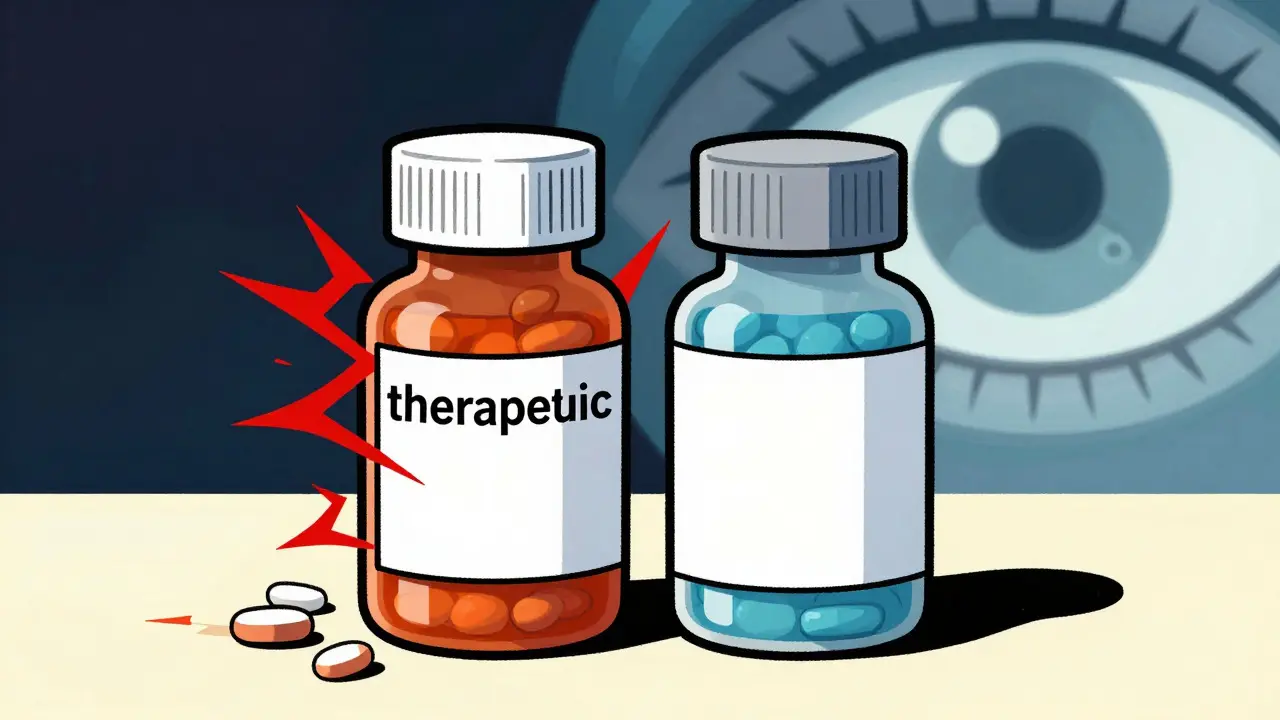
One of the most critical areas where pharmacists must step up is identifying therapeutic inequivalence. This term refers to situations where a generic product fails to demonstrate bioequivalence in clinical practice, even though it met regulatory standards during approval. It’s the difference between a drug working perfectly in a controlled trial and failing when a real patient takes it.
Therapeutic Inequivalence is a condition where a generic drug performs differently than its brand-name counterpart in clinical use, despite meeting bioequivalence standards. This concept was highlighted in the FDA's 2015 update to reporting guidelines, explicitly listing it as a reportable issue.Dr. Jerry Phillips, former Associate Director of the FDA's Division of Medication Error Prevention and Analysis, noted that pharmacist reports of therapeutic inequivalence are "particularly valuable." Why? Because they provide real-world evidence of potential bioequivalence issues that may not have been detected during the abbreviated new drug application (ANDA) review process. If you notice a patient experiencing a different clinical response after switching from brand to generic, or from one generic manufacturer to another, that is a red flag worth reporting.
The FDA’s Office of Generic Drugs, established in 2015, specifically interacts with stakeholders to investigate these reports. In their 2022 Annual Report, they documented receiving 1,842 reports mentioning therapeutic inequivalence concerns. Of those, 387 (21.0%) originated from pharmacists. This small percentage led to 147 generic drug products being subjected to additional review, resulting in 12 product-specific communications to healthcare providers. Your single report can trigger a cascade of safety actions.
Navigating the Attribution Challenge
A major hurdle in reporting generic drug problems is figuring out who made the drug. Under the 1984 Hatch-Waxman Amendments, generic manufacturers must maintain labeling identical to the reference listed drug. This creates a legal framework where generic manufacturers cannot independently update safety information. The Supreme Court’s 2011 PLIVA v. Mensing decision further complicated this by establishing that generic manufacturers cannot be held liable in state courts for failure to warn due to federal preemption.
This legal maze often leads to data attribution problems. Brand manufacturers frequently receive adverse event reports for products actually dispensed as generic equivalents. As a result, the signal gets lost or misattributed. A 2020 study by Duke University researchers found that adverse event reports for generic drugs decreased by 17.3% in the three years following the PLIVA decision compared to the prior three years. Reduced liability for manufacturers may have diminished reporting incentives, shifting more weight onto healthcare providers.
To combat this, the FDA requires specific data elements in your report: an identifiable patient, a suspect drug, an adverse event, and an identifiable reporter. When filling out the MedWatch Form 3500 (version 4.1, released January 15, 2023), ensure you include the National Drug Code (NDC), manufacturer name, lot number, and specific clinical details. Vague statements like "a patient experienced an injury" are not specific enough. Be precise. If you know the lot number, write it down. That detail can be the key to identifying a manufacturing defect.
| Data Element | Why It Matters | Common Pitfall |
|---|---|---|
| National Drug Code (NDC) | Identifies the specific manufacturer and product strength | Omitting the NDC or using an outdated code |
| Lot Number | Helps trace manufacturing defects to a specific batch | Failing to record the lot number at the point of dispensing |
| Clinical Details | Provides context for severity and causality | Using vague language instead of specific symptoms/timelines |
| Reporter Contact Info | Allows FDA to follow up for clarification | Leaving contact fields blank or incomplete |
Overcoming Barriers to Reporting
If reporting is so important, why do so few pharmacists do it? The barriers are real. A 2023 Pharmacy Times reader survey revealed that 68.4% of community pharmacists cited lack of time as the primary obstacle. Another 52.1% expressed uncertainty about whether an event met reporting criteria. Additionally, 41.7% struggled with determining whether a brand or generic product was involved.
Time is a valid concern. In a busy community pharmacy, stopping to fill out a detailed form feels impossible. However, the process has become more streamlined. The FDA’s MedWatch online portal, updated to version 3.2 in April 2023, now includes a specific "generic drug concern" category. This allows you to quickly indicate whether the issue relates to therapeutic inequivalence, manufacturing quality, or labeling discrepancies. You don’t need to write an essay; you need to provide accurate, concise data.
Uncertainty about criteria is another barrier. Remember this rule: report if there is reasonable suspicion of causality. You do not need to prove the drug caused the event. The FDA’s July 2023 guidance explicitly states that reports should be submitted even where the healthcare provider is not certain the product caused the event. Serious adverse events-defined as fatal, life-threatening, permanently disabling, requiring hospitalization, or causing congenital anomalies-should be reported within 15 calendar days. Non-serious but unexpected events also warrant submission to uncover previously unidentified drug effects.
Difficulty distinguishing between product- and patient-specific issues is common. A 2023 ASHP Drug Information Practitioners Survey found that 76.3% of respondents identified this as a top challenge. To mitigate this, document the patient’s history carefully. If the patient tolerated the brand name well, then switched to a generic and had issues, that pattern suggests a product-specific problem. If multiple patients report similar issues with the same generic manufacturer, the signal becomes stronger.

State-Level Variations and Best Practices
While federal law sets the baseline, state boards of pharmacy add layers of complexity. A 2022 analysis by the National Academy for State Health Policy revealed that 28 states have incorporated specific adverse event reporting expectations into their regulations. Only four states-California, Illinois, Massachusetts, and New York-have established mandatory reporting requirements for serious adverse events. The California State Board of Pharmacy’s 2022 Standard of Care Report explicitly states that pharmacists "must maintain a system for identifying, documenting, and reporting adverse drug reactions and therapeutic failures."
If you practice in a state without mandatory reporting, treat it as if you do. Consistency protects you professionally and ethically. Implement a simple workflow in your pharmacy software to flag potential adverse events. Use templates for common scenarios to speed up the reporting process. Train your staff to recognize signs of therapeutic inequivalence, such as sudden changes in efficacy or new side effects after a switch.
The Institute for Safe Medication Practices (ISMP) includes adverse event reporting as a core component of their 2023 Medication Safety Self Assessment for Community Pharmacies. Pharmacies scoring below 75% on reporting practices are flagged for "significant safety concerns." Use this assessment as a benchmark. If your pharmacy is struggling with reporting, it’s not just a paperwork issue; it’s a safety culture issue.
The Impact of Your Reports
Your reports matter more than you might think. The FDA’s Adverse Event Reporting System (FAERS) database contains over 25 million reports as of December 2023. Reports specifically mentioning generic drug issues increased from 12,450 in 2015 to 28,760 in 2022-a 131% increase. Despite this rise, pharmacists remain significantly underrepresented among reporters.
However, when pharmacists do report, the impact is significant. A March 2023 analysis published in JAMA Internal Medicine identified 478 unique generic drug products with potential safety signals requiring further investigation. Remarkably, 63% of these were initially identified through reports submitted by pharmacists who noticed patterns across multiple patients. This demonstrates that your frontline perspective is irreplaceable. Manufacturers see aggregate data; you see individual stories. Connecting those dots is how we catch dangerous trends early.
The FDA’s Therapeutic Equivalence Working Group, established in 2019, analyzes pharmacist-submitted reports of potential therapeutic inequivalence. Their work has led to tangible outcomes, including product recalls and label updates. By participating in this process, you contribute directly to public health. You are not just a dispenser of medications; you are a guardian of drug safety.
What constitutes a "serious" adverse event?
A serious adverse event is one that results in death, is life-threatening, requires hospitalization or prolongation of existing hospitalization, results in persistent or significant disability/incapacity, causes a congenital anomaly/birth defect, or necessitates intervention to prevent permanent impairment or damage. These events require submission within 15 calendar days.
Do I need to be sure the generic drug caused the problem?
No. The FDA encourages reporting based on "reasonable suspicion" of causality. You do not need definitive proof. If you suspect a link between the generic drug and the adverse event, report it. The FDA will investigate further.
How do I find the National Drug Code (NDC)?
The NDC is typically printed on the drug package and in your pharmacy management software. It consists of three segments: labeler, product, and package size. Ensure you record the full 10- or 11-digit code to accurately identify the manufacturer and product.
Where can I access training on adverse event reporting?
The FDA offers free training modules through the MedWatch Training Portal. Module 4: "Reporting for Healthcare Professionals," updated January 30, 2023, specifically addresses generic drug reporting considerations and provides step-by-step guidance.
What happens after I submit a report?
Your report enters the FAERS database. FDA analysts review it for patterns and signals. If multiple reports suggest a safety issue, the FDA may conduct further investigations, request additional data from manufacturers, or issue safety communications to healthcare providers and the public.