
Your kidneys do more than filter waste; they act as the body's primary chemical balancers. When kidney function declines, this balance tips, often leading to a condition called metabolic acidosis, which is a state where excess acid builds up in the blood, lowering serum bicarbonate levels below 22 mEq/L and pH below 7.35. This isn't just a lab number on a page. It is a silent driver of muscle wasting, bone loss, and faster kidney decline. For patients with chronic kidney disease (CKD), specifically those in stages 3 through 5, metabolic acidosis is both common and dangerous. Yet, it remains one of the most undertreated complications in nephrology today.
If you or a loved one has been diagnosed with advanced CKD, understanding how acid-base disorders work-and why correcting them matters-is crucial. The good news? Simple interventions like dietary changes and bicarbonate supplementation can slow disease progression significantly. Let’s look at what the science says about managing this condition effectively.
What Is Metabolic Acidosis and Why Does CKD Cause It?
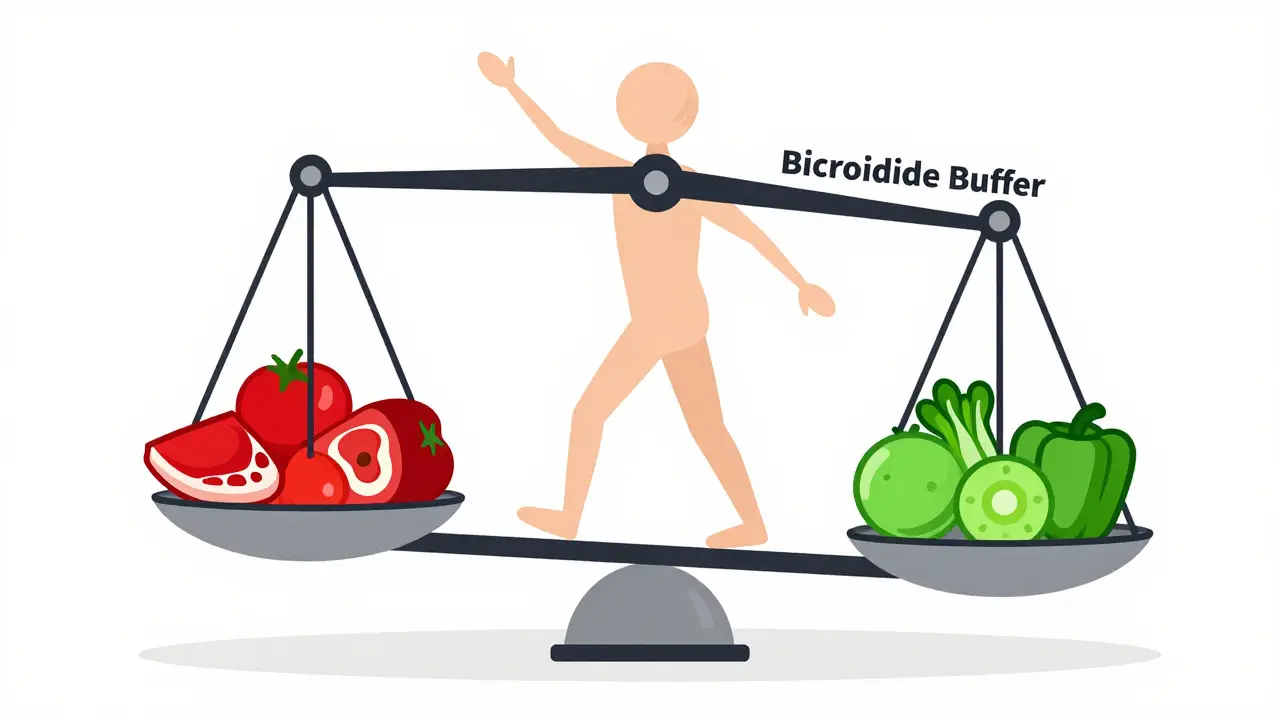
To understand metabolic acidosis, think of your body as a delicate scale. On one side sits acid production from daily metabolism and diet; on the other, your kidneys’ ability to excrete that acid and regenerate bicarbonate, a natural buffer that neutralizes acid. In healthy individuals, this system works seamlessly. But in CKD, the kidneys lose their capacity to remove hydrogen ions and produce new bicarbonate.
The prevalence rises sharply as kidney function worsens. According to data from the National Kidney Foundation, approximately 15% of patients with stage 3 CKD develop metabolic acidosis. That number jumps to 24% in stage 4 and reaches 42% in stage 5 (end-stage renal disease). This accumulation of acid doesn’t happen overnight. It creeps in, slowly eroding bone density by leaching calcium from bones to buffer the blood, breaking down muscle protein, and increasing cardiovascular strain.
Historically, this link between kidney function and acid balance was established in the 1950s by Dr. Homer Smith, whose foundational work detailed how renal tubules handle acid excretion. Today, we know that leaving this imbalance unchecked accelerates the journey toward dialysis. Correcting it isn’t optional-it’s essential for preserving remaining kidney function.
The Role of Bicarbonate Therapy in Slowing CKD Progression
When serum bicarbonate drops below 22 mEq/L, clinical guidelines recommend intervention. The gold standard treatment is oral alkali therapy, primarily using sodium bicarbonate. But why does this matter so much?
A landmark three-year randomized controlled trial published in the *Journal of the American Society of Nephrology* (2018) followed 740 patients with CKD stages 3-5. Those who took oral sodium bicarbonate (dosed at 0.5-1.0 mEq/kg/day) saw their eGFR decline slow by 5.9 mL/min/1.73m² compared to placebo. That difference is significant. Over years, it translates to months or even years of preserved kidney function, delaying the need for dialysis or transplant.
KDIGO (Kidney Disease: Improving Global Outcomes) guidelines strongly support this approach. They recommend initiating alkali therapy when bicarbonate falls below 22 mEq/L, aiming to maintain levels between 23-29 mEq/L. However, many patients remain undertreated. A 2023 analysis found only 43% of eligible patients received appropriate therapy, highlighting a critical gap in care.
| Treatment Option | Mechanism | Pros | Cons/Risks | Best For |
|---|---|---|---|---|
| Sodium Bicarbonate | Directly adds bicarbonate to buffer acid | Proven to slow eGFR decline; inexpensive | High sodium load may worsen hypertension or heart failure | Patients without fluid retention or severe HTN |
| Sodium Citrate (Shohl’s Solution) | Citrate converts to bicarbonate in the liver | Liquid form may be easier to swallow | Also contains sodium; risk of aluminum absorption if used long-term | Patients who struggle with pills |
| Potassium Citrate | Adds potassium and citrate | No sodium load; helps correct hypokalemia | High risk of hyperkalemia in CKD patients | Only if potassium is low (<3.5 mEq/L) |
| Calcium Citrate | Provides calcium and citrate | Helps with bone health; no sodium | Risk of hypercalcemia and kidney stones | Patients with low calcium or high sodium sensitivity |
Dietary Strategies: Reducing Acid Load Naturally
Medication isn’t the only tool. What you eat directly impacts your body’s acid burden. Foods high in protein, especially animal proteins, generate sulfuric and phosphoric acids during metabolism. In contrast, fruits and vegetables contain organic anions that metabolize into bicarbonate, acting as natural buffers.
You can measure this effect using the Potential Renal Acid Load (PRAL) score. Meats have a positive PRAL (e.g., +9.5 mEq/100g for beef), meaning they add acid. Vegetables have negative PRAL (e.g., -2.8 mEq/100g for spinach), meaning they reduce acid. Shifting your diet to include 5-9 servings of fruits and vegetables daily while reducing processed meats and cheeses can lower your daily acid load by 40-60 mEq.
This isn’t theoretical. One patient at the Cleveland Clinic reported a 3.5 mEq/L increase in serum bicarbonate after six months of replacing meat-based meals with plant-based alternatives under dietitian supervision. While dietary changes alone rarely normalize bicarbonate in advanced CKD, they significantly reduce the medication dose needed, minimizing side effects like bloating or nausea.
Navigating Side Effects and Patient Challenges
Even with proven benefits, adherence to bicarbonate therapy is challenging. Sodium bicarbonate tablets are large, and taking 4-6 per day is burdensome. Some patients report taste issues with liquid formulations, forcing them to mix powders into orange juice-which adds unwanted sugar. Others experience gastrointestinal discomfort, including bloating and nausea.
More critically, the sodium content poses risks. Each 650mg tablet contains about 610mg of sodium. For patients with hypertension or heart failure, this can trigger fluid retention and hospitalization. A 2020 study found a 32% higher rate of heart failure hospitalizations in CKD stage 4 patients with hypertension taking sodium bicarbonate compared to those on calcium citrate.
This is why personalized targets matter. Experts now suggest tailoring bicarbonate goals based on comorbidities. For instance, patients with heart failure might aim for 24-26 mEq/L to avoid fluid overload, while malnourished elderly patients might target 22-24 mEq/L to prevent excessive alkalinity. Monitoring should occur monthly when starting therapy, then every 3-6 months once stable.
Future Directions and Emerging Treatments
Research continues to evolve. Veverimer, a non-absorbed polymer designed to bind stomach acid without adding sodium, showed promise in early trials but failed its phase 3 endpoint in 2021, halting FDA approval efforts. Meanwhile, the ongoing COMET-CKD trial (expected results Q4 2025) compares high-dose versus low-dose sodium bicarbonate strategies, which could refine dosing protocols further.
Newer supplements like TRC001, a citrate-free alkali agent, demonstrated fewer GI side effects in preliminary data. As guidelines update-KDIGO’s 2024 draft proposes expanding the target range to 22-29 mEq/L-clinicians will have clearer frameworks for individualized care.
Widespread adoption of these strategies could prevent tens of thousands of ESRD cases annually, saving billions in healthcare costs. But success depends on awareness, consistent monitoring, and shared decision-making between patients and providers.
What is the target bicarbonate level for CKD patients?
Current KDIGO guidelines recommend maintaining serum bicarbonate between 23-29 mEq/L. However, recent updates suggest a broader range of 22-29 mEq/L may be acceptable, with personalized targets based on comorbidities like heart failure or malnutrition.
Can I use baking soda instead of prescribed sodium bicarbonate?
While baking soda (sodium bicarbonate) is chemically identical, over-the-counter versions lack precise dosing standards and may contain additives. Always consult your nephrologist before self-medicating, as improper dosing can lead to electrolyte imbalances or fluid retention.
Is potassium citrate safe for all CKD patients?
No. Potassium citrate is generally avoided in CKD stages 3b-5 due to the high risk of hyperkalemia (elevated potassium). It should only be used if blood tests confirm low potassium levels (<3.5 mEq/L).
How quickly does bicarbonate therapy work?
Serum bicarbonate levels typically rise within days of starting therapy. However, slowing eGFR decline takes months to years of consistent treatment. Regular monitoring ensures doses are adjusted safely and effectively.
Does treating metabolic acidosis improve survival?
Evidence suggests corrected acidosis slows kidney decline and reduces complications like bone disease and muscle loss. While direct mortality benefits are still being studied, preventing progression to dialysis indirectly improves quality of life and longevity.