
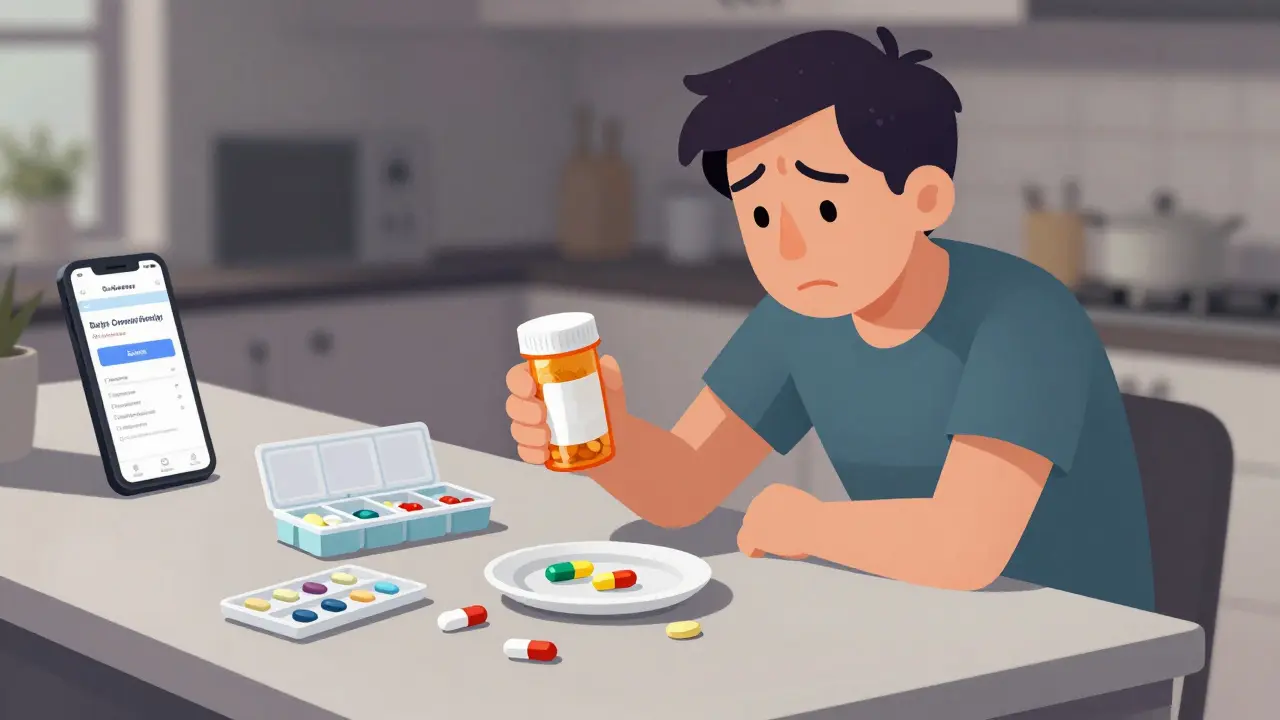
Every year, medication safety issues affect millions of people-not because they’re careless, but because the system is fragile. You take your pills as directed, trust your doctor, and assume the medicine in your hand is safe. But the numbers don’t lie: 1 in 20 patients globally experience avoidable harm from medications. That’s not a rare accident. It’s a systemic problem-and you need to know how to protect yourself.
Medication Errors Are More Common Than You Think
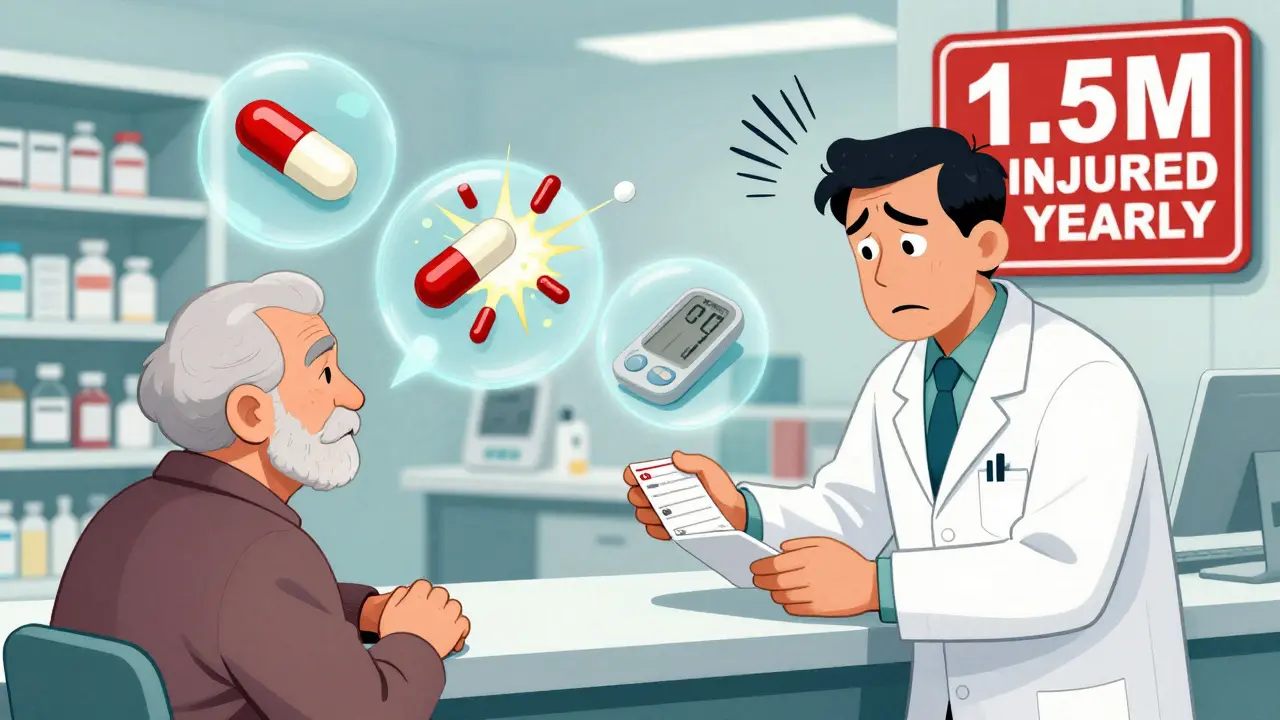
Think medication errors only happen in hospitals? Think again. Around 3% of all patients suffer preventable harm from medications, no matter where they’re treated. In the U.S. alone, more than 1.5 million people are injured by medication mistakes each year. That’s more than car accidents or falls. And it’s not just about getting the wrong pill. It’s about the wrong dose, the wrong timing, or a dangerous interaction you never knew about.
Antibiotics, antipsychotics, and heart medications are the most common culprits. In fact, nearly 1 in 5 medication-related harms involve antibiotics. Why? Because they’re overprescribed, misunderstood, or taken incorrectly. One study found that 22% of patients who took antibiotics didn’t finish their full course-not because they felt better, but because they didn’t understand why it mattered.
And it’s not just patients. Nurses make errors in 16% to 44% of cases. Pharmacists misfill prescriptions. Doctors prescribe based on outdated info. But blaming individuals misses the point. As former CMS administrator Dr. Donald Berwick said: “Most medication errors are system failures, not individual failures.”
High-Risk Medications and Deadly Risks
Some drugs are far more dangerous than others. Intravenous (IV) medications have the highest error rate-between 48% and 53% in hospitals. That’s because IV drugs act fast, and a tiny mistake can kill. Fentanyl-laced counterfeit pills are now the leading cause of death for Americans aged 18 to 45. In 2023, the DEA seized over 80 million of them. Many were sold online or through social media as “oxycodone” or “Adderall.” They weren’t. They were fentanyl. And fentanyl is 50 to 100 times stronger than morphine.
Older adults are especially vulnerable. In Australia, 11% fewer antipsychotics were prescribed to people over 65 between 2016 and 2021-because they realized these drugs often cause confusion, falls, and even sudden death in seniors. In the U.S., nearly 20% of seniors take at least one medication that’s risky for their age. Yet few are warned.
Even common drugs can be deadly if misused. Statins, blood pressure pills, and diabetes meds are among the top 5 causes of emergency room visits due to adverse reactions. Why? Because patients don’t know how to take them, or they don’t tell their doctor about other meds they’re using-including vitamins, supplements, or over-the-counter painkillers.
What Happens at Home? The Real Danger Zone
Most medication errors don’t happen in hospitals. They happen in your kitchen, your bedroom, your bathroom. Between 2% and 33% of patients make mistakes at home. That’s not a typo. It’s a range based on real studies. Why such a wide number? Because some people are careful. Others are overwhelmed.
A recent analysis of Reddit’s r/meds community found that 68% of posts were about confusion over dosage. “Is this half a pill or one whole?” “Why does this look different?” “I took it at 8 a.m., but the label says every 12 hours-does that mean 8 a.m. and 8 p.m.?”
Other common mistakes:
- Splitting pills without a pill splitter (leading to uneven doses)
- Taking two pills because you forgot you already took one
- Stopping a medication because you felt better-without asking your doctor
- Mixing alcohol with prescriptions
- Using old prescriptions for new symptoms
And then there’s the rise of fake drugs bought online. In North America, 1 in 3 counterfeit pills seized by authorities are sold through unregulated websites or social media. These aren’t just ineffective-they’re poisoned. Some contain rat poison. Others have lethal doses of fentanyl. And they look exactly like the real thing.
How to Protect Yourself: 5 Simple Rules
You can’t control the system. But you can control what you do. Here’s how to reduce your risk:
- Keep a living medication list. Write down every pill, patch, injection, vitamin, and supplement you take-including the dose and why you take it. Update it every time your doctor changes something. Bring it to every appointment.
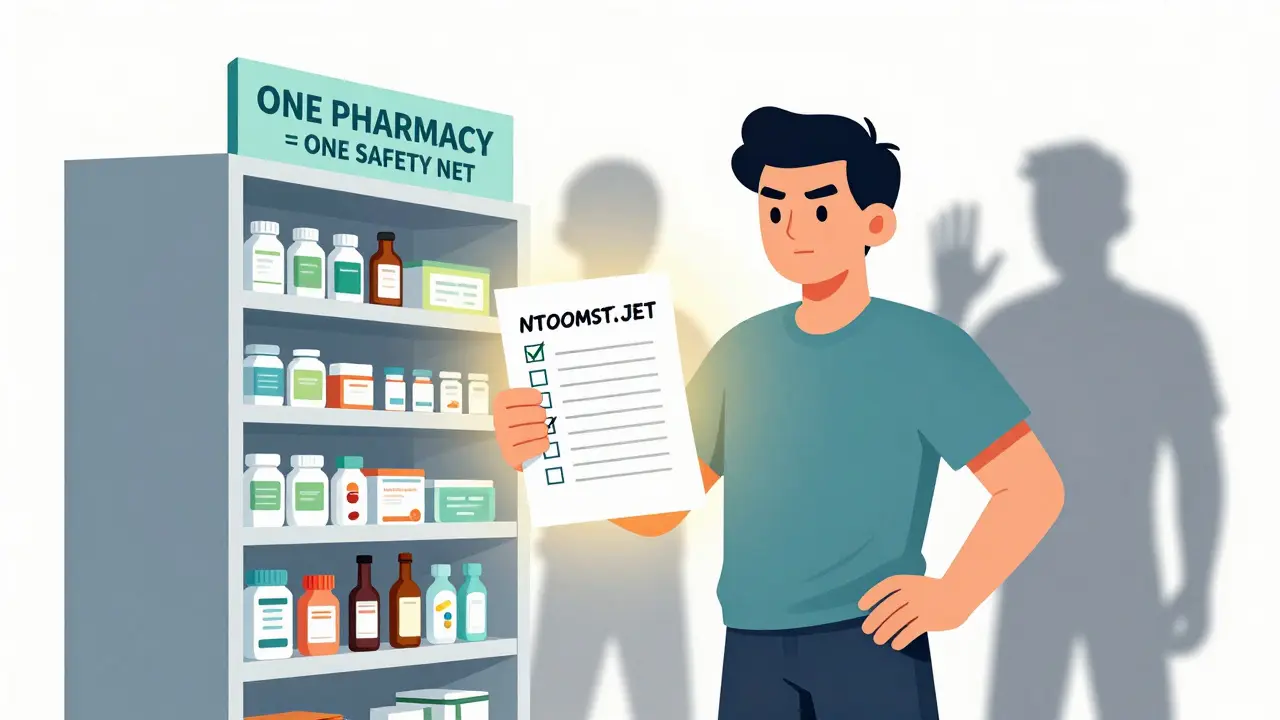
- Use one pharmacy. One pharmacy can check for dangerous interactions. If you use multiple pharmacies, no one sees the full picture. That’s how dangerous combos slip through.
- Ask the 3 questions every time you get a new prescription: “What is this for?” “How do I take it?” “What are the side effects I should worry about?” Don’t be shy. If the answer is vague, ask again.
- Check your pills. If your pill looks different this time-color, shape, markings-ask the pharmacist. It could be a generic version. Or it could be fake.
- Review your meds twice a year. Especially if you’re over 65 or take five or more medications. Ask your doctor: “Are all of these still necessary?” Many older adults are on drugs they don’t need anymore.
Australia calls this the “5 Moments for Medication Safety”: when you start treatment, when you add a new drug, during hospital transfers, when handling high-risk meds, and during regular reviews. It’s simple. And it saves lives.
What’s Being Done-and What’s Not
Some countries are making real progress. Australia cut opioid-related deaths by 37% since 2018 by tracking prescriptions in real time. The U.S. FDA now requires safety features on prescription packaging to fight counterfeits. The European Union has similar rules.
But the U.S. still has no national system to track all prescriptions. Many patients still get prescriptions faxed to pharmacies with unclear handwriting. Insurance companies still push for cheaper, less effective drugs. And hospitals still rely on handwritten orders.
Technology could help. AI-powered tools that cross-check your meds against your history could cut errors by 30% by 2027. But they’re not widely used yet. And they don’t replace human vigilance.
Why This Matters to You
Medication safety isn’t just a hospital issue. It’s your health. It’s your family’s peace of mind. It’s whether you wake up tomorrow feeling better-or worse.
You don’t need to be a doctor to protect yourself. You just need to be informed. You need to ask questions. You need to speak up when something feels off. And you need to know that your life isn’t in the hands of a machine or a rushed nurse-it’s in your hands, too.
The numbers are scary. But they’re not inevitable. Every time you check your pills, update your list, or ask a question, you’re not just being careful. You’re changing the system-one safe decision at a time.
How common are medication errors in the U.S.?
More than 1.5 million Americans are injured by medication errors each year, and about 7,000 die from them in hospitals alone. These errors are the most common type of medical mistake in healthcare settings.
Which medications are most likely to cause harm?
Antibiotics cause the most harm overall, followed by antipsychotics, central nervous system drugs, and cardiovascular medications. IV drugs have the highest error rate in hospitals, and counterfeit pills-especially those laced with fentanyl-are the deadliest new threat.
Can I trust my pharmacist to catch my medication errors?
Pharmacists are trained to spot errors, but they’re overwhelmed. A 2024 study found that most pharmacies process over 100 prescriptions per hour. That’s not enough time to catch every interaction. Always double-check your meds yourself, especially if they look different or if you’re unsure how to take them.
Why do I need to use just one pharmacy?
One pharmacy can see all your prescriptions and check for dangerous interactions between drugs, supplements, and even over-the-counter meds. If you use multiple pharmacies, no one has the full picture-and that’s how deadly combos happen.
Are online pharmacies safe to use?
Only if they’re licensed and require a prescription. Most fake drugs sold online come from unregulated sites. In North America, 1 in 3 counterfeit pills seized by authorities were bought online. Many contain lethal doses of fentanyl. If a site sells pills without a prescription or offers “miracle cures,” it’s not safe.
What should I do if I think I had a medication error?
Call your doctor or pharmacist immediately. If you’re having a serious reaction-trouble breathing, chest pain, swelling, confusion-go to the ER. Then report it. The FDA’s MedWatch program lets patients report adverse events. Your report helps others avoid the same mistake.
Comments (10)
Coral Bosley
January 22, 2026 AT 06:21This post hit me like a truck. My grandma died because a nurse mixed up her heart meds with her blood thinner. No one apologized. No one got fired. Just another statistic buried under bureaucracy. I still wake up wondering if I could’ve done more.
MARILYN ONEILL
January 24, 2026 AT 06:15Wow. Finally someone who gets it. Most people think meds are safe because they’re ‘prescribed.’ Newsflash: doctors are humans. And humans are lazy. I’ve seen a pharmacist hand out a bottle of insulin labeled as ‘vitamin D.’ And no one blinked. That’s not incompetence. That’s systemic collapse.
Steve Hesketh
January 25, 2026 AT 18:44I’m from Nigeria, and we don’t have the luxury of fancy pharmacies or AI tracking. But here’s what we do know: if your pill looks different, you ask. If you’re not sure, you walk to the clinic. We don’t have time for arrogance. We have time for survival. And honestly? That’s the real lesson here. Safety isn’t a tech fix. It’s a cultural habit. Start small. Ask questions. Trust your gut. It’s saved more lives than any app ever could.
shubham rathee
January 27, 2026 AT 07:40Let’s be real the whole system is rigged big pharma owns the FDA and the doctors and even the pharmacists are just paid actors in a play called capitalism you think they care if you die no they care if the stock goes up and the fake pills online? Of course they’re allowed to exist because the government makes more money off the panic than off preventing it
Sangeeta Isaac
January 29, 2026 AT 04:39So let me get this straight… I’m supposed to keep a living medication list, use one pharmacy, ask three questions, check my pills, and do a biannual review… and all of this is just so I don’t accidentally die from a pill that looks like a Skittle? I’m exhausted just reading this. Also, my pharmacist once told me to ‘just take it’ when I asked about the color change. So… thanks for the advice, but I’m just gonna keep my fingers crossed.
Alex Carletti Gouvea
January 29, 2026 AT 05:22Why are we even talking about this? In America we have the best healthcare system in the world. If you mess up your meds, that’s your fault. Stop blaming the system. Get your act together. We don’t need more rules-we need more responsibility. Also, fentanyl? That’s a liberal problem. Not a medical one.
Uju Megafu
January 30, 2026 AT 06:11Oh my god. I’ve been taking my blood pressure meds with grapefruit juice for three years. I thought it was healthy. Now I’m scared to breathe. Who else here has been poisoned by their own ignorance? I’m not mad-I’m just… devastated. And honestly? I think this post should be mandatory reading in every high school. Like, right after sex ed.
lokesh prasanth
January 30, 2026 AT 07:46Medication errors are just the symptom the disease is modernity itself we outsource thinking to pills and then wonder why we die
Barbara Mahone
January 30, 2026 AT 20:20I’ve worked in public health for 22 years. The five rules listed here? They’re not new. They’re just ignored. The real tragedy isn’t the errors-it’s that we’ve normalized them. People don’t fight because they’ve been taught to trust authority. But authority is broken. So we must become our own advocates. Quietly. Consistently. That’s how change begins.
MAHENDRA MEGHWAL
February 1, 2026 AT 13:24Thank you for this comprehensive and deeply necessary overview. The statistical evidence presented aligns closely with global observational studies conducted by the WHO and the International Pharmaceutical Federation. I would respectfully suggest that future iterations of this content include citations to peer-reviewed sources such as The Lancet’s 2023 report on pharmacovigilance in low-resource settings. Such additions would enhance the credibility and utility of this vital information for academic and clinical audiences.