
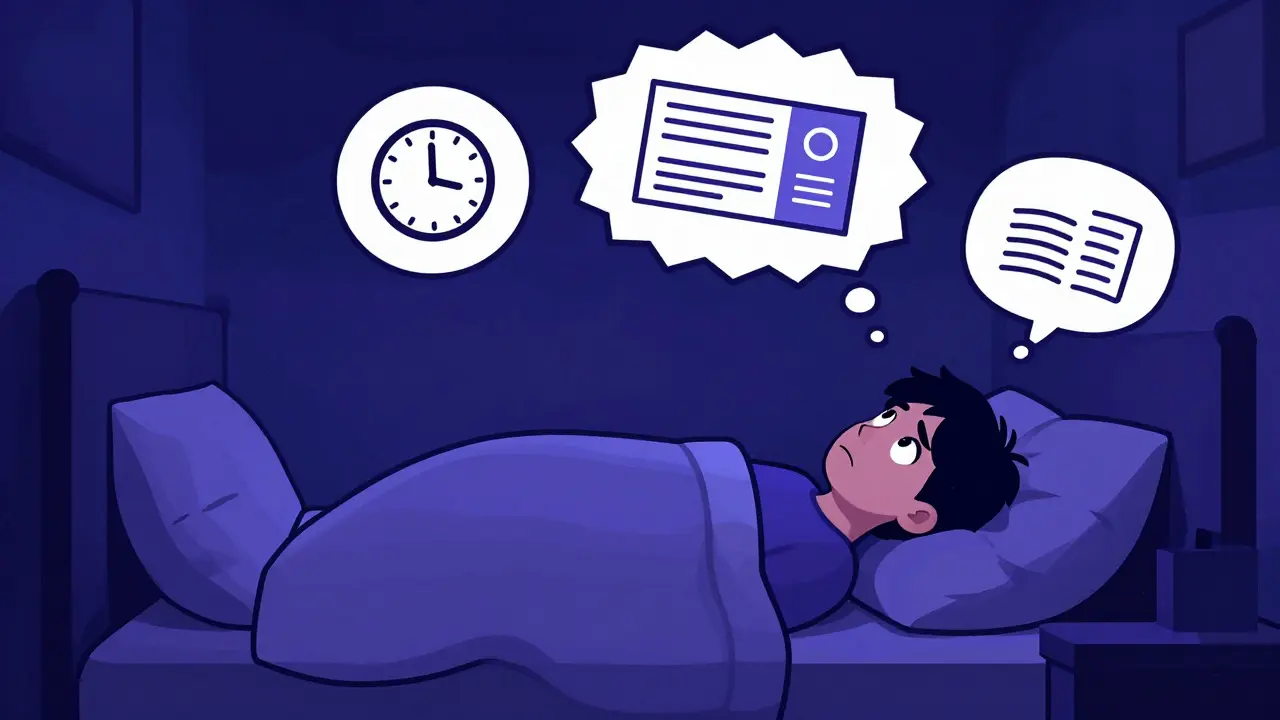
Imagine lying awake at 3:00 AM, staring at the ceiling and doing the mental math of how many hours of sleep you'll get if you drift off right now. Then comes the panic: "If I don't get eight hours, I'm going to fail my presentation tomorrow." This cycle of anxiety and wakefulness is exactly why many people reach for a pill. But while a sedative might knock you out tonight, it rarely fixes the reason you're awake in the first place. For those struggling with chronic wakefulness, the choice usually boils down to a quick fix via pharmacy or a long-term rewiring of the brain through Cognitive Behavioral Therapy for Insomnia is a structured, evidence-based psychological treatment that targets the thoughts and behaviors maintaining sleep disorders. Often called CBT-I, it focuses on the "why" of insomnia rather than just the "how" of falling asleep.
The Problem with the "Quick Fix"
When sleep disappears, the first instinct is usually to find a chemical shortcut. Zolpidem is a common example, accounting for nearly half of all insomnia prescriptions in the US. These medications are great for acute crises-like a sudden bout of grief or a high-stress week at work-but they come with a steep price tag in the long run. One of the biggest issues is tolerance; about 42% of users find the drug less effective within just eight weeks. You end up chasing the dose just to get back to where you started.
Beyond tolerance, there's the "morning fog." Many users report grogginess that lingers well into the next day, affecting driving and productivity. More importantly, medications act like a bandage. They mask the symptoms but don't address the physiological hyperarousal-that "wired but tired" feeling-that keeps your brain in a state of high alert even when your body is exhausted.
How CBT-I Actually Rewires Your Brain
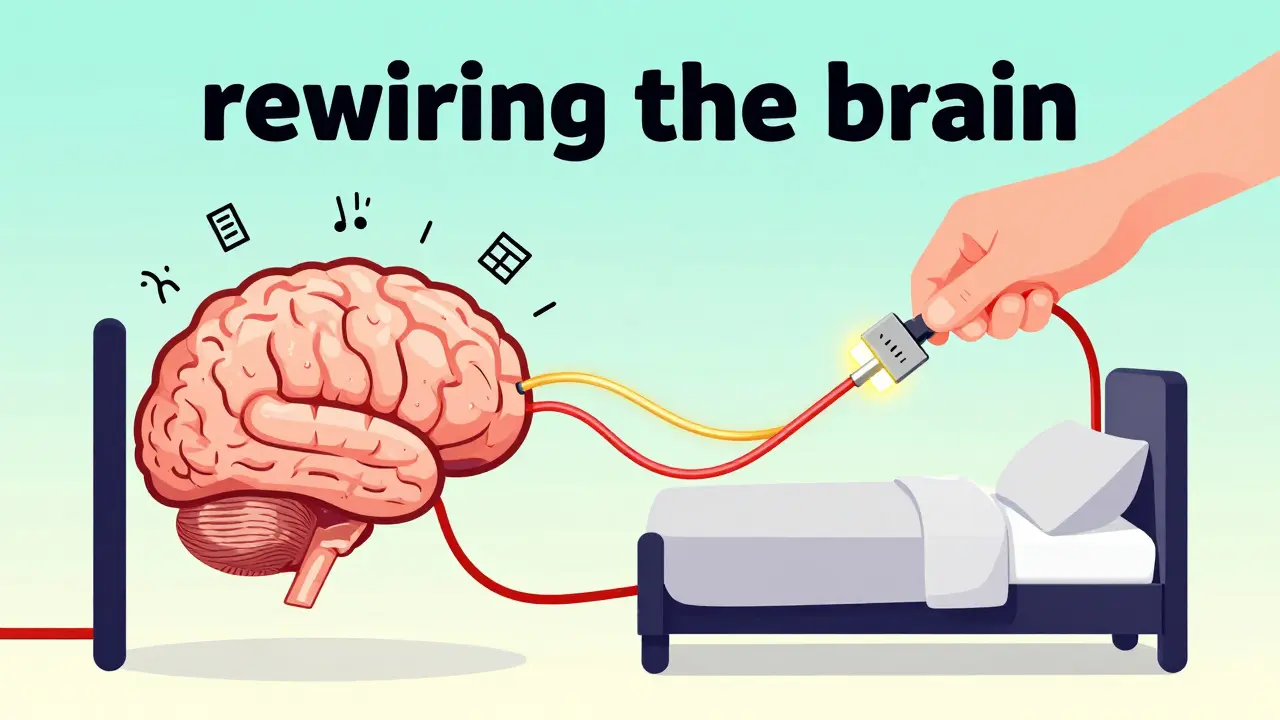
CBT-I isn't just "talking about your feelings." It is a rigorous, skill-based program that typically lasts 6 to 8 weeks. It operates on a simple but brutal premise: your brain has learned to associate the bed with wakefulness and frustration. To fix this, you have to "re-train" your brain to view the bed as a place for sleep and nothing else.
The process involves several heavy-hitting components. First, there is Stimulus Control Therapy, which is all about boundaries. The rule is simple: if you aren't sleeping, you aren't in bed. If you're awake for more than 20 minutes, you get out of the bedroom and do something boring until you feel sleepy. This breaks the mental link between the mattress and the midnight panic attack.
Then there is the most challenging part: Sleep Restriction Therapy. This sounds counterintuitive-treating a lack of sleep by limiting it further-but it is the engine of the therapy. By restricting your time in bed to match the actual amount of sleep you're getting (usually no less than five hours), you build up a massive "sleep drive." This pressure eventually overrides the anxiety, forcing your brain to consolidate sleep into a solid block rather than fragmented pieces.
Finally, Cognitive Restructuring tackles the mental noise. Instead of believing that a bad night will ruin your life, you learn to dispute those catastrophic thoughts. Research shows that patients who really dive into these cognitive modules see a significantly greater reduction in insomnia severity than those who just follow the behavioral rules.
| Feature | CBT-I (Therapy) | Sleep Medications (Sedatives) |
|---|---|---|
| Onset of Action | Slow (weeks to months) | Rapid (minutes to hours) |
| Long-term Efficacy | High (durable results) | Low (tolerance develops) |
| Side Effects | Initial daytime sleepiness | Grogginess, dependence, memory gaps |
| Root Cause Focus | Addresses behaviors/thoughts | Suppresses symptoms |
| Success Rate (12 mo) | ~68% maintain response | ~32% maintain response |
The Hard Truth About the Transition
If you're considering switching from meds to CBT-I, be prepared for a bumpy ride in the second and third weeks. This is where most people quit. Because of the sleep restriction phase, you will likely feel more tired before you feel better. It's a paradoxical experience: you're fighting your own biological urge to nap during the day so that you can finally sleep at night.
However, the payoff is massive. While medications only show a benefit for a few weeks, CBT-I results can last for a decade. A long-term study followed patients for over 10 years and found they maintained their improvements in sleep quality long after the therapy sessions ended. You aren't just borrowing sleep from tomorrow; you're actually learning how to sleep again.
Digital Options and Modern Access
For a long time, getting CBT-I meant finding a rare specialist and paying a premium per session. Today, Digital CBT-I (dCBT-I) has changed the game. Platforms like Sleepio and Somryst provide the same structured protocols through an app. For those who can't afford a private therapist or live in a rural area, these digital tools are a lifeline.
These apps use algorithms to adjust your sleep window based on your daily logs. Interestingly, recent AI-tailored versions of these programs have shown even better results for older adults, as the software can adapt the restriction pace to be gentler on the body. Medicare and many private insurers have started covering these digital therapeutics, acknowledging that a software-based behavioral change is more cost-effective than a lifetime of prescriptions.

Can You Do Both?
A common question is whether you have to choose one or the other. The answer is: not necessarily. Combination therapy-using a medication to get through the initial crisis while simultaneously undergoing CBT-I-often provides the best results. The medication lowers the barrier to entry by providing some immediate relief, while the therapy does the heavy lifting of fixing the underlying system.
The goal of combination therapy is a strategic taper. As your sleep efficiency improves (meaning you spend more of your time in bed actually sleeping), you gradually reduce the medication. This prevents the "rebound insomnia" that often happens when people try to quit sleep meds cold turkey.
How long does it take for CBT-I to start working?
While some people see a slight bump in sleep efficiency by the third session, the most significant changes usually happen between weeks 4 and 8. Because it involves retraining your brain and body, it isn't an overnight fix like a pill, but the results are far more durable.
Is sleep restriction dangerous?
For most people, it is safe and highly effective. However, it is not recommended for individuals with certain conditions like bipolar disorder (which can trigger mania), epilepsy, or severe sleep apnea without close medical supervision. Always consult a doctor to ensure your health profile supports a restriction protocol.
What is a "sleep diary" and why is it necessary?
A sleep diary is a daily log where you record when you went to bed, how long it took to fall asleep, how many times you woke up, and when you finally got out of bed. It's essential because humans are terrible at estimating sleep. The diary provides the hard data needed to calculate your sleep efficiency and adjust your sleep window accurately.
Can I do CBT-I on my own?
Yes, through accredited digital platforms (dCBT-I) or evidence-based manuals. However, having a provider or a structured app helps with accountability, especially during the difficult sleep restriction phase where the urge to nap or cheat on your wake-up time is strongest.
Why do I feel more tired during the first few weeks of therapy?
This is a normal part of Sleep Restriction Therapy. By limiting your time in bed, you are intentionally creating a sleep deficit. This "sleep pressure" is exactly what eventually forces your brain to stop wakefulness-related anxiety and fall asleep faster and more deeply.
Next Steps for Better Sleep
If you're ready to move beyond the pharmacy, start by tracking your sleep for two weeks. Use a simple notebook to record your sleep and wake times. This data will be the foundation for any treatment you choose, whether it's a digital app or a clinical specialist.
If you are currently on medication, do not stop taking it abruptly. Talk to your doctor about a "tapering plan" that coincides with the start of a CBT-I program. This ensures you don't crash into severe rebound insomnia while you're trying to learn new behavioral skills. For those in high-stress jobs, check if your company's employee assistance program offers digital CBT-I tools, as many Fortune 500 companies now provide these as a standard health benefit.
Comments (10)
dwight koyner
April 8, 2026 AT 01:29The distinction between acute and chronic insomnia is critical here. Many patients mistake situational stress for a clinical disorder and inadvertently create a psychological dependency on sedatives. CBT-I is truly the gold standard because it addresses the hyperarousal mechanism of the central nervous system.
Ethan Davis
April 8, 2026 AT 20:17Big Pharma just wants us hooked on pills so they can make billions. Why do you think they push Zolpidem over a simple behavioral change? It's all about the money and keeping us in a foggy state where we don't ask questions about what they're really putting in these meds.
jack hunter
April 9, 2026 AT 19:56Sleep is just a social construct anyway. We pretend we need 8 hours because the industrial revolution told us so. Most of the great thinkeres in history probly didnt sleep that much. This whole apxroach to "fixing" sleep is just another way to make us more productive cogs in the machine
Jamar Taylor
April 11, 2026 AT 14:09You can totally do this! The sleep restriction part sounds scary but it's just a mental game. Just keep pushing through those first two weeks and you'll see the light at the end of the tunnel. You've got this!
Stephen Luce
April 12, 2026 AT 06:20I've been where you are. That 3 AM panic is the absolute worst feeling in the world. It's a lonely place to be when the rest of the world is dreaming. Glad there are options that actually look at the root cause.
shelley wales
April 12, 2026 AT 07:04It's so wonderful to see more people talking about dCBT-I. Not everyone has the budget for a private therapist, and these apps make it so accessible for everyone to start their journey toward better health. Small steps lead to big changes!
Jitesh Mohun
April 13, 2026 AT 02:43stop overcomplicating things just follow the protocol if you want results the science is clear and the results speak for themselves stop complaining about the tiredness and just do the work
Jay Vernon
April 14, 2026 AT 16:25I tried the boring activity thing and it actually works 😴. Reading a manual for a toaster really puts me right to sleep! 💤 Just keep it simple and stay out of bed! 👍
Timothy Burroughs
April 14, 2026 AT 23:04Typical weak mindset focusing on apps and pills when you should be hardening your spirit and embracing the discipline of the American way. If you can't handle a few sleepless nights you aren't trying hard enough to master your own mind. Only the strong survive this kind of mental warfare and the rest just keep whining about their sleep diaries
Ruth Swansburg
April 16, 2026 AT 18:05Keep going!