
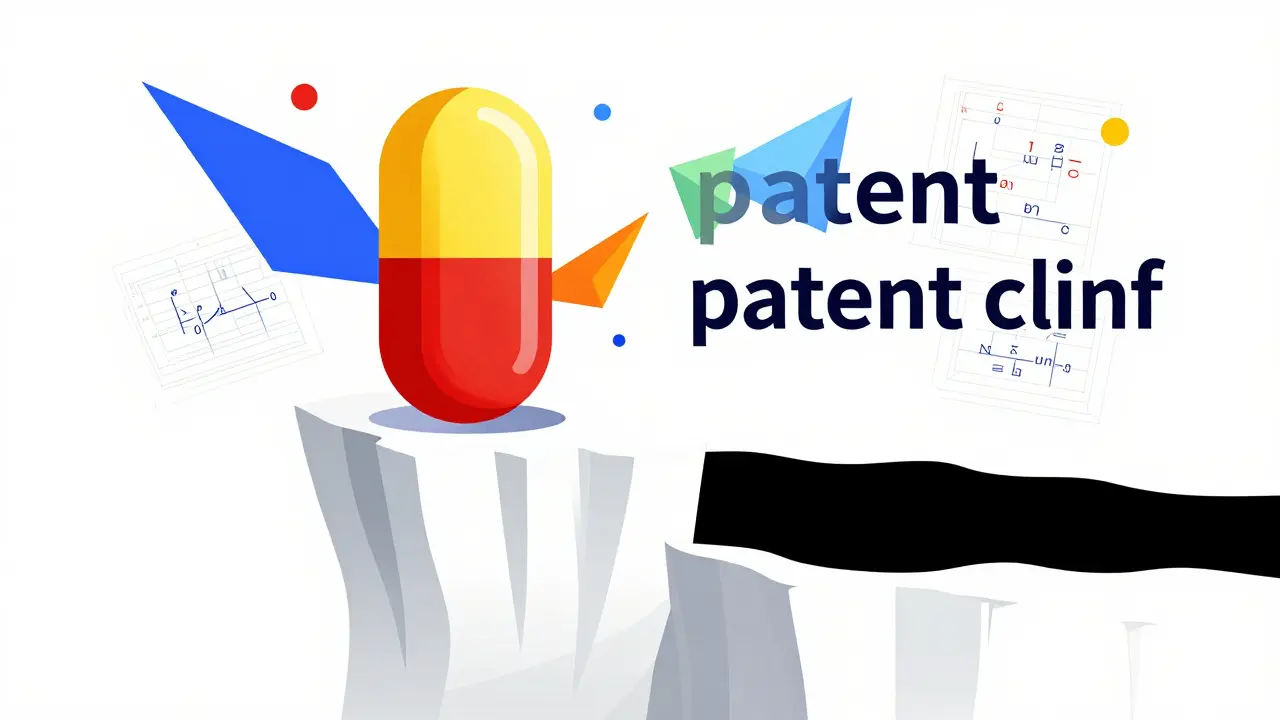
Imagine spending $2.6 billion and a decade of your life developing a miracle drug, only to watch your profits vanish overnight because a patent expired. For pharmaceutical companies, that's the ultimate nightmare. To avoid this "patent cliff," brands don't just rely on the original patent; they build a strategic wall around their product. By creating formulation patents on combinations, they can effectively stretch their monopoly for years after the original chemistry patent is long gone.
The Strategy of the Picket Fence
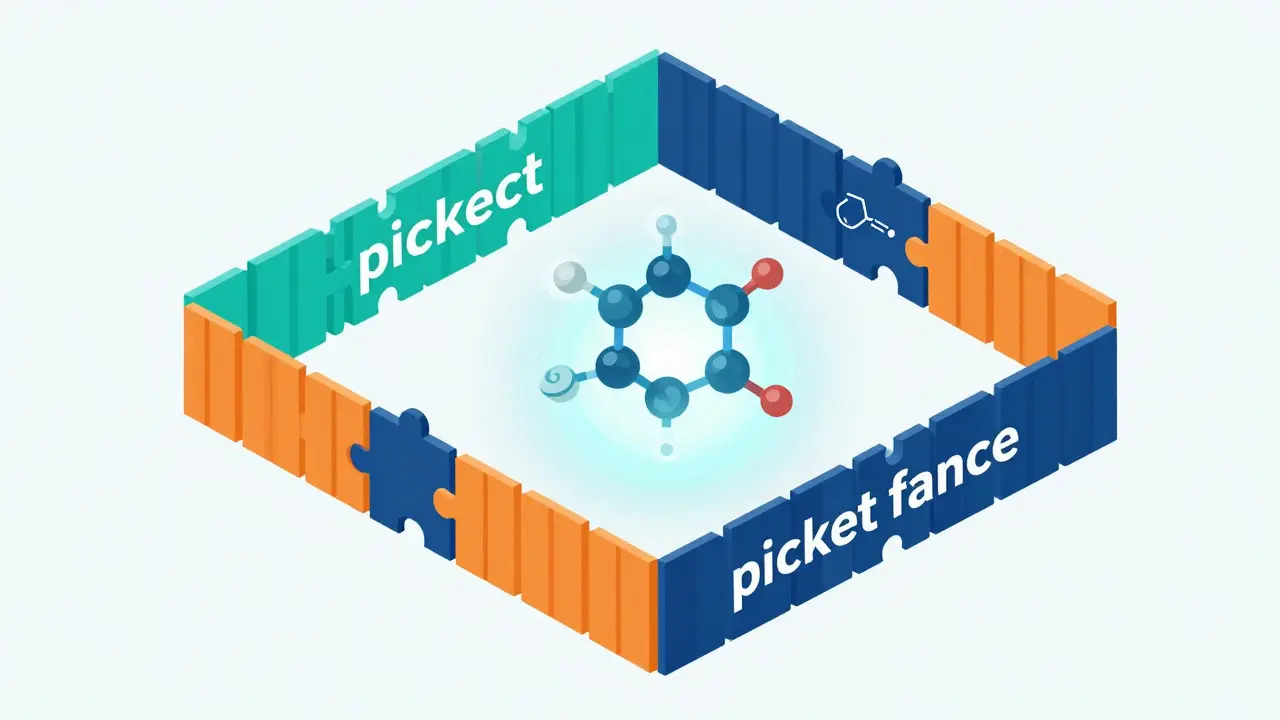
In the industry, this is often called the "picket fence" approach. Instead of one giant wall, companies plant a series of overlapping patents. They might patent the core molecule first, then a specific dose, then a combination of that drug with another, and finally a fancy delivery device like a pre-filled injector. This creates a "patent thicket" that makes it incredibly risky for generic competitors to enter the market.
For example, look at the work of Roche. With their product Phesgo®, they created a subcutaneous combination of trastuzumab and pertuzumab. By moving from a slow intravenous drip to a more convenient injection, they didn't just improve patient experience-they secured new protections that limited biosimilar competition even as older patents expired. According to USPTO data, these strategies can extend market control by anywhere from 3 to 16 years beyond the initial expiration date.
How Combination Patents Actually Work
You can't just mix two random drugs and call it a new invention. To get a patent granted, companies have to prove the combination isn't "obvious." This is where things get technical. Under the legal standards set by KSR v. Teleflex, if a combination is just a logical next step, the patent office will reject it. To win, brands must show "unexpected results"-meaning the combination does something significantly better than the two drugs would do separately.
Precision is everything here. In some cases, a claim for a 10mg/50mg ratio might be rejected as obvious, but a precise 9.8mg/51.2mg ratio could be granted because it demonstrates a specific, superior clinical outcome. This requires massive investment; some firms spend $28-42 million in additional R&D just to generate the data needed to prove this unexpected efficacy.
| Feature | Primary (Composition-of-Matter) | Formulation Combination |
|---|---|---|
| What it protects | The new chemical entity (the molecule) | The recipe, ratio, or delivery method |
| Average Exclusivity | 12-14 years post-approval | 3-8 additional years |
| Invalidation Risk | Lower (approx. 22%) | Higher (approx. 38%) |
| Strategic Goal | Establish initial market entry | Evergreening / Extending revenue |
Evergreening and the Regulatory Game
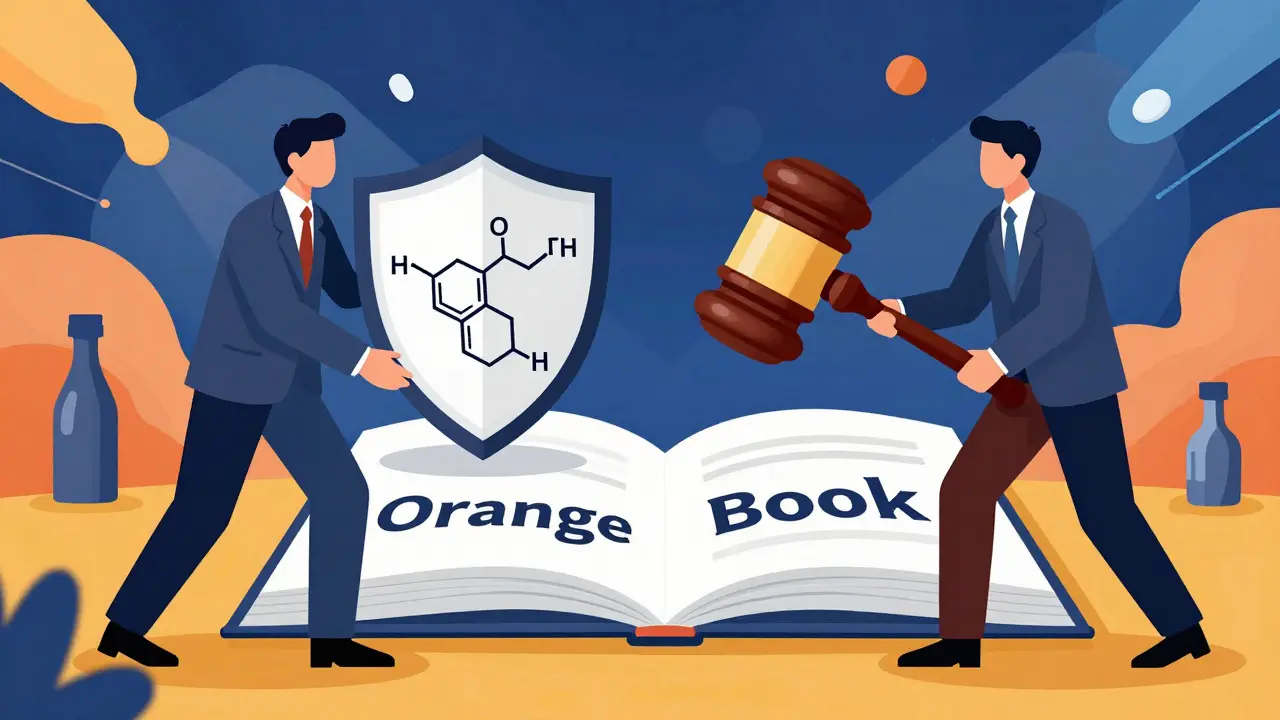
The term "evergreening" is a bit of a controversy. To a pharmaceutical executive, it's about recouping the massive cost of innovation. To a regulator or a patient, it can look like a way to keep drug prices artificially high. The FDA tracks these patents in the "Orange Book," which serves as the definitive directory for approved drugs and their associated protections.
Beyond patents, companies use regulatory exclusivities. For a new clinical investigation-like proving a new combination works better-the FDA might grant an additional 3 years of exclusivity. When you layer a 3-year regulatory exclusivity on top of a 5-year patent extension, you get a formidable barrier. Data shows that 42% of drugs approved between 2010 and 2020 used these overlapping periods to delay generic entry by an average of 4.7 years.
The Risk of Product Hopping
One of the most aggressive moves in this playbook is "product hopping." This happens when a company is about to lose a patent on an old version of a drug, so they launch a new, patented combination or formulation and then stop selling the old one. This forces doctors and patients to switch to the new version, effectively resetting the clock on generic competition because the old version is no longer available to be copied.
The Federal Trade Commission has started cracking down on this. They argue that some of these changes are trivial-like changing a salt form or an excipient-and offer no real clinical benefit to the patient. In fact, about 31% of combination patents filed recently were for these types of minor tweaks, leading to accusations of "patent privateering."
How Generics Fight Back
Generic manufacturers aren't just sitting around waiting for patents to expire. They use something called a "Paragraph IV challenge" under the Hatch-Waxman Act. Essentially, they sue the brand company, claiming the formulation patent is invalid or that their generic version doesn't infringe upon it. This is a high-stakes legal gamble.
Generic companies are winning more often now. In 2023, there were 842 such challenges, and the success rate for invalidating formulation patents has climbed to around 45%. Courts are becoming stricter about what they consider "innovative" versus what is simply a clever way to block competition. For instance, Amgen tried to extend the exclusivity of Enbrel® with a subcutaneous injector patent, but it was tossed out as an "obvious automation" of a manual process, costing the company $147 million in legal fees.
The Future of Exclusivity
The landscape is shifting toward more complex biologics. Because biologics are harder to copy than simple chemical pills, the delivery mechanism becomes the new battlefield. We are seeing a rise in pH-sensitive release technologies and fixed-dose combinations that are genuinely innovative.
However, new laws like the proposed Preserve Access to Affordable Generics Act could change the game by requiring "meaningful clinical benefit" for any secondary patent to hold up. If this passes, a large chunk of current formulation patents-potentially up to 28%-could be wiped out, paving the way for cheaper alternatives.
What is the difference between a primary patent and a formulation patent?
A primary patent (composition-of-matter) protects the actual chemical structure of a new drug. A formulation patent protects the specific way that drug is delivered, such as a timed-release pill, a specific combination with another drug, or a particular dosage ratio. Primary patents provide the first wave of protection, while formulation patents are used to extend that protection after the primary patent expires.
How does "evergreening" affect drug prices?
Evergreening delays the entry of cheaper generic versions of a drug. When a brand company extends exclusivity through combination patents, they maintain a monopoly for several more years. Without competition from generics, the brand can keep prices high, which some reports suggest increases costs by 17-23% beyond what the original innovation would justify.
What is a Paragraph IV challenge?
A Paragraph IV challenge is a legal maneuver where a generic drug manufacturer claims that a patent listed in the FDA's Orange Book is either invalid or not infringed by the generic product. If they win, the generic drug can enter the market before the original patent officially expires.
Why are combination patents harder to get than primary patents?
They must pass a stricter "obviousness" test. Because the individual drugs in a combination are often already known, the company must prove that combining them produces an unexpected result or a statistically significant clinical improvement that wouldn't have been obvious to a skilled scientist.
What is the "Orange Book"?
The Orange Book is an FDA publication that lists all approved drug products and their corresponding patents. It is the primary tool used by both brand companies and generic manufacturers to determine when a drug's exclusivity ends and when a generic version can legally be launched.
Next Steps for Industry Players
For pharmaceutical companies, the key is no longer just "more patents," but "better data." To survive a Paragraph IV challenge, you need p-values lower than 0.01 in head-to-head trials to prove superiority. For generic players, the strategy is to identify "weak" formulation patents-those covering minor salt changes or obvious ratios-and target them early with litigation.
Comments (12)
Amber McCallum
April 28, 2026 AT 06:25Big pharma just wants more money and it is sad. They play these games with patents just to keep us poor while they get rich. It is just plain greed masquerading as science.
prince king
April 29, 2026 AT 05:07This is a really eye-opening look at how the industry works! 💡 It is a tough balance between rewarding innovation and making sure people can actually afford their meds. Thanks for sharing this! 😊✨
Jarrett Jensen
April 30, 2026 AT 20:06The nuance regarding the KSR v. Teleflex standard is barely scratched here. One must appreciate that the dichotomy between a non-obvious formulation and a mere salt change is a matter of profound legal interpretation, which the layperson typically fails to grasp. It is quite tiresome to see such complex intellectual property mechanisms reduced to a simple "recipe" analogy.
Justin Crice
May 2, 2026 AT 05:12The intersection of the Hatch-Waxman Act and the current trend toward biologics creates a significant hurdle for biosimilar penetration. Specifically, the reliance on formulation patents as a secondary layer of protection often leverages the regulatory lag in the FDA's Orange Book to maintain a market monopoly despite the expiration of the primary composition-of-matter patent.
Raymond Lipanog
May 3, 2026 AT 20:00One must consider the ethical dimensions of such corporate strategies. While the recoupment of research and development costs is a legitimate concern for any entity engaged in high-risk innovation, the systematic delay of generic entry may be viewed as a contradiction to the fundamental purpose of the patent system, which is to eventually release knowledge into the public domain for the betterment of all humanity.
Kevin Taggart
May 4, 2026 AT 14:23wow so crazy they just change 0.2mg and boom more money lol :)
Sharon Mathew
May 5, 2026 AT 03:02Oh please! Everyone acts like generics are this magical savior when in reality, the quality control on some of those budget versions is absolutely terrifying! I would rather pay a premium for a brand that actually knows how to stabilize a molecule than risk my life on some cheap knock-off just because a court said a patent was "obvious"! Absolutely ridiculous!
Kat G
May 6, 2026 AT 07:05The statistics provided regarding the invalidation risk of formulation patents are quite interesting. It appears that the courts are becoming more discerning about what constitutes true innovation.
Angela Cook
May 7, 2026 AT 16:14We need to stop letting these foreign-owned firms dictate how we handle our own healthcare systems! Our laws should be way tougher on these companies to make sure American patients aren't being ripped off by some corporate loophole created in a boardroom!
lalit adesara
May 8, 2026 AT 03:56Greed is the only law here. Patents are just tools for the powerful. Absolute sham.
Jonathan Hall
May 8, 2026 AT 17:52It is genuinely frustrating to see how these corporate entities operate with such a blatant disregard for the average person's wallet, but I suppose we have to acknowledge that without the prospect of these massive returns, the venture capitalists would simply stop funding the research that leads to the miracle drugs in the first place, and while the picket fence strategy is aggressive and logically exploitative of the legal system, it is unfortunately a byproduct of a broken incentive structure that prioritizes quarterly dividends over global health equity, which is a tragedy of the highest order if you really stop to think about the human cost associated with these delayed generics over a decade of time.
Jenna Riordan
May 10, 2026 AT 15:57I bet the people writing these patents get huge bonuses for finding these loopholes.