
Complementary Treatment Safety Checker
Select a complementary treatment to view its evidence level and potential risks when combined with common medications.
Medication saves lives, but it rarely comes without a price tag in the form of nausea, fatigue, or pain. You might be taking a life-saving drug for heart disease or cancer, only to find that the side effects make daily life unbearable. This is where complementary treatments step in. These are non-mainstream practices used alongside conventional medicine to manage symptoms and improve your quality of life. They are not replacements for your prescription, but they can be powerful allies in making treatment tolerable.
The landscape of these therapies is vast and often misunderstood. According to data from the National Center for Complementary and Integrative Health (NCCIH), nearly 40% of U.S. adults use some form of complementary medicine. A significant portion-about 45.8% according to a UK hospital study-use them specifically to cope with medication side effects. But here is the catch: not all natural remedies are safe, and not all have scientific backing. The difference between a helpful therapy and a dangerous interaction often comes down to evidence.
Understanding the Evidence Gap
Before trying any new supplement or therapy, you need to understand what "evidence-based" actually means in this context. It doesn't just mean "people say it works." It means there are clinical trials, meta-analyses, and systematic reviews showing consistent results. The field of Complementary and Alternative Medicine (CAM) originated from traditional healing systems like Traditional Chinese Medicine and Ayurveda, which have histories spanning thousands of years. However, modern Western healthcare integration began in earnest in the 1970s, leading to the establishment of research bodies like the NCCIH in 1991.
The core value proposition of these treatments is a personalized, holistic approach. Conventional medicine often treats the disease; complementary medicine aims to treat the person experiencing the side effects. For example, while chemotherapy kills cancer cells, acupuncture might help manage the resulting nerve pain. But this balance is delicate. The American Heart Association’s 2022 scientific statement highlights that while some herbs are well-tolerated, others can cause severe issues like high blood pressure or irregular heartbeats when mixed with standard drugs. Understanding this distinction is the first step in safe self-care.
Top Evidence-Based Options for Common Side Effects
Not all complementary treatments are created equal. Some have robust data supporting their efficacy, while others remain in the realm of anecdote. Here are three of the most well-researched options for managing specific medication side effects.
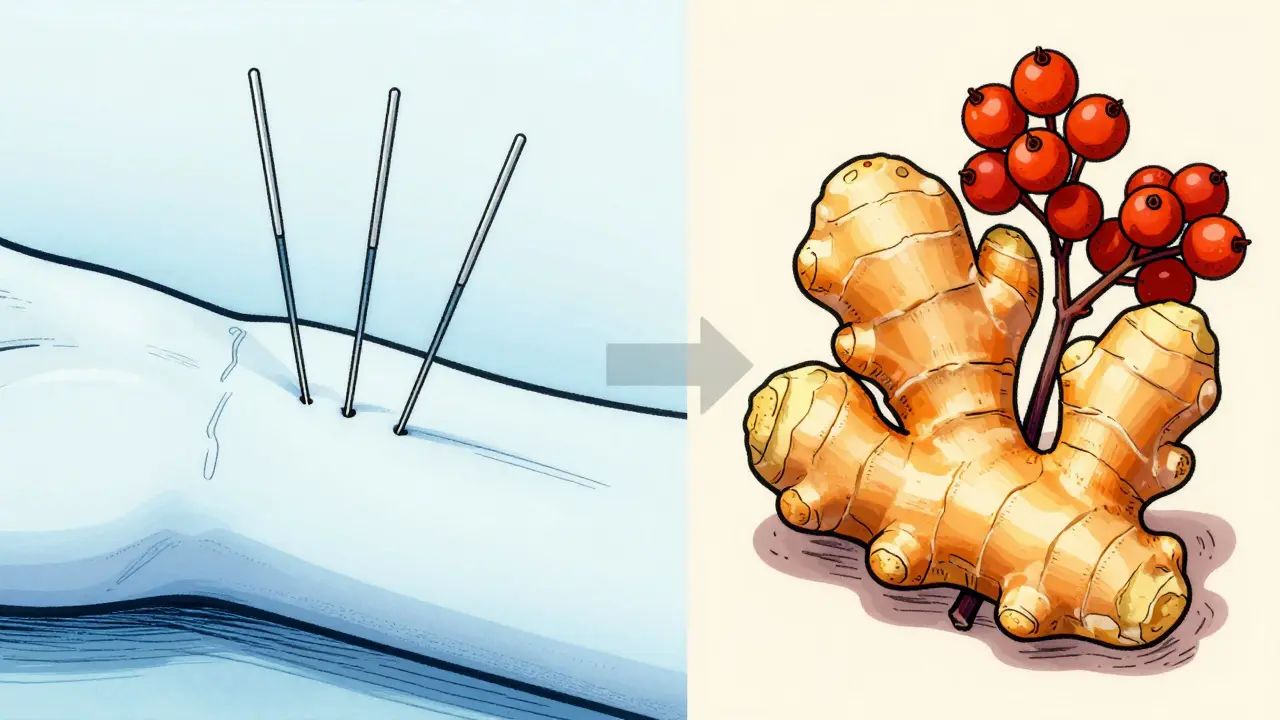
Acupuncture is a traditional Chinese practice involving the insertion of thin needles into specific points on the body. It has emerged as one of the safest and most effective tools for symptom management. A 2017 meta-analysis published in JAMA Oncology found that acupuncture reduced chemotherapy-induced nausea by 36% compared to sham controls. Even more impressive, a 2020 Cochrane review of 41 trials showed a 32% greater reduction in opioid-induced constipation than standard care alone. If you are dealing with digestive issues or chronic pain from long-term medication use, this is likely your best bet.
Ginger (Zingiber officinale) is a root commonly used in cooking and traditional medicine. It is particularly effective for gastrointestinal distress. In a 2013 study by Ryan et al., ginger at doses of 0.5-1.0 grams daily reduced chemotherapy-induced nausea by 40%. It is generally well-tolerated and easy to incorporate into your diet through teas, capsules, or fresh food. Unlike stronger anti-nausea drugs, ginger works gently on the gut lining to soothe irritation.
Hawthorn (Crataegus spp.) is a berry-bearing shrub used traditionally for heart health. While primarily studied for cardiovascular support, its safety profile is relevant for those on heart medications. A 2022 American Heart Association statement notes it is generally well-tolerated, though it can cause mild dizziness or gastrointestinal concerns. However, caution is required: it may interact with digoxin and other heart drugs, potentially altering their effectiveness. Always consult your cardiologist before adding hawthorn to your regimen.
The Hidden Dangers of Herbal Interactions
This is the part many patients miss. Just because something is "natural" does not mean it is inert. Herbs contain active chemical compounds that can interfere with how your liver processes medications. This can lead to two dangerous scenarios: the drug becomes less effective, or it builds up to toxic levels in your body.
Consider Lily of the Valley, which is a flowering plant sometimes used in herbal remedies. The American Heart Association warns it can be harmful when taken with digoxin, causing dangerously low potassium levels (hypokalemia). Similarly, Blue Cohosh is an herb used in traditional Native American medicine that might cause tachycardia (fast heart rate), high blood pressure, and chest pain. These aren't rare edge cases; they are documented risks.
A 2018 study in the Journal of Clinical Oncology surveyed 318 cancer patients and found that 51.6% used complementary medicines. Of those, 12.2% required health warnings due to potential interactions. Specific culprits included echinacea (risky for lymphoma patients), garlic (interacts with aspirin and lisinopril), and ginkgo biloba (increases bleeding risk with blood thinners). The Better Health Channel explicitly warns that many complementary medicines contain unrecognized active ingredients, and contamination is a real issue in unregulated markets.
| Treatment | Primary Use | Evidence Level | Key Interaction Risks |
|---|---|---|---|
| Acupuncture | Nausea, Pain, Constipation | High (Cochrane/JAMA) | Low (bleeding risk with anticoagulants) |
| Ginger | Nausea | High (RCTs) | Moderate (blood thinners) |
| Hawthorn | Heart Health | Moderate | High (Digoxin, ACE inhibitors) |
| Garlic Supplements | Cholesterol/Blood Pressure | Moderate | High (Aspirin, Lisinopril) |
| Antioxidants (Vit C/E) | General Wellness | Controversial | High (may protect cancer cells during chemo) |
The Communication Crisis: Why Doctors Don't Know What You Take
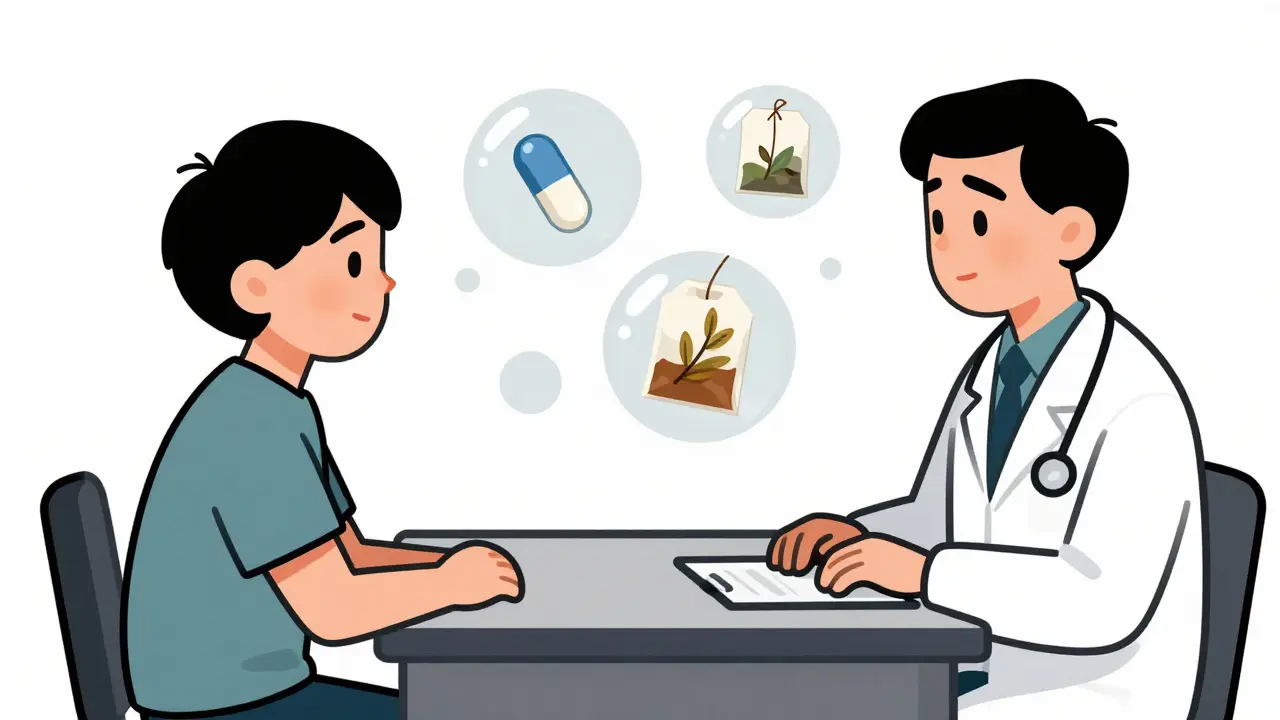
Perhaps the biggest risk isn't the herb itself, but the silence surrounding its use. A UK hospital study revealed a startling statistic: only 20.9% of patients using complementary treatments disclosed their use to healthcare providers within one month. Why? Patients often assume doctors won't approve, or they view supplements as harmless vitamins. Meanwhile, doctors are busy and may not ask specifically about every tea or capsule you take.
This lack of communication leads to preventable harm. Professor Edzard Ernst, former Chair of Complementary Medicine at the University of Exeter, noted in a 2018 BMJ review that 45.8% of CAM users experienced side effects that resolved after discontinuation. Many of these adverse events could have been avoided with simple disclosure. Dr. Lillian Nanashima, Director of Integrative Medicine at Mayo Clinic, emphasizes that their focus is on "evidence-based complementary treatments to provide the right care for each person," but this requires full transparency.
User feedback online reflects this gap. On Reddit’s r/Supplements, users share mixed experiences. One user reported ginger reducing nausea by 70%, while another warned of liver toxicity from taking milk thistle with chemotherapy. Trustpilot reviews of integrative oncology services show high satisfaction (4.2/5 stars) when patients work with professionals, but frustration when they try DIY approaches that fail. The lesson is clear: professional guidance matters.
How to Safely Integrate Complementary Care
If you want to explore these options, follow this practical checklist to ensure safety and efficacy:
- Disclose Everything: Tell your doctor and your complementary practitioner about all medicines, treatments, and remedies you use. Do not hide supplements out of fear of judgment. Your safety depends on this information.
- Check for Interactions: Use reliable resources like the Memorial Sloan Kettering Cancer Center’s "About Herbs" app or the NCCIH’s online interaction checker. These tools are updated regularly to reflect new research on drug-herb interactions.
- Prioritize Low-Risk Therapies: Start with mind-body practices like acupuncture, massage, or meditation. These have the fewest documented physical interactions and strong evidence for stress and pain relief.
- Be Wary of Antioxidants During Chemo: Cancer Research UK warns that antioxidants (vitamins A, C, E, selenium) might protect cancer cells from damage during chemotherapy or radiotherapy. Avoid high-dose antioxidant supplements unless explicitly approved by your oncologist.
- Never Stop Prescribed Meds: The Better Health Channel stresses that you should never stop taking prescribed medications or change doses without discussing it with your doctor. Complementary treatments are adjuncts, not replacements.
Looking Ahead: The Future of Integrative Medicine
The field is evolving rapidly. The global CAM market reached $191.3 billion in 2022, driven by patient demand for better side effect management. In response, institutions are adapting. The NIH allocated $142 million to NCCIH in fiscal year 2023, with 37% directed toward researching complementary approaches for medication side effects. The Precision CAM initiative, launched in January 2023, aims to develop biomarkers to predict individual responses to these therapies, moving us toward truly personalized care.
Regulatory landscapes are also tightening. While the U.S. Dietary Supplement Health and Education Act of 1994 left much of the market unregulated, the FDA issued warnings in April 2023 about unapproved kratom products linked to deaths. The European Union’s Traditional Herbal Medicinal Products Directive provides stricter oversight, though comprehensive interaction testing remains a challenge. As awareness grows, so does the expectation for higher standards of evidence and safety.
For now, the power lies in informed choice. By understanding the evidence, recognizing the risks, and communicating openly with your healthcare team, you can harness the benefits of complementary treatments without compromising your primary medical care. It is not about choosing between science and nature; it is about integrating the best of both to live a fuller, healthier life despite the challenges of medication.
Is acupuncture safe to take with blood thinners?
Acupuncture is generally safe, but if you are taking blood thinners like warfarin or aspirin, there is a slightly increased risk of bruising or bleeding at needle sites. Inform your acupuncturist and doctor beforehand so they can use thinner needles or adjust treatment areas.
Can I take ginger supplements with chemotherapy?
Yes, ginger is widely recommended for chemotherapy-induced nausea. Studies show it can reduce nausea by up to 40%. However, always confirm the dosage with your oncologist, as high doses might interact with certain blood-thinning medications often prescribed during cancer treatment.
Why are antioxidants risky during cancer treatment?
Chemotherapy and radiation work by creating oxidative stress to kill cancer cells. High-dose antioxidants (like vitamins C and E) neutralize this stress, potentially protecting cancer cells from the treatment's effects. Cancer Research UK advises against high-dose antioxidant supplements during active treatment unless approved by your care team.
What is the most common reason people don't tell their doctors about supplements?
Fear of judgment or dismissal is the primary barrier. Many patients worry their doctors will think they are foolish or unscientific. However, studies show that over 75% of patients do not disclose CAM use, leading to missed opportunities for preventing dangerous drug interactions.
Are herbal supplements regulated like pharmaceutical drugs?
No, in the U.S., dietary supplements are regulated under the Dietary Supplement Health and Education Act of 1994, which does not require pre-market approval for safety or efficacy. This means quality and purity can vary significantly between brands, increasing the risk of contamination or incorrect dosing.