

C. Diff Risk & Symptom Checker
Patient Profile & Symptoms
Click on the symptoms you are experiencing:
Ready to Assess
Fill out the form to see your personalized risk level and recommended action plan.
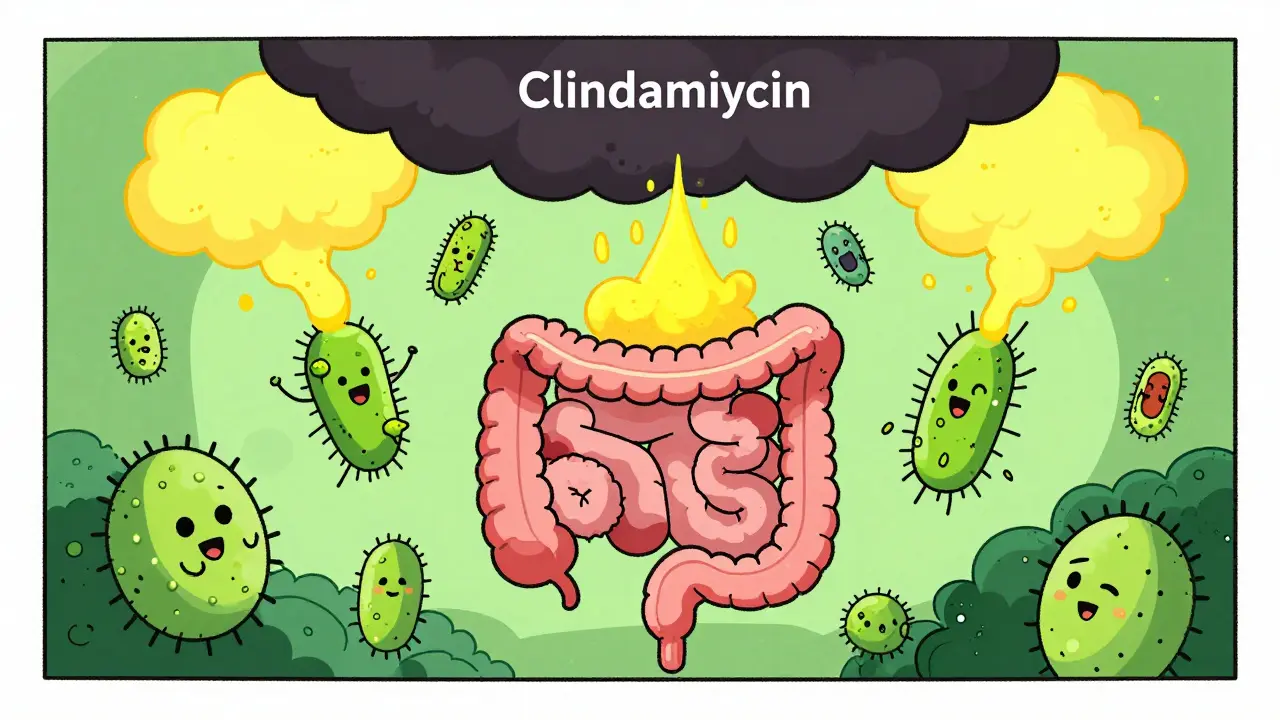
That prescription for your skin infection or dental abscess might be saving you from one problem while quietly setting the stage for another. Clindamycin is a powerful antibiotic frequently prescribed for serious bacterial infections, but it carries a significantly higher risk of causing Clostridioides difficile (C. diff) infection than most other antibiotics. You might feel relieved that the pain is gone, only to wake up days later with severe stomach cramps and diarrhea that won’t stop. This isn't just 'stomach flu.' It could be Clostridioides difficile, also known as C. diff, which is an anaerobic bacterium that produces toxins damaging the intestinal lining when normal gut bacteria are wiped out by antibiotics.
Understanding this risk doesn't mean you should refuse necessary treatment. It means you need to know exactly what to watch for and when to call your doctor. The difference between a manageable case and a life-threatening emergency often comes down to how quickly you seek care.
Why Clindamycin Is Different From Other Antibiotics
Not all antibiotics are created equal when it comes to gut health. While almost any antibiotic can disrupt your microbiome, clindamycin hits hard and stays in the system longer. A major study published in the American Journal of Managed Care analyzed over 150,000 patients and found that clindamycin conferred the greatest risk for C. diff infection among all antibiotics evaluated.
The reason lies in its chemistry. Clindamycin targets primarily gram-positive bacteria. Unfortunately, many of the good bacteria that keep C. diff in check fall into this category. When clindamycin clears them out, it leaves an empty niche for C. diff spores-which are incredibly tough and survive on surfaces for months-to germinate and multiply. Unlike some antibiotics that clear the gut quickly, clindamycin has a prolonged half-life in the gastrointestinal tract, extending the window of vulnerability. If you have a penicillin allergy, doctors often reach for clindamycin for dental or skin infections, making it a common culprit in community-acquired cases.
| Antibiotic Class | Risk Level | Key Characteristic |
|---|---|---|
| Clindamycin | Very High | Profoundly reduces gut diversity; long GI residence time |
| Cephalosporins (3rd Gen) | High | Broad spectrum; commonly used in hospitals |
| Fluoroquinolones | Moderate-High | Linked to resistant strains like ribotype 027 |
| Doxycycline/Minocycline | Low | Minimal impact on protective gut flora |
The Timeline: When Symptoms Strike
You don't always get sick while you're taking the pill. In fact, the danger zone extends well beyond your last dose. According to data from the University of Iowa Carver College of Medicine, nearly half of clindamycin-associated C. diff cases appear within one week of stopping the medication. However, symptoms can emerge anywhere from one day during therapy to 12 weeks after finishing the course.
The median time from starting clindamycin to symptom onset is about 5 to 10 days. This delay tricks many people into thinking their digestive issues are unrelated to the antibiotic. They assume the infection is viral or dietary. But if you’ve recently taken clindamycin, your body is signaling a specific type of imbalance. Keep a mental calendar. If you start feeling off two weeks after finishing a round of antibiotics, connect the dots immediately.
Red Flags: Recognizing Early vs. Severe Symptoms
Early detection saves lives. The initial sign is usually diarrhea, but not just any loose stool. We’re talking about unformed stools that take the shape of their container-watery, frequent, and often accompanied by abdominal cramping. The CDC recommends contacting a provider if you experience three or more loose stools per day for two or more days while taking or after recent antibiotic use.
However, waiting for frequency alone can be dangerous. In severe cases, the bowel may stop moving entirely (ileus), masking the diarrhea while toxins continue to damage the colon. Look for these additional warning signs:
- Fever above 101.3°F (38.5°C)
- Severe or worsening abdominal pain
- Blood or pus in the stool
- Signs of dehydration: dark urine, dizziness, dry mouth, or urinating less than 0.5 mL/kg/hr
- Rapid heart rate
If you are over 65, immunocompromised, have kidney disease, or have had C. diff before, do not wait 48 hours. Seek evaluation after just 24 hours of unformed stools. Your risk profile demands faster action.
When to Go to the Emergency Room
Some symptoms indicate fulminant C. diff infection, a medical emergency with high mortality rates if untreated. The Infectious Diseases Society of America (IDSA) and Society for Healthcare Epidemiology of America (SHEA) guidelines specify that immediate emergency care is required if you experience:
- Hypotension requiring blood pressure support (feeling faint, confused, or extremely weak)
- Ileus (abdominal bloating with no gas or stool passage)
- Megacolon (severe distension of the colon)
- Suspected perforation (sudden, sharp, intense abdominal pain)
Data from the University of Michigan Health System shows that patients who delayed care beyond 72 hours from symptom onset faced 2.3 times higher colectomy rates and 4.1 times higher mortality. Do not try to 'tough it out' with home remedies if you have these severe signs. Time is tissue.

What to Expect at the Doctor
Your provider will likely order a stool test to detect C. diff toxins or genetic material. Diagnosis requires both clinical symptoms (diarrhea) and a positive test result. If confirmed, treatment typically involves stopping the inciting antibiotic (if still being taken) and starting a targeted therapy. Vancomycin or fidaxomicin are currently preferred first-line treatments. Metronidazole is generally reserved for mild cases where other options aren't available, due to higher recurrence rates.
Recurrence is a real concern. About 25% of patients treated with vancomycin experience at least one relapse. Newer options like VOWST (fecal microbiota spores), approved by the FDA in 2023, offer hope for preventing recurrent infections by restoring healthy gut diversity. Ask your doctor about stewardship programs and whether a specialist consultation is warranted early in the process, as early intervention reduces complications by up to 63%.
Prevention and Safe Practices
You cannot eliminate risk entirely, but you can minimize it. Always complete the full course of antibiotics unless instructed otherwise, but discuss alternatives if you have a history of C. diff. For minor infections, ask if a lower-risk antibiotic like doxycycline or trimethoprim-sulfamethoxazole is appropriate. Practice strict hand hygiene with soap and water-alcohol sanitizers do not kill C. diff spores. Clean bathroom surfaces regularly with bleach-based cleaners to reduce environmental spore load.
How long does the risk of C. diff last after taking clindamycin?
The highest risk period is during antibiotic therapy and the month following discontinuation. However, symptoms can appear up to 12 weeks after finishing the medication. Stay vigilant for watery diarrhea and abdominal pain throughout this entire window.
Can I get C. diff from a single dose of clindamycin?
Yes. While rare, even a single dose, such as perioperative prophylaxis, has been documented to trigger C. diff in susceptible individuals. The absolute risk is low (1-2%), but the consequence is severe, so awareness is critical.
Are probiotics effective in preventing C. diff?
Evidence is mixed. Some studies suggest certain probiotic strains may reduce risk, but current IDSA-SHEA guidelines do not routinely recommend them for prevention due to inconsistent results. Focus on using the narrowest-spectrum antibiotic possible and maintaining hygiene.
What is the difference between regular diarrhea and C. diff?
Regular diarrhea often resolves quickly and may be linked to food or viruses. C. diff diarrhea is typically watery, frequent (3+ times/day), and accompanied by significant abdominal cramping, fever, and a history of recent antibiotic use. Only a stool test can confirm C. diff.
Is C. diff contagious?
Yes. C. diff spreads via spores that survive on surfaces and hands. Wash hands thoroughly with soap and water after using the bathroom and before eating. Avoid sharing towels. Bleach-based cleaning is essential to kill spores in the home.
Comments (13)
Tumble Farm
June 23, 2026 AT 03:52Just a quick note for anyone reading this who is currently on clindamycin or recently finished a course: do not ignore persistent diarrhea. I've seen too many people assume it's just 'antibiotic stomach' and wait until they are dehydrated before seeking help. The distinction between standard antibiotic-associated diarrhea and C. diff is critical because the treatment protocols are completely different. If you have had three or more loose stools in a day, call your provider immediately rather than waiting for it to resolve on its own.
Tucker Brown
June 24, 2026 AT 23:01The pharmaceutical industry pushes these broad-spectrum antibiotics because they sell better, but they know exactly what they are doing to our microbiomes. It is a calculated destruction of natural immunity to create long-term dependency on medical interventions. They wipe out the good bacteria so that you become susceptible to everything else, forcing you back into the system for more expensive treatments like fecal transplants. It is not an accident; it is a business model designed to keep you sick and dependent on their products while ignoring the root causes of infection resistance.
Frank Polster
June 25, 2026 AT 10:35Ah yes, nothing says 'care' like prescribing a drug that essentially nuked your gut flora. Thanks for the warning, though I’m sure most doctors would just shrug and say 'it’s rare.'
Alyssa Smith
June 26, 2026 AT 11:14This is such important information to share openly. In my culture, we often rely heavily on traditional remedies first, but when antibiotics are necessary, understanding the side effects is crucial for maintaining balance in the body. It reminds me of how interconnected our health systems are, from the gut to the mind. We must advocate for ourselves and ask questions about alternatives like doxycycline when possible, ensuring that we are not only treating the immediate infection but also preserving our long-term wellness. Knowledge truly is power in navigating these complex medical landscapes.
ankit agarwal
June 28, 2026 AT 04:29The pharmacokinetic profile of clindamycin dictates its prolonged gastrointestinal residence time, which exacerbates the dysbiosis-induced vulnerability to Clostridioides difficile spore germination. This creates a significant window of susceptibility where the anaerobic bacterial load shifts dramatically towards pathogenic strains due to the elimination of competitive gram-positive flora. It is imperative to recognize that the half-life extension in the GI tract is not merely a metabolic footnote but a primary driver of the elevated risk stratification observed in clinical cohorts. Furthermore, the biofilm formation capabilities of C. diff spores allow them to persist in environmental niches, thereby facilitating horizontal transmission vectors that compound the initial iatrogenic insult. Understanding these mechanistic pathways allows for a more informed approach to antimicrobial stewardship and prophylactic measures.
Stephanie Cree
June 29, 2026 AT 02:47Oh, please! 🙄 Do people really need a blog post to tell them that antibiotics can cause issues? It is absolutely pathetic that the general public lacks even basic biological literacy regarding how medication works. You should be washing your hands with soap and water-NOT those useless alcohol gels that everyone blindly trusts-and using bleach to sanitize every surface in your home if you suspect exposure. It is elementary hygiene, yet here we are, explaining the obvious to adults who cannot manage their own basic health responsibilities. How embarrassing. 😒
krystal Live
June 30, 2026 AT 18:36Hey guys!! Just wanted to say thanks for sharing this info. I was totally unaware that clindamycin could be so risky for my gut health. Im gonna make sure to watch out for any weird symptoms after my next dental visit. Stay strong everyone and take care of yourselves!!! 💪✨
Bruno Sarri
July 2, 2026 AT 18:29I appreciate the detailed breakdown of the timeline here. It is easy to feel anxious when dealing with potential infections, but having clear markers like the frequency of stools and specific temperature thresholds helps reduce uncertainty. For those who might be feeling overwhelmed by this information, remember that you do not have to navigate this alone. Communicating openly with your healthcare provider about your history and concerns can lead to better preventative strategies. Let us support each other in staying informed and proactive about our health journeys.
Dez Johnston
July 3, 2026 AT 08:07I’ve been following discussions on antibiotic resistance for years, and this aligns with what I’ve heard from specialists. It’s quiet but impactful stuff. Good to see it getting attention.
Amy Bogdahn
July 4, 2026 AT 23:59You are all wasting your time worrying about probiotics. They are a scam. Just stop taking unnecessary meds and eat real food. Your immune system is weak because you are lazy. Stop complaining and start living correctly.
Sonam Norbu
July 6, 2026 AT 18:37We need stricter regulations on antibiotic prescriptions in this country. Doctors are overprescribing these drugs without considering the long-term consequences for public health. It is a failure of our medical system to prioritize convenience over safety. We must demand better standards and hold providers accountable for contributing to the rise of resistant superbugs. Our national health security depends on responsible antibiotic use, and we cannot afford to ignore this growing threat any longer.
Koushiki Behera
July 7, 2026 AT 06:44There is a profound philosophical lesson here about balance and consequence. When we intervene aggressively in nature, even within our own bodies, we disrupt the delicate equilibrium that sustains life. The emergence of C. diff is not just a medical issue but a reflection of our broader relationship with intervention versus harmony. We must approach healing with humility and respect for the complex ecosystems within us. May we find wisdom in moderation and care for our inner gardens with gentleness. 🌿🕊️
Ashley Jacelyn
July 7, 2026 AT 23:33This is really helpful context for anyone who has been prescribed clindamycin. It is reassuring to know that there are clear signs to look for and that early action makes a big difference. I will definitely keep this in mind for future reference. Thank you for putting this together in such a clear way.