
Clozapine Smoking Interaction Simulator
Quitting Smoking
Patient stops smoking completely.
Starting Smoking
Non-smoker begins smoking heavily.
Switch to Vaping
Smoker switches to e-cigarettes.
Heavy Coffee
Significant increase in caffeine intake.
Select a scenario and click Calculate to see results.
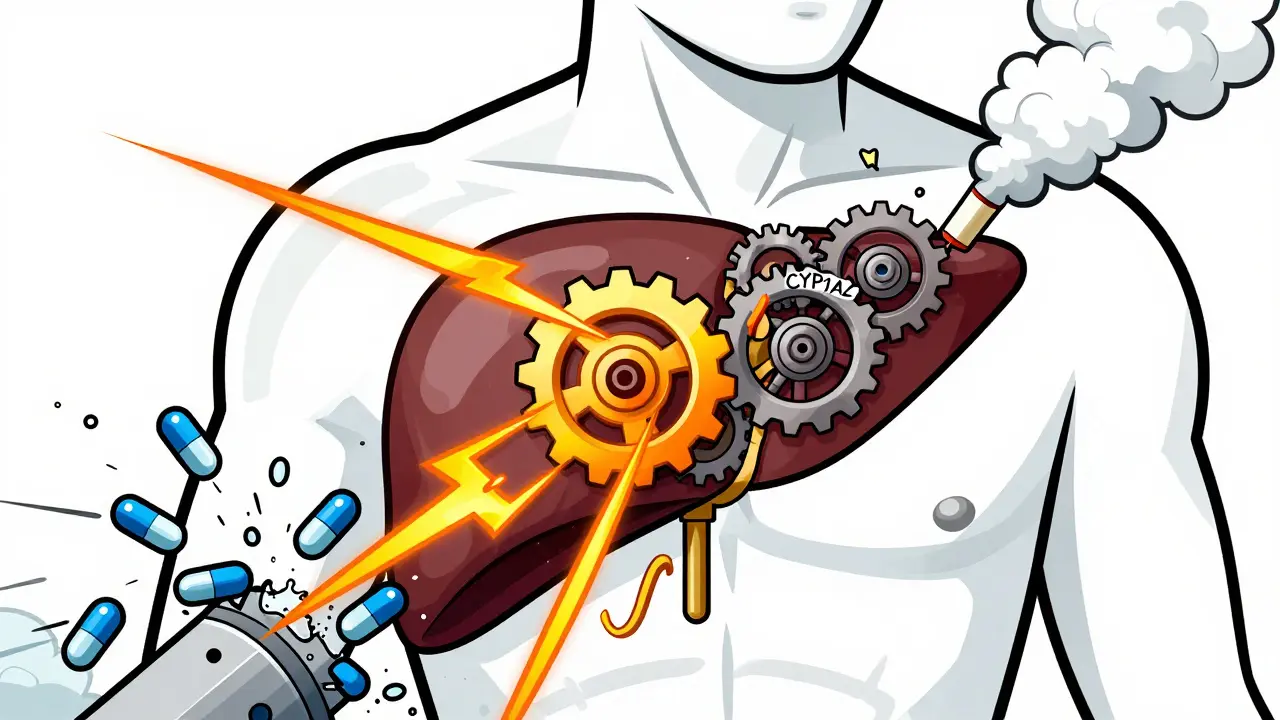
Imagine you have been taking the exact same dose of medication for months. You feel stable. Your symptoms are under control. Then, you decide to quit smoking. Within a week, you start feeling dizzy, confused, or overly sedated. Or perhaps the opposite happens: your symptoms return because you started smoking more heavily during a stressful period. This is not just a coincidence. It is a well-documented biological reaction involving Clozapine, an atypical antipsychotic used for treatment-resistant schizophrenia, and the enzymes in your liver.
The connection between clozapine and cigarette smoke is one of the most critical drug interactions in psychiatry. It involves a specific liver enzyme called CYP1A2. When you smoke, chemicals in the tobacco smoke tell this enzyme to work faster. When you stop smoking, the enzyme slows down. Because clozapine has a narrow therapeutic window, these speed changes can push blood levels into dangerous territory very quickly.
How Smoking Speeds Up Clozapine Metabolism
To understand why dose adjustments are necessary, we need to look at what happens inside the body. Clozapine is broken down primarily by the CYP1A2 enzyme. Research shows that about 90% of clozapine metabolism relies on this single pathway. The enzyme converts clozapine into norclozapine, which is then eliminated from the body.
Cigarette smoke contains polycyclic aromatic hydrocarbons (PAHs). These compounds act as potent inducers for CYP1A2. Think of induction like stepping on the gas pedal. When a patient smokes regularly, their CYP1A2 activity increases by two to three times its normal rate. This means the liver clears clozapine from the bloodstream much faster than it would in a non-smoker.
A landmark study by Faber et al., published in *Pharmacogenetics* in 2003, highlighted the scale of this effect. They found that smokers required a mean maintenance dose of 382 mg per day, compared to just 197 mg per day for non-smokers. In other words, smokers often need nearly double the dose to achieve the same therapeutic effect. The concentration-to-dose ratio (C/D) was 2.5 times lower in smokers, proving that their bodies were clearing the drug significantly faster.
The Danger of Quitting: Rapid Level Spikes
The risk isn't just about needing higher doses while smoking. The bigger danger often occurs when a patient stops smoking. This is a common scenario in hospitals or rehabilitation centers where patients are admitted and unable to smoke.
When smoking ceases, the "gas pedal" is released. However, the enzyme doesn't shut off instantly. The half-life of CYP1A2 induction reversal is approximately 38.6 hours. Activity drops by about 20% on the second day after quitting and by 36% by the seventh day. A new steady state is reached after roughly one week.
During this transition, plasma clozapine concentrations can rise sharply. A 2023 study in *Frontiers in Psychiatry* reported an average increase of 29.3% in plasma levels within two weeks of cessation among hospitalized patients. But averages hide individual risks. Some patients see increases ranging from -9.8% to +244.4%. That upper range is life-threatening.
Consider a case report from the *Netherlands Journal of Medicine* (NJM) in 2018. A 45-year-old man stopped smoking after being hospitalized for pneumonia. He remained on his usual clozapine dose. Within ten days, his serum level hit 1,200 ng/mL-a toxic level far above the therapeutic range of 350-500 ng/mL. He developed severe intoxication and required intensive care. This illustrates why simply stopping smoking without adjusting medication is dangerous.
Vaping: An Unpredictable Middle Ground
Many patients switch from traditional cigarettes to vaping, believing it is a safer alternative. From a respiratory health perspective, it may be. But for clozapine users, vaping creates a complex pharmacokinetic puzzle.
Traditional combustion produces PAHs, which strongly induce CYP1A2. Most e-cigarettes do not produce PAHs because there is no burning. Therefore, switching from smoking to vaping usually reduces CYP1A2 induction. This leads to elevated clozapine levels, similar to quitting smoking entirely.
However, the situation is not uniform. Some vape products contain aldehydes and carbonyls, which can still induce certain cytochrome P450 enzymes. This unpredictability makes vaping a risky transition for clozapine patients. A 2022 article in the *Journal of Advances in Medicine and Medical Research* warned that clinicians must monitor levels weekly for at least two weeks when a patient switches to vaping, as the reduction in induction may not be immediate or consistent.
Clinical Guidelines for Dose Adjustments
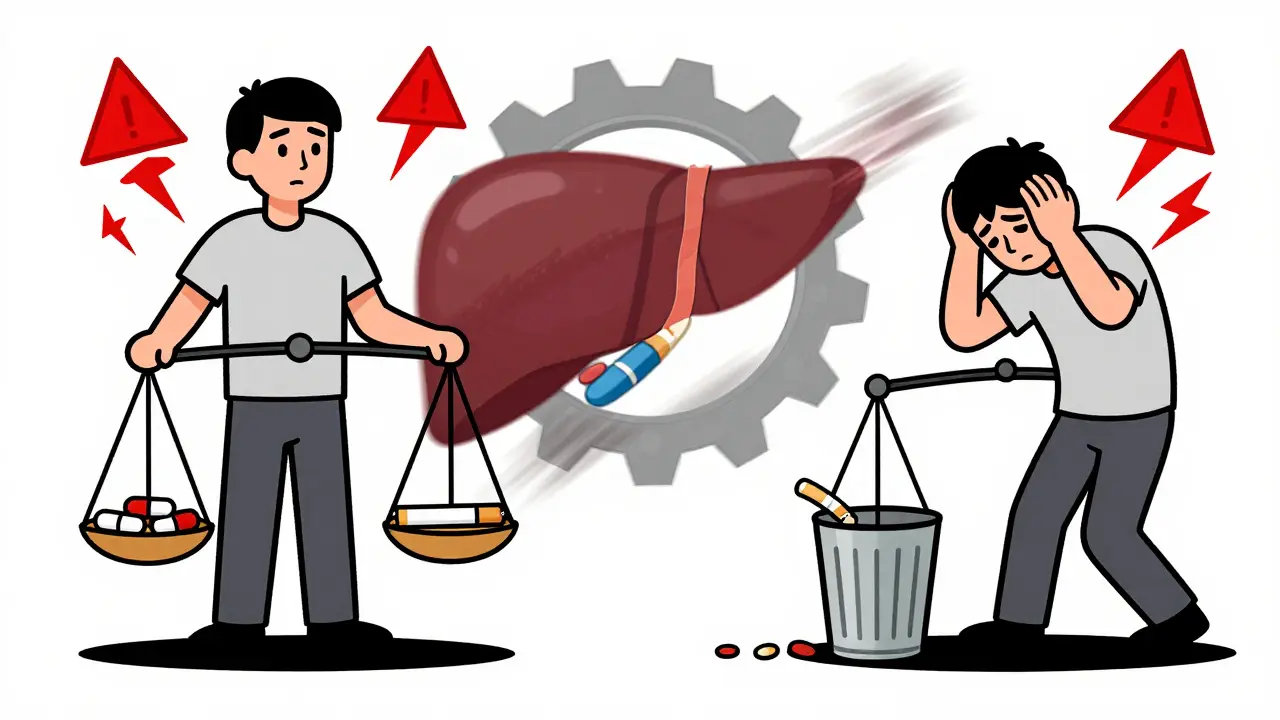
Because the stakes are high, major health organizations have established clear protocols. The American Psychiatric Association (2020) and the Dutch Pharmacogenetics Working Group (2022) mandate Therapeutic Drug Monitoring (TDM) for all patients on clozapine.
| Action / Status | Recommended Dose Adjustment | Monitoring Frequency |
|---|---|---|
| Initiating therapy in a smoker | Start standard, but anticipate 50-100% higher maintenance dose | Weekly until stable |
| Patient quits smoking | Reduce dose by 25-30% immediately | Weekly for 2-3 weeks |
| Patient starts smoking again | Monitor closely; dose may need gradual increase | Weekly for 2 weeks |
| Switching to vaping | Prepare for potential decrease; monitor levels | Weekly for 2 weeks |
When a patient quits smoking, experts recommend reducing the clozapine dose by 25-30% right away. Professor Annette Gross, lead author of the 2023 *Frontiers in Psychiatry* study, emphasized that this immediate reduction is crucial to prevent toxicity. After the initial cut, continue monitoring levels weekly for two to three weeks. Adjust further based on the results.
Conversely, if a non-smoking patient starts smoking, their levels will drop. You may need to increase the dose gradually. The key is never to guess. Always rely on blood tests.
The Role of Genetics and Other Factors
You might wonder if genetics play a role here. Specifically, the CYP1A2*1F variant (rs762551) has been studied extensively. Some research suggested that carriers of the A-allele might be more susceptible to induction. However, the large-scale Faber et al. study (2003) found no significant clinical effect of CYP1A2 genotype on dose requirements among smokers or non-smokers. Behavioral factors-how much and how often someone smokes-outweigh genetic differences in this context.
Other lifestyle factors also interact with CYP1A2. Caffeine is a substrate for the same enzyme. Heavy coffee drinkers may compete with clozapine for metabolism, potentially requiring slightly higher doses (15-20% increase). Conversely, foods like cruciferous vegetables (broccoli, cauliflower) can mildly induce CYP1A2, though the effect is minor compared to tobacco.
Why Therapeutic Drug Monitoring Is Non-Negotiable
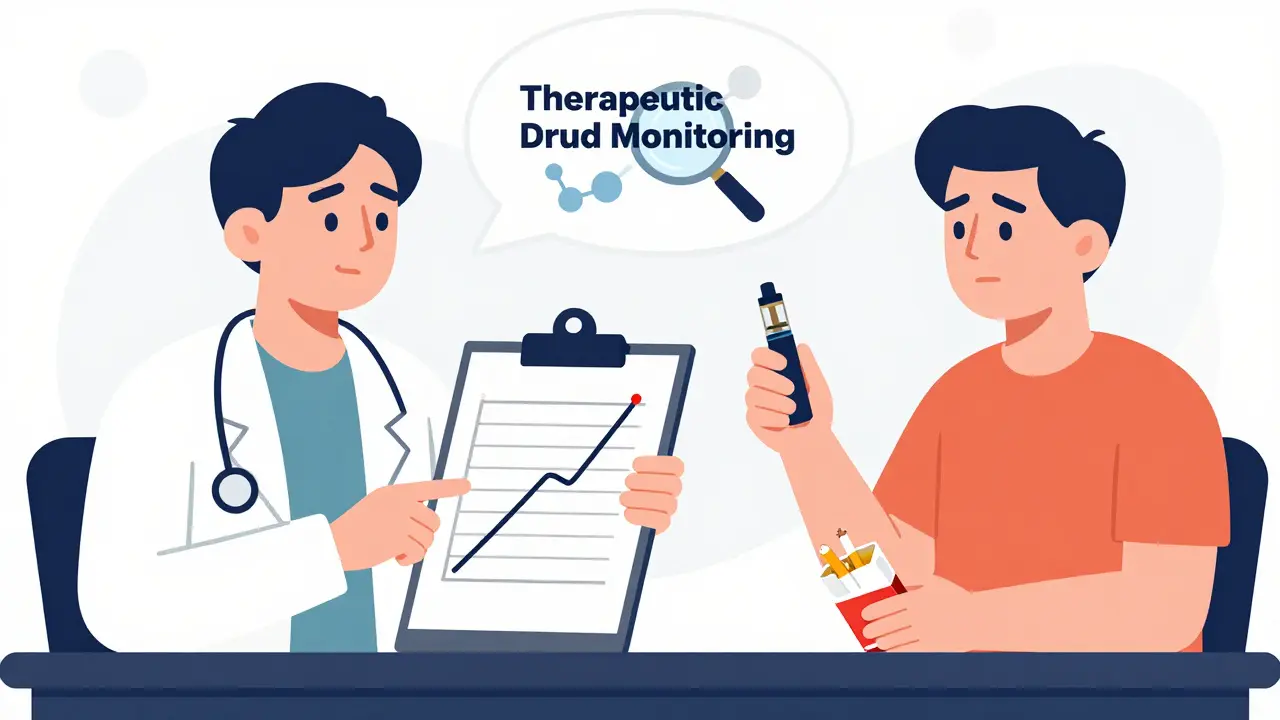
In community settings, access to TDM can be limited, which poses a significant risk. Only 42% of psychiatry residents could correctly calculate required dose adjustments after smoking cessation in a 2022 survey. This gap in knowledge highlights the need for strict adherence to monitoring protocols.
TDM should be performed at steady state, which is typically five half-lives after a dose change. For clozapine, this means waiting about 10 days after any adjustment before drawing blood. Trough levels should be drawn 12 hours after the last dose. Smokers typically have C/D ratios below 0.8 (ng/mL)/(mg/day), while non-smokers range from 1.5 to 2.0. Understanding these ratios helps clinicians distinguish between poor adherence and metabolic induction.
Failure to adjust doses based on smoking status is one of the most preventable causes of treatment failure or toxicity. Dr. Walter E. F. Backman noted that proper management can effectively handle this interaction in over 90% of cases. The cost of ignoring it is high: improper management leads to 15-20% higher hospitalization rates, costing approximately $12,500 per avoidable admission.
Practical Steps for Patients and Clinicians
If you are a patient taking clozapine, transparency is your best tool. Tell your doctor exactly how many cigarettes you smoke per day. If you are trying to quit, do not do it in secret. Work with your healthcare team to create a plan that includes pre-emptive dose reductions.
For clinicians, consider these steps:
- Document smoking status at every visit, including quantity and type (cigarettes, vaping).
- Order baseline clozapine levels before making any dose changes.
- Upon confirmed smoking cessation, reduce the dose by 25-30% immediately.
- Schedule follow-up blood tests weekly for the first month of cessation.
- Educate patients on signs of toxicity: excessive sedation, confusion, tachycardia, or seizures.
By respecting the power of CYP1A2 induction, we can keep patients safe and stable. The interaction is predictable if monitored, but deadly if ignored.
How long does it take for clozapine levels to stabilize after quitting smoking?
It typically takes about one week for CYP1A2 enzyme activity to reach a new steady state after stopping smoking. However, plasma clozapine levels can begin rising within 24-48 hours. Significant increases are often seen within the first two weeks. Weekly monitoring is recommended for at least 2-3 weeks to ensure stability.
Do I need a higher dose of clozapine if I smoke?
Yes. Smokers often require 50-100% higher maintenance doses than non-smokers to achieve therapeutic blood levels. This is because cigarette smoke induces the CYP1A2 enzyme, causing the liver to metabolize and clear clozapine much faster.
Is vaping safer than smoking for people on clozapine?
Vaping generally reduces CYP1A2 induction compared to traditional smoking because it lacks polycyclic aromatic hydrocarbons (PAHs). However, it is not risk-free. Some vape ingredients can still affect liver enzymes. Switching to vaping often leads to increased clozapine levels, requiring dose adjustments and close monitoring to avoid toxicity.
What are the signs of clozapine toxicity?
Signs of toxicity include excessive sedation, confusion, delirium, rapid heart rate (tachycardia), low blood pressure, and seizures. If you recently stopped smoking and experience these symptoms, seek medical attention immediately, as your blood levels may have spiked dangerously.
Does genetics affect how smoking impacts clozapine levels?
While genetic variants like CYP1A2*1F exist, large studies show that behavioral factors (smoking intensity) outweigh genetic differences in determining dose requirements. Most patients respond similarly to smoking-induced enzyme changes regardless of their specific genotype.
How much should I reduce my clozapine dose when I quit smoking?
Clinical guidelines recommend an immediate dose reduction of 25-30% upon smoking cessation. This should be followed by weekly blood tests to fine-tune the dose. Never stop or adjust your medication without consulting your doctor, as individual responses vary widely.