
Vitamin K Intake Calculator
Vitamin K Intake Calculator
Track your daily vitamin K to maintain stable INR levels
Your Vitamin K Log
Recommended Daily Intake
60–120 µg for most patients on warfarin
When you’re on warfarin, your body is walking a tightrope. Too much blood thinning, and you risk dangerous bleeding. Too little, and a clot could form-maybe in your heart, brain, or legs. The key to staying balanced isn’t just taking your pill on time. It’s what you eat. Specifically, how much vitamin K you get every day.
Why Vitamin K Matters More Than You Think
Warfarin works by blocking vitamin K from helping your blood clot. That’s its job. But vitamin K isn’t some enemy you need to avoid. It’s a nutrient your body needs to keep bones strong and arteries clear. The problem isn’t vitamin K itself-it’s inconsistency. If you eat a huge salad one day and then skip greens for a week, your INR will swing like a pendulum. That’s because vitamin K directly fights warfarin’s effect. More vitamin K? Your INR drops. Less vitamin K? Your INR spikes. And those swings aren’t just inconvenient-they’re dangerous. Research shows patients with inconsistent vitamin K intake are 2.3 times more likely to have INR levels outside the safe range. That means more blood tests, more doctor visits, and a higher chance of a stroke or serious bleed.What’s the Right Amount of Vitamin K?
The official daily recommendation for adults is 90-120 micrograms (µg), depending on gender. But here’s the twist: you don’t need to hit that number exactly every day. You just need to keep it steady. One cup of cooked spinach has nearly 900 µg of vitamin K. One cup of raw kale? Over 500 µg. A single boiled egg? About 20 µg. A half-cup of broccoli? Around 100 µg. You don’t have to eat the same exact meal every day. But if you normally eat a big helping of spinach on Monday and then nothing green for the rest of the week, your INR will go haywire. The goal is predictability, not perfection.What the Experts Say-And What They Don’t
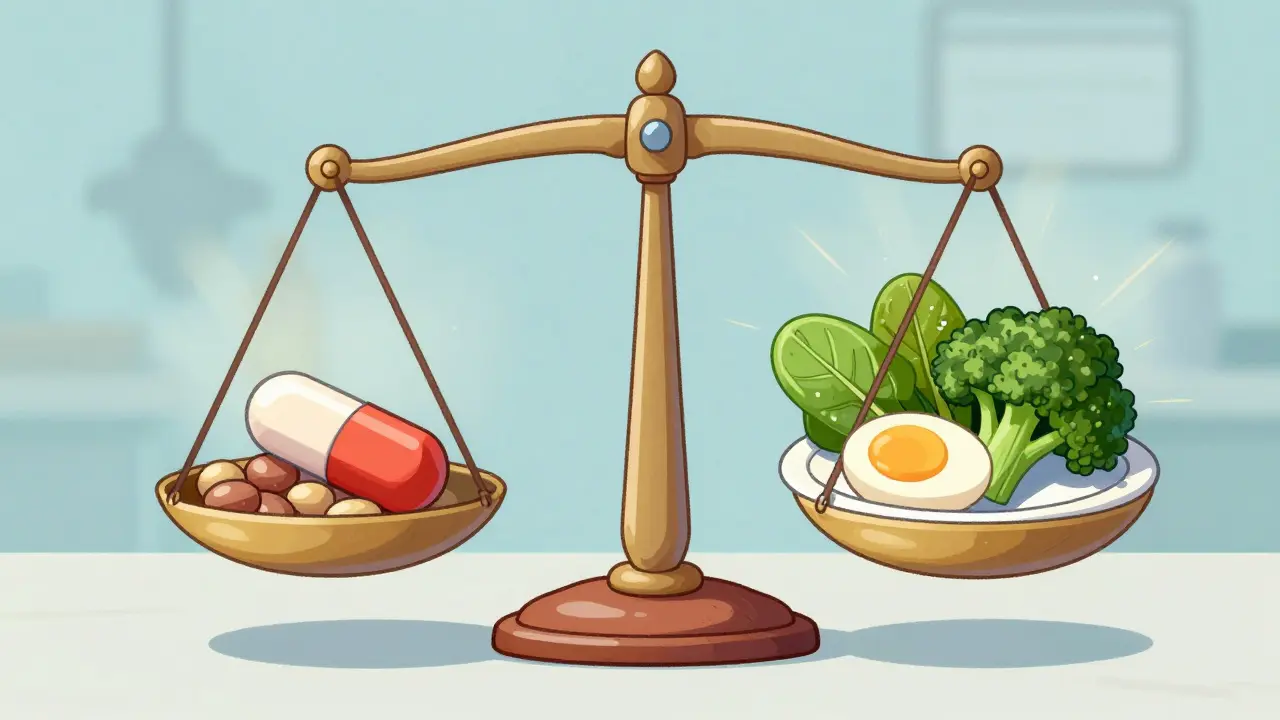
Ten years ago, doctors told patients to avoid green vegetables altogether. That advice is outdated-and harmful. The American College of Chest Physicians (2021) now says: “Dietary vitamin K restriction is not recommended and may be harmful.” Why? Because cutting out vitamin K can actually make your INR less stable. It can even lead to bone loss and calcified arteries over time. The American Heart Association and the Anticoagulation Forum agree: don’t restrict. Stabilize. Aim for 60-120 µg of vitamin K daily, spread evenly across your meals. That’s not a strict limit-it’s a target range. One study found that patients who took 150 µg of vitamin K daily (in supplement form) actually improved their time in the target INR range by 7.2%. Think of it like this: if warfarin is a scale, vitamin K is the weight on the other side. If you keep adding and removing weight randomly, the scale bounces. But if you keep the weight steady, the scale stays level.Real People, Real Results
One Reddit user, u/WarfarinWarrior, shared how their INR jumped from 45% to 78% time in range after they started eating exactly one cup of mixed greens every Tuesday and Thursday. No more guessing. No more panic when their INR spiked. A survey by the National Blood Clot Alliance found that 57% of emergency visits for INR problems were linked to inconsistent eating habits. People thought they were doing the right thing by avoiding spinach. Instead, they were making things worse. Meanwhile, patients who worked with a certified anticoagulation pharmacist-someone trained in this exact issue-hit an 82% time in therapeutic range. That’s far above the national average of 63%.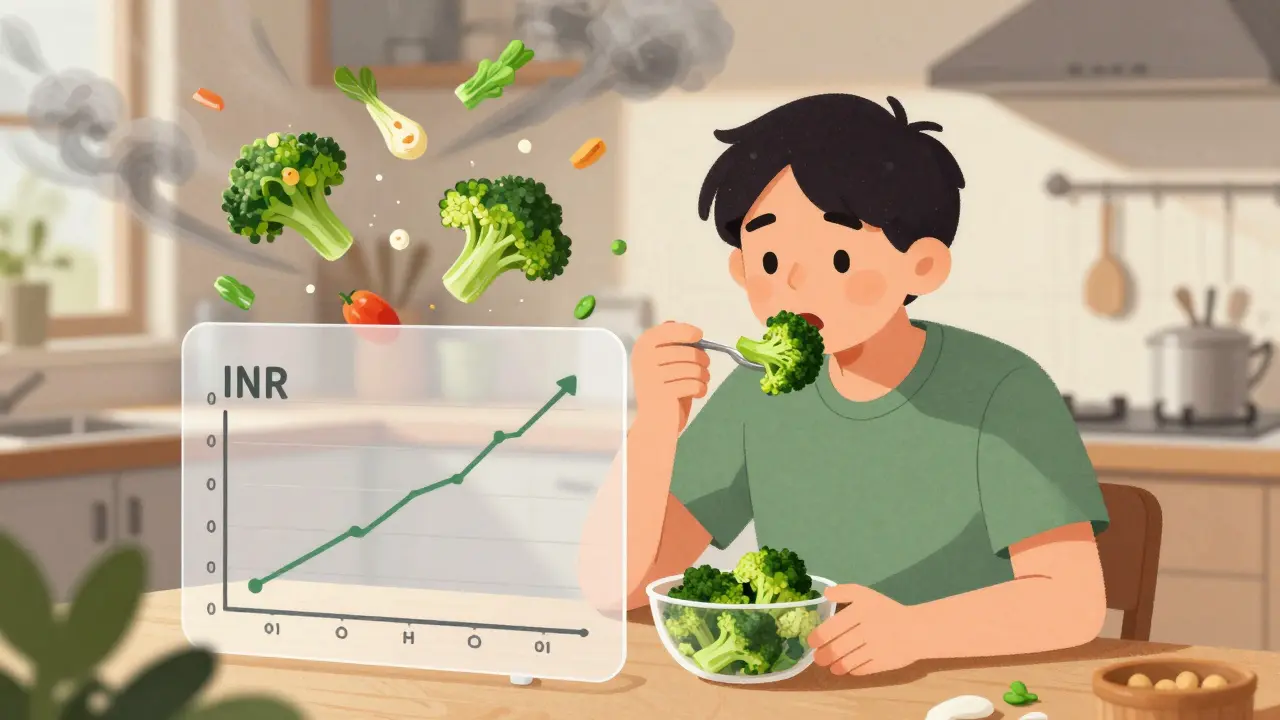
How to Build a Consistent Routine
You don’t need to become a nutritionist. But you do need a simple system.- Pick a baseline. Choose a moderate amount of vitamin K-say, 80-100 µg per day-and stick to it. For many, that’s half a cup of cooked broccoli or one cup of raw spinach or kale, spread over two or three meals.
- Use measuring cups. Visual estimates are wrong 45% of the time. A “handful” of spinach could be 30 µg or 300 µg. Use a measuring cup. It’s not glamorous, but it works.
- Track for six weeks. Write down what you eat for the first month. Use a free app like Warframate, which has a database of over 1,200 foods with vitamin K values. Or just use a notebook.
- Don’t skip meals. If you normally eat spinach with dinner and suddenly skip it because you’re out of town, your INR will rise. Bring a bag of frozen spinach. Or eat a hard-boiled egg instead. Just keep the vitamin K level close to your baseline.
- Be consistent with supplements. If you take a multivitamin or fish oil with added vitamin K, make sure it’s the same dose every day. If you stop taking it, your INR might rise. Tell your pharmacist if you start or stop any supplement.
What Foods Are High in Vitamin K?
Here’s a quick reference for common foods:| Food | Serving Size | Vitamin K (µg) |
|---|---|---|
| Spinach, cooked | 1 cup | 889 |
| Kale, raw | 1 cup | 547 |
| Broccoli, cooked | ½ cup | 102 |
| Brussels sprouts, cooked | ½ cup | 156 |
| Green beans | ½ cup | 14 |
| Scrambled egg | 1 | 20 |
| Chicken breast | 3 oz | 2 |
| Cheddar cheese | 1 oz | 5 |
| Blue cheese | 1 oz | 29 |
| Avocado | ½ fruit | 14 |
Notice something? You don’t need to avoid these foods. You just need to know what you’re eating-and keep it similar from day to day.
Genetics Play a Role Too
Not everyone reacts the same way to vitamin K. Some people are genetically more sensitive. If you have a variant in the VKORC1 or CYP2C9 gene, even small changes in your diet can cause big INR shifts. Studies show these individuals may need to keep their vitamin K intake within ±10% variation-tighter than the general ±20% guideline. If you’ve had trouble stabilizing your INR despite eating consistently, ask your doctor about genetic testing. It’s not routine-but it can be life-changing.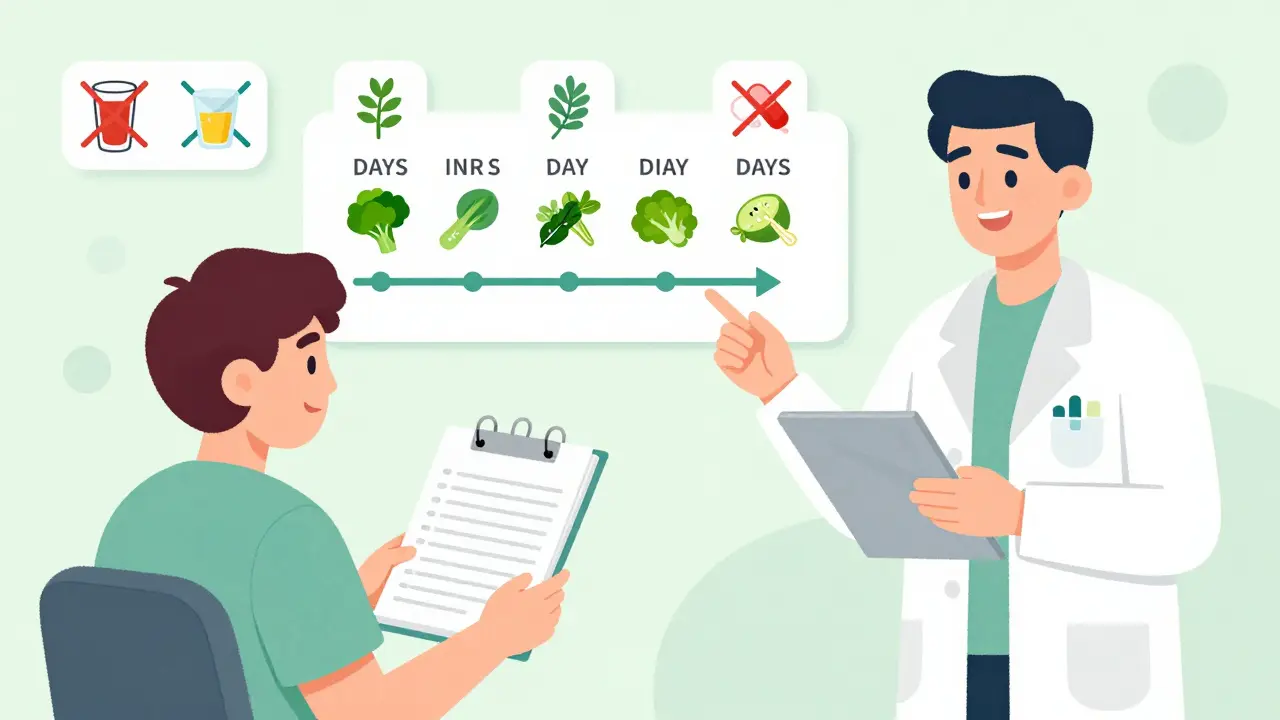
What to Do If Your INR Is Off
If your INR is too high (above 4.0), don’t panic. Don’t skip your warfarin. Don’t eat a bunch of vitamin K to “fix” it. Call your anticoagulation clinic. They’ll tell you whether to hold your dose or adjust it. If your INR is too low (below 1.5), don’t start eating more greens. That’s not the fix. Your doctor may need to increase your warfarin dose-but only after ruling out other causes like new medications, illness, or alcohol use. The best way to prevent INR swings? Consistency. Not perfection. Not restriction. Just steady habits.What About Alcohol, Herbs, and New Medications?
Vitamin K isn’t the only thing that affects warfarin. Alcohol can increase bleeding risk and lower INR if consumed heavily. Herbal supplements like garlic, ginkgo, or St. John’s wort can interfere too. Even over-the-counter painkillers like ibuprofen can raise your risk of bleeding. Always check with your pharmacist before starting any new medication or supplement-even something as simple as a cold remedy. Many contain ingredients that interact with warfarin.Bottom Line: Eat Smart, Not Scared
You don’t have to give up your favorite foods. You don’t have to live on plain chicken and rice. You just need to eat the same amount of vitamin K each day-or close to it. Start small: pick one green vegetable you like. Eat the same portion, three times a week. Track it. See how your INR responds. Then build from there. The goal isn’t to control your diet. It’s to control your INR. And the best way to do that? Make vitamin K predictable. Your body will thank you.Can I eat spinach if I’m on warfarin?
Yes, you can-and you should. Spinach is rich in vitamin K, which helps your body make clotting factors. The key isn’t to avoid it, but to eat a consistent amount every day. If you normally eat one cup of spinach three times a week, keep doing that. Don’t suddenly eat three cups one day and none the next. Consistency is what keeps your INR stable.
Should I take a vitamin K supplement?
Only if your doctor or pharmacist recommends it. Some patients with unstable INR levels benefit from a daily 150 µg supplement, especially if they struggle to get enough from food. But taking supplements without guidance can make your INR unpredictable. Always talk to your anticoagulation provider before starting anything.
How long does it take for vitamin K to affect my INR?
It usually takes 2-3 days for a change in vitamin K intake to show up in your INR. That’s why sudden dietary changes-like eating a huge salad after a week of no greens-can cause a delayed spike in INR. This delay is why tracking your food for several weeks is so important. You’re not just looking at today’s meal-you’re looking at patterns over time.
Do I need to avoid all leafy greens?
No. In fact, avoiding them can make your INR less stable. Leafy greens are packed with nutrients that protect your heart and bones. The old advice to cut them out has been reversed by major medical groups. Instead, aim for consistent intake. Eat them regularly, but don’t overdo it on one day and skip them the next.
Can I still eat out or travel?
Absolutely. But plan ahead. When eating out, ask for steamed vegetables instead of sautéed in butter or oil (which can add extra vitamin K). Carry a small bag of frozen spinach or kale to add to meals. Choose simple dishes like grilled chicken with plain rice or baked potatoes. Avoid salads with heavy dressings or unknown ingredients. And if you’re traveling, bring your food diary or app with you.
Why does my INR change even when I eat the same things?
Many factors can affect INR besides diet: illness, stress, new medications, alcohol, even changes in your liver function. Sometimes, your body’s response to warfarin shifts over time. That’s why regular blood tests are essential. If your INR changes unexpectedly, talk to your provider. Don’t assume it’s your diet-unless you’ve made a recent, noticeable change.
If you’ve been struggling with unstable INR levels, the fix might not be a new pill-it’s a new habit. Start with one consistent meal. Track it. Watch your numbers. And remember: you’re not fighting vitamin K. You’re learning to work with it.
Comments (15)
Howard Esakov
January 28, 2026 AT 19:11Wow, finally someone who gets it. 🙌 Most people think warfarin means no greens-like, bro, that’s 2012 thinking. I’ve been on this for 8 years, and my INR hasn’t budged since I started eating one cup of raw kale every damn Tuesday. Consistency > perfection. Also, stop using ‘handful’ as a unit of measurement. That’s not cooking, that’s chaos. 🍽️
Bryan Fracchia
January 29, 2026 AT 07:59Love this breakdown. It’s not about fear-it’s about rhythm. Think of your body like a jazz musician. Warfarin is the beat, vitamin K is the melody. If you keep changing the notes, the song falls apart. But if you find your groove? Magic happens. I used to panic every time my INR jumped. Now I just eat my broccoli like clockwork. Calm. Centered. Alive.
Lance Long
January 29, 2026 AT 11:45Ohhhhh my GOD. I was JUST thinking about this last night. 😭 I went from INR 5.2 to 2.1 in 72 hours because I ate a whole bag of baby spinach after a week of nothing. My husband thought I was having a stroke. I was just… trying to be healthy. 🥲 The guilt, the panic, the blood tests-it’s a rollercoaster. But now? I measure. I track. I breathe. And I eat my half-cup of broccoli every. single. night. It’s not glamorous. But it’s mine.
fiona vaz
January 31, 2026 AT 00:52Great summary. I’m a certified anticoagulation pharmacist and see this every day. The biggest mistake? Patients assume they’re doing well because they ‘avoided greens.’ In reality, they’re creating instability by eliminating the very nutrient that helps stabilize their INR. Consistency is the real medicine here.
Sue Latham
January 31, 2026 AT 04:38Ugh. So many people still think ‘vitamin K = bad.’ Like, honey, you’re not on a keto cleanse, you’re on warfarin. 😒 I had a cousin who ate kale smoothies every morning and then skipped for two weeks because ‘she felt guilty.’ INR went from 2.8 to 6.1. She ended up in the ER. Don’t be that person. Eat your greens. Just don’t go wild.
Robert Cardoso
February 1, 2026 AT 18:52Let’s be real: this entire post is just a glorified diet guide disguised as medical advice. The real issue? Warfarin is an archaic drug. It’s like prescribing a typewriter in 2024. DOACs exist. They don’t care if you eat spinach or not. Why are we still forcing people to micro-manage their broccoli intake? This isn’t empowerment-it’s institutional laziness.
matthew martin
February 2, 2026 AT 11:10Man, I used to think my INR swings were just bad luck. Then I started tracking my meals like a detective. Turns out, my ‘normal’ Tuesday salad was actually 3x the vitamin K of my Thursday one. I didn’t even realize. Now I use Warframate. It’s weirdly satisfying. Like a fitness tracker… but for your blood. 🧬 I’ve gone from 58% to 81% in-range. Not because I changed my life-just because I started paying attention.
Chris Urdilas
February 3, 2026 AT 19:17So let me get this straight-you’re telling me I can eat a whole damn garden… as long as I do it on the same days every week? 😏 That’s the most chill medical advice I’ve ever heard. I thought I had to live on tofu and plain rice. Turns out, I just needed to stop being a chaos gremlin. I’m eating my kale Tues/Thurs now. Like a boss. 🥬💪
Jeffrey Carroll
February 3, 2026 AT 20:25Thank you for this comprehensive and clinically grounded overview. The emphasis on dietary consistency rather than restriction aligns with current guidelines from the ACCP and AHA. I would encourage all patients to maintain a structured food log and engage with an anticoagulation clinic for longitudinal monitoring. Stability is achievable with discipline.
Jess Bevis
February 4, 2026 AT 07:05Japan: we eat natto every day. 1000+ µg vitamin K. INR stable. No drama. Just eat. Be consistent. Simple.
Rose Palmer
February 6, 2026 AT 00:19It is imperative to note that dietary adherence must be coupled with regular INR monitoring and professional oversight. While dietary consistency is foundational, individual pharmacogenomic variability necessitates personalized management. Patients should not self-adjust therapy based on dietary intake alone.
Kathy Scaman
February 6, 2026 AT 08:09OMG I just realized I’ve been eating spinach on Sundays and then nothing the rest of the week. No wonder my INR is all over the place. I’m gonna start eating one cup every Tuesday and Thursday. Like a ritual. I’m gonna name it ‘Kale Tuesday.’ 😌
Rhiannon Bosse
February 6, 2026 AT 20:52Wait… so you’re telling me the government and Big Pharma don’t want us to know that vitamin K is the REAL key? 🤔 They’ve been lying to us for decades. They want us scared of broccoli so we keep taking warfarin and paying for blood tests. I’m starting a movement: #FreeMyK. We don’t need pills-we need consistency. And maybe a whistleblower.
Timothy Davis
February 8, 2026 AT 01:12Let’s not ignore the elephant in the room: this post cherry-picks studies. The 150 µg supplement study? Small sample size. The 2.3x risk increase? Confounded by poor adherence. And where’s the data on long-term bone density changes with high K intake? This is anecdote dressed as science. Don’t be fooled.
John Rose
February 8, 2026 AT 20:24One thing this doesn’t mention: alcohol. I had a weekend of cocktails and my INR spiked even though my diet was perfect. It’s not just food. Your liver’s workload matters too. Always consider meds, alcohol, illness, even sleep. It’s a system-not just a plate.