
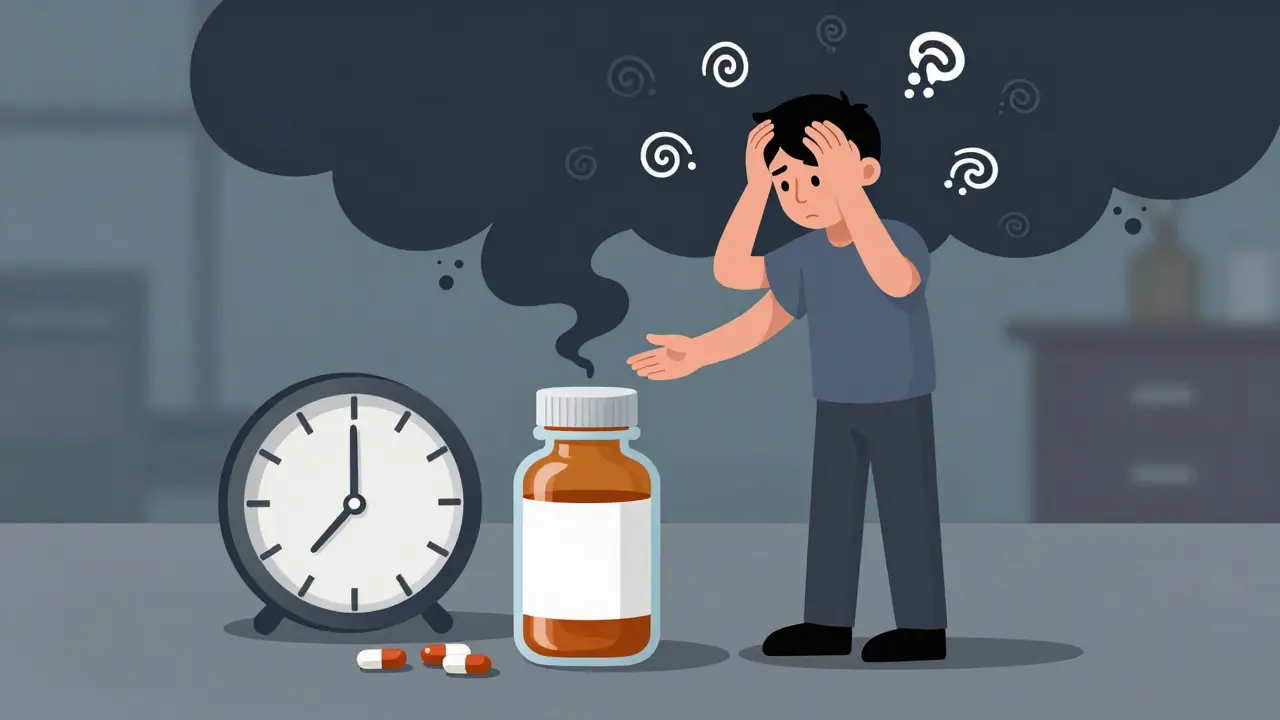
Imagine this: you were told to take a pill every day to keep your blood pressure in check. You started strong. But after two weeks, you got dizzy every time you stood up. Your stomach felt off. You started skipping doses, thinking, Maybe it’s not worth it. You’re not alone. Around 50% of people taking long-term medication don’t take it as prescribed - and side effects are one of the top reasons why.
Why Side Effects Keep People From Taking Their Medicine
It’s not about being lazy or forgetful. For many, side effects feel like a worse problem than the condition they’re trying to treat. A 2025 study in Frontiers in Pharmacology found that after people start a new medication, up to 34% stop taking it within the first few weeks - mostly because of how they feel. Dizziness, nausea, fatigue, weight gain, or even mild anxiety can make someone think, “This drug is making me worse.”
This is especially true for mental health meds. One study showed that people with depression were twice as likely to skip their pills if they experienced side effects. And once they stop one medication, they’re more likely to stop others too - even if those drugs are helping them.
Side effects aren’t just uncomfortable. They’re expensive. In the U.S., nonadherence due to side effects contributes to 125,000 preventable deaths every year and leads to up to 69% of medication-related hospital stays. For chronic conditions like diabetes or heart disease, missing doses isn’t a small slip - it’s a risk to your life.
The Real Numbers Behind Adherence
Let’s break down what really happens after a prescription is written:
- Only 50%-70% of prescriptions are even filled.
- Of those filled, 48%-66% are picked up from the pharmacy.
- Just 25%-30% are taken exactly as directed.
- And only 15%-20% refill their prescriptions as scheduled.
That’s not a failure of willpower. It’s a failure of support. Most people don’t get help when side effects show up. Their doctor doesn’t ask. Their pharmacist doesn’t follow up. They’re left to figure it out alone - and too often, they quit.
What Works: Real Solutions That Help People Stick With Their Meds
Here’s the good news: we know what helps. And it’s not just reminders or fancy pill boxes.
Pharmacist-led interventions make the biggest difference. When a pharmacist sits down with a patient - face to face - to talk about side effects, the chance of adherence goes up by 40%. One study showed that when pharmacists worked with patients to manage side effects, adherence jumped from 73.9% to 89.3%. That’s not a small change. That’s life-saving.
Face-to-face talks beat phone calls, emails, or mailed brochures. Why? Because when someone says, “I feel sick every morning after I take this pill,” a trained pharmacist can:
- Check if it’s a known side effect - and how long it usually lasts.
- Suggest taking the pill with food or at night instead.
- Recommend a lower dose or a different drug in the same class.
- Connect you with resources if the cost is a problem.
And here’s something surprising: in-person help at hospital discharge works almost as well - with 67% adherence improvement. That’s the moment when patients are most vulnerable. They’re tired, overwhelmed, and scared. A pharmacist standing there with a clear plan? That changes everything.
Doctors and Pharmacists Aren’t Talking Enough
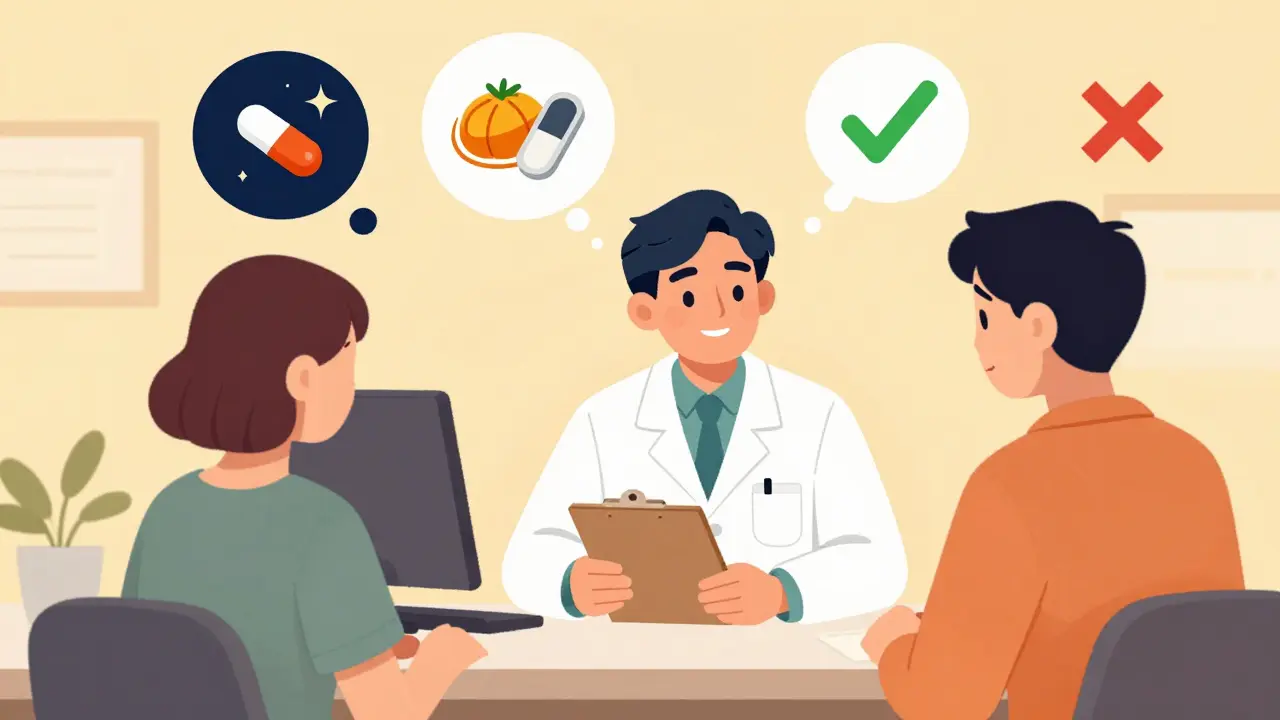
Here’s the hidden problem: pharmacists document nonadherence less than half the time - only 52% of cases. Meanwhile, nurses document it 85% of the time, and doctors 70%. That gap means side effect concerns often vanish from the record. No one knows you’re struggling. No one follows up.
That’s why patients feel invisible. They think, “If my doctor doesn’t ask, maybe it’s not a big deal.” But it is.
Health systems need to change how they track this. If side effects aren’t documented, they can’t be addressed. And if they can’t be addressed, people stop taking their meds.
What You Can Do Right Now
You don’t need to wait for your doctor to ask. Here’s what to do if you’re skipping doses because of side effects:
- Write down what you’re feeling. Not just “I feel bad.” Write: “Headache 30 minutes after pill. Nausea after lunch. Dizzy when standing.” Include the time, the dose, and how long it lasts.
- Bring it to your pharmacist. They’re trained to help with this. No appointment needed. Just walk in. Say: “I’m having these side effects. Can we talk about it?”
- Ask: “Is this normal? Will it pass?” Many side effects fade in 1-2 weeks. But if they don’t, you have options.
- Ask: “Is there another pill like this that doesn’t cause this?” Sometimes, switching to a different drug in the same class solves the problem without losing the benefit.
- Ask: “Can I take less? Or at a different time?” Some meds work just as well if taken at night or with food.
Don’t be afraid to push back. Your health matters more than following a script blindly.
What’s Changing in 2026
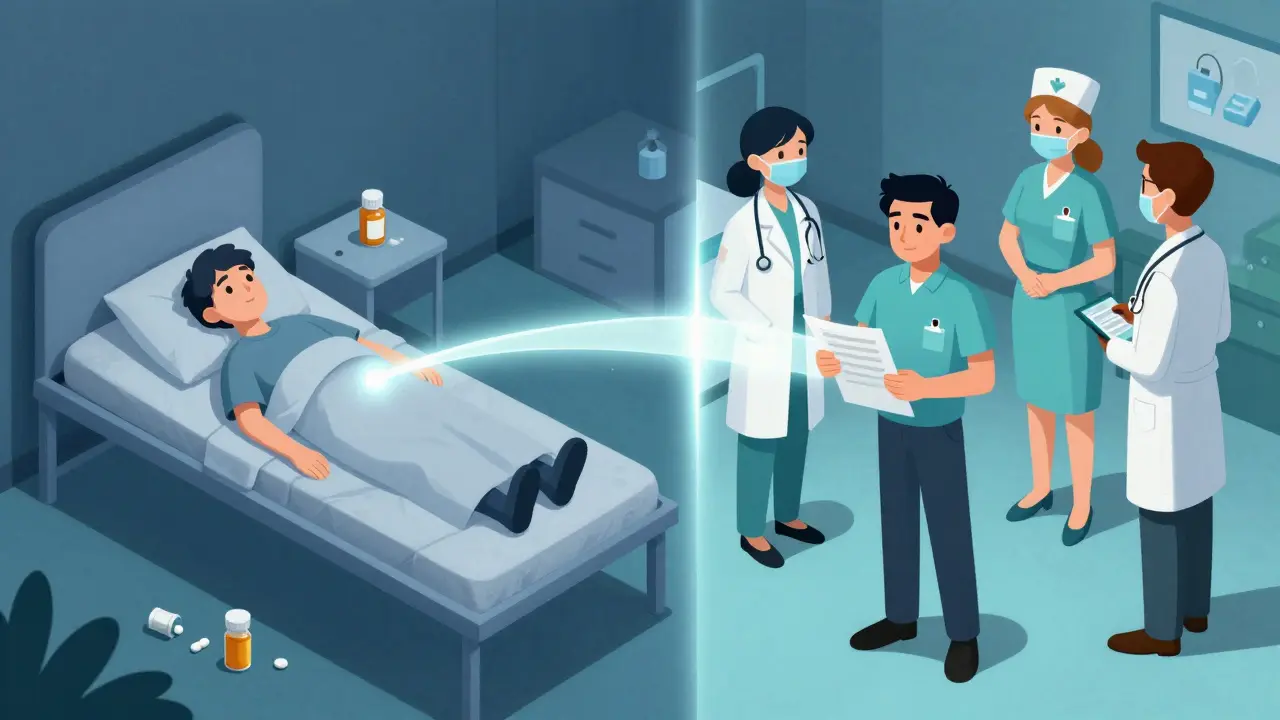
The system is starting to wake up. Value-based care - where providers get paid for keeping people healthy, not just for prescribing pills - is pushing hospitals and pharmacies to focus on adherence. Medicare Star Ratings now tie directly to how well patients stick with their meds. Plans that help people manage side effects earn higher ratings - and more money.
AI tools are also starting to help. Some systems now flag patients who haven’t refilled a prescription or who have reported side effects in past visits. Then, a pharmacist gets a nudge: “Call this patient. They’re at risk.” It’s not perfect - but it’s better than nothing.
More clinics are now including pharmacists as part of the care team - not just as pill dispensers, but as side effect managers. That’s the future. And it’s already here in places that are serious about health outcomes.
It’s Not Just About Pills
Medication adherence isn’t about remembering to take a pill. It’s about trust. It’s about feeling heard. It’s about knowing you have options when things go wrong.
Side effects aren’t a reason to quit. They’re a signal - a sign that your treatment plan needs tweaking. And with the right support, you don’t have to suffer through them to stay healthy.
If you’re struggling, you’re not failing. You’re just waiting for someone to ask the right question. Don’t wait. Walk into your pharmacy. Bring your list. Ask for help. Your body will thank you.
Comments (15)
Judith Manzano
March 9, 2026 AT 03:28I’ve been helping my mom manage her blood pressure meds, and this post hit home. She started skipping doses after nausea hit - thought it was just ‘bad luck.’ But when we walked into the pharmacy and said, ‘We need help,’ the pharmacist didn’t judge. She adjusted the timing, switched brands, and even called her doctor. Three weeks later, Mom’s numbers are stable and she’s not vomiting anymore. It’s not rocket science - just human care.
Mantooth Lehto
March 10, 2026 AT 01:18THIS. I was on antidepressants for 8 months and felt like a zombie. My doctor didn’t ask. My pharmacist? Never called. I quit cold turkey. Then I got worse. Don’t let them treat you like a number. Walk in. Say ‘I can’t do this anymore.’ They’ll help if you demand it. 💪
Scott Easterling
March 10, 2026 AT 04:1950% non-adherence? That’s because Big Pharma doesn’t want you cured - they want you dependent. These ‘side effects’? They’re designed to keep you coming back. The real solution? Stop taking pills. Eat real food. Take vitamin D. I’ve been off meds for 4 years. My BP is better than my doctor’s. The system is rigged.
Erica Santos
March 11, 2026 AT 15:32So let me get this straight - we’re supposed to trust pharmacists more than doctors? The same people who get paid per script? The same ones who can’t even spell ‘anticoagulant’ without Google? This is why people don’t trust healthcare. You’re telling me to go to a guy in a white coat who thinks ‘adherence’ is a yoga pose.
Stephen Rudd
March 11, 2026 AT 15:57You know what’s worse than side effects? The cult of compliance. People are told to swallow pills like they’re sacraments. But what if the pill is the problem? What if the real disease is a broken system that treats humans like vending machines? I stopped taking my statin after I read the trial data - 80% of the benefit went to the top 1% of risk patients. The rest? Just side effects and a false sense of security.
Mary Beth Brook
March 13, 2026 AT 10:28Medication adherence metrics are a proxy for systemic failure. The U.S. spends $500B annually on avoidable hospitalizations - 70% tied to nonadherence. But we don’t fix the root cause: fragmented care. Pharmacists aren’t empowered. EHRs don’t talk. Providers don’t get reimbursed for coordination. This isn’t a patient problem - it’s a policy failure. We need integrated care teams with legal authority to adjust regimens. Not ‘walk in and ask.’ We need legislation.
George Vou
March 13, 2026 AT 14:21they said the pill would help my anxiety... but i felt like i was floating in a dream for 3 weeks. i stopped. now i’m fine. turns out the doctor didn’t even check my liver enzymes. the system is a scam. big pharma owns the fda. they don’t care if you die. they just want your subscription.
Morgan Dodgen
March 14, 2026 AT 23:11AI flags patients? That’s just surveillance capitalism repackaged. They’re not helping you - they’re profiling you. Your refill history, your side effect reports, your mood logs - all fed into a predictive model to upsell you more drugs. The ‘pharmacist nudge’? It’s a sales trigger. They’re not your advocate - they’re a data point collector for the algorithm. Wake up.
Tom Sanders
March 16, 2026 AT 09:49Man I used to take that BP med. Dizzy all day. Tried everything. Then I just started taking it at night. No more dizziness. Didn’t even tell my doc. Just did it. Sometimes the answer’s not in the script - it’s in trial and error. Stop overthinking. Your body knows.
Neeti Rustagi
March 16, 2026 AT 20:11As a healthcare professional from India, I have witnessed firsthand how cultural stigma around chronic illness leads to nonadherence. Patients fear being labeled ‘weak’ or ‘dependent’ on medication. Many believe side effects are a sign of ‘poor karma’ or ‘weak constitution.’ Education must be culturally embedded - not clinical. We need community health ambassadors, not just pharmacists. A village elder saying, ‘I take this too - it helped me walk again,’ carries more weight than any pamphlet.
Also, in rural India, pharmacy access is a 12-kilometer journey. No one walks that far for a pill that makes them nauseous. Infrastructure must precede adherence. No amount of ‘walk in and ask’ fixes a system where the nearest pharmacy is a bus ride away.
And yes - pharmacists document less because they’re overworked. One pharmacist in my city handles 400 patients daily. She has 7 minutes per visit. How can she ask about side effects when she’s running out of time? The solution isn’t blaming the frontline worker. It’s fixing the workload.
Philip Mattawashish
March 18, 2026 AT 18:25Let’s be brutally honest - most people are lazy. They don’t want to take a pill. They want a miracle. They want to eat pizza and not have high blood pressure. The side effects? A convenient excuse. You think your dizziness is ‘bad’? Try living with a stent and no meds. You’d take the nausea. You’d take the dizziness. You’d take the horror. But you won’t. Because you’re not sick enough yet. And when you are? You’ll be too late.
Stop romanticizing nonadherence. It’s not rebellion - it’s self-sabotage. And you’re not ‘waiting for someone to ask.’ You’re waiting for someone to save you from yourself. Nobody’s coming. Not even the pharmacist.
Nicholas Gama
March 19, 2026 AT 17:25AI flags. Pharmacist nudges. Star ratings. All smoke and mirrors. The real issue? The patient isn’t the problem. The system is. You can’t fix adherence with a nudge when the system is designed to ignore discomfort. You’re treating symptoms - not the disease of disconnection. We need a paradigm shift. Not more tools. More humanity.
APRIL HARRINGTON
March 21, 2026 AT 06:17I took my pill for 11 days then stopped because I felt like a robot. My mom cried. My boyfriend left. My therapist said I was ‘resisting healing.’ But I didn’t want to be fixed. I wanted to feel real. Even if it meant being dizzy. Even if it meant being angry. Even if it meant being alone. This post makes me feel like a failure. But I’m not. I’m just not the kind of person who swallows what they’re told to swallow. And that’s okay.
Leon Hallal
March 22, 2026 AT 13:43I took my meds for 3 weeks. Felt worse. Quit. Went to the ER. They said I had a stroke. I was 32. Now I take them again. But I don’t trust them. I don’t trust anyone. I just do what I have to. No drama. No talk. Just pills. And silence.
Jazminn Jones
March 22, 2026 AT 17:51Let’s deconstruct the epistemological fallacy here: the assumption that ‘side effects’ are biologically discrete from therapeutic intent. In pharmacological terms, all drug action is polypharmacological - a spectrum of on-target and off-target effects. The ‘dizziness’ you experience isn’t an anomaly - it’s a pharmacodynamic signature. To pathologize it as ‘bad’ is to misunderstand mechanism. The solution isn’t ‘switching drugs’ - it’s understanding dose-response curves and receptor occupancy profiles. But no, let’s just ask the pharmacist to ‘suggest taking it at night.’ That’ll fix receptor affinity.