
Telehealth Medication Review Readiness Checklist
Readiness Score
Start checking off items to see your readiness.
You are Ready!
Don't forget to hold your bottles up to the camera when asked. Good luck with your review!
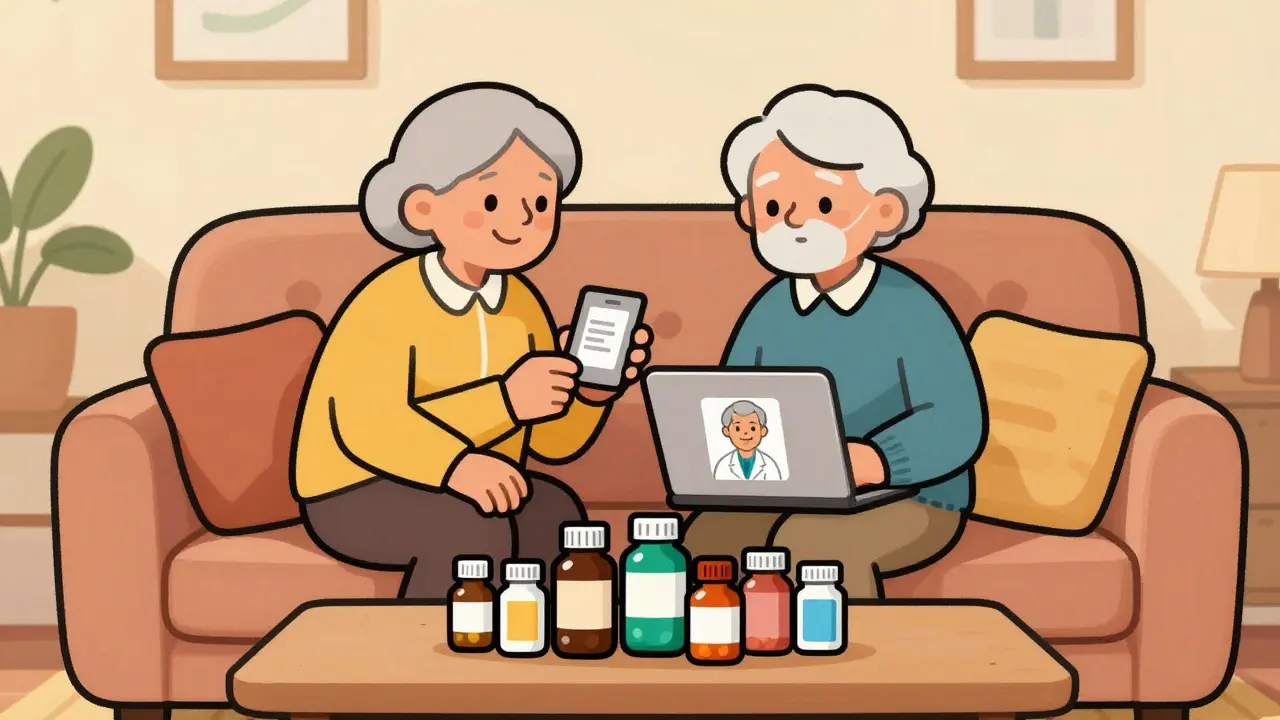
You’ve got a stack of pill bottles on the counter. Maybe there’s a supplement jar or two mixed in. You know you need to get your medications checked, but the thought of driving to the clinic, waiting in a lobby, and sitting through a rushed appointment feels exhausting. This is where telehealth medication reviews come in as a game-changer. They allow you to sit down with a qualified professional from your living room to go over every drug you take, ensuring they work together safely and effectively.
It’s not just about convenience, though that’s a huge plus. A 2020 study published in the Journal of the American Geriatrics Society found that elderly patients who received these virtual reviews saw a 34.7% drop in adverse drug events compared to those who stuck with standard care. That’s a massive difference for your health and peace of mind. But to get that level of benefit, you can’t just show up on camera empty-handed. You need a strategy.
Gathering Your Arsenal: What to Have Ready
The biggest mistake people make during a virtual consult is relying on memory. You might think you remember everything you take, but studies show that inaccurate medication histories are the source of 43.2% of medication errors, according to data from the Institute for Safe Medication Practices (ISMP) in 2022. To avoid being part of that statistic, you need physical proof.
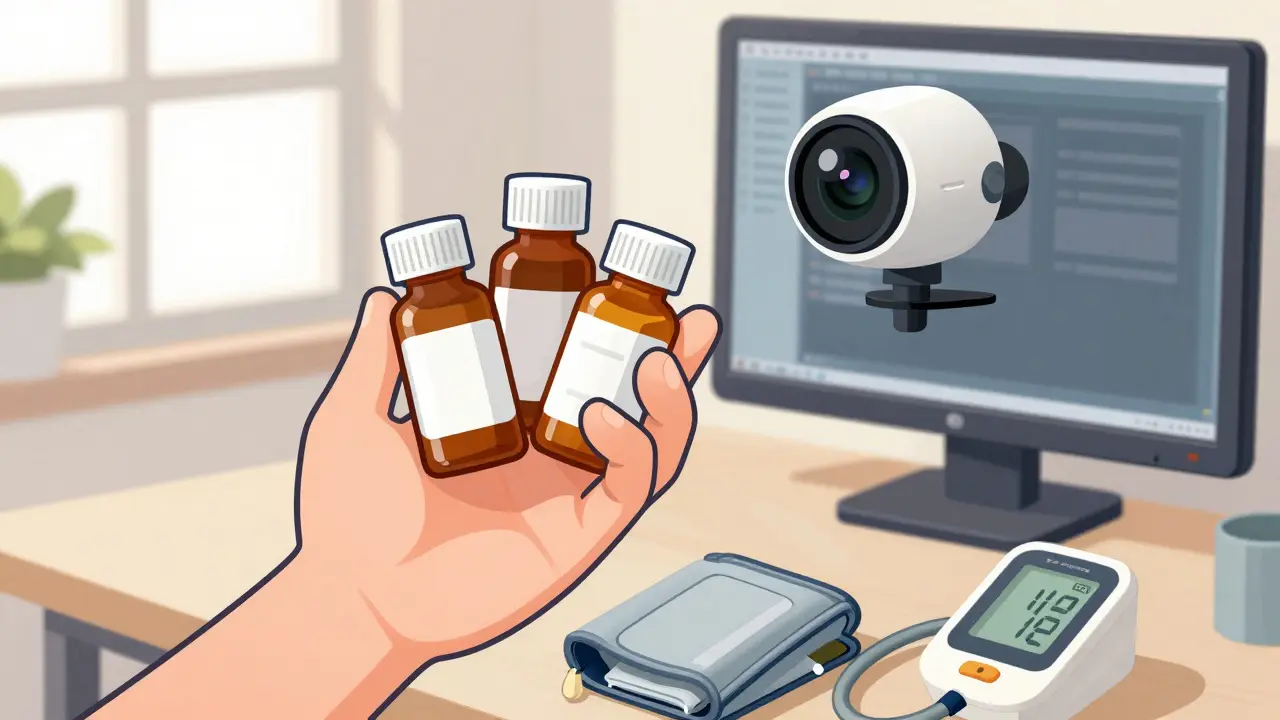
Before your video call starts, gather every single substance you put into your body. This includes:
- Prescription medications: Bring the actual bottles, not just a list. The label shows the exact dosage and prescriber.
- Over-the-counter (OTC) drugs: Pain relievers like ibuprofen or acetaminophen, antacids, and cold medicines can interact dangerously with prescriptions.
- Supplements and vitamins: St. John’s Wort, fish oil, and even high-dose Vitamin K can alter how your meds work.
- Herbal remedies: If you use anything natural, bring it too. “Natural” doesn’t always mean safe when mixed with pharmaceuticals.
A 2023 study in the Journal of Telemedicine and Telecare confirmed that displaying all these items during the video consultation increases review accuracy by 37.4%. Hold them up to the camera if asked. It helps the pharmacist verify details instantly rather than guessing.
Setting the Stage for Success
Technology glitches are the enemy of good healthcare. Nothing kills momentum faster than a frozen screen right when you’re explaining a side effect. To keep things smooth, treat this like a job interview.
First, check your internet connection. You need a stable broadband connection with at least 1.5 Mbps upload and download speed. Test it beforehand using a simple speed test site. Second, ensure your webcam is working and positioned so the pharmacist can see your face clearly. Good lighting is crucial-sit facing a window or a lamp, not with the light behind you. Shadows hide expressions that might signal confusion or discomfort.
If you have a blood pressure monitor or a glucose meter, have it plugged in and ready. Some pharmacists may ask you to demonstrate how you use it or read out recent numbers. Having these tools within arm’s reach prevents awkward pauses and keeps the conversation flowing naturally.
The Safety Plan: Questions You Must Ask
This is the core of the visit. Don’t be shy. The pharmacist is there to advocate for your safety. Here are the critical questions that turn a routine check-up into a robust safety plan.
1. "How will you verify my list against pharmacy records?"
Pharmacists have access to databases that track what pharmacies have dispensed to you. However, systems don’t always talk to each other perfectly. Ask them to cross-reference what you brought with their digital records. This double-check catches duplicates or forgotten refills that could lead to accidental overdoses.
2. "What is your process for talking to my doctor?"
A medication review isn’t useful if the recommendations stay in the chat room. According to a 2023 audit by NCQA, only 62.8% of telehealth services have standardized protocols for sending feedback to primary care providers. You need to know exactly how your pharmacist will communicate changes to your GP. Will they send a secure message? Call the office? Get clarity on this handoff process.
3. "Are there any interactions I’m missing?"
Even if you’ve taken the same meds for years, new research emerges constantly. Ask specifically about interactions between your OTC painkillers and your heart medication, or your supplements and your antidepressants. Clinical Decision Support Systems (CDSS) used by pharmacists flag many of these, but human insight adds another layer of protection.
4. "How do we monitor for side effects between now and next time?"
Virtual models carry a slightly higher risk of undetected adverse effects because the pharmacist can’t physically examine you. A 2021 study noted a 17.3% higher rate of incomplete assessments for complex cases without hands-on evaluation. Ask for a clear action plan: What symptoms should trigger an immediate call? Is there a secure messaging portal you can use for quick questions?
Understanding the Limits of Virtual Care
While telehealth is powerful, it’s not a magic wand. It works best for medication reconciliation, chronic disease management for stable conditions, and post-discharge follow-ups. In fact, it has been shown to reduce 30-day hospital readmissions by 22.1%, according to CMS data from 2022.
However, be honest with yourself and your provider about complexity. If you have multiple comorbidities requiring physical assessment, or if you are managing psychiatric medications that require full mental status exams, a purely virtual approach might fall short. Effectiveness rates drop significantly in these areas-down to 43.6% for psychiatric management without proper video capability. If your case is complex, ask if a hybrid model (some visits in-person, some virtual) makes more sense.
Making the Most of the Follow-Up
The value of the review extends beyond the hour-long call. Once the pharmacist sends their recommendations to your doctor, you become the project manager of your own health. Follow up with your primary care provider to ensure they’ve acted on the suggestions. Did they adjust a dose? Stop a redundant drug? Switch to a cheaper generic?
Keep a updated list of your medications in your wallet or phone after the review. Share this list with any new specialist you see. Consistency is key to maintaining the safety gains you worked for during that telehealth session.
Is a telehealth medication review covered by insurance?
Coverage varies by plan, but significant progress has been made. As of late 2024, the Centers for Medicare & Medicaid Services (CMS) established separate reimbursement codes for comprehensive telehealth medication reviews (G2225 at $142.37) and targeted reviews (G2226 at $78.92). Many private insurers now follow suit, but you should always check with your specific provider before scheduling to confirm copay amounts or prior authorization requirements.
Can a pharmacist prescribe medication during a telehealth review?
In many jurisdictions, pharmacists have expanded prescribing rights, particularly for minor ailments or adjustments to existing regimens under collaborative practice agreements. However, for controlled substances, rules are stricter. As of early 2025, Schedule II controlled substances generally require an initial in-person examination, while Schedule III-V medications can often be managed via telehealth. Always ask your pharmacist about their specific scope of practice in your state or country.
What if I’m not tech-savvy? Can I still do this?
Absolutely. Many healthcare systems offer pre-appointment technology training. A 2024 survey by the National Council on Aging found that 68.2% of seniors felt more comfortable with telehealth after receiving such training. Additionally, family members or caregivers can join the video call to help navigate the platform, allowing you to focus entirely on your health discussion.
How long does a typical telehealth medication review take?
A comprehensive review usually lasts between 30 to 60 minutes. This allows enough time to go through every medication, discuss lifestyle factors, answer your questions, and document findings. Targeted reviews, which focus on a specific issue like a new diagnosis or a particular side effect, may be shorter, around 15 to 20 minutes.
Who performs these reviews?
These reviews are typically conducted by Accredited Pharmacists or clinical pharmacists who have specialized training in medication therapy management (MTM). They work alongside your general practitioner but bring deep expertise in drug interactions, dosing, and pharmacokinetics that doctors may not have time to delve into during a standard 15-minute visit.