
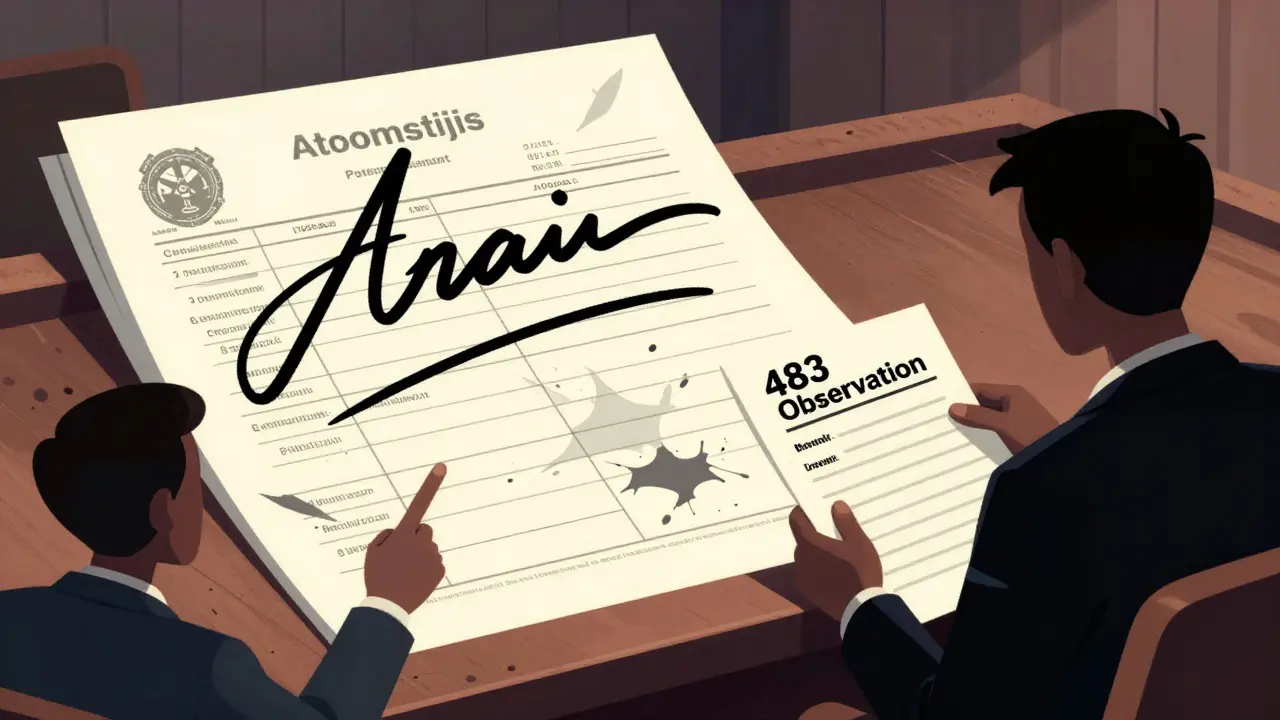
When you're making anything from pills to medical devices, the paperwork you keep isn't just busywork-it's your legal shield. One missing signature, one untimely entry, or one unverified calculation can trigger a regulatory inspection, a product recall, or even a shutdown. In manufacturing, documentation isn't about proving you did the work-it's about proving you did it right, every single time.
Why Documentation Isn't Optional
It started with a tragedy. In 1937, over 100 people died after drinking a toxic liquid medicine. That event forced the U.S. government to create rules that still govern manufacturing today. Now, every step in production-from mixing ingredients to packaging-must be documented. The goal? Prevent contamination, mix-ups, and human error before they happen. Regulators don't just want to see records. They demand them. The FDA’s 21 CFR Part 211, the EU’s EudraLex Volume 4, and PIC/S guidelines all agree: if it wasn’t written down, it didn’t happen. And if it didn’t happen, the product isn’t safe to sell. The cost of getting it wrong? A single recall can cost $10 million on average. In 2022, over 41% of all FDA Form 483 observations were tied to documentation failures. That’s not a small number-it’s the number one reason companies get flagged.The Two Types of Records You Can’t Ignore
There are two kinds of documents that make or break your compliance:- Procedural documents-these are your instructions. Think Standard Operating Procedures (SOPs), test methods, material specs, and equipment use guides.
- Compliance records-these are your proof. Batch records, environmental logs, equipment calibration sheets, and test results.
The ALCOA+ Rules: Your Documentation Bible
Regulators don’t just say "keep records." They say: "Keep them right." That’s where ALCOA+ comes in. It’s not a suggestion-it’s a requirement.- Atributable: Every entry must have a name and date. No "team" entries. No initials without ID.
- Legible: Handwritten entries must be clear. No smudges, no pencil, no fading ink.
- Contemporaneous: Records must be made at the time the work happens. No "I’ll write it later." You have 24 hours max.
- Original: No photocopies. No screenshots. Original data only-even if it’s electronic.
- Accurate: No guessing. No rounding unless the spec allows it.
- + Complete, Consistent, Enduring, Available: All data must be full, match across records, last for years, and be easy to find.
Digital vs. Paper: What Works Today
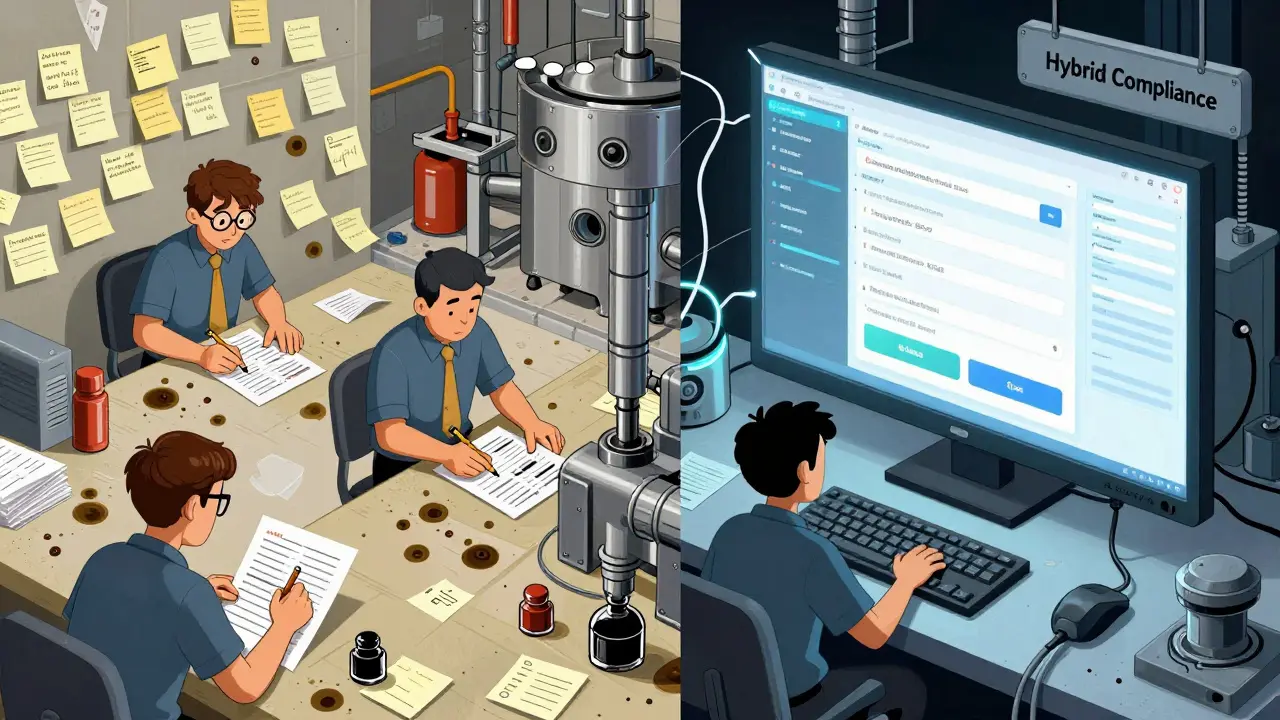
Most manufacturers still use paper logs. But the future is digital. Electronic systems reduce errors by up to 55%, according to an ISPE study. Systems like MasterControl, used by Merck, cut corrective action times from 45 days to 22. But going digital isn’t just buying software. You must validate it. GAMP 5 guidelines require over 150 test cases to prove your system won’t lose data, allow unauthorized changes, or delete audit trails. Electronic records must meet 21 CFR Part 11 rules: unique login, audit trail, system validation, and secure backup. No Excel sheets on shared drives. No PDFs emailed from personal accounts. If it’s electronic, it’s regulated. And here’s the catch: even if you go digital, you still need paper backups in some cases. The FDA’s 2023 draft guidance says hybrid systems are allowed-but only if every electronic entry has a full, searchable audit trail with at least 1,000 characters of context.Regional Differences That Trip Up Global Manufacturers
You might think GMP rules are the same everywhere. They’re not. - The FDA requires every calculation to be verified by a second person. The EU lets software do it. - Japan demands all documents be in Japanese. If you’re exporting, you need certified translations. - The EU’s MDR 2017/745 requires clinical evaluation reports with detailed literature searches. The FDA doesn’t. - ISO 13485 for medical devices demands traceability matrices linking design specs to test results. The FDA’s QSR doesn’t require that. Manufacturers serving both U.S. and EU markets spend an average of $2.1 million a year just to reconcile these differences. One company in Birmingham reported a 37% delay in approvals because their batch records didn’t match EU format.What Goes Wrong? The Top 3 Failures
Based on FDA warning letters and audit reports from 2021-2023, here are the most common mistakes:- Incomplete batch records (32% of citations): Missing signatures, skipped steps, or unexplained deviations.
- Inadequate investigation documentation (27%): A deviation happened, but no root cause was found-or documented.
- Untimely record completion (21%): Records filled out days later. No timestamps. No justification.
How to Get It Right
You don’t need a team of lawyers. You need a system.- Write SOPs at an 8th-grade reading level. If your operators can’t understand them, they won’t follow them.
- Use the four-eyes rule. Critical records (like batch release) need two people to review and sign.
- Appoint documentation champions. One person in each department who owns the process. They’re not just admins-they’re enforcers.
- Follow the 5C rule: Clear, Concise, Complete, Correct, Compliant. If it doesn’t meet all five, scrap it.
- Train like it’s life-or-death. QA staff spend 68% of their time on documentation. If they’re drowning, you’re at risk.
The Future Is Here-And It’s Smarter
AI is starting to help. Early adopters are using systems that auto-generate batch records from machine data. One MIT study showed a 45% drop in documentation time. But regulators aren’t there yet. Validation frameworks are still being built. The EU’s 2024 revision of EudraLex will require risk-based documentation by January 2025. That means you’ll need to document why you keep certain records-and why you don’t keep others. PIC/S is releasing a new guide in late 2024 to fix regional inconsistencies. This could mean less duplication. Or more confusion. Either way, you’ll need to adapt.Bottom Line
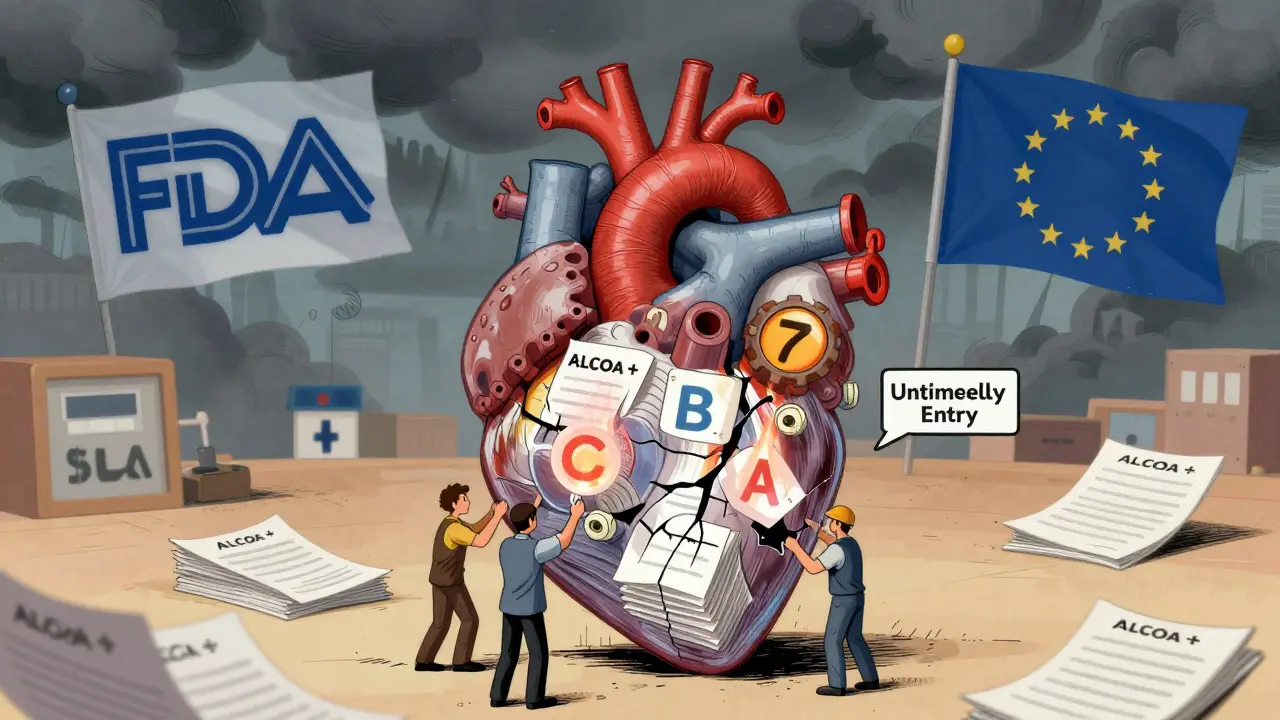
Documentation isn’t paperwork. It’s your quality system’s heartbeat. Every signature, every timestamp, every corrected entry matters. In manufacturing, the record isn’t proof of work-it’s proof of care. The best manufacturers don’t just meet requirements. They build a culture where documentation is natural, not burdensome. Where people know why it matters-and don’t wait for an audit to remind them. If you’re still using sticky notes or unvalidated Excel sheets, you’re one inspection away from disaster. Start fixing it now. Not tomorrow. Today.What happens if I don’t follow GMP documentation rules?
Failure to comply can lead to FDA Form 483 observations, warning letters, product recalls, or even plant shutdowns. In 2022, the average cost of a recall due to documentation failures was $10 million. Regulatory agencies treat documentation integrity as the top compliance risk-worse than facility conditions. Repeated violations can lead to criminal charges against responsible personnel.
Do I need to keep paper records if I use electronic systems?
Not necessarily, but you must ensure your electronic records meet 21 CFR Part 11 requirements: audit trails, secure access, validation, and backup. If you use a hybrid system (paper and electronic), every electronic entry must have a complete, searchable audit trail with at least 1,000 characters of context. The FDA allows hybrid systems but expects full traceability-no shortcuts.
How long do I need to keep manufacturing records?
Minimum retention is one year beyond the product’s expiration date, or three years after final distribution, whichever is longer. For medical devices under EU MDR, records must be kept for 10-15 years depending on device class. Always check your specific product category and region-some markets require longer retention.
Can I use cloud-based software for documentation?
Yes, but only if the vendor provides full validation documentation, data security protocols, and compliance with 21 CFR Part 11. The cloud itself isn’t the issue-it’s whether your system can prove data integrity, access control, and audit trail retention. Many FDA warning letters have been issued to companies using unvalidated cloud tools, even if they looked professional.
What’s the biggest mistake companies make with documentation?
The biggest mistake is treating documentation as an afterthought. Companies invest in machines and materials but underfund their documentation systems. They wait for an audit to fix problems. The best manufacturers build documentation into daily workflows-from operator training to change control. It’s not a department task-it’s part of every job.
Comments (15)
peter vencken
March 23, 2026 AT 09:35Man, I've seen so many plants crash because someone didn't sign a log. It's not even about being lazy-it's about culture. If your team thinks paperwork is a chore, you're already one step from a recall. I work in pharma, and we started putting QR codes on every batch record that link to a 30-sec video of the person signing. Sounds dumb? It cut our errors by 60%. People remember faces, not signatures.
Chris Crosson
March 25, 2026 AT 05:14I don't get why people still use paper. I mean, come on. We're in 2025. I've seen Excel sheets floating around like they're sacred texts. If you're not using a validated system with audit trails, you're just asking for a visit from the FDA. And trust me, they don't bring cookies.
Darlene Gomez
March 26, 2026 AT 05:53There's a deeper layer here that nobody talks about. Documentation isn't just about compliance-it's about dignity. When you force your operators to write down every step, you're saying: 'Your work matters enough to be recorded.' That changes how people show up. I used to be a line lead, and when we started tying documentation to recognition-not punishment-people started correcting each other's logs before supervisors even noticed. It became pride, not a burden.
Natasha Rodríguez Lara
March 27, 2026 AT 17:09I work in a global med device company, and the EU vs FDA thing is wild. We had a batch rejected because the EU wanted the lot number in the header of the paper log, but our US system put it at the bottom. No one thought to check. We lost $2M in product. Now we have a 'regulatory translator' in each department. It’s not glamorous, but it saves lives. And money.
Danielle Arnold
March 29, 2026 AT 03:27Wow. So we’re spending millions to make sure someone writes '23.5°C' instead of '24°C'? I’m starting to think the real product here is paperwork.
Katie Putbrese
March 30, 2026 AT 14:26The FDA is out of control. We’re not building rockets here. We’re making aspirin. But nooo, we need 28 data points, audit trails, digital signatures, and a notary. This is why manufacturing left the US. Nobody can afford to play this game anymore. Let people do their jobs without a lawyer watching over their shoulder.
Jacob Hessler
March 30, 2026 AT 21:22i dont get why people make this so hard. just use a tablet. write it. sign it. done. why do we need 150 test cases just to log a temp? we got a 5000 sq ft plant running on a raspberry pi and a google form. no one died. no one got sick. but the auditors? they had a heart attack. #keepitsimple
Amber Gray
March 31, 2026 AT 16:24this is why we need AI. why should a human spend 2 hours writing logs when a sensor can do it in 2 sec? the FDA is holding us back. we’re in the future and they’re still using fax machines. 🤦♀️
Donna Fogelsong
March 31, 2026 AT 17:48You think this is about compliance? Nah. This is about control. The regulators don’t want you to be safe-they want you dependent. They want you to need their approval for every damn step. They’re not protecting you. They’re protecting their budgets. Look at the consultants they hire. Millions flowing into the same 3 firms. It’s a pyramid. Wake up.
Jesse Hall
April 1, 2026 AT 08:28I just wanted to say thank you to whoever wrote this. I’m a QA lead and I’ve been drowning in paperwork for years. This is the first time someone framed it as 'proof of care' instead of 'another checkbox.' My team actually cheered when I shared this. We’re rolling out digital checklists next week. Small wins matter. 💪
Linda Foster
April 2, 2026 AT 18:42The ALCOA+ framework is not a suggestion-it is a regulatory imperative. Non-compliance with these principles constitutes a material deviation under 21 CFR Part 211.200. Organizations that fail to implement documented procedures aligned with these criteria expose themselves to significant liability, including but not limited to injunctions, debarment, and criminal prosecution under 21 U.S.C. § 331. This is not hyperbole. It is codified law.
rebecca klady
April 4, 2026 AT 12:02I’ve been doing this for 18 years. The best thing we ever did? Made the SOPs into comics. Yeah, really. Simple drawings. Stick figures. One panel per step. Operators loved it. Errors dropped. And guess what? The FDA auditor laughed and said, 'This is the clearest thing I’ve seen all year.' Sometimes you just gotta meet people where they are.
Namrata Goyal
April 5, 2026 AT 06:46You Americans think you invented quality. LOL. In India, we’ve been doing GMP since the 70s. We don’t need 28 data points. We need one thing: trust. Your system is bloated because you don’t trust your people. We train our workers like engineers. They don’t need a checklist-they need purpose. Maybe your problem isn’t documentation. It’s leadership.
J. Murphy
April 6, 2026 AT 23:36everyone says 'just use digital' like its magic. guess what? the system crashed last week. lost 3 days of logs. now we’re in audit hell. paper is dumb but it dont break. your fancy software is just a new way to fail.
peter vencken
April 7, 2026 AT 05:06To J. Murphy: I get it. We lost logs too. But here’s the fix: we now have dual entry. One person logs on a tablet. A second person verifies on a different device. If one fails, the other holds. We lost zero data since. No paper. No panic. Tech isn’t the enemy. Bad design is.