
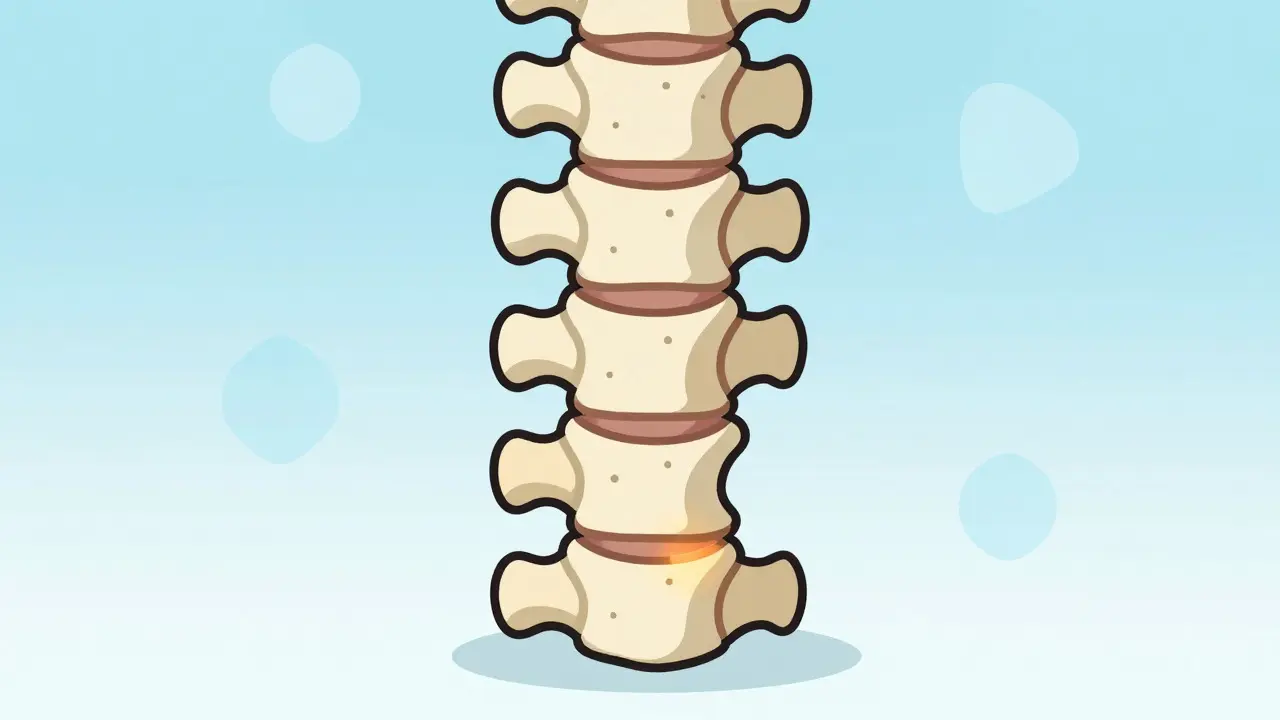
Imagine your spine as a stack of coins. Now imagine one of those coins sliding forward off the pile. That is essentially what happens in spondylolisthesis, a condition where one vertebra slips out of alignment relative to the one below it. This misalignment often occurs in the lower back, specifically between the fifth lumbar vertebra (L5) and the first sacral bone (S1). While many people live with this condition without knowing it, for others, it becomes a source of chronic lumbar instability and significant discomfort.
The term comes from Greek words meaning "vertebra" and "slip." It is not just a simple strain; it is a structural shift that can compress nerves and alter how your body moves. If you are dealing with persistent lower back pain that feels like a muscle pull but won't go away, or if you notice your posture changing, understanding the mechanics of this slip is the first step toward finding relief.
What Is Spondylolisthesis and Who Gets It?
Spondylolisthesis is a spinal condition characterized by the slippage of one vertebral body with respect to the adjacent vertebral body, causing mechanical or radicular symptoms. It affects approximately 6% of the general population. Interestingly, it is more common in women than men and typically manifests in middle-aged individuals over 50. However, it isn't limited to older adults. Children under six have a prevalence of about 2.6%, often linked to genetic factors.
The condition is graded using the Meyerding Classification system, which measures the degree of slippage as a percentage of the vertebral body width. This grading helps doctors determine how severe the issue is and what treatment path makes sense. There are five main types based on cause:
- Degenerative: The most common type in adults, accounting for about 65% of cases. It results from arthritis and wear-and-tear on the spine's cartilage and bones.
- Isthmic: Caused by a defect in the pars interarticularis, the small segment connecting the vertebrae. This is often seen in young athletes involved in sports requiring repetitive spinal hyperextension, such as gymnastics or weightlifting.
- Traumatic: Resulting from acute injury or fracture.
- Dysplastic: Caused by birth defects affecting the facet joints.
- Pathologic: Due to bone weakness from diseases like tumors or osteoporosis.
Symptoms: More Than Just Back Pain
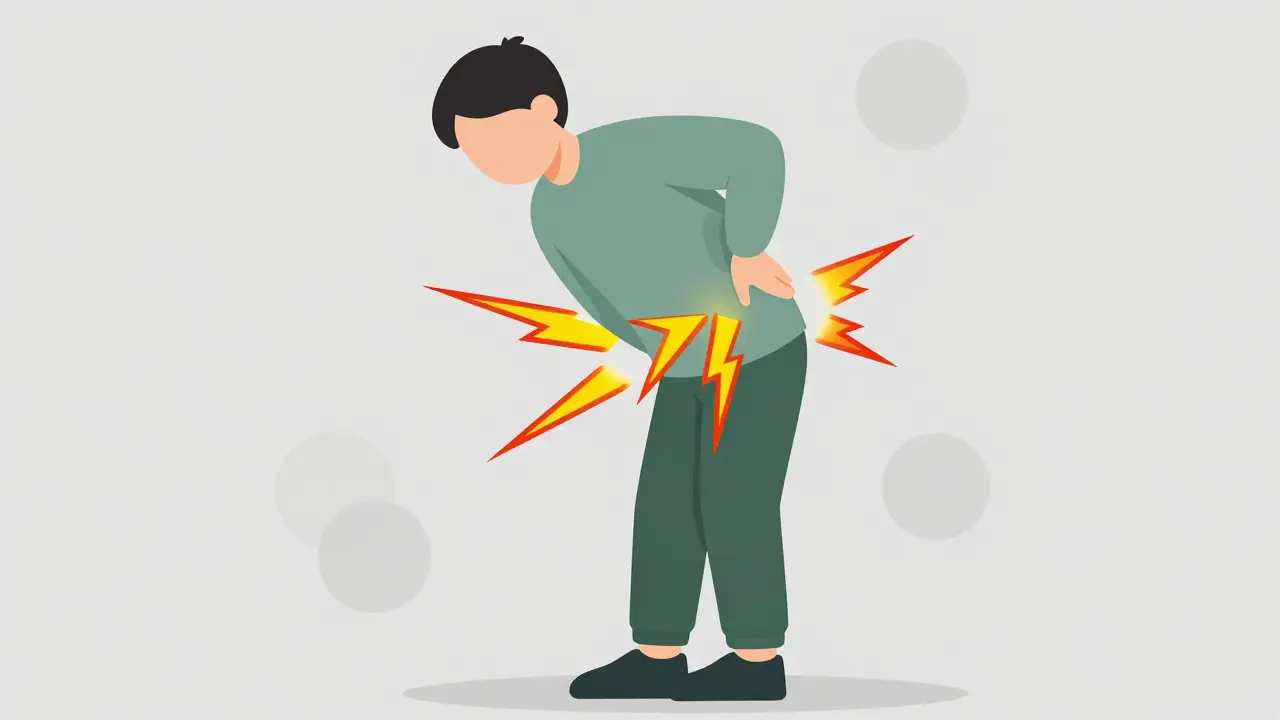
About 40-50% of people with spondylolisthesis never experience symptoms. But when they do, the pain is distinctive. It usually starts in the lower back and radiates to the buttocks and back of the thighs. A key hallmark is that the pain worsens when standing or walking (reported in 82% of symptomatic cases) and improves when sitting or bending forward.
You might also notice tight hamstrings, which affects roughly 70% of patients. In more advanced cases, known as high-grade slips (Meyerding Grade III-IV), nerve compression can lead to neurological issues. About 35% of these patients report tingling, numbness, or weakness in their legs. Some may even develop an abnormal curvature of the spine, initially appearing as swayback (lordosis) and potentially progressing to roundback (kyphosis).
Diagnosis: Seeing the Slip
Diagnosing spondylolisthesis requires specific imaging. A standard X-ray might miss the subtle shifts, so doctors typically order standing lateral X-rays. These provide a clear view of the alignment while you bear weight. For a deeper look, CT scans detail the bony anatomy, helping to identify fractures or defects in the pars interarticularis. MRI scans are crucial for evaluating soft tissue involvement, particularly nerve compression and disc degeneration.
Research shows that disc degeneration correlates strongly with patient age rather than the severity of the slip itself. This means two people with the same grade of slippage can have vastly different levels of pain and functional limitation, depending on the health of their discs and surrounding tissues.
Conservative Management: The First Line of Defense
Before considering surgery, most patients undergo a period of conservative treatment. This approach focuses on managing symptoms and strengthening the support structures around the spine. Physical therapy is central to this strategy. Programs typically last 12-16 weeks and focus on core strengthening and hamstring stretching. Adherence is critical, with only about 65% of patients sticking with the full regimen, yet those who do see the best outcomes.
Medication plays a supportive role. Non-steroidal anti-inflammatory drugs (NSAIDs) help manage inflammation and pain. In some cases, epidural steroid injections are used to reduce swelling around the affected nerve roots. If your lower back pain persists beyond three to four weeks, or if you develop sciatica-like symptoms, consulting a specialist is recommended to prevent long-term complications.
Spinal Fusion: When Surgery Becomes Necessary
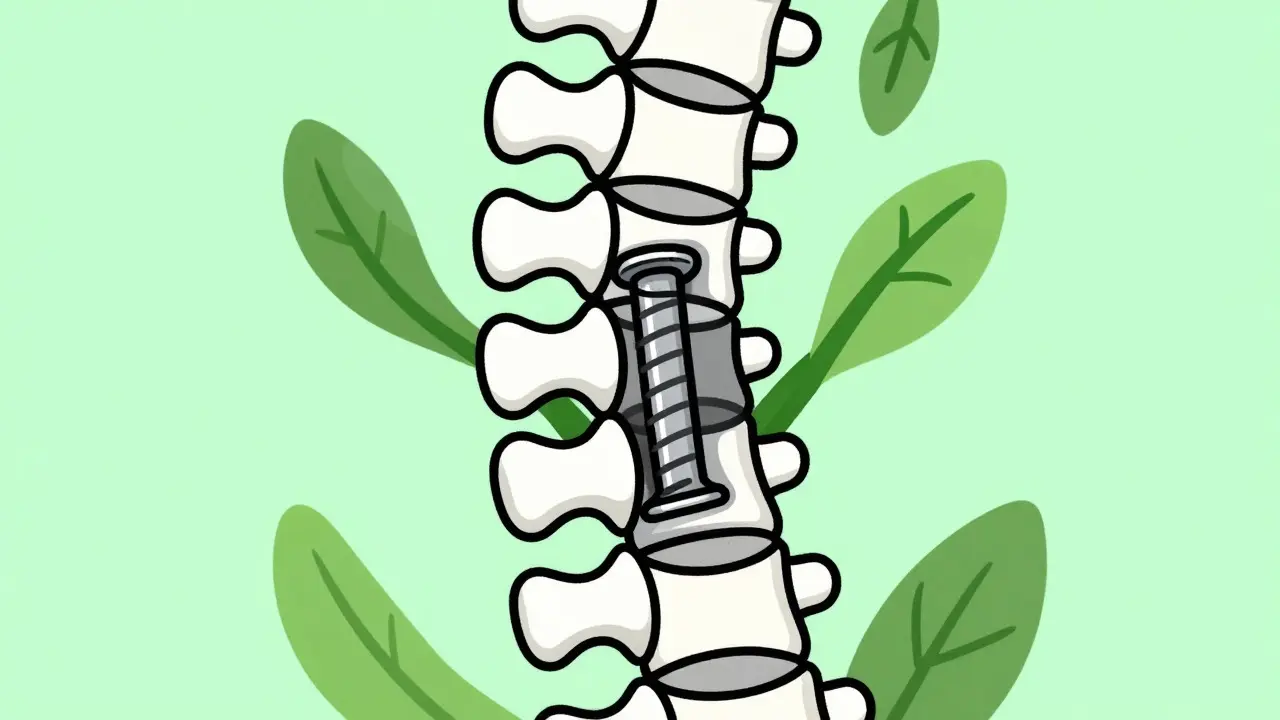
If conservative treatments fail after six to twelve months and significantly impact your quality of life, spinal fusion may be considered. The goal of fusion is to stabilize the slipped vertebra by joining it to the adjacent one, preventing further movement and reducing pain.
There are three main surgical approaches, each with its own success rates and indications:
| Technique | Prevalence | Success Rate (Grade I-II) | Success Rate (Grade III-IV) | Key Benefit |
|---|---|---|---|---|
| Posterolateral Fusion | ~55% | 75-85% | 60-70% | Standard approach for mild slips |
| Interbody Fusion (PLIF/TLIF) | ~35% | 85-92% | 85-92% | Better restoration of disc height and neural space |
| Minimally Invasive Techniques | ~10% | Varies | Limited Data | Reduced recovery time and tissue damage |
Interbody fusion techniques generally show higher success rates across all grades because they restore the natural height of the disc space, which opens up the area where nerves exit the spine. For high-grade slips, revision surgery rates are higher, around 12-15%, often due to adjacent segment disease developing within five years.
Preparation and Recovery: What to Expect
Preparing for fusion surgery is as important as the operation itself. Smoking cessation is critical; smokers face a 3.2 times higher risk of pseudoarthrosis, where the bones fail to fuse. Weight management is also vital, as a BMI over 30 increases complication risks by 47%.
Recovery is a marathon, not a sprint. You can expect six to eight weeks of restricted activity, followed by three to six months of physical therapy. Full recovery often takes 12 to 18 months. Patient satisfaction rates at the two-year mark are generally high, ranging from 78-85%, provided the initial selection criteria were met and rehabilitation was consistent.
Emerging Trends and Future Directions
The field of spinal care is evolving. New devices approved recently aim to improve fusion rates, with early studies showing 89% success at six months compared to traditional methods. Biologic enhancements, such as bone morphogenetic protein (BMP), are being investigated to boost fusion rates in high-risk patients. Meanwhile, motion-preserving alternatives like dynamic stabilization devices are gaining attention for low-grade slips, though long-term data is still emerging.
As research continues, the focus is shifting toward better patient selection. Identifying specific clinical and imaging predictors can help ensure that surgery is reserved for those who will truly benefit, reducing unnecessary procedures and improving overall outcomes.
Is spondylolisthesis always painful?
No. Approximately 40-50% of people with spondylolisthesis remain asymptomatic throughout their lives. Symptoms often depend on the grade of the slip and the presence of associated disc degeneration or nerve compression.
Can I continue exercising with spondylolisthesis?
Yes, but modification is key. Activities involving repetitive hyperextension, like gymnastics or heavy weightlifting, should be avoided or modified. Low-impact activities like swimming, walking, and cycling are generally safe and beneficial for maintaining mobility.
How long does spinal fusion recovery take?
Initial restricted activity lasts 6-8 weeks. Physical therapy continues for 3-6 months. Full recovery, including returning to normal daily activities and work, can take 12-18 months depending on the extent of the surgery and individual healing rates.
What is the difference between spondylolysis and spondylolisthesis?
Spondylolysis is a defect or stress fracture in the pars interarticularis of the vertebra. Spondylolisthesis is the actual slippage of the vertebra forward. Spondylolysis often precedes spondylolisthesis, acting as the precursor to the slip.
Does smoking affect spinal fusion success?
Yes, significantly. Smokers have a 3.2 times higher rate of pseudoarthrosis (failure of the bones to fuse). Quitting smoking before surgery is one of the most effective steps to improve surgical outcomes.
Comments (15)
Amy Zalkin
August 26, 2026 AT 04:31ok so the coin stack thing is actually kinda helpful to visualize. i always thought my back pain was just bad posture from sitting at a desk all day but maybe its something structural. does anyone know if yoga helps or makes it worse? i love downward dog but it feels intense in my lower back
Alex Brown
August 26, 2026 AT 12:44The metaphor of the spine as a stack of coins is indeed a simplification, yet it captures the essence of mechanical instability quite well. The critical distinction here lies in the dynamic nature of the slip; it is not merely a static displacement but a progressive failure of the posterior ligamentous complex and facet joints. When we consider the etiology, particularly in degenerative cases, we must acknowledge that the loss of disc height acts as a primary driver for increased shear forces on the L5-S1 segment. This biomechanical shift often leads to what is termed 'retrolisthesis' in some contexts, though forward slippage remains the classic presentation. It is fascinating how the body compensates through pelvic tilt and hamstring tightness, effectively altering the center of gravity to reduce load on the unstable segment. Understanding this compensation mechanism is vital for any conservative treatment plan, as stretching the hamstrings without addressing the core stability can sometimes exacerbate the underlying instability rather than resolving it. The Meyerding classification, while useful for quantifying the degree of slip, does not fully capture the functional impact on the patient's daily life. Two individuals with a Grade II slip can have vastly different outcomes based on their pre-existing spinal curvature and muscle mass. Therefore, a holistic approach that integrates imaging data with clinical symptoms is paramount. We must move beyond treating the symptom of pain and address the root cause of the mechanical failure. This perspective shifts the focus from passive healing to active stabilization. It suggests that surgery should be viewed not as a last resort, but as a precise engineering solution to restore alignment when biological repair fails. The philosophical implication is that our bodies are not just biological entities but complex mechanical systems that require maintenance and occasional recalibration. Embracing this view allows us to make more informed decisions about our health. It encourages a proactive stance rather than a reactive one. Ultimately, understanding the mechanics empowers patients to take control of their recovery process.
Thhomas Fox
August 27, 2026 AT 16:07Great breakdown of the fusion types. I had a TLIF two years ago for a grade 2 slip and the interbody spacer really did change my life. Standing for long periods used to be impossible but now I can work full shifts again. Core strength is everything post-op though. Don't skip the PT.
joyce Hogewoning
August 28, 2026 AT 18:04I mean honestly who would have guessed that your spine could just slide off like a bad stack of pancakes right?? I had this issue when I was younger playing gymnastics and everyone just told me to tough it out which was basically terrible advice because my back was screaming in agony every single time I tried to do a backbend and then later on when I got older the pain came back even harder and now I am stuck taking pills and waiting for the next appointment with a specialist who looks at his watch constantly like he has somewhere better to be than listen to a human being complain about their own vertebrae slipping around like a loose tooth in a jawbone that is slowly falling apart
Kaylyn Mello
August 29, 2026 AT 15:10the part about smoking increasing risk by 3.2 times is wild. i quit last year for general health but good to know it specifically affects bone fusion. glad i stopped before needing any procedures
Owen John
August 30, 2026 AT 21:08They don't tell you that the real problem isn't the bone, it's the pharmaceutical industry keeping you dependent on NSAIDs so you never seek the actual fix. Fusion is just another way to lock you into a system where you need more hardware in your body. Have you considered that the 'degenerative' label is just a marketing term for normal aging that they pathologize to sell you injections? The data on success rates is cherry-picked from trials funded by device manufacturers. Wake up people.
Maneesh kv
August 30, 2026 AT 21:29🔥 solid info. but why do we always start with meds? in india we use ayurvedic herbs for back pain for centuries and it works great without side effects. 🌿 western medicine is too aggressive 😤
John Park
September 1, 2026 AT 05:53Let's be real, most of these 'success rates' are inflated by survivorship bias. You only hear from the ones who walked out fine. The ones who end up with adjacent segment disease five years later? They're silent. It's a ticking time bomb in your lower back. And don't get me started on the cost. You pay a fortune for a procedure that might just shift the pain to the level above. Typical corporate healthcare greed.
Kathleen McGrath
September 1, 2026 AT 12:57This gave me hope! My doctor said I might need surgery but reading about the physical therapy options first made me feel less scared. I think I will try the core strengthening program before making any big decisions. Thanks for explaining it so clearly!
Lemuel Gomez
September 2, 2026 AT 02:34Interesting point about the disc degeneration correlating with age rather than slip severity. That explains why my friend with a mild slip has no pain, while I have moderate slip and constant discomfort. It’s not just the bone position, it’s the tissue health. Good read overall, though the table formatting was a bit hard to parse on mobile.
Emmanuel Umana
September 3, 2026 AT 13:17In Nigeria, we see many young athletes with isthmic spondylolisthesis due to heavy lifting without proper technique. Prevention is key. Education on safe movement patterns can save many from long-term issues.
Lilian Binda
September 4, 2026 AT 17:53stop acting like this is a new discovery. we have known about spinal slips for decades. the problem is doctors in the west overprescribe surgery. in africa we treat with rest and traditional methods and it works fine. stop relying on machines and needles. your body knows best
Fabian Saldana
September 6, 2026 AT 05:51It is imperative that we emphasize the importance of early intervention. The data presented regarding the efficacy of interbody fusion is compelling, suggesting a paradigm shift in surgical planning for high-grade slips. We must advocate for comprehensive pre-operative screening to ensure optimal candidate selection. Furthermore, the role of lifestyle modifications, particularly smoking cessation, cannot be overstated. Let us champion a holistic approach to spinal health that integrates medical precision with personal responsibility.
Colin Finch
September 8, 2026 AT 02:20Oh, brilliant piece! Truly illuminating. I found the section on emerging trends particularly captivating. The idea of motion-preserving devices is so wonderfully innovative, isn't it? It gives one such hope for the future of spinal care. A very thoughtful analysis, thank you for sharing such detailed information with us all.
Betty Childers
September 9, 2026 AT 03:11Just wanted to say this helped me understand my mom's condition. She has been in a lot of pain lately and we were unsure if she needed surgery. Knowing that PT is the first step and can be effective for many people is really reassuring. Thank you for writing this in such a clear way.