

Every year, millions of people around the world take medicine they think is real - but it’s not. Counterfeit drugs look just like the real thing. Same packaging. Same color. Same name. But inside? They might have no active ingredient. Too much of it. Or worse - toxic chemicals. And if you don’t know what to look for, you won’t know the difference until it’s too late.
Why Your Eyes Are the Last Line of Defense
Technology has made strides. Serialization codes. QR codes. Blockchain tracking. But none of it matters if you’re buying from a shady website or picking up a bottle from a street vendor. The truth is, most counterfeit medicines don’t get caught by scanners or databases. They slip through because someone bought them without checking. That’s where you come in.The World Health Organization says 10-30% of medicines in low-income countries are fake. Even in places like the UK or US, where regulation is strong, fake drugs still get in - mostly through online sellers that look official. Pfizer reports that 89% of counterfeit medicines come from unverified websites. And here’s the scary part: 78% of people who bought fake pills online say they ignored the price. “Too good to be true” was their excuse.
You can’t rely on the system alone. You have to be the final checkpoint. Because if you swallow a fake pill, no one else will feel the side effects but you.
What to Look For: The BE AWARE Checklist
You don’t need a lab or a degree in pharmacology. You just need to know what to check before you take anything. The World Health Professions Alliance created a simple tool called BE AWARE - and it works.- B - Box: Is the packaging cracked? Are the colors faded? Are there spelling mistakes? Fake manufacturers cut corners. Look for words like “pharmaceutical” misspelled as “pharmecutical” - it happens more than you think.
- E - Expiration: Check the date. If it’s expired, don’t take it. But also, if the date looks smudged or printed over an older one, that’s a red flag.
- A - Appearance: Compare the pill to one you’ve taken before. Same size? Same shape? Same markings? If your new bottle of metformin has pink tablets instead of white, something’s wrong.
- A - Authenticity: Does it have a unique code? In the EU, every prescription medicine box since 2019 has a 2D barcode you can scan at the pharmacy. If your pharmacist won’t scan it, walk out.
- R - Seal: Is the tamper-proof seal broken? Is the cap loose? Legitimate medicine comes sealed. If it’s been opened, don’t risk it.
- E - Electronic: Look for QR codes. France and Brazil started rolling out digital leaflets in 2024. Scan it. If the link takes you to a weird website or doesn’t load, stop.
These steps take less than a minute. But they’ve stopped thousands of fake medicines from reaching people. Brazilian patient Maria Silva noticed her diabetes pills had different markings. She called ANVISA - Brazil’s health agency - and they traced it back to a fake batch. She saved her family’s life.
Where Not to Buy: The Online Trap
The biggest source of fake drugs? The internet. Not pharmacies. Not hospitals. Websites that look real but aren’t.Look for the .pharmacy seal. In the US and UK, only verified online pharmacies can use it. If you’re buying online and you don’t see that tiny badge, you’re buying from someone who doesn’t care if you live or die. NABP’s 2023 survey found 41% of Americans bought medicine online without checking for this seal. And 18% of them ended up sick.
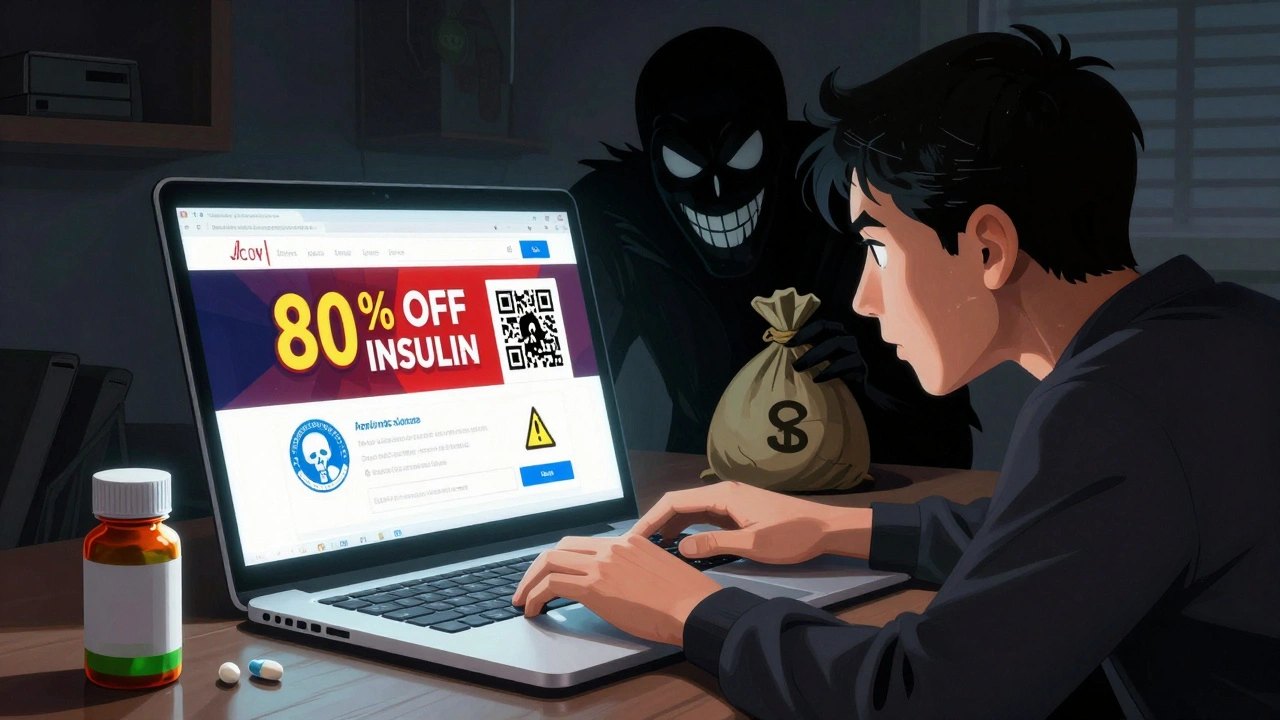
And don’t fall for the “discount” trap. If your insulin is 80% cheaper than your pharmacy charges, it’s fake. No exceptions. Counterfeiters know people are desperate. They prey on that.
Real pharmacies don’t need to advertise on Instagram or Facebook. They don’t send you emails saying “Limited stock!” They don’t ask for payment in cryptocurrency. If it feels off, it is.
What Happens When You Take a Fake Pill
Some people think fake medicine just doesn’t work. That’s not true.Take antibiotics. If they’re fake and don’t contain the right drug, your infection won’t clear. It gets worse. Then you need stronger medicine - which might not work either. You’re stuck in a cycle.
Or take blood pressure pills. If they’re too weak, your pressure spikes. If they’re too strong, you risk a stroke. One 2022 study found that 32% of counterfeit blood pressure meds had 2-5 times the active ingredient. That’s not a mistake. That’s dangerous.
And then there’s the chemical risk. Fake malaria drugs in Africa have been found to contain rat poison. Fake erectile dysfunction pills in the US contained industrial dyes and paint thinners. These aren’t outliers. They’re common.
There’s no way to tell by taste or feel. You can’t test it at home. That’s why prevention is everything.
What You Can Do Right Now
You don’t need to wait for a government campaign or a new app. Start today.- Always buy from licensed pharmacies - physical or verified online. If you’re unsure, call your local pharmacy and ask if they trust the source.
- Keep your old medicine bottles. Compare new ones side by side. Even small differences matter.
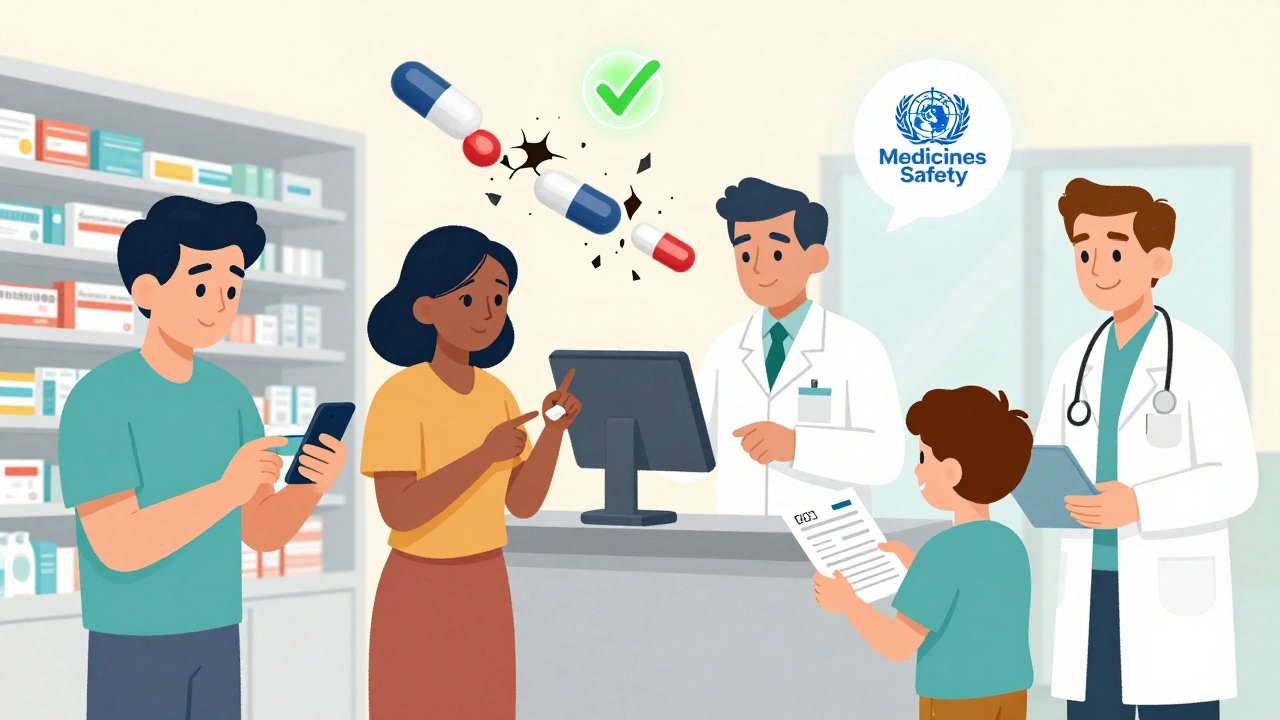
- Download the WHO’s Medicines Safety app. It’s free. It works offline. It tells you how to spot fakes in your language.
- Ask your pharmacist to scan your prescription medicine. If they don’t know how, they’re not up to date - and you should find a new one.
- If you suspect something’s fake, report it. The FDA took 4,300 reports in 2023. Pfizer got 14,000 consumer reports last year. Those reports led to 217 counterfeit busts across 116 countries.
It only takes one person to stop a shipment. One call. One report. One moment of doubt.
The Hard Truth: Vigilance Isn’t Enough
Let’s be clear: expecting every patient to spot every fake is unfair. In places where people can’t afford real medicine, they have no choice. In places with low literacy, visual checks fail more than 40% of the time. That’s not negligence - that’s systemic failure.Experts like Dr. Paul Newton from Oxford say putting the burden on patients in poor countries is ethical outsourcing. Governments and big pharma should fix the supply chain. They should make real medicine affordable. They should enforce laws.
But until that happens - you still have to protect yourself. And your family. And your neighbors.
That’s why vigilance isn’t optional. It’s survival.
What’s Changing in 2025
The fight against fake medicine is getting smarter.India launched a blockchain pilot in April 2024. You scan a code, and you see the whole journey - from factory to pharmacy. No gaps. No hidden stops.
Pfizer says 95% of prescription drugs will have consumer-verification features by 2027. That means more QR codes, more apps, more transparency.
But here’s the catch: technology only helps if you know how to use it. A QR code won’t save you if you don’t scan it. A seal won’t mean anything if you don’t check it.
That’s why education matters more than ever.
Final Thought: You’re Not Just a Patient. You’re a Guardian.
You’re not powerless. You have more control than you think. Every time you check a label, every time you say no to a suspicious deal, every time you report a fake - you’re not just protecting yourself. You’re helping shut down a criminal network that profits from fear and desperation.Counterfeit medicine isn’t a distant problem. It’s in your medicine cabinet. It’s in your friend’s purse. It’s in the online ad you clicked without thinking.
Don’t wait for someone else to fix it. Start with the bottle in your hand. Look. Check. Ask. Report.
Your life depends on it.
How can I tell if my medicine is fake?
Check the packaging for spelling errors, faded colors, or broken seals. Compare the pills to previous batches - size, color, markings. Scan any QR codes or barcodes. If the pharmacy won’t verify the unique serial code, walk away. Use the WHO’s Medicines Safety app to cross-check details.
Can I trust online pharmacies?
Only if they have the .pharmacy seal. In the UK and US, this means they’ve been verified by the National Association of Boards of Pharmacy. Avoid websites that don’t require a prescription, offer “miracle cures,” or ask for payment via crypto or wire transfer. If the price seems too good to be true, it is.
What should I do if I think I’ve taken a fake pill?
Stop taking it immediately. Contact your doctor or pharmacist. Report it to your national health authority - in the UK, that’s the MHRA. Save the packaging and any receipts. Your report could help stop a batch from reaching others.
Are fake medicines only a problem in poor countries?
No. While 10-30% of medicines are fake in low-income countries, even developed nations like the UK and US see counterfeit drugs - mostly from unverified online sellers. The WHO says less than 1% of medicines in the UK are fake, but that’s still thousands of dangerous pills entering the system every year.
Why don’t governments stop fake medicine completely?
It’s a global problem with weak enforcement in many regions. Criminals use complex networks that cross borders. Some countries lack the resources to monitor every shipment. Even with serialization tech, if the system isn’t enforced at the pharmacy level, fakes slip through. That’s why patient vigilance remains critical - it fills the gaps.
Can I report fake medicine anonymously?
Yes. Most national health agencies, including the UK’s MHRA and the US FDA, allow anonymous reporting. You don’t need to give your name. Just send the details: where you bought it, what it looked like, and any batch or serial numbers. Your report helps track patterns and shut down operations.
Do pharmacies check for fake medicines?
In the EU and UK, pharmacies are required to scan the unique identifier on every prescription medicine box since 2019. But not all staff are trained, and not all systems work perfectly. That’s why you should always ask them to scan your medicine. If they hesitate, find a different pharmacy.
Is there an app to help me verify my medicine?
Yes. The WHO’s Medicines Safety app is free and available in over 30 languages. It helps you spot fake packaging, explains how to read codes, and links you to official reporting channels. Some countries also have local apps - like Brazil’s MedCheck - which are used by over a million people.
Comments (8)
Inna Borovik
December 6, 2025 AT 18:03Just got back from my pharmacy and asked them to scan my blood pressure med. They looked at me like I was crazy. Said it's 'not necessary.' I walked out. That's the problem. Systems are broken, and they expect patients to just trust. I'm not trusting anything until I see that 2D code light up on their scanner. If they can't do it, they're part of the problem.
Rashmi Gupta
December 7, 2025 AT 15:32Let me be clear: this whole vigilance nonsense is a distraction. In India, we don't have the luxury of scanning QR codes when we're choosing between food and medicine. The real criminals aren't the people buying cheap pills-they're the ones who priced life out of reach in the first place. This article reads like a manual for the privileged. Meanwhile, my aunt took fake insulin for six months because it was the only thing she could afford. She's alive. That's not vigilance. That's survival.
Andrew Frazier
December 8, 2025 AT 11:51Ugh. Another woke article telling us to check labels while the government lets China flood us with fake meds. You think scanning a QR code is gonna stop this? Nah. It's all part of the globalist agenda to make us dependent on tech while our pharma companies get bought out by foreign corps. If you wanna stay safe, buy American. Or better yet, just don't take pills at all. Your body's smarter than Big Pharma anyway.
Gwyneth Agnes
December 9, 2025 AT 13:38Check the seal. Don't trust the price. Report it. That's it.
Katie O'Connell
December 10, 2025 AT 17:00While the BE AWARE framework is commendable in its structural clarity, it fundamentally presupposes a level of socioeconomic privilege that is neither universal nor ethically defensible. The onus placed upon the individual patient to act as a pharmacovigilance sentinel is, in essence, a form of epistemic violence-transferring institutional responsibility onto the most vulnerable. One must interrogate not only the packaging, but the political economy that renders such vigilance a necessity rather than a safeguard.
Brooke Evers
December 12, 2025 AT 15:31I just want to say how much this post means to me. I used to think I was overreacting when I checked every pill, every box, every expiration date. But last year, my mom took a fake diabetes med because she didn't want to spend the extra $20. She ended up in the ER. Since then, I scan everything. I keep old bottles. I call the pharmacy before I buy anything online. I even taught my 72-year-old dad how to use the WHO app. It’s not about being paranoid-it’s about being prepared. And if you’re reading this and you’ve never checked your meds? Please, just take one minute today. Look at the color. Feel the seal. Ask a question. You’re not being dramatic. You’re being brave.
Saketh Sai Rachapudi
December 13, 2025 AT 23:28India has better drug control than US. We have DCGI and traceability. You guys are so lazy. You want everything on phone. We use common sense. Fake medicine? No one sells it here because we report immediately. You Americans think you're safe because you have big pharma? Lol. Your online pharmacies are a joke. You need to stop being soft.
Nigel ntini
December 15, 2025 AT 10:40Thank you for writing this. I’ve worked in community pharmacies for 18 years, and I’ve seen the fear in people’s eyes when they realize their medicine might be fake. I’ve had patients cry because they couldn’t afford to replace it. We’re not perfect-we don’t always have the time, the training, the tech. But we’re trying. And every time someone asks us to scan a code, it reminds us why we do this job. Don’t be ashamed to ask. Don’t be afraid to walk away. You’re not being difficult. You’re being human.