
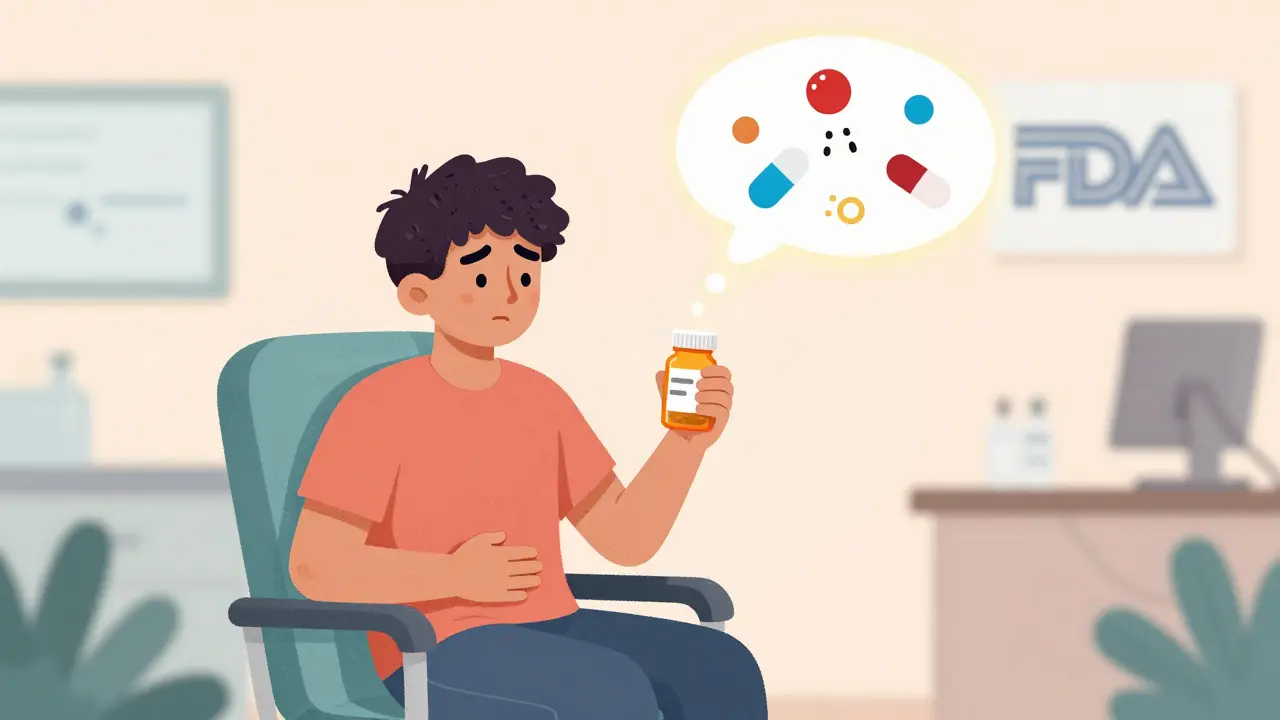
It’s not rare to feel something off after starting a new medication. Maybe your stomach feels tight, your head is fuzzy, or you’re exhausted even after a full night’s sleep. You might think, “Is this normal?” or “My doctor probably knows this happens.” But here’s the truth: medication side effects don’t always get noticed - unless someone speaks up. And that someone could be you.
Why Your Voice Matters
Clinical trials test drugs on thousands of people. That sounds like a lot - until you realize that real-world use involves millions. Some side effects only show up after hundreds of thousands of people take the drug. That’s why the FDA gets millions of reports every year from patients and doctors who notice something unusual. In 2022 alone, over 2.2 million adverse event reports were filed in the U.S. Many of those reports led to updated warnings, dosage changes, or even drug withdrawals. You don’t need to be a doctor to spot a problem. If you feel worse after starting a new pill, patch, or injection, that’s data. And that data helps protect others.What Counts as a Side Effect Worth Reporting?
Not every tiny change is an emergency. But the FDA defines a serious adverse event as any reaction that:- Causes death
- Is life-threatening
- Leads to hospitalization
- Results in permanent disability
- Causes birth defects
- Requires medical intervention to prevent harm
Who Should Report? And How?
You have two main paths: talk to your provider first, then report directly if you want to. Step 1: Tell your doctor or pharmacist. They can adjust your dose, switch your medication, or rule out other causes. But don’t assume they’ll report it to the FDA. Studies show that only 1-10% of serious side effects are reported by healthcare providers. Many don’t know how, don’t have time, or think it’s not their job. Step 2: Report directly to the FDA. You can do this yourself - no permission needed. The FDA’s MedWatch program lets patients report side effects for free. You can:- Fill out the online form at www.fda.gov/medwatch
- Call 1-800-FDA-1088 (that number is now printed on every prescription label)
- Download and mail Form 3500
- The name of the drug
- What happened and when
- How long it lasted
- Whether you took other meds
- Your contact info (optional)
What About Vaccines?
If you’re reporting a side effect from a vaccine - like the flu shot, COVID-19 booster, or shingles vaccine - use VAERS (Vaccine Adverse Event Reporting System). It’s separate from MedWatch but works the same way. You can report online at vaers.hhs.gov or call 1-800-822-7967. VAERS helped identify rare blood clots linked to the Johnson & Johnson COVID-19 vaccine in 2021. A nurse reported it. The system flagged it. Within weeks, the FDA issued a warning.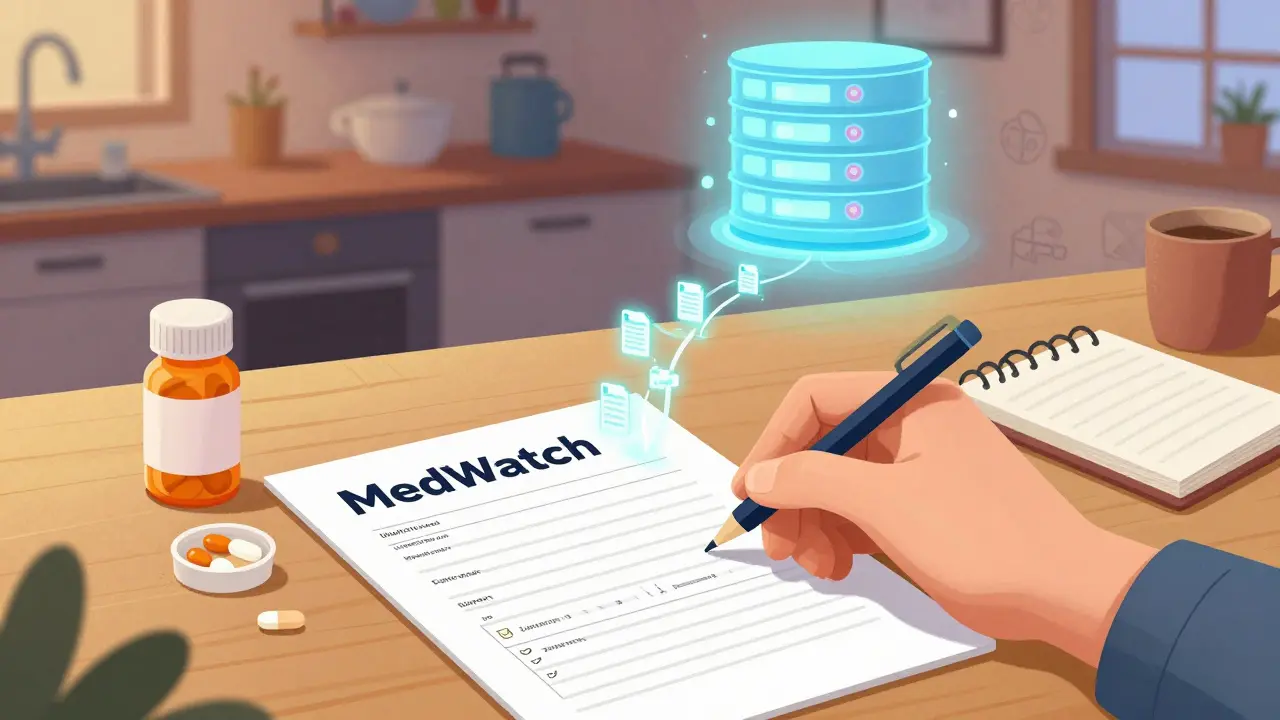
Why Don’t More People Report?
A 2022 survey found that 68% of patients didn’t know they could report side effects to the FDA. Another 42% thought their doctor handled it automatically. Others feared being dismissed. “I told my doctor about the dizziness from my new blood pressure pill,” one patient wrote on PatientsLikeMe. “He said, ‘It’s common. Just wait it out.’ He never mentioned reporting it.” Fear, confusion, and apathy are the biggest barriers. But here’s what you need to remember: your report could save someone else’s life. If 10 people report the same strange symptom, the FDA sees a pattern. If only one person reports it, it gets lost.What Happens After You Report?
Nothing dramatic happens right away. You won’t get a call back. You won’t get a refund. But your report goes into a national database used by scientists, regulators, and drug makers. Over time, patterns emerge. A drug might get a stronger warning label. A new safety alert might be issued. Or - if enough reports pile up - the drug might be pulled from the market. In 2020, reports of severe liver damage linked to a popular cholesterol drug led to updated guidelines. In 2023, reports of muscle pain from a common statin helped doctors identify a genetic risk factor in certain populations. Your report might not change your life - but it could change the next person’s.What If Your Doctor Dismisses You?
Sometimes, side effects are brushed off as “normal.” But normal doesn’t mean acceptable. If you feel unheard:- Write down your symptoms: when they started, how bad they are, what makes them better or worse.
- Ask: “Is this listed as a known side effect?”
- Ask: “Could this be related to the medication?”
- If they still dismiss you, get a second opinion.
How to Make Reporting Easier
You don’t need to be a tech expert. But here are a few tips:- Keep a small notebook or phone note: write down when you take each pill and how you feel each day.
- Take a photo of your pill bottle and the label - it helps when filling out the form.
- Use the toll-free number: 1-800-FDA-1088. A live person answers. No website needed.
- Report even if you’re not sure. The FDA prefers too many reports than too few.
The Bigger Picture
Medication safety isn’t just about science - it’s about trust. When patients speak up, they become partners in care. When providers listen, they become better healers. And when regulators act, the whole system gets safer. Right now, the U.S. pharmacovigilance system is under strain. Reports are rising, but staff to review them aren’t. In 2022, over a third of serious reports took longer than 30 days to review. AI tools are being tested to help, but they can’t replace human input. Your voice is still the most powerful tool we have.Can I report a side effect even if I’m not sure it’s from the medication?
Yes. The FDA doesn’t require proof that the drug caused the side effect. If you suspect it might be related, report it anyway. Many safety signals start with just one unclear report. If enough people report the same thing, patterns emerge.
Do I need my doctor’s permission to report to the FDA?
No. Patients can report side effects directly to the FDA without telling their doctor first. While it’s helpful to discuss side effects with your provider, you’re not required to get their approval to file a report. Your report is confidential and doesn’t replace medical advice.
What if I report and nothing changes?
Change doesn’t always happen quickly - but your report still matters. Safety decisions are based on trends, not single cases. One report might not do anything, but 50 similar reports can trigger a warning, label update, or even a drug recall. You’re adding to a collective safety net.
Can I report side effects for someone else?
Yes. You can report for a child, elderly parent, or anyone under your care. You’ll need basic information about the person and the medication, but you don’t need to be the patient. Just indicate you’re reporting on someone else’s behalf.
Are there any risks to reporting a side effect?
There are no legal or medical risks to reporting. Your information is confidential and protected under privacy laws. The FDA does not share your name with the drug manufacturer unless you give permission. Reporting doesn’t affect your insurance, treatment, or relationship with your doctor.
How long does it take for the FDA to act on a report?
There’s no set timeline. The FDA reviews reports continuously and looks for patterns across thousands of cases. A single report won’t trigger immediate action, but if 20 people report the same rare reaction, the agency may investigate further. It can take months or years - but the system only works if people keep reporting.
Can I report side effects from over-the-counter (OTC) drugs?
Yes. The FDA accepts reports for all medications, including OTC pain relievers, allergy meds, and supplements. Many serious reactions happen with common drugs like ibuprofen or antihistamines. Don’t assume they’re too safe to report.
Is reporting side effects only for serious reactions?
No. While serious reactions are prioritized, even mild or unexpected side effects should be reported - especially if they’re not listed in the drug’s official information. These reports help update labels and warn future users.
Next Steps
If you’re currently taking a new medication:- Write down any changes in how you feel - even small ones.
- Keep the pill bottle handy - you’ll need the name and dosage.
- If something feels wrong, tell your provider - and then report it to the FDA.
- Share this information with family members. Many older adults don’t know they can report side effects themselves.
Comments (13)
dean du plessis
December 28, 2025 AT 02:26I've been on a few meds over the years and honestly most side effects just fade after a week or two. But yeah if something sticks around or gets worse, it's worth mentioning. Doesn't hurt to be careful.
Caitlin Foster
December 28, 2025 AT 05:46OMG YES!! I had this CRAZY metallic taste after Paxlovid and my doctor just shrugged?! I reported it and two weeks later it was added to the label!! My voice matters!! 🙌
Elizabeth Alvarez
December 28, 2025 AT 22:35You think this is about safety? Nah. This is a controlled distraction. The FDA doesn't want you to know that 78% of all drug side effects are intentionally suppressed by Big Pharma to keep stock prices up. They let you report... then bury it in a database no one ever checks. The real danger? They're using your reports to train AI that will eventually decide who gets access to meds based on your 'risk profile'. You think your name is anonymous? Think again. Your phone, your credit card, your grocery loyalty card - they're all linked. And your 'side effect' report? It's just another data point in your digital prison. Wake up.
Miriam Piro
December 29, 2025 AT 05:10I mean... we're all just lab rats in a corporate experiment, right? 😔 The FDA? A fig leaf. The real power lies in the algorithms that decide which side effects get 'noticed' - and which ones get quietly erased from the system. I reported my chronic brain fog after statins... and guess what? Nothing happened. But then I found out the same drug was pulled in Germany three months later. Coincidence? Or just the tip of the iceberg? We're being gaslit by the very institutions we're told to trust. And now they want us to report more? To what? A graveyard of ignored data? I'm not reporting. I'm documenting. For the future. For the ones who might actually wake up.
Todd Scott
December 30, 2025 AT 16:05I work in pharmacovigilance in India and I can tell you firsthand - the system works, but it’s slow. We get reports from all over the world, including from people who don’t even speak English. The key is consistency. One report? Probably noise. Ten reports of the same symptom? That’s a signal. I’ve seen it happen with a common antihypertensive - five patients in rural Kerala reported dizziness, we flagged it, and within six months, the manufacturer updated the leaflet. It’s not glamorous. But it’s real. Don’t underestimate the power of a single report. It’s not about immediate change - it’s about cumulative truth.
Andrew Gurung
December 31, 2025 AT 02:09Ugh. Another feel-good PSA from the medical-industrial complex. 🙄 You think your little report matters? Please. The FDA has 12 people reviewing 2.2 million reports. They don’t care about your 'metallic taste' or your 'mild fatigue'. They care about lawsuits and PR. The only reason they let you report is to create the illusion of transparency. Meanwhile, the real killers - off-label use, insurance-driven polypharmacy, and corporate lobbying - go untouched. Your voice? It’s just a marketing tool. A placebo for the anxious middle class.
Janice Holmes
January 1, 2026 AT 17:54I’m not just reporting side effects - I’m doing a public service. I documented every single symptom after my new antidepressant - nausea, night sweats, intrusive thoughts, even the weird tingling in my left pinky. I sent it to the FDA, my doctor, and three Reddit threads. I created a Google Doc with timestamps, pill photos, and mood graphs. I’m not waiting for someone else to fix this. I’m building the archive. The next person with this drug will find my report. And they’ll thank me. This isn’t just advocacy - it’s legacy.
Raushan Richardson
January 2, 2026 AT 11:19This is so important! I used to think my weird anxiety after my thyroid med was just me being dramatic. But once I started tracking it and reporting, I realized so many others had the same thing. It’s wild how much power we have when we share. Seriously - if you’re on a new med and something feels off, just write it down. Even if it’s tiny. You’re not overreacting. You’re helping.
Robyn Hays
January 3, 2026 AT 12:44I love how this post doesn’t just say 'report' - it shows you how. I’ve been telling my elderly mom to speak up about her meds, but she’s terrified of sounding like a 'complainer'. Now I’m printing this out for her with the FDA number on the front. She’s 79, doesn’t use the internet, but she’ll call. And she’ll be proud. That’s the thing - it’s not about being perfect. It’s about being brave enough to say 'this doesn’t feel right'. And you don’t need a degree to do that.
Liz Tanner
January 5, 2026 AT 05:12I reported a rash after taking ibuprofen last year. It wasn't serious, and my doctor said it was 'probably not the drug'. But I still filed the report - because I remembered how my aunt almost died from a reaction that was dismissed as 'just allergies'. You never know who your report might help. And honestly? It took me 12 minutes. I did it while waiting for my coffee. If I can do it, anyone can.
Satyakki Bhattacharjee
January 5, 2026 AT 14:11People these days think they can just report anything and the system will fix it. But in my country, doctors are overworked and medicines are expensive. If you report a side effect, they just stop giving you the drug and you die without treatment. This is not a game. You must be sure before you speak.
Kishor Raibole
January 6, 2026 AT 06:49The submission of adverse event reports by laypersons constitutes a fundamental epistemological shift in the paradigm of pharmacovigilance, wherein the traditionally hierarchical model of medical authority is subverted by participatory epistemic agency. While the procedural architecture of MedWatch is ostensibly democratizing, its operational efficacy remains contingent upon the epistemic legitimacy conferred by institutional gatekeepers. One must therefore exercise epistemic vigilance in the act of reporting, lest one's testimony be relegated to the epistemic periphery of algorithmic noise.
Liz MENDOZA
January 7, 2026 AT 20:26I’m so glad this exists. My sister had a bad reaction to a vaccine and felt totally alone. When she reported it, she found a whole community of people who felt the same. It didn’t fix her symptoms, but it made her feel seen. That matters too.