
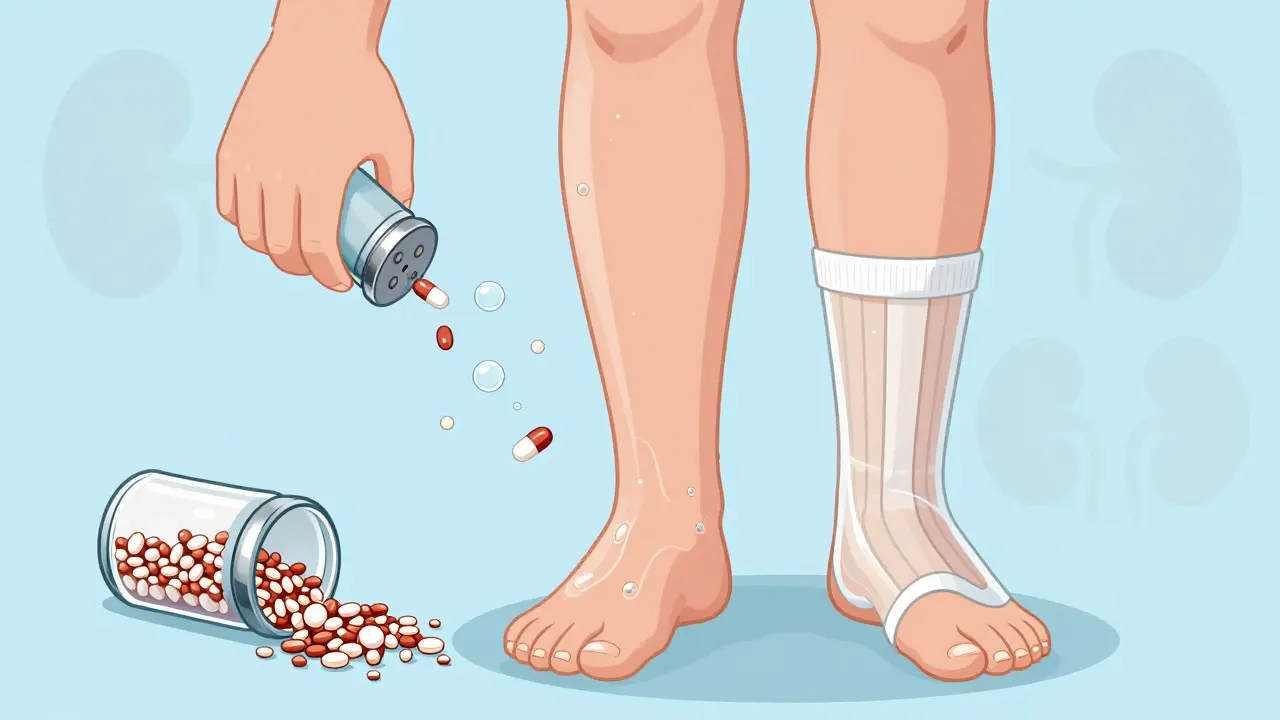
When your kidneys start to fail, your body doesn’t just slow down-it starts to swell. Edema in chronic kidney disease (CKD) isn’t just a nuisance. It’s a sign your body is drowning in fluid it can’t get rid of. You might notice your ankles puffing up by the end of the day, your shoes feeling tighter, or even your face looking puffy in the morning. For many people with CKD, this swelling doesn’t go away with rest. It comes back, again and again, because the kidneys aren’t doing their job: filtering out sodium and water.
Why Edema Happens in CKD
Your kidneys normally balance fluid by pulling excess sodium and water out of your blood and sending it to your bladder. When kidney function drops-especially when your eGFR falls below 60 mL/min/1.73m²-that system breaks down. Sodium sticks around. Water follows sodium. And suddenly, fluid leaks out of your blood vessels into your tissues. That’s edema. It shows up first in the ankles and feet because gravity pulls fluid downward. But it can also collect around your eyes, in your abdomen (ascites), or even in your lungs if things get serious. The more advanced your CKD, the worse it gets. Stage 4 or 5? You’re at high risk. And here’s the catch: it’s not just about drinking too much water. Even if you’re not chugging fluids, the sodium in your food is doing the damage. Processed bread, canned soup, deli meats-these aren’t snacks. They’re liquid traps.Diuretics: The Fast Fix with a Price
When swelling gets bad, doctors turn to diuretics. These are pills or injections that tell your kidneys to pee out more fluid. But not all diuretics work the same way, and not all are safe for every stage of CKD. For people with eGFR under 30, loop diuretics like furosemide are the go-to. You might start with 40 mg a day. If that doesn’t help, your doctor might bump it up-20 or 40 mg every few days-until you’re losing a pound or two a day. In severe cases, doses can hit 320 mg daily. That’s a lot. And it’s not without risk. A 2016 NIH study followed 312 non-dialysis CKD patients. Those on diuretics lost more fluid-but their kidney function declined faster. On average, their eGFR dropped by 3.2 mL/min/1.73m² per year. People not on diuretics? Only 1.7. That’s a big difference. And then there’s the risk of acute kidney injury. If you push too hard-especially with doses over 160 mg of furosemide daily-you can crash your kidneys. One study showed a 4.1 times higher chance of hospitalization for kidney failure when doses go too high. Thiazide diuretics like hydrochlorothiazide work better for people with milder CKD (eGFR above 30). But here’s the twist: combining a loop diuretic with a thiazide-called sequential nephron blockade-can be more effective. It’s like using two different filters instead of one. But it also increases the risk of kidney injury by 23%. Spironolactone is another option, especially if you have heart failure along with CKD. It helps with fluid retention and even cuts death risk by 30% in advanced heart failure. But it can spike your potassium levels. In stage 4 or 5 CKD, that risk jumps above 25%. That’s why your doctor will check your blood regularly. And now, there’s a new tool: IV furosemide. Approved by the FDA in March 2025, it’s designed specifically for advanced CKD. In patients with eGFR under 15, it cleared 38% more fluid than oral pills. That’s huge for people who can’t absorb pills anymore.Salt Restriction: The Foundation No One Wants to Talk About
If diuretics are the fire extinguisher, salt restriction is the smoke detector. It stops the fire before it starts. The National Kidney Foundation says you should eat no more than 2,000 mg of sodium a day if you have edema from CKD. For advanced stages, they recommend 1,500 mg. That’s less than a teaspoon of salt. But here’s the problem: you’re not eating salt. You’re eating bread, soup, cheese, and frozen meals. One slice of bread? 150-200 mg sodium. Two slices? That’s already 10% of your daily limit. A cup of canned soup? 800-1,200 mg. Two ounces of deli turkey? 500-700 mg. You haven’t even added salt at the table yet. A 2022 review by the American Kidney Fund found that people who stuck to 2,000 mg of sodium a day saw a 30-40% reduction in swelling within 2-4 weeks-without any pills. That’s powerful. But sticking to it? That’s the hard part. A survey from the American Kidney Fund’s online community showed 68% of people with CKD struggle with low-sodium diets. Why? Taste (72%), social events (65%), and not knowing what’s safe (58%). It’s not just about reading labels. You have to learn to cook differently. Use herbs, lemon, garlic. Avoid pre-made sauces. Rinse canned beans. Choose fresh over frozen. And don’t forget hidden fluids-yogurt, soups, watermelon. One cup of watermelon has 200 mL of water. That counts.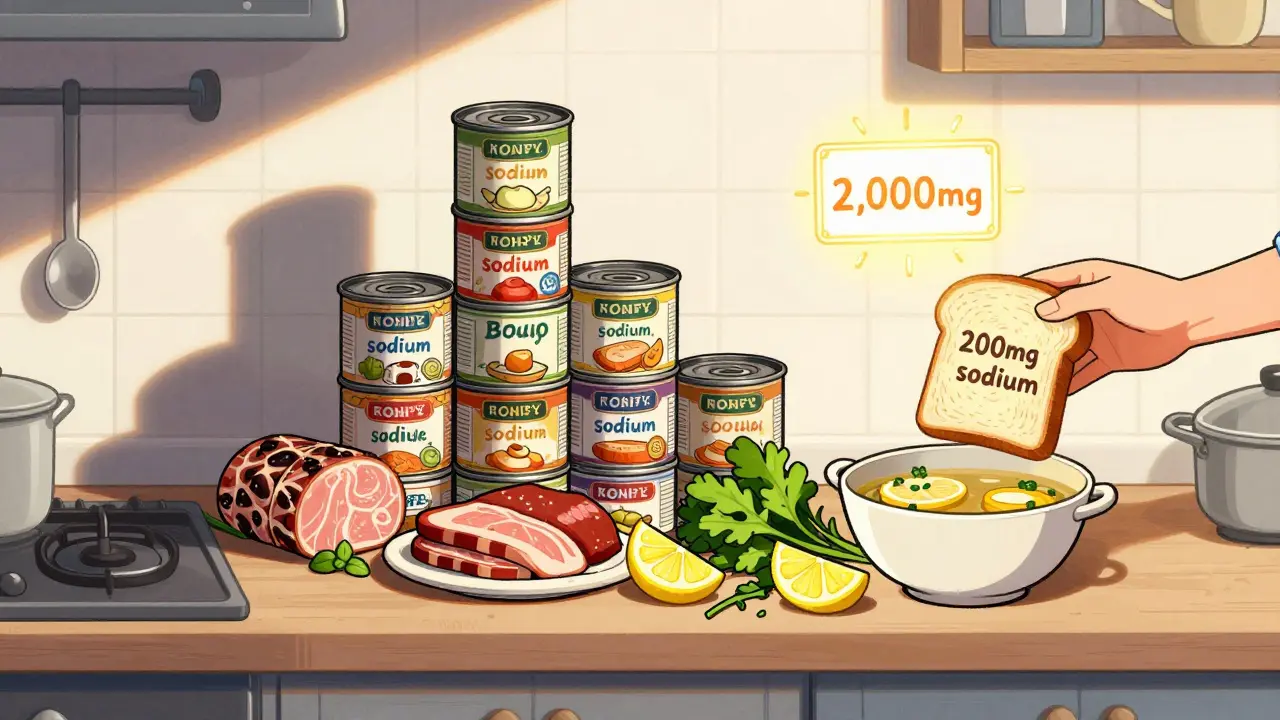
Compression Therapy: The Silent Helper
Diuretics and diet help. But if your legs are swollen, you need something else: compression. Graduated compression stockings (30-40 mmHg at the ankle) are the gold standard. They squeeze your legs just enough to push fluid back toward your heart. Studies show they reduce leg volume by 15-20% in four weeks. That’s not magic. That’s physics. But most people don’t wear them. A 2022 University of Michigan study found only 38% of patients kept using them after three months. Why? They’re hard to put on (57%), they itch (41%), and they feel tight (63%). Elevation helps too. Lying down with your feet above your heart for 20-30 minutes a few times a day can reduce swelling by 25-30%. It’s simple. Free. And often ignored. Walking matters. A 2021 Cochrane review showed that 30 minutes of walking five days a week improved edema control by 22% compared to just resting. Movement pushes fluid through your lymphatic system. It’s like a natural pump. For severe cases-especially with nephrotic syndrome-intermittent pneumatic compression devices can help. These machines inflate and deflate around your legs, mimicking muscle movement. One study found they reduced leg swelling 35% more than stockings alone.The Real Challenge: Balance
The biggest mistake? Thinking one treatment is enough. Diuretics without salt restriction? You’ll need higher doses. More side effects. Faster kidney decline. Compression without movement? Your legs stay heavy. Fluid pools back in. Salt restriction without support? You’ll give up. The most successful patients? They have a team. A nephrologist. A renal dietitian. A physical therapist. Together, they create a plan that’s not just effective-but doable. Mayo Clinic’s patient registry found that with multidisciplinary care, 75% of stage 3-4 CKD patients controlled their edema within eight weeks. Without it? Only 45%. And here’s the truth: untreated fluid overload is deadlier than the side effects of treatment. A 2024 report from the American Society of Nephrology showed a 28% higher death rate in CKD patients with persistent edema compared to those who reached “dry weight”-the point where swelling is gone but you’re not dehydrated.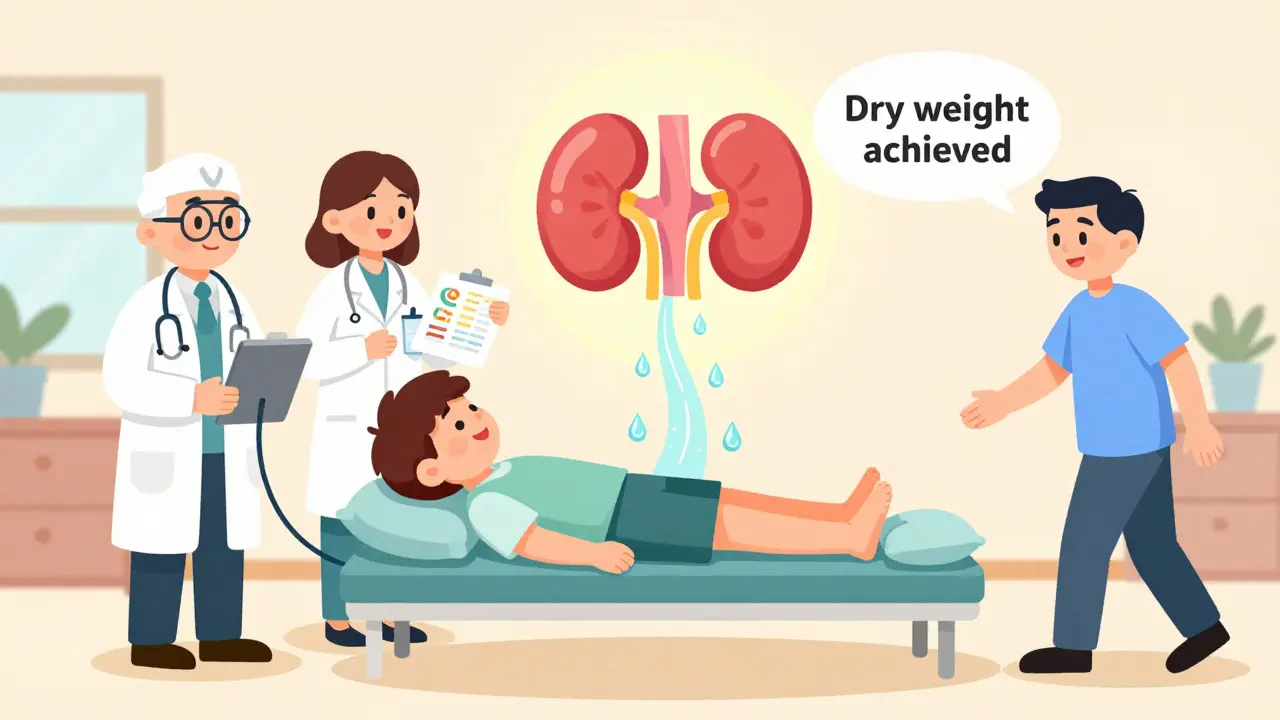
What You Can Do Today
You don’t need to fix everything tomorrow. Start with one thing.- Track your sodium: Use a free app like MyFitnessPal. Write down everything you eat for three days. You’ll be shocked.
- Swap one high-sodium food: Replace canned soup with homemade broth. Swap deli meat for grilled chicken. Notice how you feel.
- Try elevation: Lie down after dinner. Put your feet on two pillows. Do it for 20 minutes. See if your ankles feel lighter.
- Ask for help: Request a referral to a renal dietitian. They’re not a luxury. They’re essential.
What’s Next?
Research is moving fast. The NIH’s FOCUS trial, ending in late 2025, is testing whether using bioimpedance scans to guide diuretic doses can cut hospital visits by a third. That means your treatment could soon be personalized-not just based on how you look, but on what your body actually holds. Vaptans, new drugs that block water retention, are being studied. But early trials were halted because of liver damage. So for now, the old tools-salt, diuretics, compression-are still your best bet. The goal isn’t to eliminate all swelling. It’s to live without it controlling your life. To sleep without waking up to swollen eyes. To walk without your shoes cutting into your ankles. To eat dinner with friends without wondering if the bread will make you swell. It’s possible. But it takes more than a pill. It takes knowledge. Discipline. And support.Can I stop taking diuretics if I cut out salt?
Some people with early-stage CKD (stages 1-3) can reduce or even stop diuretics after strict salt restriction for 4-6 weeks. But in stages 4-5, the kidneys are too damaged to handle fluid on their own. Stopping diuretics without medical supervision can lead to dangerous fluid buildup. Always work with your doctor before changing your meds.
How much water should I drink if I have edema from CKD?
There’s no one-size-fits-all number. If you have mild edema, 1.5-2 liters a day is usually fine. If you’re in stage 4 or 5 with severe swelling, your doctor may limit you to 1-1.5 liters. That includes water, tea, coffee, soup, yogurt, and even fruits like watermelon. Track your total fluid intake-not just what you drink.
Are compression stockings uncomfortable? Do they really work?
Yes, they can be uncomfortable at first-especially if you’ve never worn them. But 30-40 mmHg graduated stockings are designed to squeeze your ankles the most and loosen as they go up your leg. That’s what helps push fluid back up. Studies show they reduce leg swelling by 15-20% in four weeks. If they hurt, ask for a different size or brand. Don’t quit. The benefit is real.
Why do I feel dizzy when I take diuretics?
Diuretics make you pee out fluid-and that lowers your blood pressure. If you lose too much too fast, you can get lightheaded, especially when standing up. This is called orthostatic hypotension. To prevent it: stand up slowly, drink water if you’re not over your fluid limit, and don’t skip meals. If dizziness happens often, tell your doctor. Your dose may need adjusting.
Can I still eat out with CKD and edema?
Yes-but you need a plan. Ask for no added salt. Skip sauces and dressings. Choose grilled meats, steamed veggies, and plain rice. Avoid soups, fried foods, and anything labeled “seasoned” or “marinated.” Chain restaurants often have nutrition info online-check sodium content before you go. It’s not perfect, but it’s doable.
Comments (13)
Sue Stone
January 23, 2026 AT 21:26Just tried the elevation thing after dinner-feet on two pillows-and my ankles actually felt lighter by morning. No magic, just physics. I’m sold.
Susannah Green
January 24, 2026 AT 05:21Track your sodium? YES. I used MyFitnessPal for three days and realized I was hitting 4,200 mg just from ‘healthy’ snacks-granola bars, pretzels, even ‘low-sodium’ veggie chips. Mind blown. Started swapping for unsalted almonds and fresh fruit. Swelling dropped 30% in 10 days. You don’t need fancy meds if you cut the hidden salt.
Oladeji Omobolaji
January 24, 2026 AT 21:48Man, this hits different. I’m from Nigeria, and here we think edema is just ‘water retention’-no one talks about sodium traps in bread or soup. My cousin with CKD didn’t even know canned beans needed rinsing. This post? Lifesaver. Sharing it with my whole family.
Dawson Taylor
January 26, 2026 AT 00:17Compression stockings are not comfortable, but they’re not supposed to be. They’re medical devices, not fashion accessories. The 30-40 mmHg gradient is non-negotiable for fluid return. If they itch, try silicone-lined brands. If they’re hard to put on, get a donning aid. This isn’t optional-it’s biomechanical support.
Sallie Jane Barnes
January 26, 2026 AT 09:00I’m a nurse, and I’ve seen this over and over: patients on 320 mg furosemide daily, still swollen, because they’re eating a whole bag of pretzels at lunch. Diuretics aren’t a license to eat junk. They’re a bridge-until you fix the root. Salt restriction isn’t a diet. It’s survival. And yes, it’s hard. But so is dialysis three times a week.
I had a patient who cut salt for six weeks and got her diuretic cut in half. She cried when she could wear her favorite shoes again. That’s the win we need to focus on.
Vanessa Barber
January 26, 2026 AT 17:17Wait-so you’re saying I can’t eat my favorite chicken noodle soup? And that I have to wear these weird leg socks? And walk? What’s next, yoga and affirmations? I’m not some wellness influencer. I’m just trying to survive.
Janet King
January 27, 2026 AT 07:15It is important to understand that fluid balance is a delicate system. Excess sodium causes water retention. Diuretics help remove fluid, but they do not correct the underlying sodium imbalance. Compression and movement assist venous return. All three are necessary. One alone is insufficient. This is not opinion. This is physiology.
Andrew Smirnykh
January 27, 2026 AT 14:32I appreciate how this breaks down the science without jargon. I’ve been on diuretics for two years, and no one ever explained why salt matters more than water. I thought drinking less would help. Turns out, it’s the bread. And the soup. And the ‘no salt added’ canned tomatoes that still have 180 mg per serving. Eye-opening.
Kerry Evans
January 28, 2026 AT 14:10People act like diuretics are the enemy. But if you’re drowning in fluid, you don’t get to be ‘natural’-you get to live. The NIH study you cited? It showed diuretics *delayed* dialysis in 68% of cases. That’s not killing your kidneys-it’s buying you time. Stop blaming the medicine and start blaming the processed food industry.
And compression stockings? If you can’t put them on, you’re not trying hard enough. My grandma wore them at 85 with arthritic hands. She used a plastic bag trick. You can too.
charley lopez
January 28, 2026 AT 20:00Sequential nephron blockade (SNB) enhances natriuresis by targeting multiple nephron segments: loop diuretics inhibit NKCC2 in the thick ascending limb, thiazides block NCC in the distal convoluted tubule. This synergistic effect increases sodium excretion beyond monotherapy. However, SNB increases risk of prerenal azotemia and hypokalemia, especially in eGFR <30. Requires close electrolyte monitoring.
Laura Rice
January 29, 2026 AT 22:01I cried reading this. I’ve been so ashamed of my swollen legs. I wore long dresses to hide them. I said no to family dinners because I didn’t want to be asked why I wasn’t eating. But now? I’m trying the elevation. I bought one pair of compression socks. I swapped my soup for broth. I’m not fixed. But I’m trying. And that’s enough for today.
Anna Pryde-Smith
January 31, 2026 AT 20:21They’re all just trying to make you dependent on drugs and compression socks so they can keep billing Medicare. What about natural healing? Why not just drink lemon water and do yoga? I’ve been off meds for 6 months and my swelling is gone. You’re being manipulated.
Kerry Moore
February 2, 2026 AT 19:25Thank you for the thorough, evidence-based breakdown. The data on diuretic-induced eGFR decline is critical. I’ve shared this with my nephrology team. We’re now implementing a structured salt-restriction protocol with dietitian follow-up for all new CKD patients with edema. The 75% success rate with multidisciplinary care is compelling. This should be standard of care.