
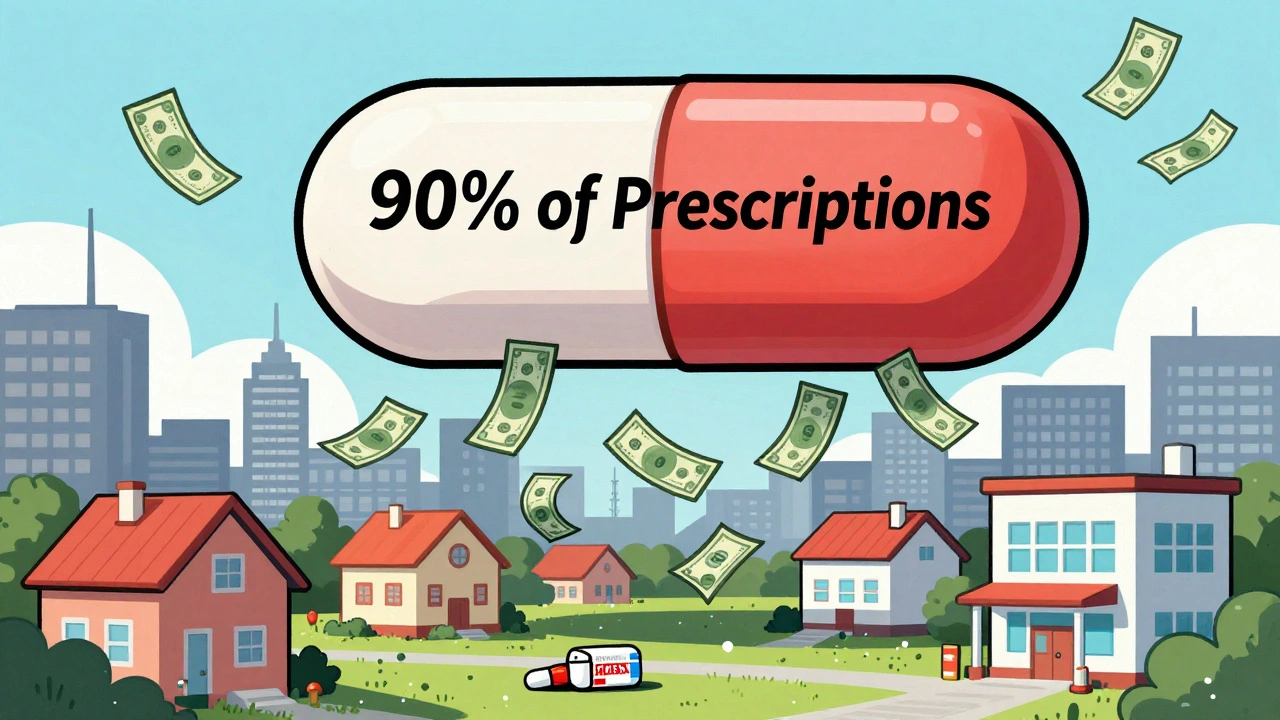
For over a decade, the U.S. healthcare system has been quietly saving trillions of dollars-not by cutting services, raising premiums, or limiting care-but by switching to generic drugs. These are the same medicines as brand-name pills, just cheaper. And they’re used in nine out of every ten prescriptions filled. In 2024 alone, generics and biosimilars saved Americans $467 billion. Over the last ten years, that adds up to $3.4 trillion. That’s more than the entire annual GDP of Canada or Australia.
What Exactly Are Generic Drugs?
Generic drugs contain the exact same active ingredients as their brand-name counterparts. They work the same way, in the same dose, and are taken the same way. The only differences are in the inactive ingredients-like fillers or coatings-and the packaging. The FDA requires generics to meet the same strict standards for safety, strength, and quality as brand-name drugs. Yet they cost, on average, 80% to 85% less.
Take lisinopril, a blood pressure medication. The brand version, Zestril, can cost $150 a month without insurance. The generic? About $4. Or metformin, used by millions with type 2 diabetes. Brand-name Glucophage runs around $200 a month. Generic? Under $10. These aren’t outliers. They’re the norm.
How Did We Get Here?
The foundation was laid in 1984 with the Hatch-Waxman Act. Before that, drug companies could block competitors indefinitely by holding patents. The law changed that. It allowed generic manufacturers to apply for approval without repeating expensive clinical trials-proving bioequivalence instead. In exchange, innovator companies got a little extra patent time to make up for delays during FDA review.
This created a predictable path for competition. Once a brand drug’s patent expired, generics flooded in. The more companies making the same drug, the lower the price. That’s how a drug that once cost $500 a month dropped to $10 within two years of generic entry.
The Numbers Don’t Lie
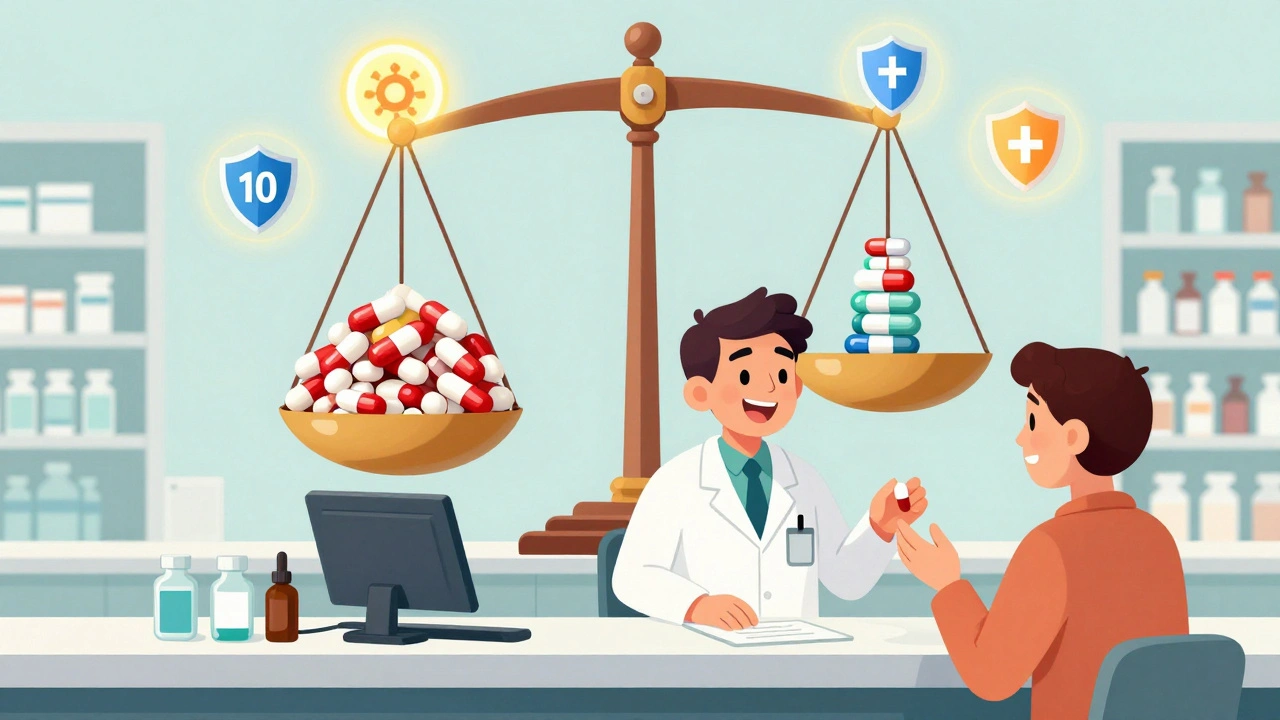
In 2024, Americans filled 3.9 billion prescriptions for generic drugs. That’s over 90% of all prescriptions. But generics made up only 12% of total drug spending. Meanwhile, brand-name drugs-only 10% of prescriptions-accounted for 88% of the $700 billion spent on prescriptions.
That gap is the savings. In 2024, people spent $98 billion on generics. They spent $700 billion on brands. The difference? Over $600 billion saved just from switching to cheaper versions of the same medicine.
Biosimilars-generic versions of complex biologic drugs like Humira or Enbrel-are adding to the momentum. Since 2015, they’ve saved $56.2 billion. In 2024 alone, they saved $20.2 billion. That’s money that didn’t go to insurance companies, Medicare, or patients’ pockets.
Who Benefits the Most?
Everyone does-but some more than others.
Medicare saved $142 billion in 2024 because of generics. Medicaid saved $62.1 billion. Private insurers saved billions more. For patients, the impact is personal. A 2023 survey found that people who switched to generics saved an average of $147 per medication each month. For someone on three or four prescriptions, that’s over $500 a month. That’s rent. That’s groceries. That’s not choosing between medicine and heat in winter.
States with strong generic substitution laws saw even bigger savings. California’s program pushed generic use to 98%. Texas, with more flexible rules, hit 87%. The difference? Billions of dollars in state budgets.
Why Aren’t We Saving Even More?
Because the system isn’t working as intended.
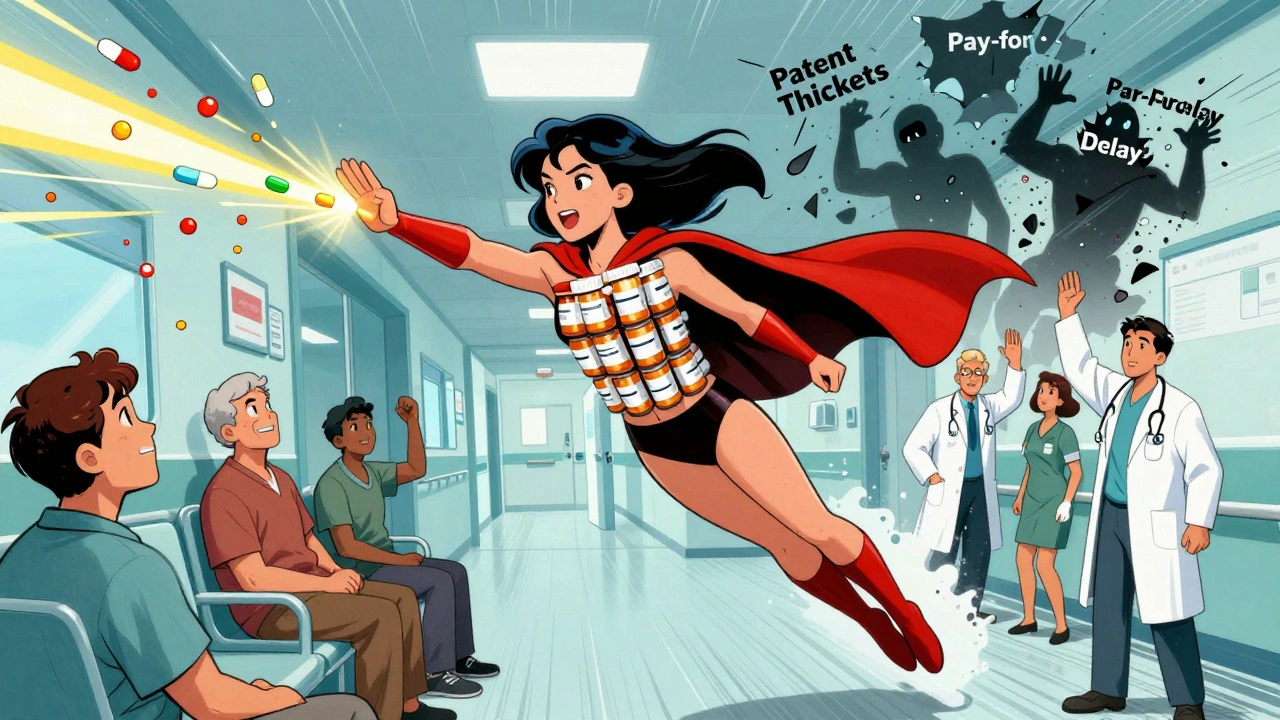
Brand drugmakers have learned how to delay competition. They file dozens of patents on minor changes-like a new pill shape or a different coating-called “patent thickets.” A 2024 study found that just four drugs, protected by these tactics, cost the system over $3.5 billion in two years.
Then there’s “pay-for-delay.” Big pharma pays generic companies to hold off on launching their cheaper version. The Congressional Budget Office estimates these deals cost taxpayers $3 billion a year. Blue Cross Blue Shield says they drive up drug prices by $12 billion annually.
Pharmacy Benefit Managers (PBMs), who negotiate drug prices for insurers, often push patients toward more expensive brand drugs-even when generics are available. Why? Because they make more money off higher-priced drugs. A 2023 study found that prior authorization requirements for generics jumped 47% between 2019 and 2023, creating unnecessary barriers.
Are Generics Really the Same?
Some patients worry. “My brand worked fine. The generic made me feel weird.”
It’s rare, but it happens. The FDA says generics are therapeutically equivalent. But a Drugs.com review of over 15,000 users found that while 87% praised the cost, only 63% felt the effectiveness was just as good. For most, it’s fine. For a small group, small differences in inactive ingredients might cause side effects-especially with narrow-therapeutic-index drugs like warfarin or levothyroxine.
That’s why doctors sometimes prescribe brand-name drugs when switching could be risky. But for 95% of prescriptions, generics are not just safe-they’re better.
The Future Is Cheaper
The FDA approved 1,145 new generic drugs in 2024. That’s a 7.3% increase from the year before. Another $24 billion in brand-name drugs are set to lose patent protection by 2025. That means more savings on the horizon-for statins, antidepressants, asthma inhalers, and even cancer drugs.
Biosimilars are growing fast too. With a projected 22.7% annual growth rate through 2029, they’re poised to cut biologic drug costs even deeper. The first biosimilar to Humira hit the market in 2023. By 2026, five more are expected. That could save patients and insurers tens of billions more.
Legislation like the Affordable Prescriptions for Patients Act, passed by the Senate HELP Committee in 2024, aims to shut down patent abuse and pay-for-delay deals. If enacted, it could add $7.2 billion in annual savings.
What’s Holding Back the Savings?
Consolidation. The top 10 generic manufacturers now control 63% of the market. In 2015, it was 51%. Fewer players mean less competition-and sometimes, price hikes. Drug shortages are another problem. As of December 2024, 287 generic medications were in short supply, mostly due to manufacturing issues overseas.
And while the U.S. leads the world in generic use (90% of prescriptions), most European countries use generics in only 60-80% of cases. Yet they pay far less for both brand and generic drugs. Why? Because their governments negotiate prices directly. The U.S. doesn’t. We rely on market competition-and that’s broken in places.
What Can You Do?
If you’re on a prescription, ask your doctor or pharmacist: “Is there a generic?” If your insurance won’t cover it, ask for a formulary exception. Many plans will approve it if you show the generic is equivalent.
Use tools like GoodRx or SingleCare to compare prices. Sometimes, paying cash for a generic is cheaper than using insurance.
And if you’re on Medicare Part D, check your plan’s formulary. Some plans still push brand drugs-even when generics are cheaper. You have the right to appeal.
Every time you choose a generic, you’re not just saving money. You’re helping the whole system stay afloat. The savings from generics fund research, lower premiums, and keep care affordable for millions.
It’s Not Magic. It’s Math.
There’s no secret formula. No miracle drug. Just simple economics: more competition = lower prices. And generics are the most powerful tool we have to control drug costs.
For every dollar spent on brand drugs, we’re spending 8 cents on generics. But those 8 cents are doing 90% of the work. That’s efficiency. That’s impact. That’s a trillion-dollar shift in how healthcare works.
The question isn’t whether generics work. It’s why we don’t use them more.
Are generic drugs as safe and effective as brand-name drugs?
Yes. The FDA requires generic drugs to have the same active ingredients, strength, dosage form, and route of administration as the brand-name version. They must also prove they’re bioequivalent-meaning they work the same way in the body. Over 90% of generics are rated as therapeutically equivalent. While a small percentage of patients report differences in side effects or effectiveness, these cases are rare and often linked to inactive ingredients, not the medicine itself.
Why do some generic drugs cost more than others?
Price depends on competition. If only one or two companies make a generic, prices stay higher. Once five or more manufacturers enter the market, prices drop sharply. Supply chain issues, manufacturing delays, or shortages can also cause temporary spikes. Some complex generics-like inhalers or injectables-cost more to produce, so they’re priced higher even when generic.
Can I switch from a brand-name drug to a generic without asking my doctor?
In most cases, yes. Pharmacists can substitute a generic unless the prescription says “Dispense as Written” or “Do Not Substitute.” But for certain medications-like blood thinners, seizure drugs, or thyroid hormones-your doctor may prefer you stay on the same version. Always check with your provider if you’re unsure.
Do insurance plans always cover generics?
Most do-and they often charge lower copays for generics. But some plans still prioritize brand-name drugs through formulary design or require prior authorization for generics. Medicare Part D plans, in particular, sometimes steer patients toward more expensive options. Always check your plan’s formulary or call your insurer to confirm coverage.
What’s the difference between a generic and a biosimilar?
Generics are copies of small-molecule drugs made chemically. Biosimilars are copies of large, complex biologic drugs made from living cells. Because biologics are harder to replicate, biosimilars aren’t exact copies-they’re “similar enough” to work the same way. They’re approved through a different FDA process and are generally more expensive than traditional generics, but still cost 15-35% less than the original biologic.
Why aren’t generic drug prices lower if they’re so much cheaper to make?
It’s not just about manufacturing cost. Pricing is influenced by market competition, supply chain issues, consolidation among manufacturers, and how PBMs negotiate with pharmacies. In some cases, when competition drops, prices rise-even for generics. The system isn’t perfectly transparent, which is why tools like GoodRx can help you find the best price.
Comments (12)
Chase Brittingham
December 1, 2025 AT 22:14My grandma’s on five generics. She used to skip doses because the brand names cost more than her groceries. Now she takes them all, no problem. I didn’t even know how big this was until I saw her refill her pills last month. That $147 a month they mentioned? That’s her entire utility bill gone. This isn’t just economics-it’s survival.
And honestly? I’ve never heard a single person say the generic made them worse. Just cheaper. And that’s the point.
Chad Handy
December 2, 2025 AT 11:50Let’s not romanticize this. The system isn’t saving money-it’s shifting the burden. Generics are cheaper because the manufacturers are squeezing labor, cutting corners on quality control, and outsourcing to countries with zero environmental standards. The FDA’s ‘equivalent’ label is a legal fiction. I’ve seen pills that crumble in the bottle. I’ve seen batches with inconsistent potency. And when someone has a bad reaction, who pays? The ER. The Medicaid system. The taxpayer. The savings are real, but they’re built on a foundation of ignored risk.
And don’t get me started on the fact that most generic manufacturers are owned by the same conglomerates that own the brand-name companies. It’s not competition-it’s collusion with a different logo.
Yes, I know it’s cheaper. But cheap isn’t safe. And safety isn’t a line item in a spreadsheet.
Joe Lam
December 3, 2025 AT 02:12Of course generics save money. That’s basic microeconomics. What’s fascinating is how little the public understands about bioequivalence testing. The FDA doesn’t require full clinical trials because the pharmacokinetic profile is what matters-not anecdotal ‘I felt weird’ stories. The placebo effect is stronger than most people realize. You think the generic ‘doesn’t work’? You’re probably just subconsciously expecting it to fail.
And the real scandal isn’t generics-it’s PBMs. They’re the hidden tax on healthcare. They incentivize brand drugs because they get rebates. That’s why your copay is $50 for a brand when the generic is $10. The pharmacy gets paid more to give you the expensive one. The system is rigged, and it’s not the pharmacists’ fault. It’s the middlemen.
Jenny Rogers
December 3, 2025 AT 21:57It is a moral failure, not merely an economic one, that we have normalized the commodification of human health to such a degree that we celebrate the substitution of life-sustaining pharmaceuticals with their cheapest possible facsimiles. The fact that we must choose between insulin and rent is not a triumph of efficiency-it is the collapse of our ethical infrastructure.
And yet, we are told to be grateful for the crumbs. That a man in Ohio can afford his blood pressure medication because it costs $4 instead of $150 is hailed as progress. But progress should not be measured in how little we can give someone to stay alive. It should be measured in whether we have created a society where no one must choose at all.
Generics are not the solution. They are the symptom of a disease we refuse to name: profit over personhood.
Rachel Bonaparte
December 5, 2025 AT 00:30Okay, but let’s talk about the elephant in the room-the FDA’s ‘therapeutic equivalence’ ratings are a joke. They’re based on blood concentration curves in healthy volunteers, not real people with comorbidities, liver issues, or genetic variations. And don’t even get me started on the fact that the same generic manufacturer can supply different batches to different states, and the inactive ingredients change based on cost and availability.
I had a friend on levothyroxine who switched to generic and went into atrial fibrillation. Her doctor didn’t believe her until her TSH levels spiked. Turns out, the generic had a different filler that affected absorption. She’s back on brand now. And yes, it costs $200 a month. But she’s alive.
So sure, 95% of people are fine. But what about the 5%? Are we just supposed to say ‘tough luck’? That’s not healthcare. That’s gambling with people’s lives.
Scott van Haastrecht
December 5, 2025 AT 01:42Let’s cut through the corporate PR. The $3.4 trillion savings? That’s not savings-it’s theft. The drug companies knew this was coming. They sat on patents. They bought up generic manufacturers. They created ‘authorized generics’ that they own and sell themselves at a discount to undercut real competitors. Then they raise prices on the brand version right before the patent expires so they can milk it one last time.
And the biosimilars? They’re being held back by the same companies that make the originals. They pay off lawmakers. They lobby against price transparency. They bury real competition in paperwork. This isn’t capitalism. It’s feudalism with a corporate logo.
And don’t tell me about ‘market competition.’ There’s no competition when one company owns the patents, the supply chain, and the pharmacy benefit managers. This is a cartel. And we’re the suckers paying for it.
Ollie Newland
December 6, 2025 AT 19:49Interesting that the US leads in generic utilization but still has the highest per-capita drug spend globally. The disconnect lies in the lack of price negotiation. In the UK, the NHS negotiates bulk prices for generics and brand alike. Here, we rely on fragmented payer systems and PBMs who don’t pass savings to patients. The result? A generic version of metformin costs $4 in the US but £1.20 in the UK-same pill, same manufacturer, different pricing architecture.
It’s not about the drug. It’s about the system. We have the tools-what we lack is political will to fix the intermediaries.
Rebecca Braatz
December 8, 2025 AT 12:38If you’re on a prescription, ask for the generic. Seriously. Do it. Your pharmacist is your ally. They know the prices, the formularies, the loopholes. I work in a clinic and I’ve seen patients cry because they couldn’t afford their meds-until we switched them to generic. One woman told me she could finally afford her daughter’s birthday present. That’s not a statistic. That’s a life.
And if your insurance won’t cover it? Appeal. Write a letter. Call them. It’s not hard. You’re not asking for a favor-you’re asking for what’s already available. The system is broken, but you still have power. Use it.
Michael Feldstein
December 10, 2025 AT 12:10I’ve been curious about this for a while. I asked my pharmacist why some generics are cheaper than others even if they’re the same drug. He said it’s all about how many manufacturers are making it. If there’s only one, price stays high. If there are five, it drops to pennies. That’s why you sometimes see $10 for one brand of lisinopril and $3 for another.
And here’s the weird part-sometimes the cheapest one isn’t even the same company. It’s a different manufacturer that just got FDA approval last month. So if your prescription costs more than $5, it’s probably because you’re not checking. Try GoodRx. It’s free. It’s not magic. It’s just information.
Also-don’t assume your doctor knows the current prices. Most don’t. They know the drug. You know the cost. Talk to each other.
Augusta Barlow
December 10, 2025 AT 22:36Did you know the FDA allows generic manufacturers to use fillers that are banned in the EU? Things like titanium dioxide and FD&C dyes-carcinogens in animal studies. They’re fine in the US because ‘they’re not active ingredients.’ But they’re in your body. And the FDA doesn’t test for long-term cumulative effects of these additives across hundreds of daily pills over decades.
And the real kicker? The same companies that make the generics also make the brand-name drugs. They’re the same factories. Same machines. Same workers. But when it’s branded, they use ‘premium’ fillers. When it’s generic, they use the cheap stuff. You’re not getting the same drug. You’re getting the budget version.
This isn’t healthcare. It’s a two-tiered poison system.
Bill Wolfe
December 11, 2025 AT 20:10Let’s be real: the only reason generics are ‘safe’ is because we’ve normalized mediocrity in medicine. We’ve accepted that ‘close enough’ is good enough. But medicine isn’t engineering. It’s biology. And biology doesn’t care about your spreadsheet.
And don’t get me started on the fact that the FDA’s bioequivalence threshold is 80–125%-meaning a generic can be 20% weaker or 25% stronger than the brand and still be approved. That’s not equivalence. That’s a gamble. And we’re all the subjects.
Meanwhile, the pharmaceutical elite laugh all the way to the bank, selling us the same pills for 10x the price under a different name. It’s not capitalism. It’s performance art.
jagdish kumar
December 12, 2025 AT 15:57Generics are the quiet revolution. No fanfare. No ads. Just people living.
That’s enough.