
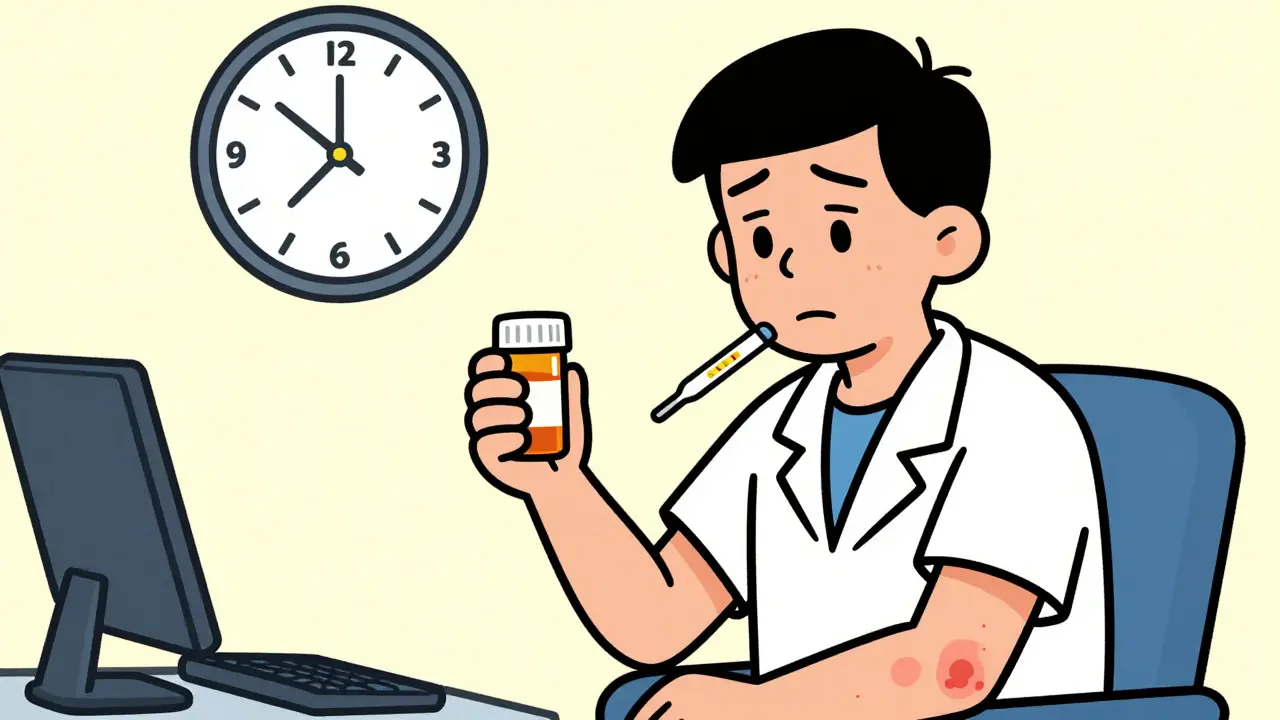
Imagine taking a new medication for a common condition like gout or seizures. Weeks later, you develop a fever and a rash that looks like measles. You might assume it’s just a mild allergy or a virus. But what if those symptoms signal DRESS, which stands for Drug Reaction with Eosinophilia and Systemic Symptoms? This is not a simple rash. It is a severe, potentially life-threatening adverse drug reaction that affects multiple organs inside your body.
DRESS syndrome is classified as a Severe Cutaneous Adverse Reaction (SCAR). Unlike typical allergic reactions that happen within minutes or hours, DRESS has a delayed onset. The lag time gives people a false sense of security. By the time the skin breaks out, internal damage to the liver, kidneys, or lungs may already be underway. Understanding this condition is vital because early recognition can save lives. The mortality rate sits at approximately 10%, mostly due to liver failure. However, catching it early drops that risk significantly.
The Hallmark Signs of DRESS Syndrome
Identifying DRESS relies on recognizing a specific triad of symptoms: fever, rash, and blood abnormalities. These signs do not appear all at once. They usually unfold over weeks. Here is how the progression typically looks:
- Latency Period: Symptoms start 2 to 8 weeks after beginning the offending drug. In rare cases, it can take up to 16 weeks. If you started a new med last month, keep an eye out.
- Prodrome: Before the rash appears, you may feel flu-like symptoms. This includes malaise, sore throat, swollen lymph nodes, and a fever above 38°C (100.4°F).
- Skin Eruption: Within 1-2 days of the fever, a rash develops. In 75-90% of cases, it is morbilliform, meaning it looks like measles-red, blotchy patches covering large areas of the body. It can also be maculopapular or purpuric.
- Blood Changes: Lab tests reveal high levels of eosinophils (a type of white blood cell). Specifically, counts often exceed 700 cells/μL or make up more than 10% of total white blood cells. Atypical lymphocytes are also common.
If you see these three elements together-fever, widespread rash, and eosinophilia-you need immediate medical attention. Do not wait for the rash to clear on its own.
Common Culprit Drugs
Not every medication causes DRESS, but certain classes are notorious triggers. Knowing which drugs carry higher risks helps you stay vigilant. The most frequent offenders include:
| Drug Class / Specific Drug | Percentage of Cases | Risk Factors |
|---|---|---|
| Allopurinol | 40-50% | Renal impairment (CKD Stage 3+), HLA-B*58:01 gene variant |
| Antiepileptic Drugs (Carbamazepine, Phenytoin, Lamotrigine) | 20-30% | Rapid dose escalation, genetic susceptibility |
| Sulfonamides (Antibiotics) | 10-15% | General hypersensitivity history |
Allopurinol, used to treat gout, is the single biggest trigger. Patients with chronic kidney disease face a much higher risk. Studies show that among allopurinol users with reduced kidney function (eGFR <60 mL/min), the incidence rises to 1 in 200. Genetic testing for the HLA-B*58:01 allele can identify high-risk individuals, particularly in Asian populations, where this gene confers an 80-90% sensitivity for allopurinol-induced DRESS.
How DRESS Differs from Other Skin Reactions
It is easy to confuse DRESS with other severe skin conditions like Stevens-Johnson Syndrome (SJS) or Toxic Epidermal Necrolysis (TEN). However, the differences are critical for treatment. SJS and TEN involve the death of skin cells, leading to blistering and peeling. DRESS does not cause significant epidermal detachment.
Consider the timeline. SJS/TEN usually strikes quickly, within 1 to 4 weeks of starting a drug. DRESS takes longer, typically 2 to 8 weeks. Mucosal involvement (sores in the mouth, eyes, or genitals) is prominent in SJS/TEN (>90% of cases) but less common in DRESS (30-50%). Furthermore, DRESS involves systemic inflammation driven by CD4+ T cells and eosinophils, whereas SJS/TEN is driven by cytotoxic CD8+ T cells. Confusing the two can lead to incorrect treatments. For instance, treating DRESS as a simple viral exanthem delays life-saving steroid therapy.
Diagnosis and Diagnostic Criteria
Doctors use the RegiSCAR criteria to diagnose DRESS. This standardized system ensures consistency across medical facilities. To receive a definite diagnosis, a patient must have been hospitalized and exhibit at least three of the following features:
- Acute skin rash
- Fever greater than 38°C
- Lymphadenopathy (swollen lymph nodes)
- Hospitalization lasting 15 days or more
- Eosinophilia (>1,500/μL or >10%)
- Atypical lymphocytes in blood smear
- Involvement of three or more internal organs
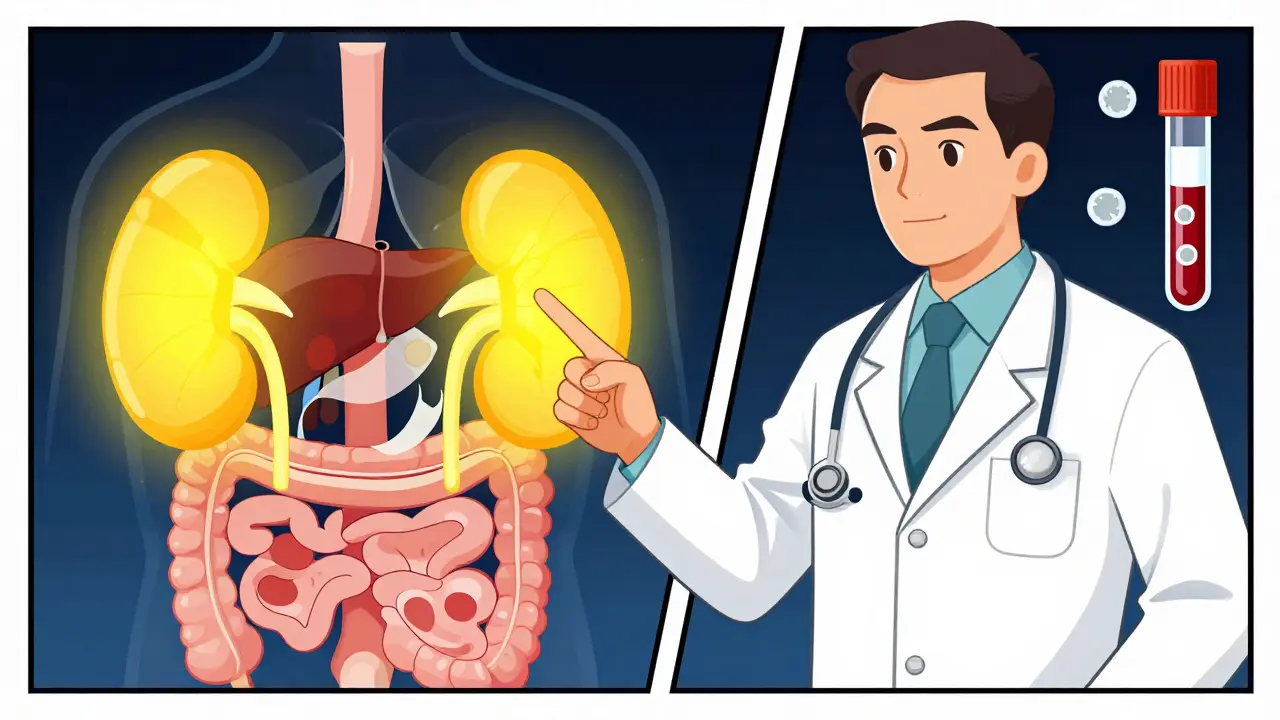
Internal organ involvement is a major concern. The liver is affected in 70-90% of cases, often showing ALT levels exceeding 1,000 U/L. Kidneys are involved in 10-30% of cases, with creatinine rising above 1.5 mg/dL. Lungs and hematologic systems are also at risk. Some researchers note that reactivation of human herpesvirus 6 (HHV-6) occurs in 60-70% of cases, potentially worsening the severity. Testing for HHV-6 PCR can help confirm the diagnosis and monitor recovery.
Treatment and Management Protocols
Time is tissue when dealing with DRESS. The first and most critical step is stopping the offending drug immediately. Doing so within 24 hours of recognition reduces mortality from 15% to 5%. There is no antidote for DRESS; treatment focuses on suppressing the immune response and supporting failing organs.
Patients usually require hospitalization in intensive care or specialized dermatology units for 14 to 21 days. Systemic corticosteroids are the cornerstone of therapy. Doctors typically prescribe prednisone at 0.5 to 1 mg/kg/day. This high dose continues for 4 to 8 weeks before gradually tapering off. Stopping steroids too early can cause the symptoms to flare back up.
Supportive care is equally important. Because the immune system is compromised, patients are vulnerable to infections. Bacteremia and fungemia occur in about 10% of cases. Strict infection control measures are necessary. Daily monitoring of liver enzymes, complete blood counts, and renal function is standard practice for the first two weeks. New research suggests that adding anakinra (an IL-1 receptor antagonist) to steroids may shorten hospital stays from nearly 19 days to just over 11 days in severe cases.
Long-Term Outlook and Prevention
Surviving DRESS is only half the battle. About 20-30% of patients experience persistent organ damage, particularly renal impairment. Some survivors develop autoimmune diseases months later, such as Graves' disease or thyroiditis. Regular follow-up with nephrology and endocrinology is essential for long-term health.
Prevention starts with awareness. If you have had DRESS, you must avoid the triggering drug forever. Cross-reactivity with similar drugs is possible, so inform all healthcare providers about your history. Genetic screening for HLA-B*58:01 before starting allopurinol is now recommended in many guidelines, especially for high-risk groups. For patients with kidney issues who need urate-lowering therapy, febuxostat is often suggested as a safer alternative to allopurinol.
The incidence of DRESS is rising, partly due to an aging population using more high-risk medications. Projections indicate a 25% increase in cases by 2030. Being informed is your best defense. If you notice unexplained fever and rash weeks after starting a new prescription, speak to your doctor immediately. Do not ignore the warning signs.
Is DRESS syndrome contagious?
No, DRESS syndrome is not contagious. It is an internal immune reaction triggered by a medication you have taken. You cannot catch it from someone else, nor can you spread it to others through contact, air, or bodily fluids.
How long does it take for DRESS symptoms to appear?
Symptoms typically appear between 2 to 8 weeks after starting the causative drug. This delay is known as the latency period. In some cases, it can take as little as 1 week or as long as 16 weeks. This long window often leads to misdiagnosis as a viral illness.
What is the survival rate for DRESS syndrome?
The overall mortality rate for DRESS syndrome is approximately 10%. Most deaths result from fulminant hepatitis (liver failure). However, if the condition is diagnosed early and the offending drug is stopped immediately, the mortality rate can drop to less than 2%.
Can DRESS syndrome come back?
If you are re-exposed to the same drug that caused DRESS, the reaction will likely return and may be more severe and faster-onset. Even switching to a chemically similar drug can sometimes trigger a recurrence due to cross-reactivity. Lifelong avoidance of the culprit drug is mandatory.
Which organs are most commonly affected by DRESS?
The liver is the most frequently affected organ, involved in 70-90% of cases. The kidneys are affected in 10-30% of cases. Other organs that may suffer damage include the lungs (10-20%), heart, and hematologic system (blood cells). Multi-organ involvement distinguishes DRESS from simpler skin rashes.