
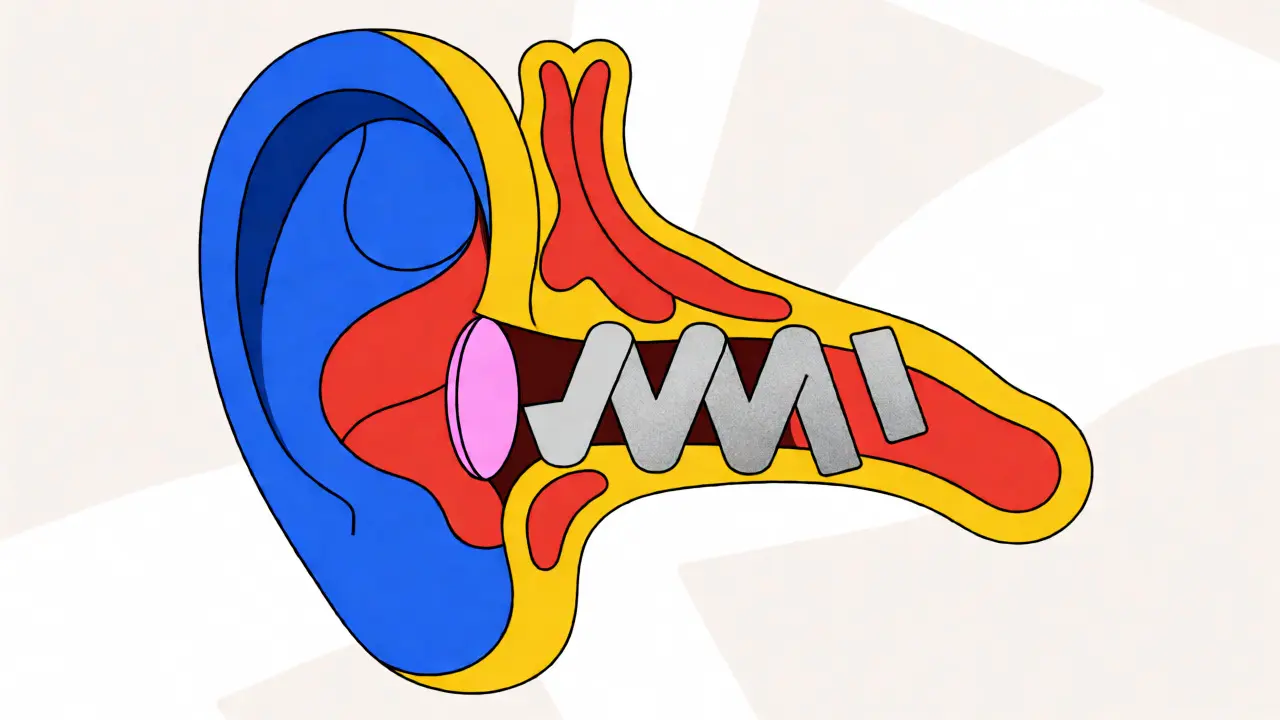
You know that feeling when you’re in a crowded pub in Birmingham, the noise is deafening, but suddenly someone whispers your name and it sounds like they’re talking through a wall? That muffled sensation isn’t just background noise-it’s often conductive hearing loss, a condition where sound waves get blocked before they reach the sensitive inner ear. Unlike age-related hearing decline, this type of loss is frequently fixable. It happens when something in your outer or middle ear prevents sound from vibrating properly against the eardrum and tiny bones. The good news? Because the issue is mechanical rather than neurological, surgical repair can restore near-normal hearing for many people.
Why Sound Gets Stuck: Understanding the Mechanics
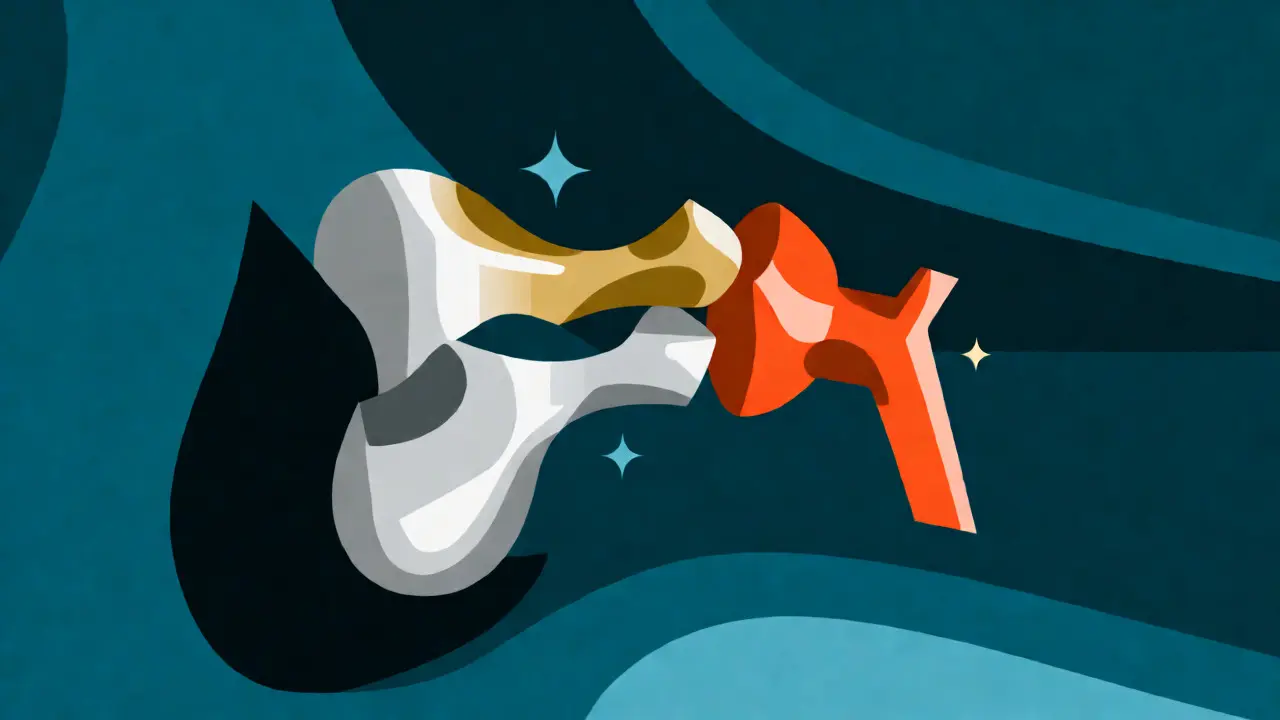
To fix the problem, you first need to understand what’s broken. Your ear works like a high-precision acoustic system. Sound enters the ear canal, hits the tympanic membrane (eardrum), which vibrates three tiny bones called ossicles-the malleus, incus, and stapes. These bones amplify the sound and pass it to the fluid-filled cochlea in the inner ear. If any part of this chain-wax, eardrum, or bones-is damaged or stiffened, the signal weakens. This creates an "air-bone gap," a measurable difference between how well you hear through air versus bone conduction. A gap of 15-60 dB is typical for conductive loss. It’s not about nerve damage; it’s about transmission failure.
The Usual Suspects: Common Middle Ear Pathologies
Not all conductive loss is created equal. The cause dictates the treatment. Here are the most common culprits:
- Otitis Media with Effusion (Glue Ear): Fluid builds up behind the eardrum, dampening vibrations. It’s the leading cause of acquired hearing loss in children. In fact, up to 80% of kids experience at least one episode by age three. While often temporary, chronic cases require intervention.
- Tympanic Membrane Perforation: A hole in the eardrum caused by trauma, infection, or barotrauma (like flying). Small holes might heal on their own, but larger ones (accounting for 15-20% of adult cases) usually need surgical patching.
- Otosclerosis: An inherited condition where the stapes bone fuses to the surrounding bone structure. Instead of vibrating freely, it locks up. This causes progressive hearing loss, typically starting in young adulthood.
- Cholesteatoma: A skin cyst that grows in the middle ear. It’s dangerous because it’s locally destructive-it can erode bone and damage nearby structures if left untreated. Surgery is non-negotiable here.
Diagnosis: Beyond the Big Box Store Test
Don’t rely on those quick online hearing tests. Accurate diagnosis requires specialized equipment. Audiologists use two main tools: pure-tone audiometry and tympanometry. Pure-tone testing compares air conduction (sound through headphones) with bone conduction (vibrations via a mastoid bone oscillator). If bone conduction is normal but air conduction is poor, you have conductive loss. Tympanometry checks eardrum movement. A flat trace (Type B) indicates fluid or a perforation in 92% of cases. High-resolution CT scans of the temporal bone may also be ordered, costing around £600-£900 privately in the UK, to map out bone details before surgery.
Surgical Solutions: Fixing the Mechanical Chain
If medical management fails after 3-4 months, or if the condition is structural, surgery becomes the primary option. The goal is simple: restore the vibration pathway.
| Procedure | Primary Indication | Success Rate | Recovery Time |
|---|---|---|---|
| Tympanoplasty | Eardrum Perforation | 85-95% (small holes) | 6 weeks water restriction |
| Stapedectomy/Stapedotomy | Otosclerosis | 80-90% close air-bone gap | 1-2 weeks light activity |
| Myringotomy with Tubes | Glue Ear (Children) | 75% resolve within 3 months | Immediate relief |
| Mastoidectomy | Cholesteatoma | Safe/dry ear priority | 4-6 weeks full recovery |
Tympanoplasty is the gold standard for repairing eardrum holes. Surgeons graft tissue (often from behind the ear) over the perforation. Success rates are high, especially for smaller tears. For otosclerosis, surgeons perform a stapedectomy or stapedotomy. They remove or bypass the fused stapes bone and replace it with a prosthesis. Modern laser-assisted techniques have reduced complication rates to under 2%, a huge improvement from the 15% seen in older methods.
For children with persistent glue ear, myringotomy with tube placement is routine. In the US alone, 667,000 of these procedures happen annually. The tubes ventilate the middle ear, allowing fluid to drain. Most parents report immediate improvement in their child’s attention and speech clarity.
What to Expect: Recovery and Realities
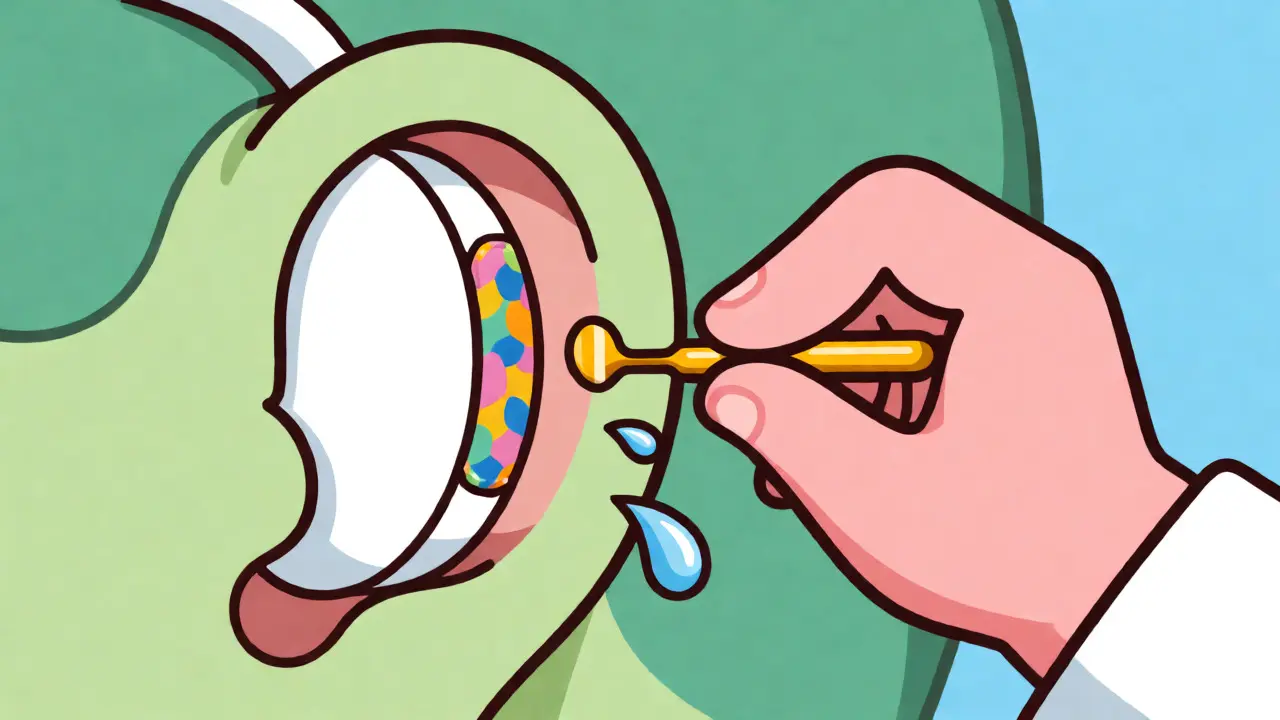
Surgery isn’t magic, and recovery takes patience. Post-op care is strict. After tympanoplasty, you must keep the ear dry for six weeks-no swimming, no shower splashes. Avoid pressure changes (flying, diving) for eight weeks. Side effects are rare but possible. About 7% of stapedectomy patients experience temporary vertigo, and 4% report taste disturbances due to nerve proximity. However, patient satisfaction is overwhelmingly positive. Data from major centers shows 87% of stapedectomy patients report significant daily function improvements, such as hearing whispers again or lowering TV volume.
It’s crucial to manage expectations. Cholesteatoma surgery prioritizes safety over perfect hearing. The primary goal is a "safe, dry ear" to prevent brain infections or facial nerve damage. Hearing restoration is secondary. Similarly, complex reconstructions might result in slight sound quality changes. One Reddit user noted, "I can hear better, but music sounds slightly different." This is normal as the ear adapts to new mechanics.
When to Seek Help
If you notice sudden hearing loss, seek emergency care. Sudden onset could indicate vascular issues or acute trauma. For gradual loss, see an audiologist if symptoms persist beyond three months despite treating infections. Don’t ignore unilateral (one-sided) loss, as it can signal tumors or asymmetrical pathology. Early intervention prevents permanent damage and simplifies surgery. Remember, conductive loss is often reversible. Ignoring it risks letting a simple fix turn into a complex reconstruction.
Is conductive hearing loss permanent?
No, it is often temporary or correctable. If caused by wax, fluid, or infection, it resolves with medical treatment. If structural, surgery can restore hearing in 80-95% of cases depending on the procedure.
Can I swim after middle ear surgery?
Generally, you must avoid submerging the ear for 6-8 weeks post-surgery. Water exposure can introduce bacteria or disrupt healing grafts. Always follow your surgeon's specific clearance guidelines.
How long does it take to recover from otosclerosis surgery?
Most patients return to work within 1-2 weeks. Full healing takes several weeks. You should avoid heavy lifting and straining during this period to protect the delicate prosthesis.
Do hearing aids help with conductive hearing loss?
Yes, hearing aids can amplify sound effectively since the inner ear nerves are intact. However, surgery is often preferred for younger patients or those seeking natural hearing restoration without devices.
What is the risk of cholesteatoma returning?
Recurrence rates vary but can range from 5% to 20% depending on complexity. Regular follow-up appointments with microscopic exams are essential to catch regrowth early.
Comments (10)
Kimberly Thomas
September 1, 2026 AT 06:54Oh great another medical article written by someone who clearly thinks they are a doctor but has never actually held a scalpel. You talk about "mechanical failure" like it is so simple to fix when in reality the middle ear is a nightmare of tiny structures that break if you look at them wrong. I have seen so many people get these surgeries and end up with worse hearing or permanent tinnitus because some surgeon thought they knew better than the anatomy itself. Your success rates are cherry-picked from the best centers while the average person is stuck waiting months for an appointment that costs more than their car payment. It is just noise disguised as information to make people feel hopeful before they lose their savings.
Aaron Gragg
September 1, 2026 AT 11:53While the general overview provided here is accessible to the layperson, one must critically examine the nuances regarding the surgical indications mentioned particularly concerning otosclerosis and stapedotomy procedures. The text suggests that modern laser-assisted techniques have reduced complication rates significantly which is statistically accurate in controlled clinical trials yet real-world application often varies based on the surgeon's experience level and the specific pathology of the patient's ossicular chain fixation.
Furthermore the distinction between conductive and sensorineural components is crucial because mixed hearing loss is far more common than pure conductive loss in aging populations and ignoring this can lead to inappropriate surgical candidacy assessment. A thorough pre-operative evaluation including high-resolution computed tomography imaging is not merely optional but essential to rule out superior semicircular canal dehiscence which can mimic otosclerosis symptoms and would require a completely different surgical approach such as plugging rather than stapedectomy.
The mention of cholesteatoma recurrence rates being 5-20% is somewhat broad and fails to account for the difference between open cavity mastoidectomies versus closed cavity techniques where the risk profile and follow-up requirements differ drastically. Patients need to understand that the goal of cholesteatoma surgery is indeed safety first but long-term care involves rigorous microscopic examinations that many patients neglect leading to late-stage recurrences that could have been caught earlier with proper compliance.
It is also worth noting that the air-bone gap closure targets mentioned are idealistic for complex cases and surgeons often prioritize stability over perfect audiometric outcomes to avoid iatrogenic sensorineural hearing loss which is irreversible and devastating for quality of life compared to the manageable residual conductive deficit.
Harry Falk
September 2, 2026 AT 04:33Useful breakdown. Glue ear in kids is way too common though. My nephew had tubes twice. Hopeless.
Akeem Feiton
September 3, 2026 AT 19:58This whole thing is typical American medical propaganda!! They want you to cut into your head so they can bill insurance companies billions!! In my country we respect the body we dont just drill holes in skulls for fun!!! These "surgeons" are butchers playing god with our precious ears!!! If you listen closely you hear the truth they are lying about the recovery time its not weeks its months of pain and misery!!! Do not trust them do not let them touch you!!!
Stuart Lorne
September 4, 2026 AT 07:59mate you forgot to mention that half these guys cant even find the eardrum without a microscope and then wonder why their results suck. also £600 for a ct scan is a rip off in the uk private sector anyway nhs does it free eventually after you wait 6 months lol. nice try tho
kishhore kumar
September 5, 2026 AT 07:48Very informative post :) I was wondering about the cost factor in India vs US since you mentioned UK prices. Also is there any natural remedy for early stage otosclerosis before surgery? :)
Kristina Rhodes
September 6, 2026 AT 19:25It is fascinating how we view the body as a machine that needs repair rather than a system that adapts. Perhaps the silence we fear is actually a space for introspection that we have forgotten how to value in our noisy world. Yet if the mechanics fail we seek external fixes which reflects our broader societal inability to sit with discomfort. Still hope those undergoing surgery find peace in their new hearing regardless of the technical details.
Marc-David Mayer
September 6, 2026 AT 22:06Great info! 🤓 Really helpful for anyone dealing with this. Don't be afraid to ask your ENT questions! 👍🏼💪🏼
Anderson Miller
September 7, 2026 AT 05:07Sure sure... just go under the knife because some guy on the internet said the "success rate" is high... what happens when you wake up and the prosthesis has slipped... or you develop vertigo that lasts longer than the "temporary" label suggests... or maybe the nerve damage is permanent despite the stats... oh wait no worries just ignore the risks because "satisfaction is positive" right??... classic medical marketing...
Adam Cox
September 8, 2026 AT 20:31I had a tympanoplasty five years ago and honestly the six week water restriction was hell on earth. I couldn't shower properly and my hair smelled awful. But yeah the hearing came back mostly. Just don't expect perfection. Music still sounds weird sometimes. Like everything is slightly underwater even though the tests say it's normal. Whatever. At least I can hear my wife nag me now.