
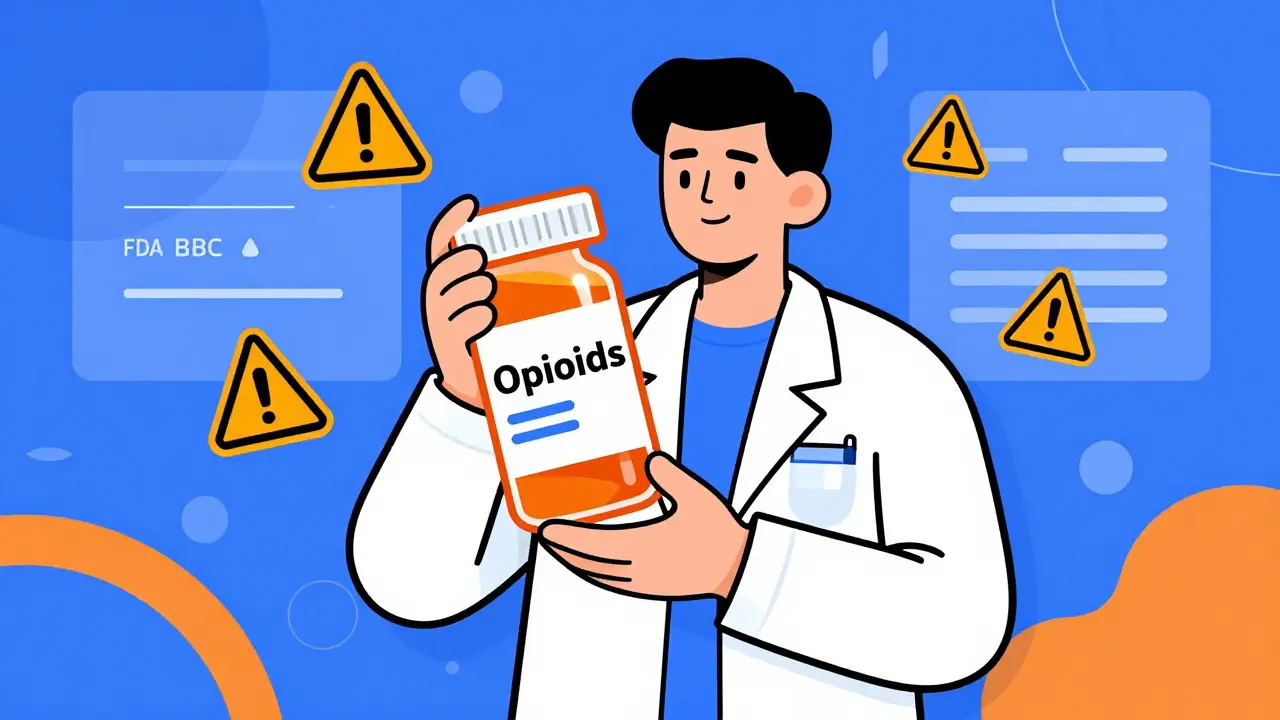
Medicines are safe when they leave the factory. But once millions of people start taking them in the real world, hidden risks can surface. That is exactly why the U.S. Food and Drug Administration (FDA) issues Drug Safety Communications, which are official notifications providing critical safety information to patients and healthcare professionals about medications after approval. In 2025, these alerts have become more frequent, more specific, and more impactful than ever before.
If you take prescription medication, or if you care for someone who does, understanding these updates is not just bureaucratic box-ticking-it is a matter of health and safety. From major changes to opioid labels to new MRI requirements for Alzheimer’s treatments, here is what you need to know about the most significant drug safety news from early to mid-2026, based on the wave of communications released throughout 2025.
The Big Shift in Opioid Prescribing Labels
The most sweeping change of the year came on July 31, 2025. The FDA mandated that every single opioid pain medication sold in the United States must update its prescribing information. This was not a suggestion; it was a class-wide action affecting all 46 approved opioid products, including both brand-name and generic extended-release/long-acting (ER/LA) opioids.
Why now? For years, doctors knew opioids carried risks, but the data was vague. Thanks to two massive postmarketing studies conducted by the Opioid Postmarketing Consortium-costing $187 million-we finally have hard numbers. The new labels must include quantitative estimates of addiction, abuse, misuse, and overdose risks for long-term users.
Specifically, the labels now highlight that approximately 1 in 12 patients prescribed opioids for long-term use may develop an opioid use disorder. They also add warnings about toxic leukoencephalopathy, a rare but serious brain condition linked to opioid overdoses, and updated interactions with gabapentinoids like gabapentin and pregabalin.
| Requirement | Detail | Impact |
|---|---|---|
| Risk Quantification | Must state specific statistical risks of addiction and overdose for long-term use. | Helps patients make informed decisions based on data, not fear. |
| New Warnings | Inclusion of toxic leukoencephalopathy and opioid-induced esophageal dysfunction. | Alerts clinicians to non-fatal but severe complications. |
| Drug Interactions | Expanded warnings for CNS depressants, specifically adding gabapentinoids. | Reduces risk of respiratory depression when combining meds. |
| Re-evaluation Schedule | Clinicians must reassess benefit-risk every 3 months for stable patients. | Prevents "prescribing inertia" where patients stay on meds without review. |
Doctors are divided on this move. Dr. Robert Redfield, former CDC Director, called it the most significant regulatory action since 2016, praising the clarity of the data. However, Dr. Andrew Kolodny criticized the FDA for not mandating strict prescribing limits, arguing that labels alone won’t stop the estimated 8,000-10,000 annual overdose deaths. On the ground, many physicians feel squeezed. An American Medical Association survey found that 63% of primary care doctors don’t have enough time during visits to discuss these new complex risks thoroughly.
Weight Loss Risks in ADHD Medications
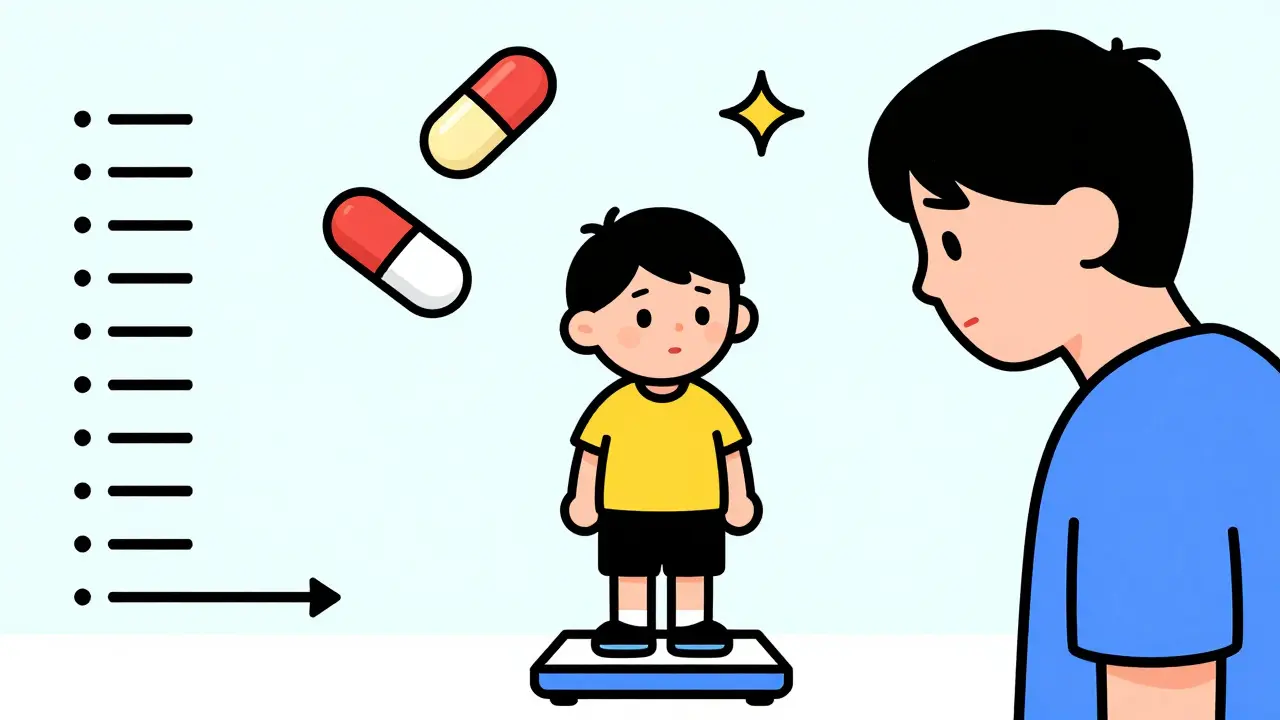
On June 30, 2025, the FDA issued a targeted warning regarding extended-release stimulants used to treat Attention Deficit Hyperactivity Disorder (ADHD). These medications, which contain methylphenidate or amphetamines, are staples for managing focus and behavior in children and adults. However, the alert focuses on a specific side effect: significant weight loss in young children.
The communication specifically impacts patients under the age of six. While ADHD diagnoses in this age group are less common, the treatment is sometimes necessary. The FDA now requires healthcare providers to monitor weight closely. Doctors must measure weight at the baseline (before starting treatment) and then every three months thereafter. If a child experiences excessive weight loss, the provider needs to adjust the dose or consider alternative therapies.
This affects roughly 9.4 million pediatric patients in the U.S. who use stimulant medications. Parents should ask their pediatrician about growth charts and nutritional support if their child is on these drugs. It is a reminder that even well-established treatments require vigilant monitoring as children grow.
Alzheimer’s Treatment: New MRI Rules for Leqembi
Leqembi (lecanemab) has been a breakthrough in Alzheimer’s disease treatment, slowing cognitive decline in early-stage patients. But it comes with a known risk: Amyloid-Related Imaging Abnormalities (ARIA), which involves swelling or micro-bleeds in the brain. As more patients started using the drug in 2025, the FDA saw a rise in reported cases-274 instances of ARIA in the first year of widespread use.
On August 28, 2025, the FDA tightened the rules. Patients taking Leqembi must now undergo additional MRI monitoring. Specifically, MRIs are required at five months and fourteen months after starting treatment. This ensures that any signs of brain swelling or bleeding are caught early, before they cause permanent damage or severe symptoms.
For families navigating Alzheimer’s, this adds logistical complexity. You need to coordinate infusions with radiology appointments. However, the trade-off is safety. Early detection of ARIA allows doctors to pause treatment temporarily, letting the brain heal while preserving the long-term benefits of the drug.
Allergy Meds and Heart Health: Cetirizine Updates
You probably have a bottle of Zyrtec (cetirizine) or Xyzal (levocetirizine) in your medicine cabinet. These are among the most popular over-the-counter allergy medications, used by an estimated 25 million Americans annually. On May 16, 2025, the FDA issued a safety communication requiring new warnings for these specific antihistamines.
The concern centers on potential heart rhythm issues, specifically QT interval prolongation, in susceptible individuals. While rare, this risk means that people with existing heart conditions or those taking other medications that affect heart rhythm should consult their doctor before using high doses of cetirizine or levocetirizine. The label update aims to ensure that patients and prescribers are aware of this interaction, preventing adverse events in vulnerable populations.
Good News: Clozapine REMS Program Removed
Not all FDA communications are about adding restrictions. Sometimes, science proves that a rule is no longer needed. On August 27, 2025, the FDA announced the removal of the Risk Evaluation and Mitigation Strategy (REMS) program for clozapine.
Clozapine is a powerful antipsychotic medication used for treatment-resistant schizophrenia. Since its approval in 1990, it has required strict blood monitoring due to a risk of agranulocytosis, a dangerous drop in white blood cells. Over decades, better testing methods and improved patient education have made this risk highly manageable. The FDA determined that the burdensome REMS requirements were no longer justified by the current safety profile. This decision simplifies access for patients who rely on clozapine, reducing administrative hurdles for clinics and pharmacies.
How to Stay Safe: Practical Steps for Patients
With so many updates, it can feel overwhelming. Here is how you can protect yourself and your loved ones:
- Check Your Medicine Cabinet: Look for recall notices online. The FDA maintains a searchable database of recalled drugs. If you see a match, do not panic. Stop taking the medication only if instructed, and contact your pharmacist for a replacement.
- Talk to Your Doctor About Opioids: If you take opioids for chronic pain, schedule a check-in. Ask your doctor to review your dosage and discuss the new risk statistics. Do not taper off abruptly without medical supervision, as withdrawal can be severe and dangerous.
- Monitor Children on Stimulants: If your child takes ADHD medication, keep a log of their weight and appetite. Share this with their pediatrician at every visit.
- Keep Up with MRIs: If you or a family member is on Leqembi, mark your calendar for the 5-month and 14-month MRI scans. These are non-negotiable for safety.
- Read the Patient Package Insert: When you pick up a new prescription, read the paper insert. It contains the latest FDA-approved warnings. If something sounds confusing, ask your pharmacist to explain it.
What’s Next for Drug Safety?
The trend is clear: the FDA is moving faster. In 2020, there were 47 Drug Safety Communications. By 2024, that number jumped to 68-a 44.7% increase. Looking ahead to 2026 and beyond, the FDA’s strategic plan commits to issuing safety communications within 30 days of confirming a significant risk, down from the previous 60-90 day average.
This acceleration is driven by technology. The FDA’s Sentinel Initiative, which analyzes electronic health records from 300 million patients across 25 healthcare systems, is getting smarter. It is expected to generate two to three times more safety signals by 2027. This means we will likely see more precise, data-driven alerts in the coming years.
For patients, this is good news. It means problems are identified sooner. For doctors, it means staying on top of guidelines is harder than ever. The key is open communication. Never assume a medication is "safe" just because it has been around for a long time. Always stay engaged with your healthcare provider, and never hesitate to ask questions when your prescription changes.
What is a Drug Safety Communication (DSC)?
A Drug Safety Communication is an official notice from the FDA to patients and healthcare professionals. It highlights new safety information about a medication that was not fully understood during clinical trials. DSCs may result in label changes, new warnings, or recommendations for monitoring.
Do I need to stop taking my opioid medication immediately?
No. The July 2025 FDA update requires changes to the *labeling* of opioid prescriptions, not an immediate halt to treatment. Stopping opioids abruptly can be dangerous. Instead, talk to your doctor about the new risk data and whether your current dose is still appropriate for your situation.
Who is affected by the new ADHD medication warning?
The June 2025 warning specifically targets children under the age of six who are prescribed extended-release stimulants (like methylphenidate or amphetamine-based drugs). The main concern is unexpected weight loss, so regular weight monitoring is now required.
Why do Leqembi patients need extra MRIs?
Leqembi can cause Amyloid-Related Imaging Abnormalities (ARIA), which includes brain swelling or micro-bleeds. The FDA now mandates MRIs at 5 and 14 months after starting treatment to detect these issues early, ensuring patient safety while continuing therapy.
Is Zyrtec (cetirizine) unsafe?
Zyrtec is generally safe for most people. However, the FDA added warnings about potential heart rhythm issues (QT prolongation) in susceptible individuals. If you have a pre-existing heart condition or take other heart-affecting medications, consult your doctor before using high doses.
What happened to the Clozapine REMS program?
The FDA removed the strict REMS requirements for clozapine in August 2025. Decades of data showed that with proper blood monitoring and education, the risks are manageable. This change reduces administrative burden for patients and clinics without compromising safety.
How can I check if my medication has been recalled?
You can search the FDA’s official recall database online. Additionally, pharmacists often notify customers of direct recalls. Always check the lot number on your bottle against the recall notice to confirm if your specific batch is affected.