
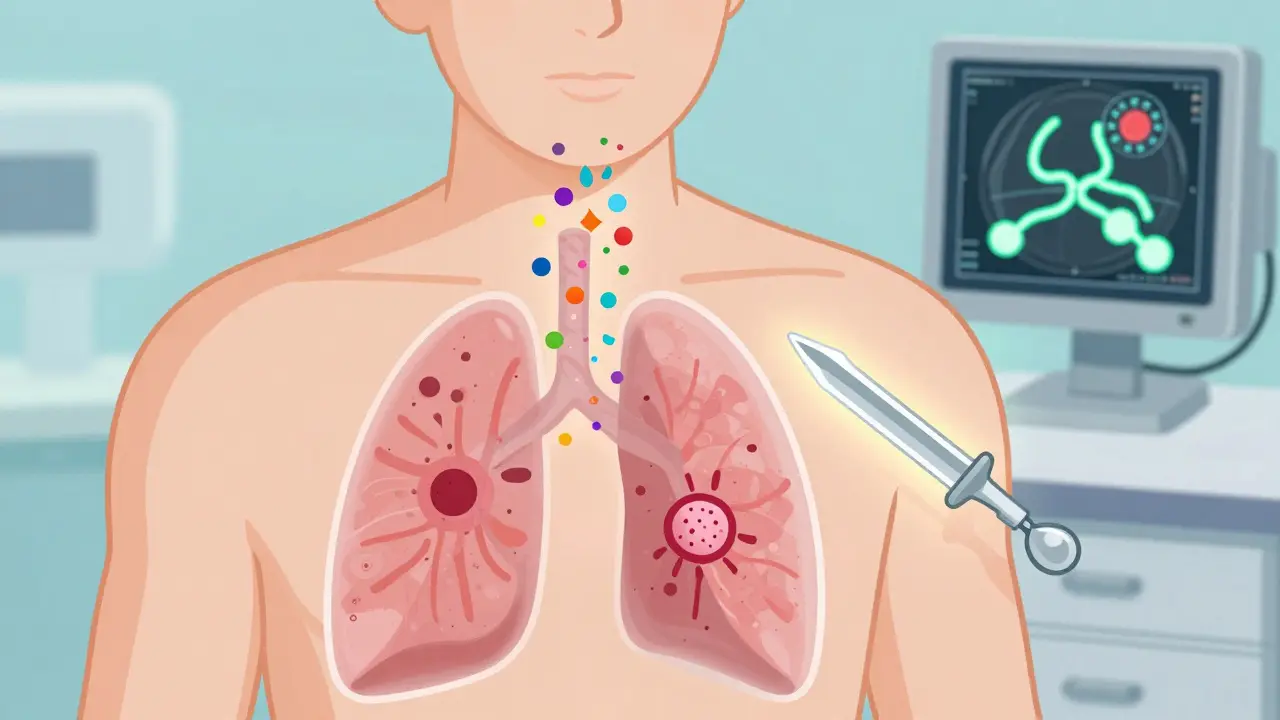
When someone is diagnosed with early-stage lung or breast cancer, one of the first big decisions their care team faces is: Should treatment happen before surgery or after? This isn’t just a technical question-it affects how much treatment you get, how long you wait for surgery, and even whether the treatment actually works for your body. Two main approaches exist: neoadjuvant therapy (before surgery) and adjuvant therapy (after surgery). Both aim to kill cancer cells, but they do it in very different ways-and the choice can change your outcome.
What Neoadjuvant Therapy Really Does
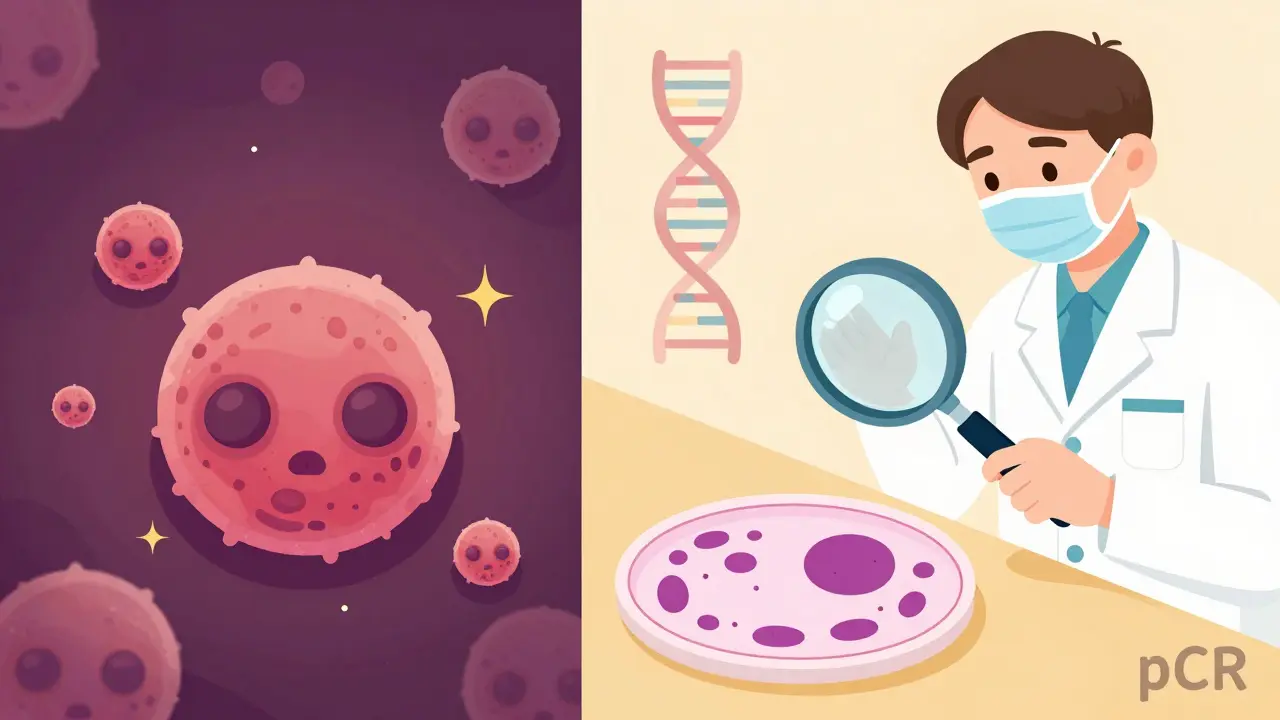
Neoadjuvant therapy means giving drugs-like chemotherapy, immunotherapy, or targeted therapy-before the surgeon cuts into you. The idea isn’t just to shrink the tumor. It’s to see how your cancer reacts in real time. If the tumor shrinks dramatically or disappears entirely on scans, that’s a good sign. But even better: when pathologists examine the tissue removed during surgery and find no live cancer cells, that’s called a pathologic complete response, or pCR. This isn’t just a nice-to-have. In triple-negative breast cancer, patients who hit pCR have a 60-70% lower risk of recurrence compared to those who still have cancer left behind.
In non-small cell lung cancer (NSCLC), the CheckMate 816 trial showed something groundbreaking: when patients got nivolumab (an immunotherapy drug) plus chemo before surgery, 24% achieved pCR. That’s compared to just 2.2% with chemo alone. Those who had pCR didn’t just look better on scans-they lived longer. Median event-free survival jumped from 20.8 months to 31.6 months. That’s over a year longer without the cancer coming back.
Another big advantage? Neoadjuvant therapy lets doctors test drugs on the real tumor inside your body. If the cancer doesn’t respond, you avoid surgery that might not help-and you can switch treatments faster. You’re not guessing anymore. You’re seeing.
What Adjuvant Therapy Is For
Adjuvant therapy comes after surgery. The goal here is simple: clean up whatever cancer cells were left behind. Even if the surgeon removed every visible tumor, tiny clusters of cancer can hide in other parts of your body. These are called micrometastases. Adjuvant therapy is meant to find and kill them.
For decades, this was the standard. After removing a breast tumor or part of a lung, patients got chemo or hormone therapy for 4-6 months. It worked. But it was a shot in the dark. You never knew if the drugs were doing anything-because you couldn’t see the cancer anymore. You were treating based on risk, not response.
Adjuvant therapy still has its place. If your tumor didn’t shrink during neoadjuvant treatment-if you didn’t get pCR-then adjuvant therapy becomes critical. It’s your second chance. And for some cancers, like early-stage hormone receptor-positive breast cancer, it’s still the main path.
Why Sequencing Matters More Than Ever
Here’s where things get tricky. For years, doctors assumed combining neoadjuvant and adjuvant therapy-giving drugs before and after surgery-was the best strategy. But new data says otherwise.
A major 2024 meta-analysis of over 3,200 patients across four key trials (KEYNOTE-671, Neotorch, AEGEAN, NADIM II) found something surprising: adding adjuvant immunotherapy after neoadjuvant treatment didn’t improve survival. Not even a little. The hazard ratio for event-free survival was 0.88-meaning a tiny 12% reduction in risk. That’s not statistically meaningful. Meanwhile, side effects spiked. Nearly 30% of patients on the combo had serious side effects (grade 3 or higher), compared to under 18% with neoadjuvant-only.
Dr. Mark Awad from Dana-Farber put it plainly: “The neoadjuvant-only approach may represent the optimal sequencing strategy for early-stage NSCLC.” Why? Because you get the benefit of early treatment, real-time feedback, and tumor shrinkage-without the extra toxicity of more drugs after surgery.
In breast cancer, the story is similar. A 2023 analysis of over 1,000 patients with early-stage triple-negative breast cancer found no significant difference in survival between those who got neoadjuvant therapy and those who got adjuvant therapy. But here’s the twist: the patients who got neoadjuvant therapy and achieved pCR had much better outcomes than those who didn’t. That’s the real power of neoadjuvant-it doesn’t just treat. It tells you.
Who Gets Which Approach?
Not every patient gets the same treatment. It depends on cancer type, stage, and biology.
- Non-small cell lung cancer (NSCLC): If you have stage IB (tumor ≥4 cm) to IIIA, the NCCN guidelines now recommend neoadjuvant chemoimmunotherapy. This is especially true if your tumor expresses PD-L1 (even 1% or more). The FDA approved nivolumab plus chemo for this use in 2022.
- Triple-negative breast cancer (TNBC): About 45% of patients now get neoadjuvant chemo. Why? Because pCR rates are high-30-40%-and those who hit it have a much better shot at long-term survival.
- HER2-positive breast cancer: Neoadjuvant therapy is standard. Drugs like trastuzumab and pertuzumab are often added to chemo before surgery. pCR here can be over 60%.
- Hormone receptor-positive breast cancer: Still mostly treated with adjuvant therapy. But if the tumor is large or high-risk, neoadjuvant therapy is being used more often to shrink it down.
The bottom line? Neoadjuvant isn’t just for aggressive cancers anymore. It’s becoming the default for anyone who might benefit from seeing how their body responds.
The Hidden Cost of Waiting
One common fear: “If I wait for neoadjuvant therapy, will my cancer spread while I’m waiting?” It’s a real concern. About 5-10% of NSCLC patients experience disease progression during the 9-12 weeks of pre-surgery treatment. And 10-15% of patients can’t have surgery on time because of side effects like low white blood cell counts or lung inflammation.
That’s why timing matters. The ideal window between the last dose of neoadjuvant therapy and surgery is 3-6 weeks. Too soon, and your body hasn’t recovered. Too late, and the tumor might start growing again. This requires tight coordination between medical oncologists, surgeons, and radiologists.
And here’s the catch: only 58% of community hospitals have formal neoadjuvant pathways. Academic centers? 92%. If you’re in a smaller town, getting this sequencing right might mean traveling farther or waiting longer for a multidisciplinary team to review your case.

What’s Next? The Future of Sequencing
The field is moving fast. Trials like KEYNOTE-867 and NeoADAURA are testing whether we can skip adjuvant therapy entirely for patients who respond well. Another big frontier? Circulating tumor DNA (ctDNA).
Imagine this: after neoadjuvant therapy, your doctor takes a blood test to see if any cancer DNA is still floating in your bloodstream. If yes-that’s a red flag. You need more treatment. If no? You might be able to skip adjuvant therapy altogether. Twelve trials are already testing this approach. If it works, it could cut unnecessary treatment for thousands.
Dr. Roy Herbst predicts that within five years, biomarker-driven neoadjuvant therapy will become standard for 70% of early-stage NSCLC cases. Adjuvant therapy will shift from a routine step to a targeted rescue for those who didn’t respond.
And the numbers back it up. The global neoadjuvant therapy market is projected to hit $29.3 billion by 2028. Adoption in the U.S. has doubled in just three years-35% of NSCLC patients now get it before surgery, up from 15% in 2020.
What Should You Do?
If you’re facing surgery for early-stage cancer, ask these questions:
- Has my cancer type been shown to respond to neoadjuvant therapy?
- What’s my chance of achieving pCR?
- Will I get a biopsy or scan after treatment to see if it worked?
- What happens if I don’t respond?
- Is there a plan to test for ctDNA after surgery?
Don’t assume adjuvant therapy is the default. Neoadjuvant therapy isn’t experimental anymore-it’s evidence-based. And for many, it’s the smarter path.
Is neoadjuvant therapy better than adjuvant therapy?
It depends on your cancer type and stage. For many patients with lung or triple-negative breast cancer, neoadjuvant therapy offers a clear advantage: it lets doctors see if treatment works before surgery. Patients who achieve a pathologic complete response (pCR) have much better survival outcomes. While survival rates between the two approaches are often similar, neoadjuvant therapy gives more information, helps shrink tumors for easier surgery, and may reduce the need for additional treatment afterward.
Can I skip adjuvant therapy if I had neoadjuvant treatment?
Yes, for many patients. Recent data, including a 2024 meta-analysis of over 3,200 patients, found no survival benefit from adding adjuvant immunotherapy after neoadjuvant therapy in non-small cell lung cancer. In fact, it increased serious side effects. If your tumor responded well (e.g., you reached pCR), your care team may recommend stopping treatment after surgery. This is now becoming standard in leading cancer centers.
How long do I wait between neoadjuvant therapy and surgery?
The ideal window is 3 to 6 weeks after your last dose of treatment. This gives your body time to recover from side effects like low blood counts or inflammation, but not so long that the cancer starts growing again. Studies like NADIM II show this timing improves surgical outcomes and reduces complications. Your care team will monitor you closely during this period.
What is a pathologic complete response (pCR), and why does it matter?
A pathologic complete response (pCR) means no viable cancer cells are found in the tumor tissue removed during surgery. It’s the strongest indicator that the treatment worked. In triple-negative breast cancer, patients with pCR have up to 70% lower risk of recurrence. In lung cancer, pCR is linked to significantly longer survival. It’s now used as a key measure in clinical trials and is helping doctors decide whether more treatment is needed after surgery.
Does insurance cover neoadjuvant therapy?
Yes, in most cases. The FDA approved neoadjuvant nivolumab plus chemotherapy for resectable non-small cell lung cancer in March 2022, and the European Medicines Agency followed in October 2022. These approvals mean most insurance plans in the U.S. and Europe cover this treatment. However, access can vary depending on your hospital’s protocols and whether you’re treated at an academic center versus a community hospital.
Sequencing cancer treatment isn’t about doing more. It’s about doing the right thing at the right time. Neoadjuvant therapy isn’t just a step before surgery-it’s a diagnostic tool, a predictor, and a powerful way to personalize your care. The future of cancer treatment isn’t just about what drugs you get. It’s about when you get them-and why.
Comments (13)
Kenneth Jones
March 24, 2026 AT 19:51Neoadjuvant therapy isn't just smart-it's necessary. If your tumor doesn't shrink, you're wasting time and risking spread. No more guessing. See it first, act second. Period.
Mihir Patel
March 26, 2026 AT 16:37i read this whole thing and honestly? mind blown. pcr? like.. no cancer left? thats wild. i thought chemo after was the only way. guess i was wrong lol
Kevin Y.
March 28, 2026 AT 06:32Thank you for this exceptionally clear and well-researched breakdown. As a clinician, I’ve seen the paradigm shift firsthand. The data supporting neoadjuvant sequencing is now overwhelming, particularly in NSCLC and TNBC. The reduction in unnecessary adjuvant toxicity is a major win for patient quality of life. Well done.
Rachele Tycksen
March 28, 2026 AT 13:29so wait… we’re saying we can skip chemo after surgery if the tumor’s gone? that sounds too good to be true. my aunt did both and still got sick. maybe this only works for rich people?
Anil Arekar
March 30, 2026 AT 12:51The evolution of cancer sequencing reflects a deeper understanding of tumor biology. Neoadjuvant therapy transforms treatment from a blanket approach to a dynamic, personalized strategy. The concept of pathologic complete response as a biomarker is not merely clinical-it is philosophical. It shifts the paradigm from reaction to observation. This is medicine maturing.
Elaine Parra
April 1, 2026 AT 10:29Let’s be real-this is just Big Pharma’s way to sell more drugs. They rebrand ‘chemo before surgery’ as ‘cutting edge’ so they can charge $200K for nivolumab. Meanwhile, people in rural areas still can’t get a scan. This isn’t progress-it’s profit dressed up as science.
Natasha Rodríguez Lara
April 2, 2026 AT 12:14I love how this article highlights the diagnostic value of neoadjuvant therapy. It’s not just about shrinking tumors-it’s about learning. If we can use treatment as a real-time test, that’s huge. I wonder how many oncologists still default to adjuvant out of habit. We need more education.
peter vencken
April 3, 2026 AT 16:22pete here. just had my bro go through this for stage 2 lung. got neoadjuvant, hit pcr, skipped adjuvant. 18 months clean. doc said ‘you’re lucky, not everyone responds.’ but the data says it’s not luck-it’s science. if your doc hasn’t mentioned this, ask for a second opinion. seriously.
Linda Foster
April 4, 2026 AT 16:06The clinical implications of this shift are profound. The elimination of redundant adjuvant therapy reduces systemic toxicity, lowers healthcare expenditure, and improves patient autonomy. It is imperative that guidelines continue to evolve in alignment with the latest meta-analyses, particularly given the absence of survival benefit with dual sequencing.
Rama Rish
April 5, 2026 AT 20:56this is huge. i work in a community hospital. we just started neoadjuvant last year. took forever to get the team on board. now we’re seeing real results. no more guessing. just seeing.
Kevin Siewe
April 7, 2026 AT 20:21For anyone reading this who’s facing a diagnosis-don’t panic. Ask for the data. Ask about pCR. Ask if ctDNA testing is available. This isn’t about being aggressive. It’s about being informed. You have more power than you think.
Darlene Gomez
April 8, 2026 AT 14:26There’s a quiet revolution happening here. We used to treat cancer like a war-bomb it, cut it, repeat. Now we’re learning to listen. Neoadjuvant therapy doesn’t just kill cells-it talks to them. And when the tumor responds? That’s not luck. That’s biology speaking. The future isn’t just about what we give. It’s about what we learn from what we give.
Danielle Arnold
April 8, 2026 AT 20:53Wow. So after all this, the big takeaway is… we finally figured out that giving drugs before surgery is better than after? Took long enough.